Drip Irrigation Efficiency Calculator
Estimated System Efficiency
--%Breakdown of Loss Factors
Ever wondered how much water actually reaches your plants when you run a drip irrigation system is a method of watering that delivers water directly to the root zone through emitters or tubes.? You might think it’s 100% efficient because the water goes straight to the roots. But in reality, some water always escapes. The short answer? Typically, 5% to 15% of water is lost with drip irrigation under standard conditions. That means 85-95% of what you pump out actually does useful work. Sounds good, right? Yes-but those losses add up over months, and they can be reduced significantly if you know where the water is going.
The "lost" water isn’t just wasted; it’s mostly evaporating from the soil surface or leaking before it hits the target. Understanding these percentages helps you fine-tune your setup, save money on water bills, and keep plants healthier. Let’s break down exactly where the water goes and how to minimize those gaps.
Where Does the Water Actually Go?
To understand the loss rates, we need to look at the three main pathways for water after it leaves the emitter:
- Soil Infiltration (The Good Stuff): This is water absorbed by the soil into the root zone. Ideally, this should be 85-95% of total output.
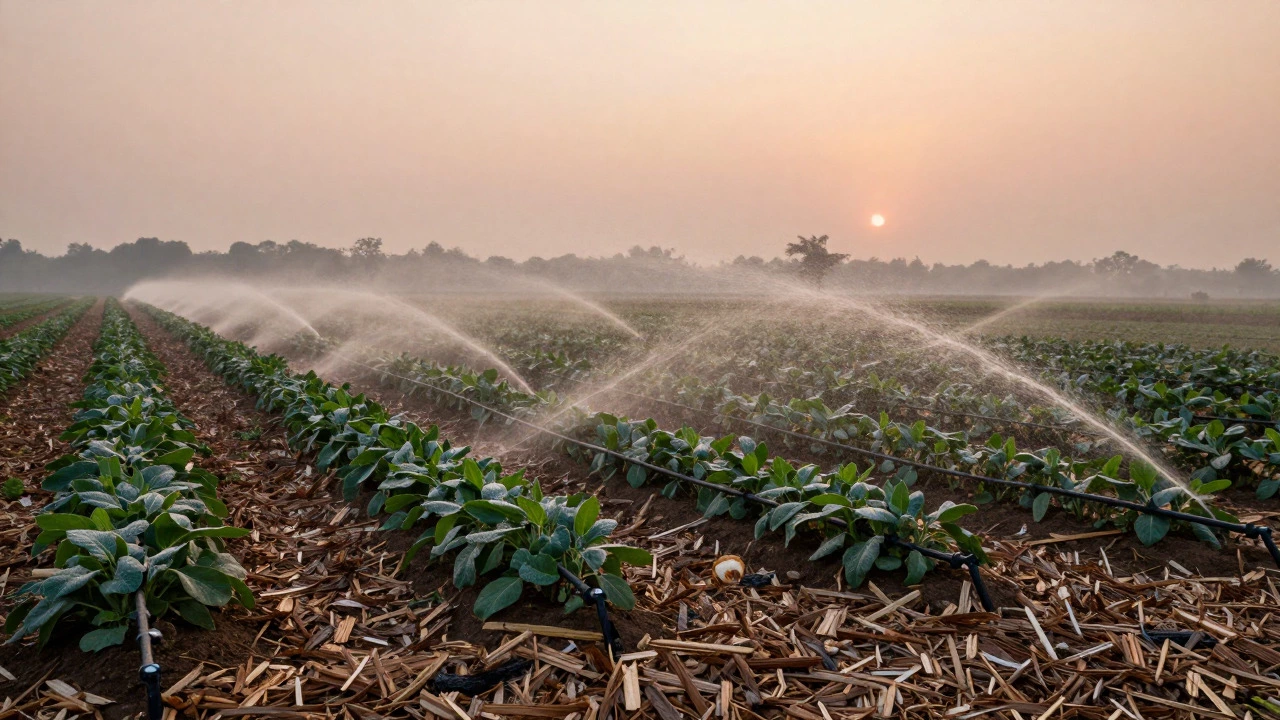
- Evaporation (The Main Culprit): Water sitting on the soil surface dries up due to sun, wind, and heat. This accounts for most of the 5-15% loss.
- Deep Percolation (The Hidden Waste): If you overwater, water moves below the root zone where plants can’t reach it. This is less common in well-calibrated systems but happens during heavy rain events or if timers are set too long.
Compared to sprinkler systems, which often lose 30-50% of water to wind drift and evaporation, drip is a huge improvement. But it’s not magic. The key variable here is how the water is applied.
Factors That Change Your Water Loss Percentage
Your specific loss rate depends on several environmental and mechanical factors. Two identical drip systems in different locations can have vastly different efficiencies.
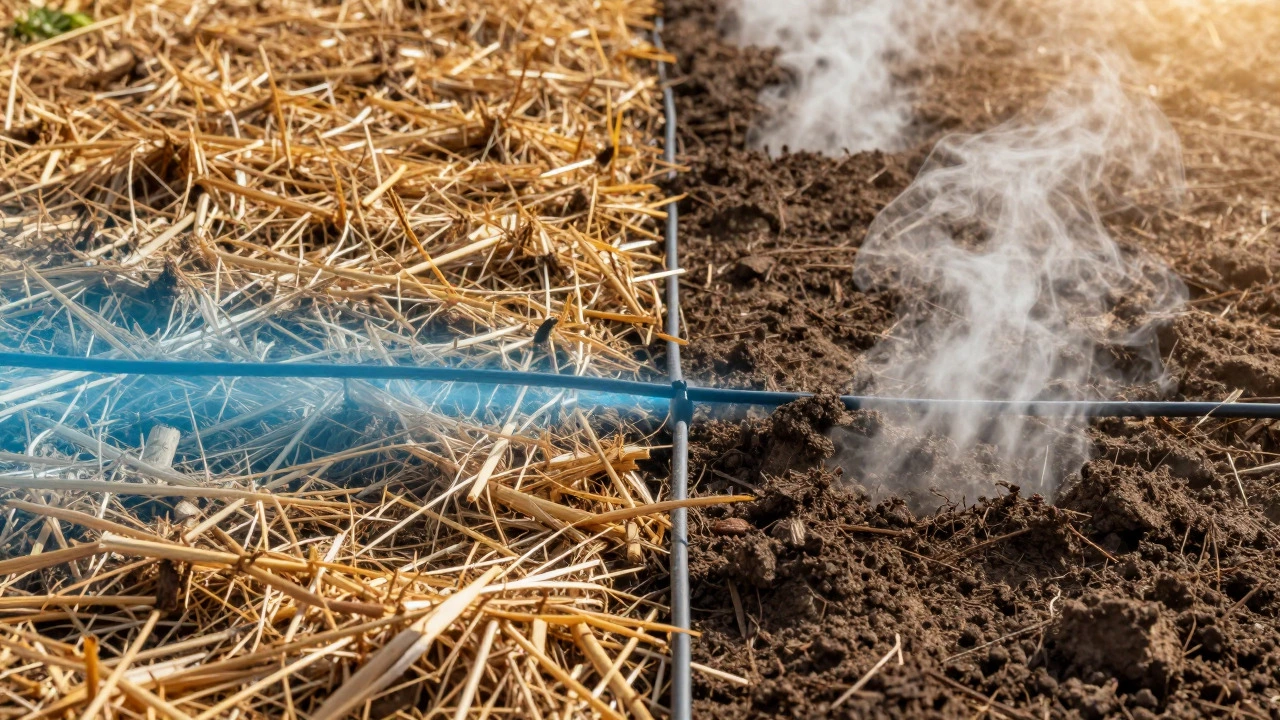
- Cover Crop vs. Bare Soil: This is the biggest factor. A field covered in mulch or growing crops loses far less water than bare dirt. Mulch acts as an insulator, reducing surface evaporation by up to 70%. Without mulch, expect losses on the higher end (10-15%). With straw or wood chip mulch, you can push losses down to 5% or even lower.
- Wind Speed: Wind strips moisture from the soil surface. In arid regions like Arizona or parts of Spain, high winds can increase evaporation losses significantly. In humid, sheltered areas like the UK or Pacific Northwest, wind-related loss is minimal.
- Emitter Type: Pressure-compensating drippers maintain consistent flow regardless of pressure changes. Non-compensating ones can vary, leading to uneven wetting patterns that may encourage more surface runoff or dry spots.
- Soil Type: Sandy soils drain fast, increasing the risk of deep percolation if you don’t adjust timing. Clay soils hold water longer, reducing evaporation but risking waterlogging if overdone.
Real-World Data: What Studies Show
Research from agricultural universities consistently shows that drip irrigation efficiency ranges between 85% and 95% in controlled trials. For example, studies on tomato farms in California found that uncovered fields lost about 12% of water to evaporation, while mulched fields lost only 4-6%. Similar data from greenhouse operations in the Netherlands shows losses as low as 2-3% due to controlled humidity and temperature.
Here’s a quick comparison to help visualize the impact:
| Irrigation Method | Typical Efficiency | Primary Loss Factor | Best Use Case |
|---|---|---|---|
| Drip (Mulched) | 95-98% | Minimal evaporation | Row crops, orchards, gardens |
| Drip (Bare Soil) | 85-90% | Surface evaporation | Temporary setups, early season |
| Sprinklers | 60-75% | Wind drift, evaporation | Lawn care, large open fields |
| Flood Irrigation | 50-65% | Runoff, seepage | Rice paddies, clay-heavy soils |
Notice how mulching makes a dramatic difference. If you’re gardening in a hot climate, adding 2-3 inches of organic mulch around your drip lines can cut your water waste in half.
How to Minimize Water Loss in Your System
You don’t need expensive technology to improve efficiency. Simple adjustments yield big results.
- Mulch Everything: Apply organic mulch (straw, shredded leaves, wood chips) around all drip lines. This is the single most effective step.
- Water Early Morning: Run your system before 8 AM. Cooler temperatures and lower wind speeds reduce evaporation. Avoid midday watering when the sun is at its peak.
- Use Soaker Hoses for Small Areas: For container gardens or small plots, soaker hoses buried under mulch can achieve similar efficiency to drip lines without the complexity.
- Monitor Soil Moisture: Don’t rely solely on timers. Use a simple soil moisture probe to check if the soil is actually dry before running the system. Overwatering leads to deep percolation losses.
- Check for Leaks Regularly: A tiny leak at a connector can waste gallons per day. Inspect your lines monthly, especially after winter freeze-thaw cycles.
Common Mistakes That Increase Water Loss
Even with a good system, user error can spike your water loss percentage.
- Running Timers Too Long: Many people set timers for 1 hour without adjusting for soil type or weather. In sandy soil, 30 minutes might be enough; in clay, you might need 45. Calibrate based on actual absorption.
- Ignoring Rainfall: If it rains heavily, your soil is already saturated. Running the drip system adds unnecessary water that leaches away. Use a rain sensor or manually skip cycles.
- Poor Emitter Placement: Emitters placed too far from the plant base may wet soil that doesn’t contain roots, leading to evaporation in non-productive zones. Keep emitters within the root zone.
Calculating Your Own Water Loss
You can estimate your specific loss rate with a simple test. Place a shallow pan (like a pie tin) next to your drip line. Fill it with water to mark the level. Run your irrigation system for a known duration. Afterward, measure the remaining water in the pan. The difference represents evaporation loss during that period. Compare this to the total water delivered by your emitters (flow rate × time) to get a rough percentage.
For example, if your system delivers 1 gallon in 10 minutes, and the pan loses 0.1 gallons to evaporation in the same time, your evaporation loss is 10%. Add any visible runoff or deep percolation estimates to get a total loss figure.
When Drip Isn’t the Best Choice
Drip irrigation is highly efficient for row crops, trees, and container gardens. But for large, uniform lawns, sprinklers might be more practical despite higher water loss, because covering a large area with drip lines is labor-intensive. Also, in very cold climates where ground freezes deeply, drip lines can be damaged, making seasonal storage necessary. In such cases, micro-sprinklers might offer a balance between efficiency and ease of use.
Ultimately, the goal isn’t just to minimize water loss-it’s to deliver water where and when plants need it most. By understanding the 5-15% loss range and taking steps to reduce it, you can maximize the benefits of your drip irrigation system while conserving a precious resource.
Is drip irrigation really 95% efficient?
Yes, under ideal conditions with mulch and proper calibration, drip irrigation can reach 95-98% efficiency. However, without mulch or in windy, hot climates, efficiency may drop to 85-90%. Always factor in your local environment.
How does mulch reduce water loss in drip irrigation?
Mulch acts as a barrier that slows down evaporation from the soil surface. It also moderates soil temperature, keeping roots cooler in summer. Organic mulches like straw or wood chips can reduce evaporation losses by up to 70% compared to bare soil.
What is the biggest cause of water loss in drip systems?
Surface evaporation is the primary cause of water loss in most drip systems, especially when soil is exposed. Deep percolation (water moving below the root zone) is the second major factor, usually resulting from overwatering or poor timer settings.
Should I run drip irrigation every day?
Not necessarily. Frequency depends on soil type, plant needs, and weather. In sandy soils, daily or every-other-day watering may be needed. In clay soils, twice a week might suffice. Use a soil moisture probe to guide your schedule rather than sticking to a fixed routine.
Can drip irrigation be used for vegetables?
Absolutely. Drip irrigation is excellent for vegetable gardens because it keeps foliage dry, reducing disease risk. It also delivers water directly to the roots, promoting deeper root growth and better nutrient uptake. Just ensure emitters are placed close to each plant’s base.