Carrot Yield Calculator
Carrot Yield Estimator
Calculate your expected carrot harvest based on your growing space and conditions
Tips for Better Yield
Proper thinning is crucial - thin to 2-3 inches apart for best results
Soil texture matters - loose, sandy loam gives best results
Consistent moisture prevents forked roots and promotes even growth
Key Facts
• Each plant produces one carrot
• Requires 2-3 inches spacing between plants
• A 4x4' raised bed yields ~192 carrots
• Container size affects maximum yield
• Soil quality impacts size and quantity
One carrot plant doesn’t give you a bunch. It gives you one carrot. That’s it. No magic, no hidden bonus roots, no secret cluster hiding under the soil. If you’re planting carrots expecting a handful per seed, you’re setting yourself up for disappointment. But that doesn’t mean growing carrots is a waste of time. In fact, it’s one of the most rewarding things you can grow in a small kitchen garden.
Why You Get Just One Carrot Per Plant
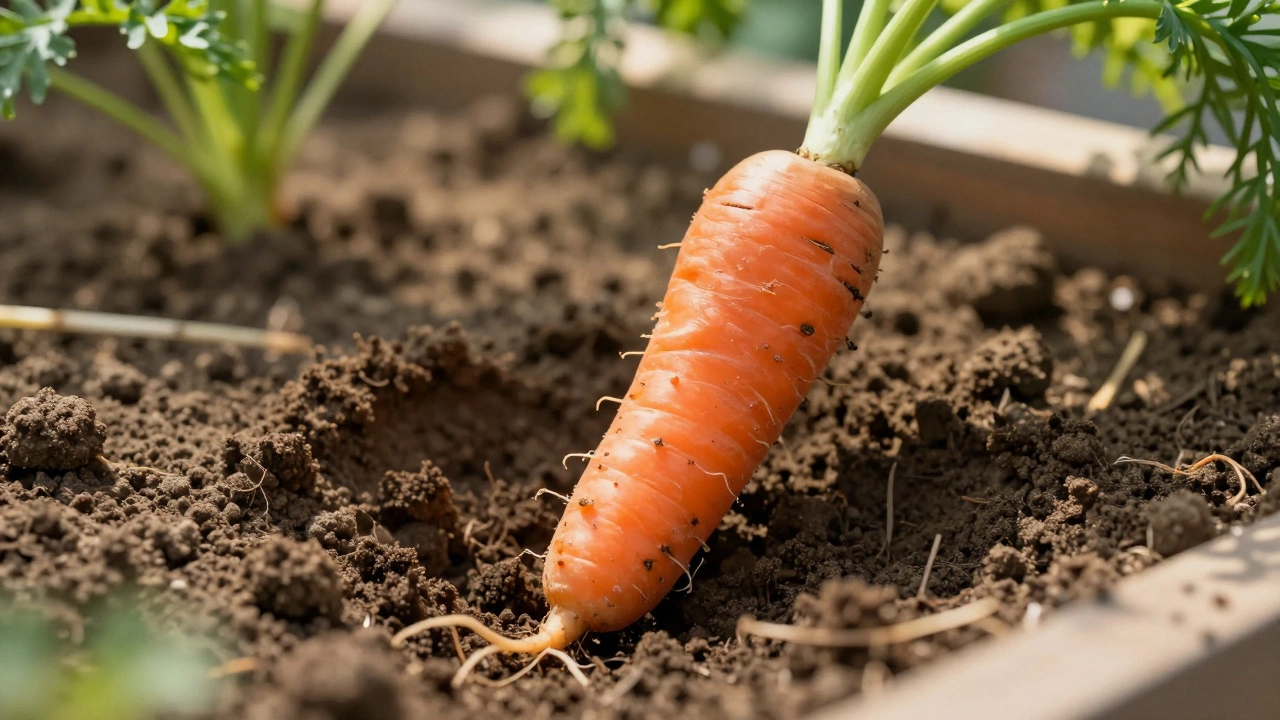
Carrots are taproots. That means they grow straight down, storing energy in a single thickened root. Unlike potatoes or onions, which multiply underground, carrots don’t split or form bulbs. Each seed produces one plant, and that plant makes one main root. You might see a few tiny side roots - especially if the soil’s rocky or compacted - but those aren’t edible carrots. They’re just stress responses.Some gardeners think they’re doing something wrong when they pull up a single carrot. They’re not. That’s exactly how it’s supposed to work. The confusion comes from seeing bags of carrots in the store - all bundled together - and assuming each plant gives you a bunch. Those bundles come from dozens of individual plants, harvested at the same time.
How Many Carrots Can You Grow in a Small Space?
If you’re growing carrots in a window box, a raised bed, or even a 5-gallon bucket, you’re not limited by the number of plants you can grow - you’re limited by space and thinning. Each carrot needs about 2 to 3 inches of space between plants. That means in a 12-inch-wide planter, you can fit about 4 to 6 carrots per row. If you plant two rows, you’re looking at 8 to 12 carrots from that one container.In a standard 4x4 foot raised bed, you can fit around 16 rows of carrots, spaced 3 inches apart. That’s roughly 192 carrots per bed. That’s not one per plant - that’s 192 plants, each giving you one carrot. The math is simple: more plants = more carrots.
What Affects Carrot Yield?
You won’t get big, sweet carrots just by planting seeds and waiting. Carrots are picky. Here’s what actually moves the needle:- Soil texture: Carrots hate clay and rocks. They need loose, sandy loam. If your soil’s heavy, mix in compost and coarse sand. I’ve seen gardeners in Manchester get stunted carrots because they didn’t prep the soil. One year, I dug up a patch where the soil was just garden dirt - out came 14 tiny, twisted carrots. The next year, after adding 3 inches of compost and breaking up the clumps? 38 long, smooth ones.
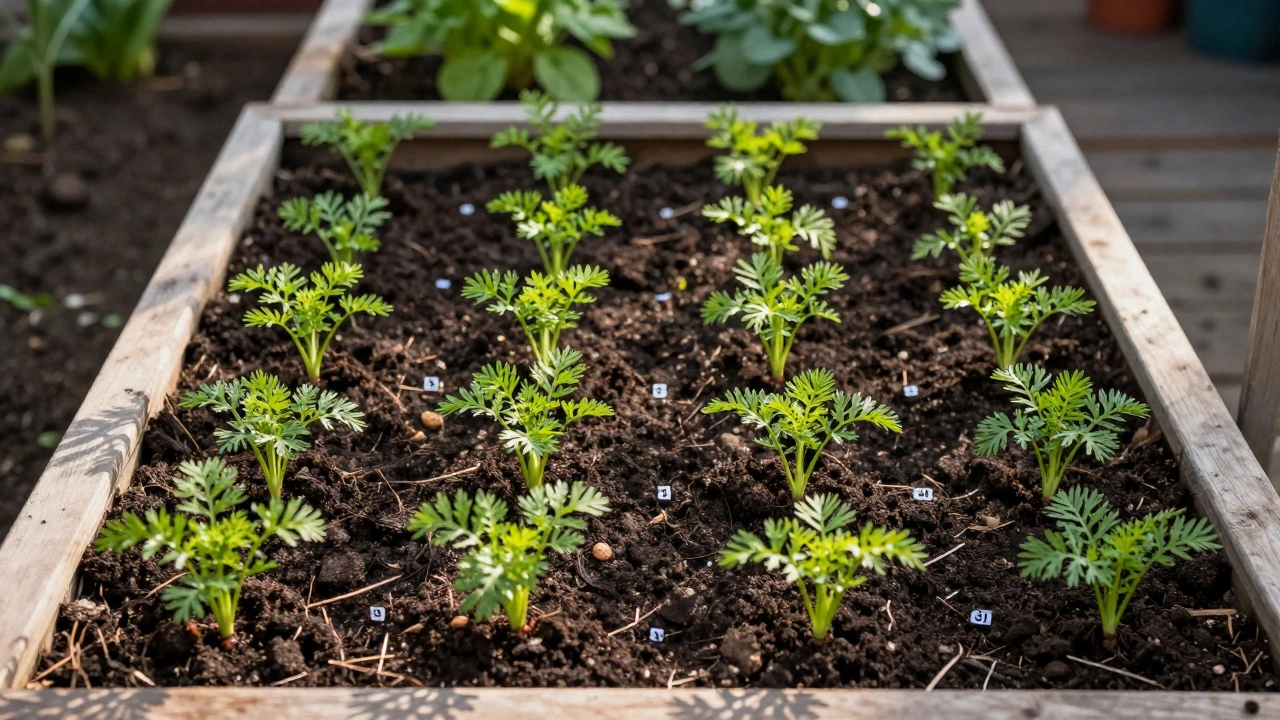
- Thinning: This is the #1 mistake. If you don’t thin seedlings, they crowd each other. You’ll end up with a bunch of pencil-thin carrots instead of a few fat ones. Thin to 2-3 inches apart when seedlings are about 2 inches tall. The thinnings? Toss them in a salad. Baby carrot tops are mild and peppery.
- Water: Carrots need consistent moisture. Let the soil dry out for a week, and you’ll get forked, hairy roots. Water deeply once or twice a week, especially in dry spells.
- Timing: Plant carrots in early spring or late summer. They don’t like heat. In Manchester, I plant around mid-March and again in late July. The fall crop often tastes sweeter after a light frost.
Can You Get More Than One Carrot From a Single Seed?
No. Not naturally. But here’s something people get wrong: sometimes, you’ll pull up a carrot that looks like two fused together. That’s not two plants. That’s one seed that germinated with two embryos - a rare genetic quirk. It’s not reliable, and it doesn’t mean you can breed for double carrots. It’s a curiosity, not a crop strategy.There’s also a myth that cutting the top off a carrot and planting it will grow a new one. That’s not true. You’ll get leafy greens, maybe even flowers if you wait long enough - but no new root. Carrots are biennials. They spend one year building a root, then flower and seed in the second year. Once you harvest the root, the plant’s done.
How to Maximize Your Carrot Harvest
If you want a steady supply of carrots from your kitchen garden, you need to think in batches, not single plants.- Succession planting: Every 2 to 3 weeks, sow a new row of seeds. That way, you’re not harvesting all your carrots at once. You’ll have fresh ones from late spring through winter.
- Use the right variety: Short, stubby carrots like ‘Nantes’ or ‘Thumbelina’ are perfect for containers. Longer types like ‘Danvers’ need deeper soil. Pick based on your space, not your wish list.
- Don’t wait too long: Carrots left in the ground too long get woody. Most varieties are ready in 60 to 75 days. Check the seed packet. Pull one early to test. If it’s bright orange and snaps cleanly, you’re good.
- Store smart: After harvest, cut off the green tops (they draw moisture from the root). Store carrots in a plastic bag with damp paper towels in the fridge. They’ll last 2 to 3 months. Or, leave them in the ground over winter - cover with mulch. They’ll stay sweet and crisp until spring.
What About Carrot Greens?
Don’t throw them away. Carrot tops are edible, packed with vitamin K and antioxidants. Chop them fine and add to pesto, soups, or scrambled eggs. They’re slightly bitter, like parsley with a hint of earthiness. In my kitchen, I use them as a garnish or blend them into green smoothies. A little goes a long way.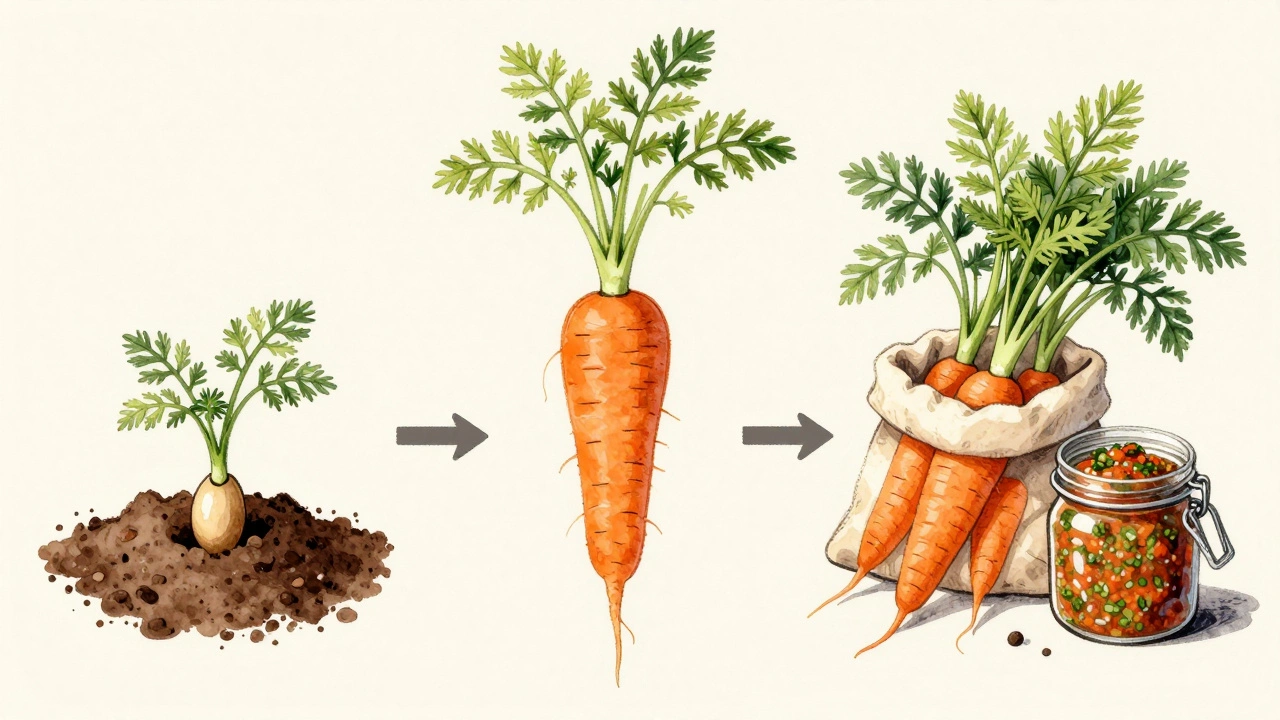
Realistic Expectations for Kitchen Gardeners
If you’re growing carrots in a small space, aim for 20 to 50 carrots per season. That’s not a huge harvest, but it’s enough to make a difference. One carrot a week in your salads, roasted as a side, or grated into muffins - that’s a win. You’re not feeding a family of four, but you’re cutting down on store-bought produce and growing something that tastes better than anything you’ll find in a plastic bag.Carrots are low-maintenance, don’t need much fertilizer, and grow well in partial shade. They’re ideal for beginners. You don’t need a big yard. Just a container, some good soil, and the patience to wait 2 months.
What to Do If You Get Fewer Carrots Than Expected
If your carrots came out small, misshapen, or sparse, here’s what to check:- Was the soil too compact? Try next time with a 50/50 mix of compost and potting soil.
- Did you skip thinning? Next round, use a ruler to space seeds before planting.
- Was it too hot or too dry? Carrots prefer cool, moist conditions. Mulch with straw to keep soil cool.
- Did you plant too early? In the UK, frost can stunt growth. Wait until soil hits 7°C (45°F).
One year, I planted carrots in a spot where the previous year’s compost pile had been. The soil was rich, but full of unbroken clods. Out came 12 carrots - all bent like question marks. The next season, I sieved the soil through a 1/4-inch screen. Got 41 straight, smooth ones. Soil prep makes the difference.
Final Thought: It’s Not About Quantity - It’s About Quality
You won’t get a bushel of carrots from one plant. But you will get a flavor that’s sweet, crisp, and alive - the kind you can’t buy. That’s why people grow them. Not because it’s efficient. But because it’s real.One carrot from your own garden tastes like summer. Or autumn. Or spring. It tastes like the effort you put in. And that’s worth more than a bag of supermarket carrots any day.
Do carrots grow back after you harvest them?
No. Carrots are taproots, and once you pull them, the plant dies. You can’t regrow a new carrot from the stump. But if you leave the top in the ground, it may flower and produce seeds for next year’s crop.
How many carrots can I grow in a 5-gallon bucket?
You can grow about 8 to 10 carrots in a 5-gallon bucket if you use a loose, sandy soil mix and thin seedlings properly. Make sure the bucket has drainage holes and is at least 12 inches deep.
Why are my carrots so small?
Small carrots usually mean the soil is too hard, the plants are overcrowded, or they didn’t get enough water. Carrots need loose, well-drained soil and consistent moisture. Thin seedlings to 2-3 inches apart and add compost to improve texture.
Can I grow carrots indoors?
Yes, but only in deep containers (at least 12 inches) with strong sunlight or grow lights. Carrots need 6-8 hours of direct light daily. A south-facing windowsill works in winter, but they’ll grow slower than outdoors.
When is the best time to plant carrots in the UK?
Plant carrots in early spring (late February to April) for a summer harvest, or in late July to early August for a winter harvest. Avoid planting during the hottest months - they don’t like heat. The second crop often tastes sweeter after a light frost.