Root Rot Rescue Diagnostic Tool
Step 1: Identify Symptoms
Check all the signs you are currently seeing in your plant.
Diagnosis Result
-You water your pothos on a strict schedule. You check the soil surface. It looks dry. So you pour more water. But instead of thriving, your plant starts dropping leaves, turning yellow, and looking generally miserable. The culprit? Likely root rot. This silent killer destroys more houseplants than pests ever will.
Root rot isn't just "too much water." It's a fungal infection that sets in when roots sit in oxygen-deprived, soggy soil for too long. The fungi attack the root tissue, turning it brown, mushy, and unable to absorb nutrients or water. If you catch it early, you can save your plant. If you wait until the stem is black and soft, you might be too late. Here is how to diagnose, treat, and prevent this common issue.
Spotting the Signs Before It’s Too Late
Most people notice root rot only after the damage is severe. By then, the plant is often beyond saving. To fix it, you need to spot the subtle clues first. Above-ground symptoms are usually indirect because the problem is underground.
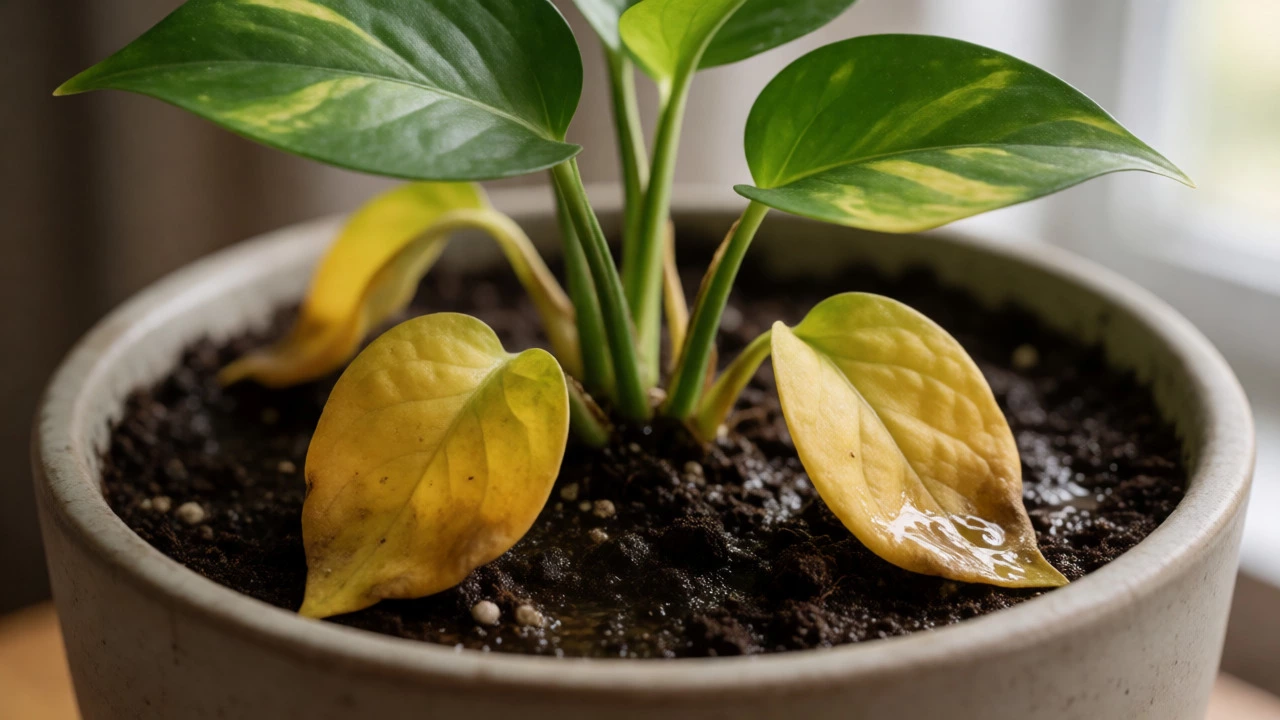
- Yellowing leaves: Unlike nutrient deficiency which affects older leaves first, root rot often causes widespread yellowing or browning edges across multiple levels of the plant.
- Wilting despite wet soil: This is the classic paradox. The soil feels damp, but the plant droops as if it’s dying of thirst. Why? Because rotted roots cannot transport water to the leaves.
- Mushy stems: Check the base of the plant where the stem meets the soil. If it feels soft or squishy rather than firm, the rot has moved up from the roots.
- Foul odor: Smell the soil. Healthy potting mix smells earthy. Rotten roots smell like a swamp or old gym socks due to anaerobic bacterial activity.
If you see these signs, don’t guess. Get your hands dirty. Gently remove the plant from its pot. Healthy roots are white, cream, or light tan and feel firm. Rotted roots are dark brown, black, or translucent, and they fall apart when you touch them. This visual confirmation is your green light to start treatment.
The Emergency Surgery: Cleaning the Roots
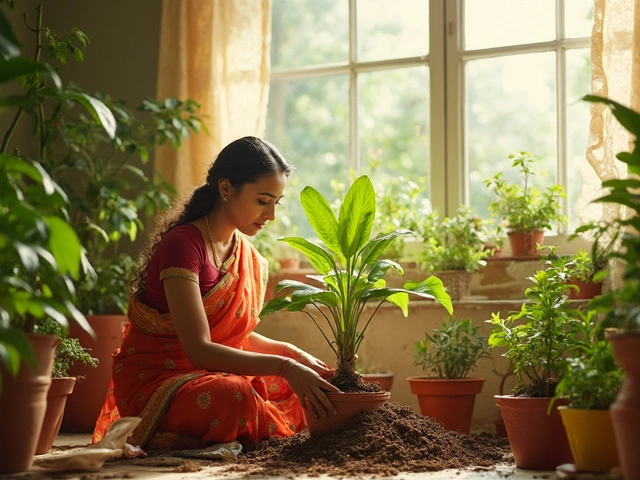
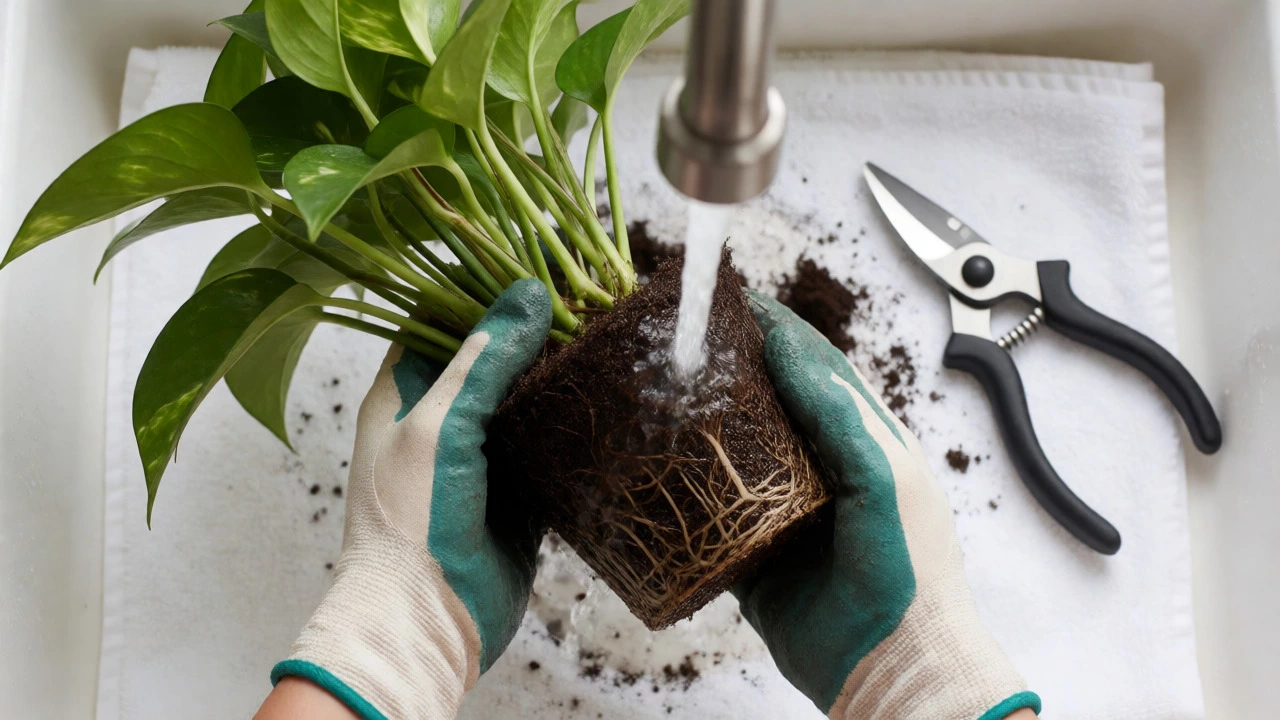
Treating root rot is essentially surgery. You are removing dead tissue to stop the spread of infection. You need sharp scissors or pruning shears, rubbing alcohol to sterilize them, fresh potting mix, and a clean pot with drainage holes. Do not reuse the old soil; it is likely full of the fungus causing the problem.
- Shake off excess soil: Gently loosen the root ball. Rinse the roots under lukewarm tap water to wash away the remaining soil. This lets you see exactly what is healthy and what is rotten.
- Sterilize your tools: Wipe your scissors with rubbing alcohol before each cut. If you don’t, you risk spreading the fungus from one root to another.
- Cut away the rot: Trim every single brown, mushy, or slimy root. Cut back to healthy white tissue. It feels harsh, but leaving even a small patch of rot means the fungus will return. If more than 50% of the roots are gone, you may need to trim some leaves too to reduce stress on the remaining roots.
- Inspect the crown: Check the top of the root system where the stems emerge. If this area is black and mushy, the plant might not survive. However, if the crown is firm, you have a fighting chance.
Once cleaned, let the roots air dry for an hour or two. Fungi thrive in moisture, so giving the wounds time to callus over helps. Some growers dip the trimmed roots in a hydrogen peroxide solution (one part 3% hydrogen peroxide to three parts water) for a few minutes to kill any lingering spores. It’s an optional step, but effective for stubborn cases.
Repotting for Recovery
Choosing the right medium is critical. Regular garden soil holds too much water for indoor pots. You need a chunky, airy mix that drains fast. For most tropical houseplants like Monstera, Philodendron, or Pothos, a mix of 50% high-quality potting soil, 30% perlite, and 20% orchid bark works wonders. The perlite creates air pockets, while the bark prevents compaction.
| Plant Type | Recommended Mix Ratio | Why It Works |
|---|---|---|
| Tropicals (Pothos, Monstera) | 50% Soil, 30% Perlite, 20% Bark | Balances moisture retention with high aeration. |
| Succulents & Cacti | 40% Soil, 60% Inorganic (Perlite/Pumice) | Extremely fast drainage to prevent waterlogging. |
| Aroids (Philodendron) | 50% Coco Coir, 30% Perlite, 20% Charcoal | Charcoal absorbs toxins; coir holds less weight than peat. |
When repotting, use a pot only slightly larger than the root ball. A huge pot holds excess water around the roots, recreating the conditions that caused the rot. Ensure the pot has large drainage holes. If you’re using a decorative cache pot without holes, keep the nursery pot inside and empty the saucer 15 minutes after watering. Never let the plant sit in standing water.
Post-Op Care: The Healing Phase
Your plant is stressed. It lost significant root mass, so it can’t support its current leaf count. You must adjust care immediately to help it recover.
Hold off on fertilizer. Fertilizer salts burn damaged roots. Wait at least four weeks after repotting before introducing any nutrients. Let the plant focus energy on growing new roots, not processing food.
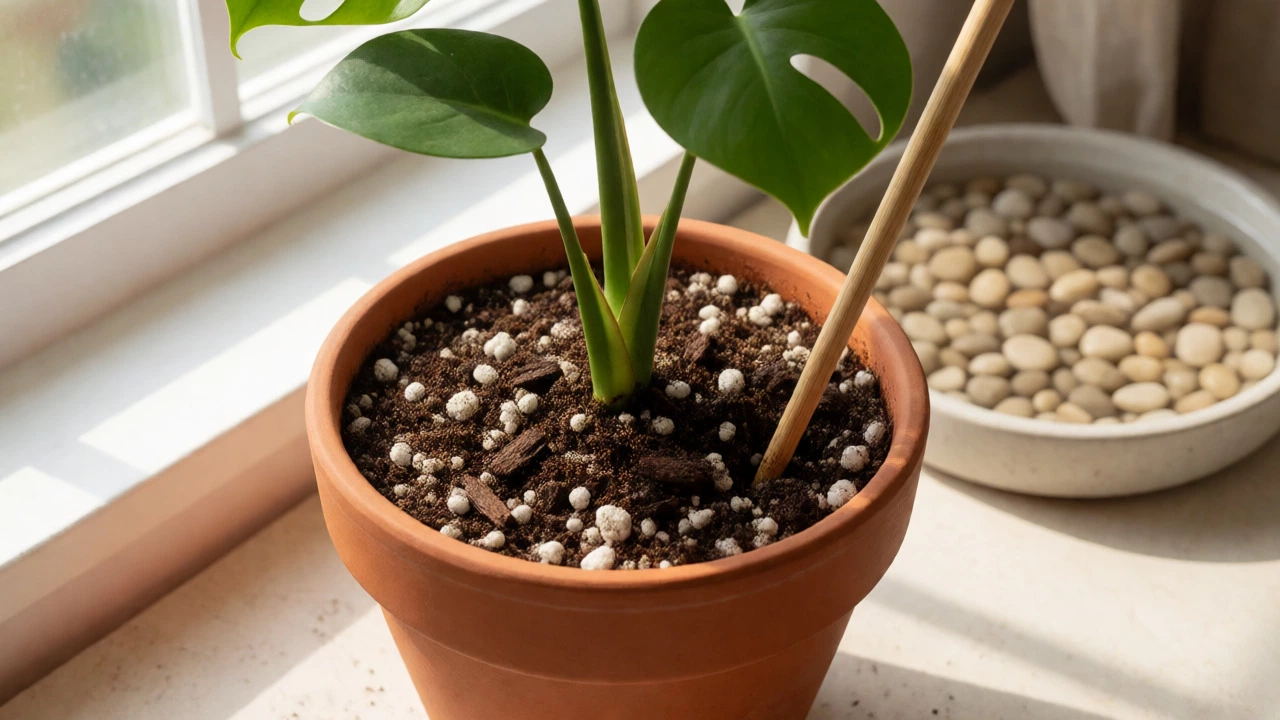
Water sparingly. Water thoroughly once after repotting to settle the soil, then let the top 2-3 inches of soil dry out completely before watering again. Use a wooden chopstick or your finger to test depth. If you’re unsure, err on the side of dryness. Overwatering is easier to fix than underwatering in recovery mode.
Increase humidity. With fewer roots, transpiration is reduced. Misting the leaves or placing the pot on a pebble tray with water (not touching the bottom of the pot) reduces stress on the foliage. Keep the plant in bright, indirect light. Avoid direct sun, which can scorch weakened leaves.
Preventing Future Outbreaks
Fixing root rot is reactive. Preventing it requires changing your habits. Most cases stem from "love killing"-watering on a calendar rather than checking the plant’s needs.
First, upgrade your pots. Terracotta is excellent for beginners because it wicks moisture away from the soil through its porous walls. Plastic retains moisture longer, so you must be more careful with watering frequency in plastic containers. Always ensure there is at least one inch of space between the soil line and the rim of the pot to allow for proper watering without overflow.
Second, learn your environment. Manchester winters are darker and cooler. Plants grow slower and drink less. A pothos that needed water every seven days in July might only need it every fourteen days in January. Adjust your schedule seasonally. If you travel or forget to water, consider self-watering pots with reservoirs, but monitor them closely-they can still cause rot if the water level stays high.
Finally, inspect regularly. Every month, lift your plants. Feel the weight of the pot. A heavy pot means wet soil; a light pot means dry soil. This tactile feedback is more accurate than looking at the surface, which can look dry while the bottom remains saturated.
Can I save a plant if all the roots are black?
If literally every root is black and mushy, and the stem is also soft, the plant is likely dead. However, if the stem is still firm, you can try propagating the healthy top section. Cut above the rot, place the cutting in water or moist sphagnum moss, and hope it develops new roots. This is often easier than trying to revive the original root system.
Does cinnamon help with root rot?
Cinnamon is a mild fungicide and can help prevent mold on cut surfaces. Dusting trimmed roots with cinnamon powder before repotting is a popular home remedy. While scientific evidence for its effectiveness against severe Pythium or Phytophthora infections is mixed, it doesn’t hurt and may provide a slight protective barrier for minor cuts.
How long does it take for a plant to recover from root rot?
Recovery depends on the severity of the damage and the plant species. Fast-growing plants like Pothos or Spider Plants may show new growth within 2-4 weeks. Slower growers like ZZ Plants or Sansevieria might take 2-3 months. Look for new leaf production or firming of existing leaves as positive signs.
Should I cut off yellow leaves?
Yes. Yellow leaves are already compromised and won’t turn green again. They drain energy from the plant. Removing them allows the plant to redirect resources toward root regeneration. However, do not remove more than 30-50% of the foliage at once, as the plant needs leaves to photosynthesize and generate energy for healing.
Is hydrogen peroxide safe for all plants?
Generally, yes, if diluted correctly. A solution of 3% hydrogen peroxide mixed with water (1:3 ratio) kills fungus and bacteria on contact. It breaks down into water and oxygen, which actually aerates the soil. Avoid using high concentrations, as they can damage delicate root tips. Test on a small area if you have a very sensitive plant like a fern.