Indoor Plant Hydration Checker
Select your plant type and characteristics below to find out the safest way to hydrate it.
You’ve probably heard the advice before: give your ferns a spritz to keep them happy. It feels intuitive. We sweat when it’s hot, so surely plants do too? But here is the hard truth that many plant parents learn the hard way: misting is rarely the best way to hydrate your indoor plants. Houseplants grown in controlled environments require specific moisture management strategies to thrive without disease.. In fact, for most common houseplants, misting does more harm than good. It creates a false sense of security while leaving the roots thirsty and inviting fungal infections.
The debate between misting and watering isn’t just about preference; it’s about biology. To understand why one method wins over the other, we need to look at how plants actually drink and breathe. This guide will break down the science of hydration, help you identify which rare exceptions might benefit from a spray bottle, and show you better ways to raise humidity if that’s what your tropical babies really need.
How Plants Actually Absorb Water
To settle this argument, we first have to look at the plumbing system of a plant. Most people assume leaves are sponges that soak up moisture from the air. While some specialized plants can absorb tiny amounts of nutrients through their foliage (a process called foliar feeding), the vast majority of water uptake happens through the roots. The underground network of tissues responsible for absorbing water and minerals from the soil..
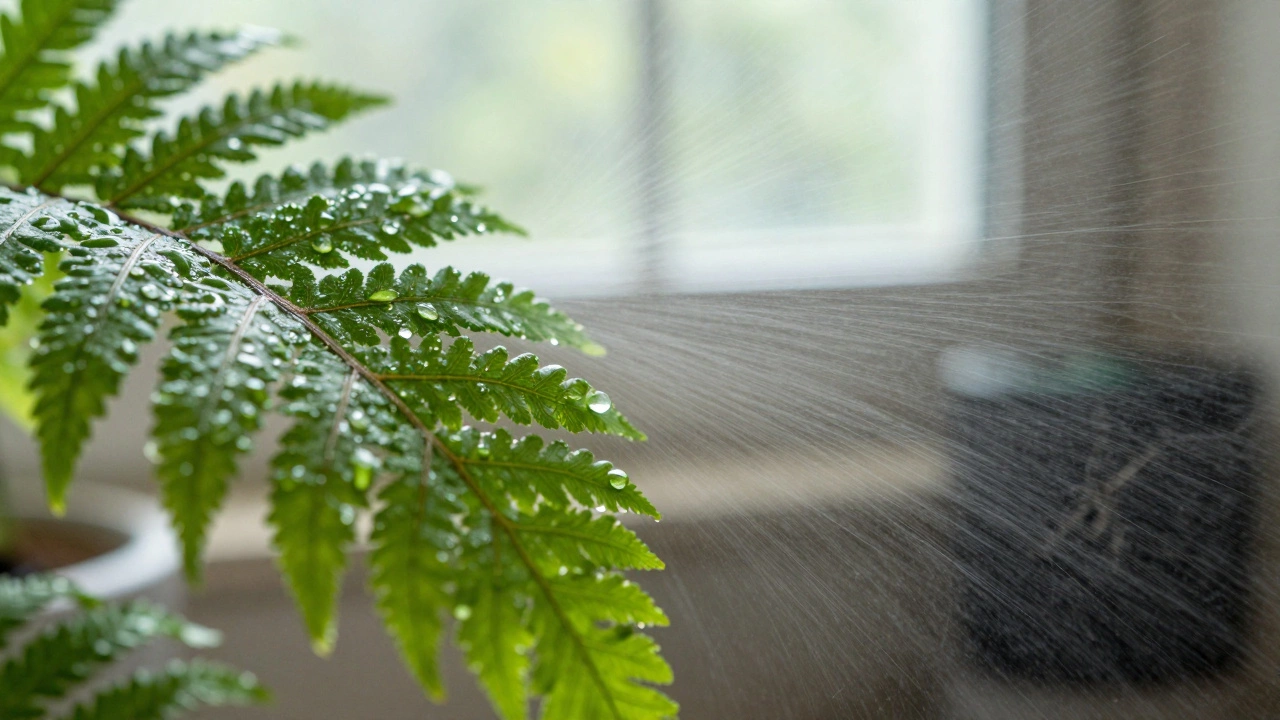
Water travels from the soil, into the root hairs, up through the stem via the xylem, and finally out through microscopic pores on the underside of leaves called stomata. Microscopic openings on leaf surfaces that regulate gas exchange and transpiration.. This process is known as transpiration. When you mist a plant, you are wetting the surface of the leaf. Unless the stomata are wide open and the solution is specifically formulated for absorption, that water sits there. It evaporates quickly, often within minutes, providing zero lasting hydration to the root system where the plant actually needs it.
If your plant is drooping because the soil is dry, spraying the leaves is like pouring water on the roof of a house to fix a leak in the basement. It looks like you’re doing something, but the core problem remains unsolved. The only reliable way to hydrate a dehydrated plant is to water the soil directly.
The Hidden Dangers of Misting
So, if misting doesn’t hydrate the roots effectively, why is it so popular? It’s largely aesthetic. A glistening leaf looks fresh. But beyond the visual appeal, misting introduces significant risks to your indoor garden, particularly in homes with average or low airflow.
The biggest threat is fungal infection. Diseases caused by fungi that thrive in damp, stagnant conditions, such as powdery mildew and botrytis.. Fungi love warm, moist environments. When you create a fine mist around your plants, you are essentially creating a microclimate perfect for spores to germinate. If that moisture doesn’t evaporate quickly-which it won’t in a corner with poor air circulation-it leads to powdery mildew, a white dusty coating on leaves, or botrytis blight, which causes brown, mushy spots.
Another risk involves pests. Some insects, like spider mites, actually thrive in humid conditions created by frequent misting if the air isn’t moving. Furthermore, if you use tap water to mist, the mineral deposits (calcium and magnesium) left behind after evaporation can clog the stomata over time. This reduces the plant’s ability to breathe and photosynthesize efficiently. You might notice white spots on dark leaves, which are permanent mineral stains.
For plants with hairy leaves, like African Violets or Begonias, misting is practically forbidden. The trichomes (tiny hairs) trap the water against the leaf surface. This trapped moisture cannot evaporate easily, leading to rapid rot and necrosis (tissue death). One spray can ruin a beautiful bloom in hours.
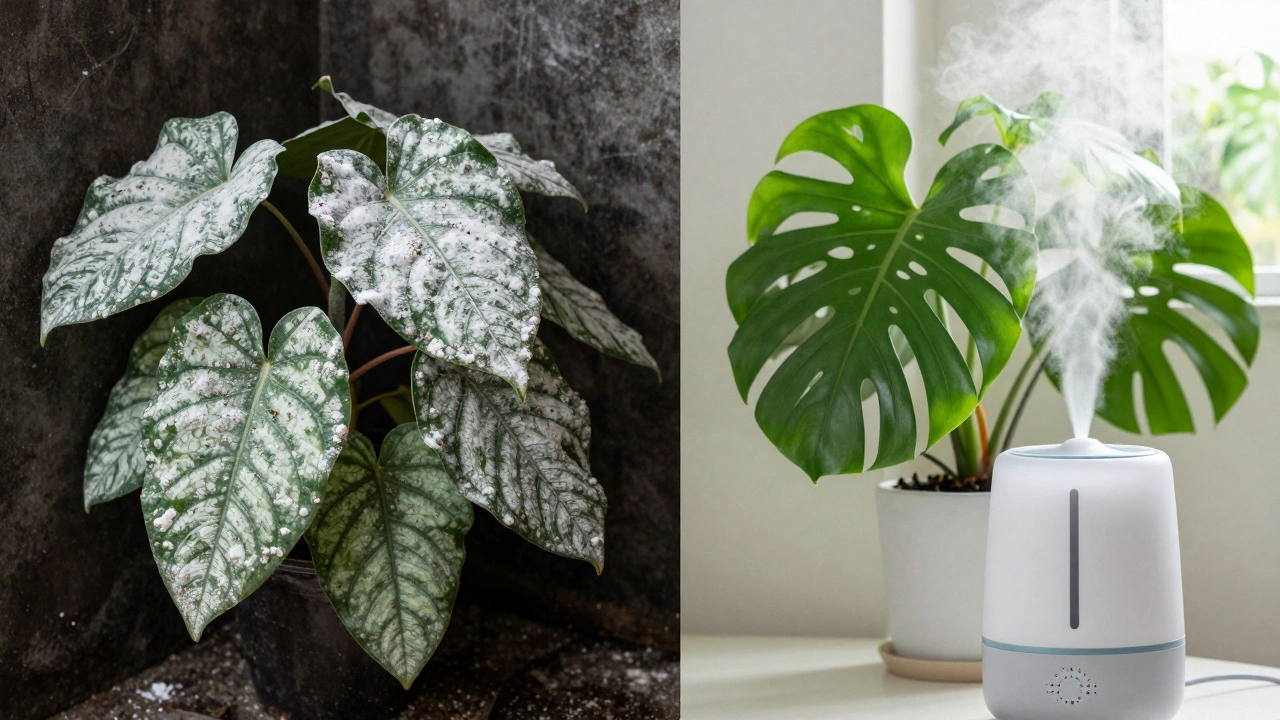
When Misting Might Make Sense
Are there any scenarios where misting is beneficial? Yes, but they are narrow. Misting can be useful for cleaning dust off large leaves. Dust blocks sunlight, reducing photosynthesis. A gentle spray followed by wiping with a soft cloth keeps the plant healthy. However, this is a cleaning task, not a hydration strategy.
Some epiphytic plants, such as certain species of Ferns. Non-vascular or vascular plants that reproduce via spores and typically grow in shady, moist environments. or Bromeliads. Tropical plants belonging to the family Bromeliaceae, many of which are epiphytes that store water in their central rosette., have evolved to absorb moisture from the air. For example, the Bird’s Nest Fern (Cyathea dealbata) has smooth, waxy leaves that can tolerate and even enjoy occasional misting. Similarly, young seedlings or cuttings that lack developed root systems may benefit from high ambient humidity provided by frequent misting while they establish roots. But once those roots are established, the misting should stop.
Even for these humidity-loving plants, misting is a temporary fix. It raises humidity for perhaps 15-30 minutes before the water evaporates. It does not provide the sustained, stable humidity levels that tropical plants crave.
Better Ways to Increase Humidity
If your goal is to mimic the tropical rainforest environment for plants like Calatheas, Marantas, or Orchids, you need consistent humidity, not sporadic sprays. Here are three proven methods that work far better than a spray bottle:
- Pebble Trays: Place a tray filled with pebbles and water underneath your plant pot. Ensure the bottom of the pot sits on the pebbles, not in the water, to prevent root rot. As the water evaporates, it increases the local humidity around the plant without wetting the soil or leaves directly.
- Humidifiers: An ultrasonic humidifier is the gold standard for plant lovers. It allows you to control the exact humidity level (aim for 50-70% for most tropicals) and provides constant moisture without the risk of fungal growth associated with stagnant mist.
- Grouping Plants: Plants naturally increase the humidity around them through transpiration. Grouping several pots together creates a microclimate. The air inside that cluster stays more humid than the rest of the room. This is free, passive, and effective.
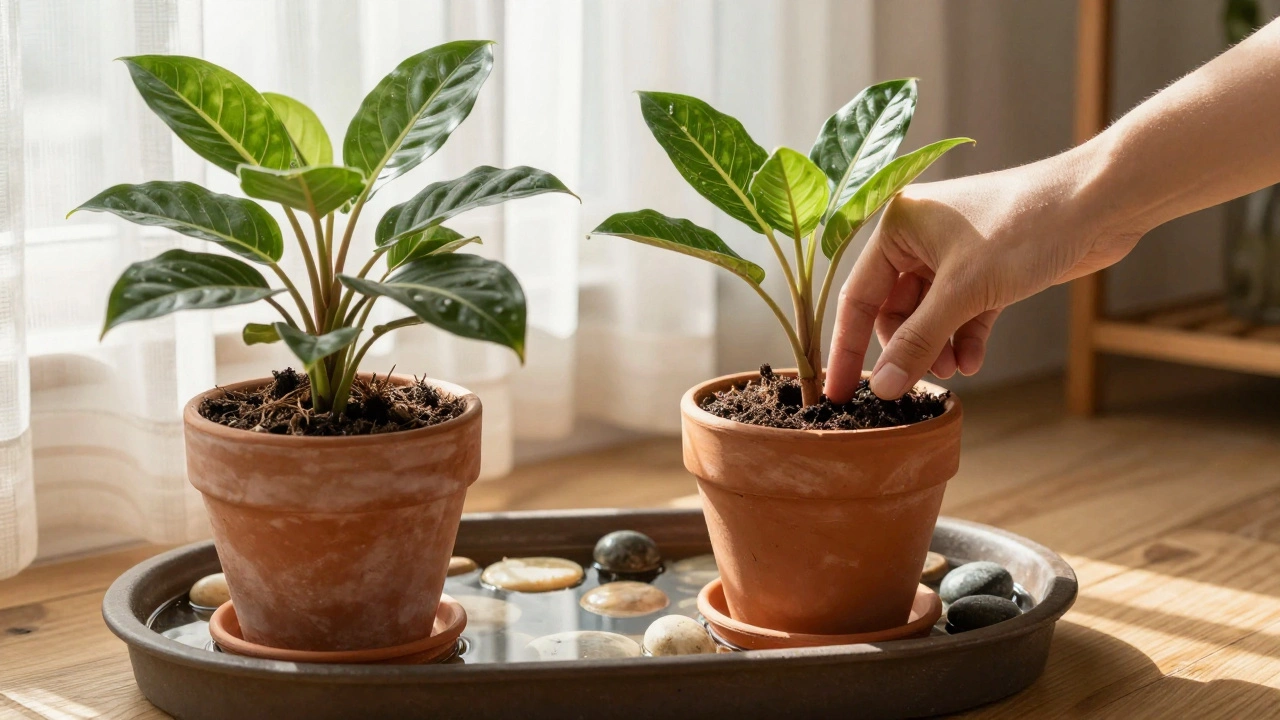
Proper Watering Techniques
Since misting doesn’t replace watering, let’s talk about doing it right. The most common mistake new plant owners make is watering on a schedule rather than based on need. Every home has different light levels, temperatures, and airflow, which all affect how fast soil dries out.
Use the "finger test." Stick your finger about an inch (or two inches for larger pots) into the soil. If it feels dry, it’s time to water. If it feels damp, wait. Overwatering is the number one killer of indoor plants, causing root rot. A condition where roots decay due to excessive moisture and lack of oxygen, leading to plant death..
When you do water, soak the soil thoroughly until water runs out of the drainage holes. This ensures the entire root ball gets hydrated and flushes out accumulated salts from fertilizers. Never let your plant sit in standing water in the saucer; empty it after 15 minutes. Always use pots with drainage holes. Without them, you have no control over excess water, and root rot becomes inevitable.
| Feature | Misting | Watering (Soil) |
|---|---|---|
| Primary Benefit | Dust removal, brief humidity spike | Hydrates roots, supports growth |
| Risk Level | High (fungus, mineral buildup) | Low (if done correctly) |
| Duration of Effect | Minutes | Days to weeks |
| Best For | Cleaning, specific epiphytes | All potted plants |
| Impact on Roots | Negligible | Direct and essential |
Common Mistakes to Avoid
Avoid using distilled water for misting if you want to avoid mineral deposits, but don’t use it for long-term soil watering unless necessary, as plants need trace minerals. Tap water is usually fine if left to sit for 24 hours to allow chlorine to evaporate. Also, never mist plants in direct, strong sunlight. The water droplets can act like magnifying glasses, focusing sunlight onto the leaf tissue and causing burn spots. Always mist in the morning or evening if you choose to do so.
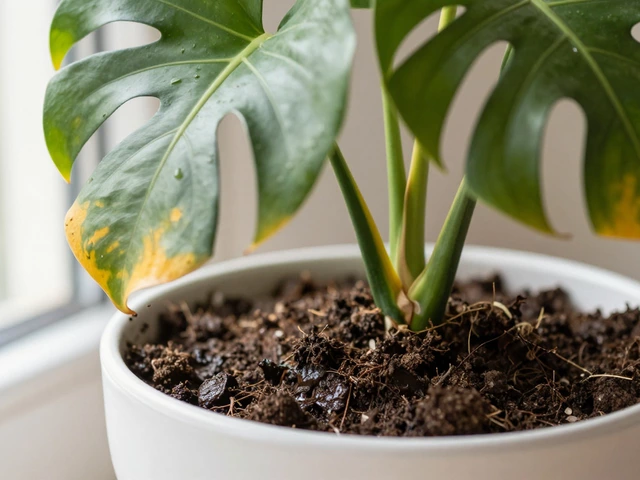
Finally, trust your eyes and fingers over internet trends. If your plant’s leaves are crispy at the edges, it likely needs higher ambient humidity (use a humidifier) or deeper watering, not a quick spray. If the leaves are yellowing and dropping, check the soil moisture. Is it soggy? You’re overwatering. Is it bone dry? You’re underwatering. Misting won’t solve either issue.
Can I mist my succulents?
No, you should generally avoid misting succulents. These plants are adapted to arid environments and store water in their leaves and stems. Excess moisture on their leaves can lead to rot and fungal issues. Water them deeply but infrequently, allowing the soil to dry out completely between waterings.
Why are there white spots on my leaves after misting?
These are likely mineral deposits from tap water. As the water evaporates, calcium and magnesium remain on the leaf surface. To prevent this, use filtered or distilled water for misting, or simply wipe the leaves with a damp cloth instead of spraying.
These are likely mineral deposits from tap water. As the water evaporates, calcium and magnesium remain on the leaf surface. To prevent this, use filtered or distilled water for misting, or simply wipe the leaves with a damp cloth instead of spraying.
Is misting good for orchids?
It depends on the type. Phalaenopsis orchids prefer humidity but can suffer from crown rot if water sits in the center of the plant. Misting the air around them is okay, but avoid getting water in the crown. Better options include using a humidity tray or a humidifier.
How often should I water my indoor plants?
There is no single schedule. Check the soil moisture regularly. For most houseplants, wait until the top inch or two of soil is dry before watering again. Factors like light, temperature, and pot size affect drying times.
Can misting kill my plants?
Yes, indirectly. Frequent misting can promote fungal diseases like powdery mildew and botrytis, especially in low-light or low-airflow conditions. It can also cause rot in plants with hairy leaves or sensitive crowns.