Rice Cultivation Risk Simulator
Scenario: You are managing a rice paddy. Adjust the environmental variables to see how they impact your crop's health and final yield. Balance the water and nutrients to avoid disaster!
Quick Summary: Why Rice is a High-Maintenance Crop
- Water Intensity: Most varieties require constant flooding to suppress weeds and maintain temperature.
- Soil Chemistry: Rice needs anaerobic (oxygen-poor) conditions that would kill almost any other food crop.
- Labor Demands: From transplanting seedlings by hand to precise water leveling, the physical work is grueling.
- Pest Pressure: The humid, watery environment is a playground for fungi, bacteria, and insects.
- Climate Sensitivity: A sudden cold snap or a late monsoon can wipe out an entire season's yield.
The Battle Against Oxygen
Most plants breathe through their roots. If you soak a tomato plant in three inches of water for a week, it will drown because its roots can't get oxygen. Rice is different. Oryza sativa, the common Asian rice, has evolved a specialized internal anatomy called aerenchyma. These are essentially tiny air tunnels that allow oxygen to travel from the leaves down to the roots even when the plant is submerged.
However, creating this environment is where the difficulty starts. To make rice thrive, farmers have to manage anaerobic soil. This is soil that is completely saturated with water, pushing out all the air. In these conditions, the chemistry of the earth changes. Iron and manganese become more soluble, and the soil becomes chemically "reduced." For a home gardener, replicating this requires a waterproof basin or a heavy clay liner, because if the water drains away too quickly, the plant loses its competitive advantage over weeds.
Water Management: More Than Just Watering
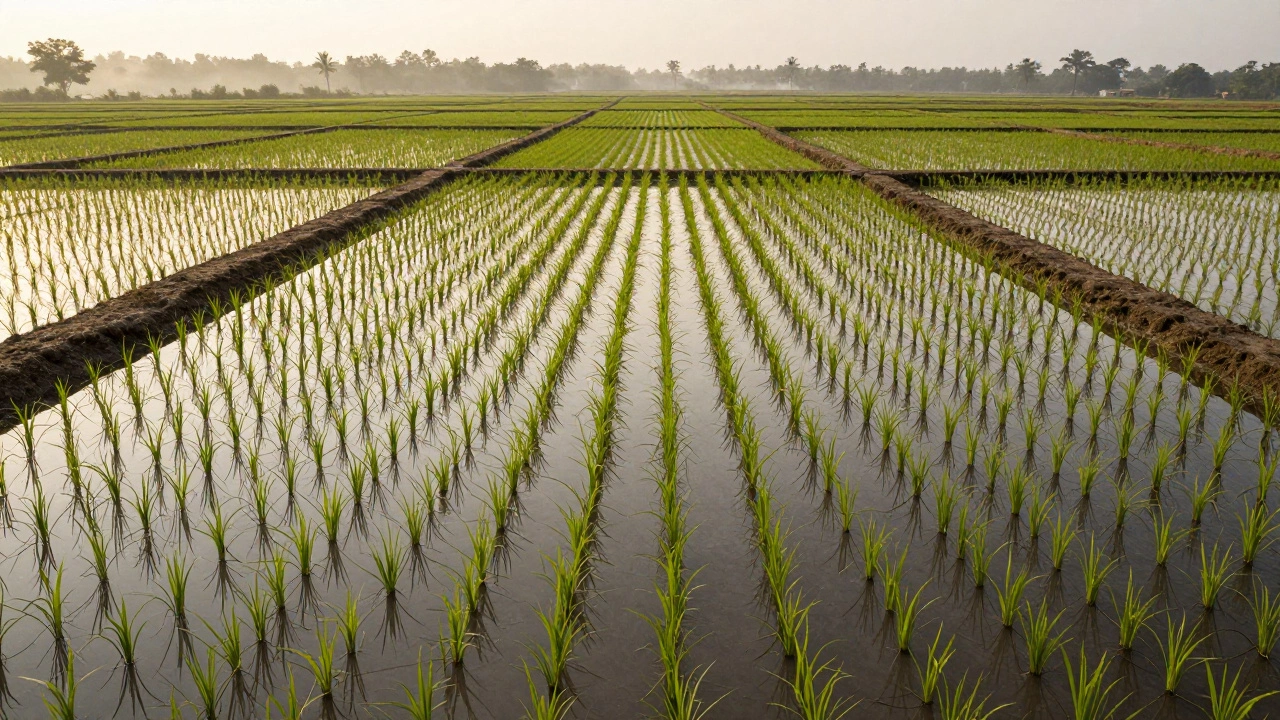
You don't just "water" rice; you manage a hydraulic system. The traditional paddy field is not just a patch of mud; it is a precision-engineered basin. The goal is to keep a consistent layer of water-usually between 5 and 10 centimeters-across the entire surface.
Why so much water? It's not actually for the rice to drink. The water acts as a natural herbicide. Most weed species cannot survive in standing water, but rice can. If the water level drops by just a few centimeters, dormant weed seeds in the mud wake up and can quickly choke out the young rice plants. Managing this requires a constant watch on irrigation gates and levees. In many parts of the world, this is still done by hand, meaning farmers spend hours every day adjusting small mud walls to ensure the water doesn't flow unevenly, which would lead to some plants drowning and others drying out.
| Crop | Water Requirement | Soil Condition | Primary Risk |
|---|---|---|---|
| Rice | Extremely High (Saturated) | Anaerobic/Waterlogged | Drought / Salinity |
| Wheat | Low to Moderate | Well-drained/Aerated | Root Rot/Excess Water |
| Maize (Corn) | Moderate | Loamy/Aerated | Waterlogging |
The Grueling Process of Transplanting
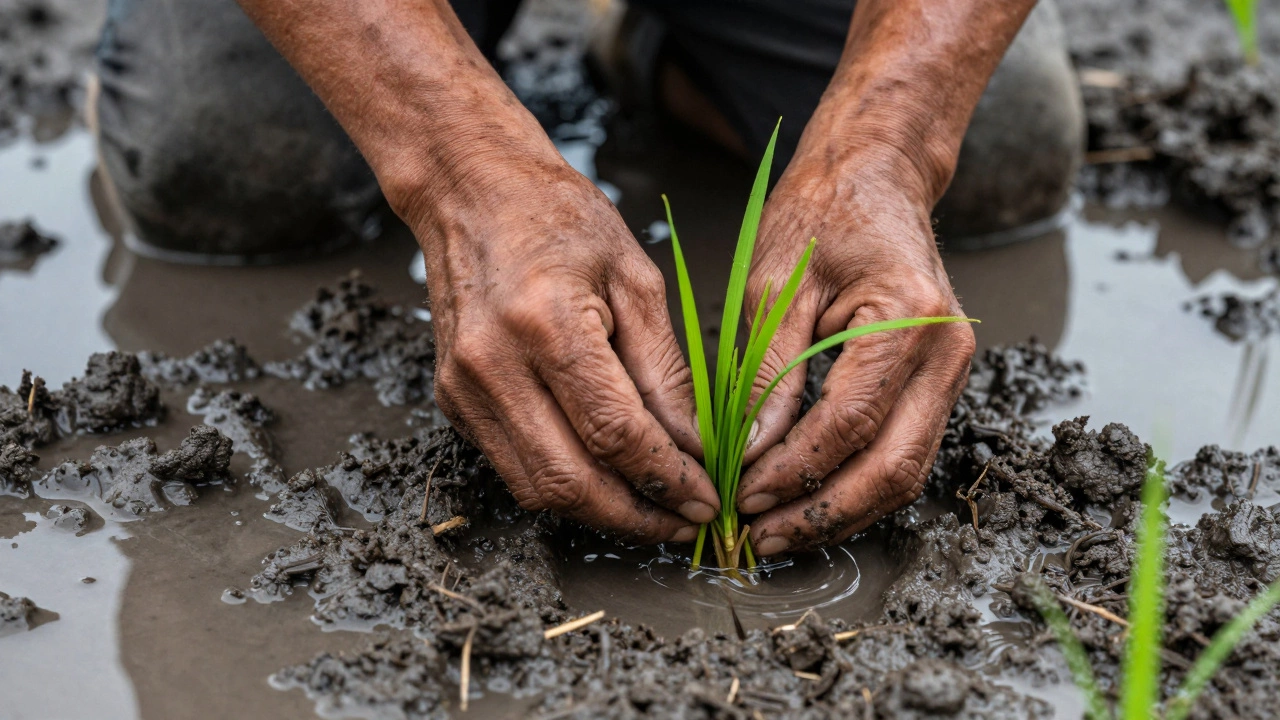
You might think you can just throw seeds into the mud and let them grow. While "direct seeding" exists, the most successful way to grow rice is through transplanting. This is a massive bottleneck in production. Farmers first grow seeds in a nursery bed, and once they reach a certain height, they are pulled out by hand and replanted into the flooded paddy.
This process is incredibly hard on the body. It involves bending over in knee-deep mud for ten to twelve hours a day. But there is a scientific reason for it: transplanting gives the rice a head start. By the time the seedlings are moved into the main field, they are strong enough to withstand the initial shock of the anaerobic environment and can outcompete the weeds that are trying to sprout. If you seed directly, you spend three times as much effort weeding the field manually, which is often more expensive than the labor of transplanting.
Pests and Pathogens in the Humidity
The same conditions that make rice grow-warmth, high humidity, and standing water-are exactly what fungi and bacteria love. One of the biggest nightmares for a rice grower is Rice Blast, a fungal disease caused by the pathogen Magnus oryzae. It can attack the leaves, the nodes, and even the panicle (the head of the rice), potentially destroying the entire crop in a matter of days.
Then there are the insects. The Brown Planthopper is a notorious pest that sucks the sap out of the plant and transmits viral diseases. Because the plants are grown so densely in a wet environment, these pests spread like wildfire. Managing this requires a delicate balance of organic controls and targeted pesticides, as over-spraying can kill the spiders and predatory beetles that naturally keep the planthoppers in check.
The Soil Nutrient Struggle
Growing rice in water changes how the plant eats. In a normal garden, nitrogen is readily available. In a flooded paddy, nitrogen is often lost to the atmosphere through a process called denitrification, where bacteria turn nitrates into nitrogen gas. This means rice is an incredibly "hungry" crop.
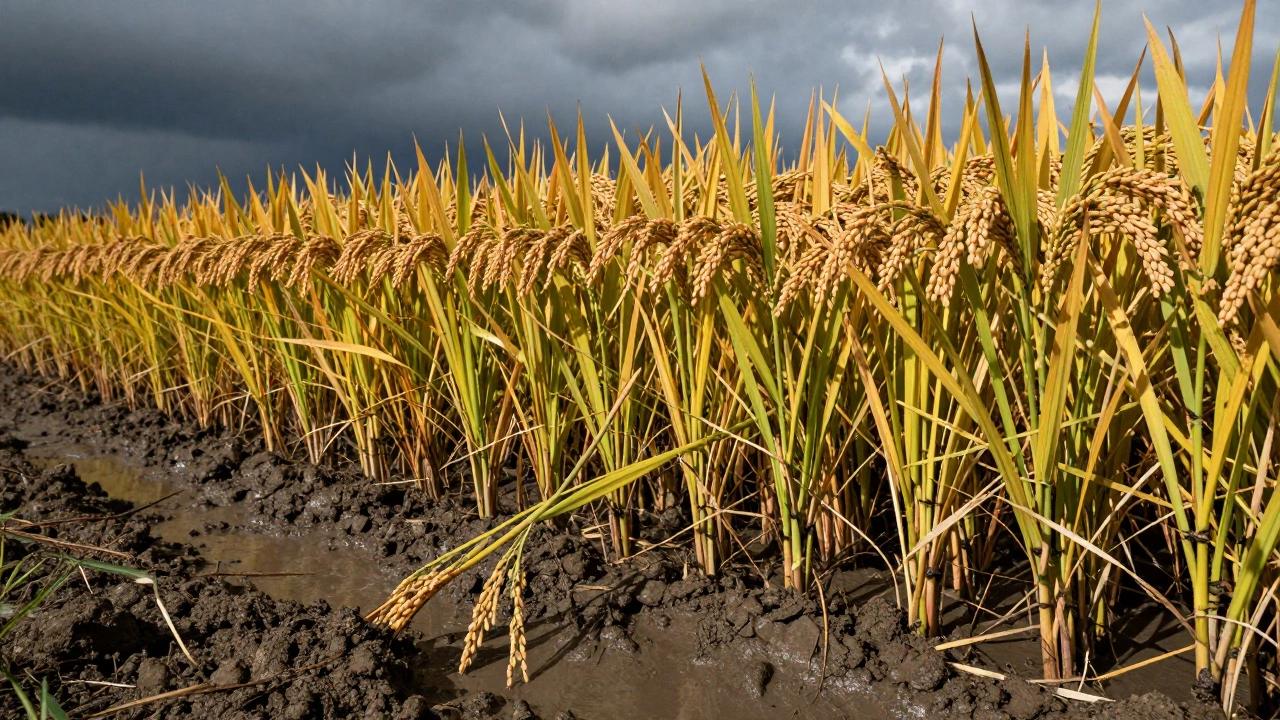
To keep yields high, farmers have to apply significant amounts of fertilizer, often using Urea. However, if you apply too much nitrogen, the plant grows too tall and thin, making it prone to "lodging"-which is when the plant literally falls over under the weight of the grain. Once the rice is lying in the mud, it's almost impossible to harvest and becomes a breeding ground for rot.
The Precision of the Harvest
Timing the harvest is a high-stakes gamble. If you harvest too early, the grains are chalky and break during milling. If you wait too long, the grains can sprout while still on the stalk or be eaten by birds. The transition from a flooded field to a dry field must be managed perfectly. Farmers must drain the paddies several weeks before harvest to allow the soil to harden enough to support the weight of harvesting machinery or people walking through the field.
If the soil remains too wet, the grains are contaminated with mud, and the drying process-which must happen quickly to prevent mold-becomes much more difficult. This means the grower isn't just a gardener; they have to be a water engineer, a chemist, and a meteorologist all at once.
Can I grow rice in a standard garden bed?
Not effectively. Standard garden beds drain too quickly. Rice needs standing water to suppress weeds and thrive. To grow it at home, you'll need a container with no drainage holes or a dedicated pond-like structure with a heavy clay base to keep the water from seeping into the ground.
Does all rice need to be grown in water?
No. There is such a thing as "upland rice" which is grown in drier soils. However, these varieties generally have lower yields and are more susceptible to pests and weeds than lowland paddy rice.
Why is rice so much harder to grow than wheat?
Wheat thrives in aerated soil and requires far less water. Rice's need for a flooded, anaerobic environment creates logistical challenges (irrigation systems) and biological challenges (fungal growth) that simply don't exist for wheat.
How does climate change affect rice growing?
Rice is very sensitive to temperature. A sudden drop in temperature during the flowering stage can cause sterility, meaning the plant grows but produces no grain. Additionally, rising sea levels are pushing saltwater into paddies, and most rice varieties cannot tolerate high salinity.
What is the biggest mistake beginners make when growing rice?
The most common error is failing to maintain a consistent water level. Many beginners let the soil dry out slightly, which allows weeds to take over. Once weeds establish themselves in a rice field, they are nearly impossible to remove without damaging the rice plants.
Next Steps for Aspiring Growers
If you are determined to try growing rice, start small. A large plastic tub or a repurposed livestock tank is your best bet for a controlled environment. Focus on choosing a variety that matches your local climate-short-grain varieties often handle cooler temperatures better than long-grain tropical types. Be prepared to spend more time managing the water than you do tending the plant itself. If you notice the leaves turning yellow, check your nitrogen levels, but be careful not to over-fertilize, or you'll end up with a field of fallen stalks.