Snake Plant Watering Calculator
Enter your balcony conditions to get the ideal watering schedule for your snake plant.
Your Watering Schedule
Care Tips
Water slowly until it drains from bottom. Empty saucer after 10 minutes.
If you’re setting up a balcony garden but don’t have time to water daily, prune weekly, or baby every leaf - you’re not alone. Most people want greenery that survives neglect, not a plant that demands constant attention. The truth? There’s one plant that stands out above all others for sheer toughness, beauty, and zero fuss: the snake plant.
Why Snake Plant Wins
Snake plant (Sansevieria trifasciata) doesn’t just tolerate neglect - it thrives on it. Left unwatered for six weeks? Fine. Placed in a corner with barely any light? Still green. Forgotten for months while you’re away? It’ll be waiting when you get back. This isn’t luck. It’s biology. Snake plants store water in their thick, upright leaves like little desert cacti. They evolved in arid regions of West Africa, where rain is rare and sunlight is harsh. That means they’ve got a built-in survival toolkit.
Unlike ferns that droop if you look at them wrong, or orchids that need humidity and misting, snake plants handle dry air, AC drafts, and even the occasional forgotten watering can. They grow slowly, so you won’t need to repot every year. They don’t attract pests. They don’t drop leaves randomly. And they clean the air - NASA studies show they remove toxins like formaldehyde and benzene, making them perfect for urban balconies near traffic or kitchens.
What You Need to Know Before You Buy
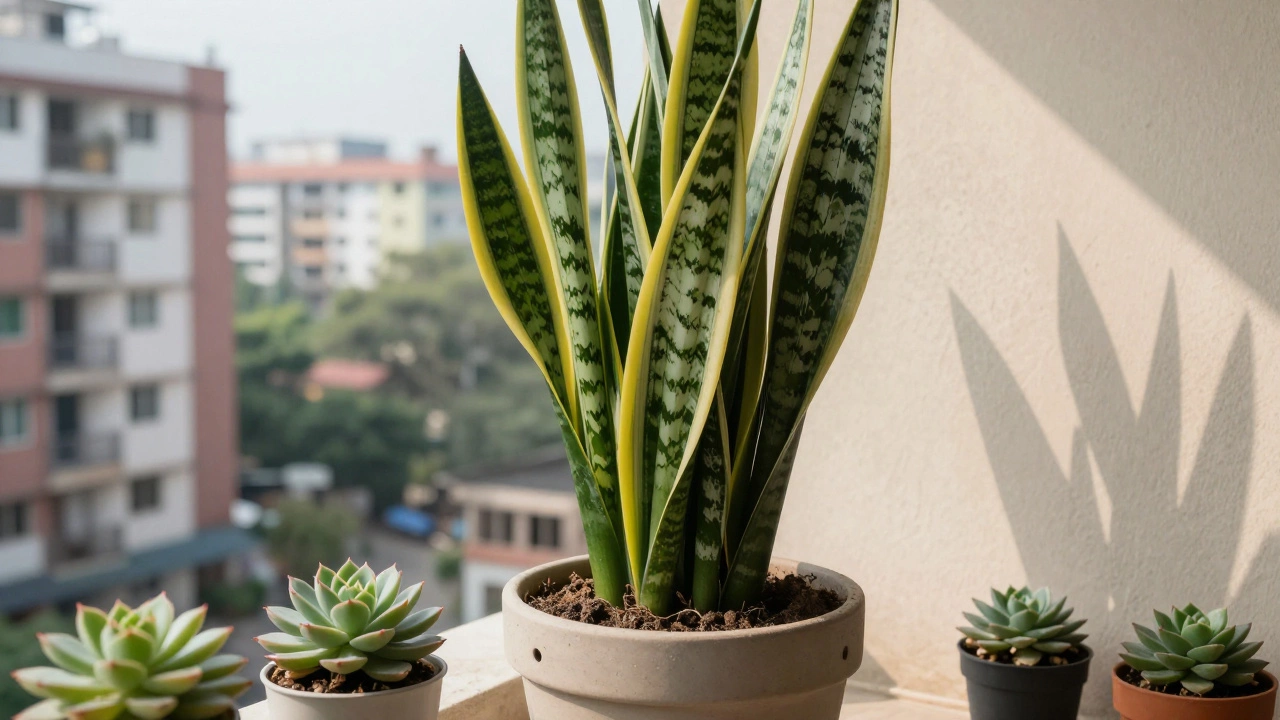
Not all snake plants are the same. The classic variety - with dark green bands and yellow edges - is the most common and easiest to find. But there are others: the compact Sansevieria cylindrica (cylindrical leaves, great for small spaces), or the variegated Sansevieria trifasciata 'Laurentii' with bold yellow stripes. All of them have the same low-maintenance superpowers.
You don’t need fancy soil. A standard potting mix with a little extra perlite or sand works fine. No need for fertilizer more than once or twice a year. Even then, it’s optional. A single watering every 4-6 weeks is enough in winter. In summer, you might stretch it to 8 weeks if your balcony is shaded. Stick your finger in the soil - if it’s dry an inch down, water. If not, wait.
Light? It doesn’t care. Direct sun? It’ll handle it. Full shade? It’ll grow slower but stay alive. The only thing it hates is soggy soil. Overwatering kills more snake plants than under-watering. If the leaves turn soft or yellow at the base, you’ve drowned it. Let the soil dry out completely before trying again.
Other Contenders (And Why They Lose)
People often ask about ZZ plants, pothos, or spider plants as alternatives. And yes - they’re all tough. But here’s the real comparison:
| Plant | Water Needs | Light Tolerance | Growth Speed | Common Problems |
|---|---|---|---|---|
| Snake Plant | Every 4-8 weeks | Low to bright indirect | Very slow | Overwatering only |
| ZZ Plant | Every 3-6 weeks | Low to bright | Slow | Root rot if overwatered |
| Pothos | Every 1-2 weeks | Low to bright | Fast | Leaf drop if dry too long |
| Spider Plant | Every 1-2 weeks | Bright indirect only | Medium | Brown tips from tap water |
ZZ plants are close - they’re almost as tough. But they grow slower and can get leggy in low light. Pothos is great for hanging baskets, but if you forget to water for two weeks, it drops leaves fast. Spider plants love humidity and hate chlorine in tap water - a big problem if you live in a city with hard water.
Snake plant? It doesn’t care about your water quality. It doesn’t mind heat or cold. It won’t get leggy. It won’t get dusty and need wiping. It doesn’t need to be rotated. It just… works.
How to Set It Up on Your Balcony
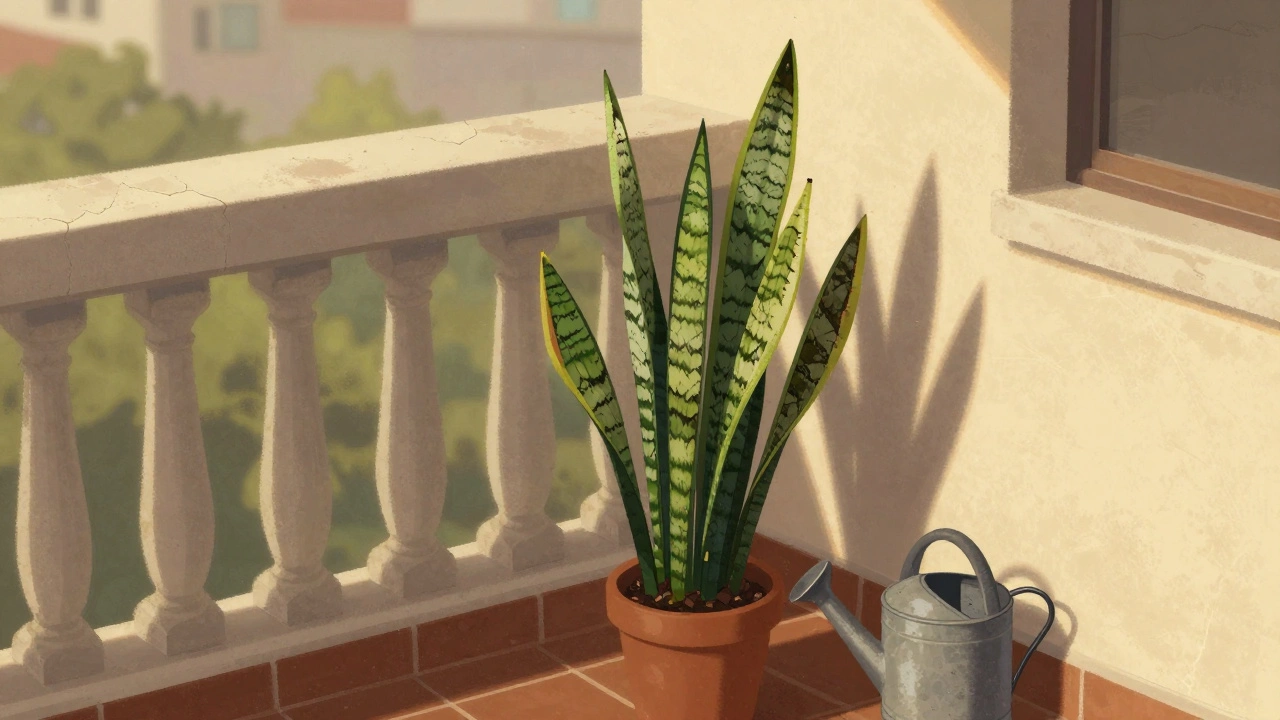
You don’t need a big planter. A 6-inch pot with drainage holes is enough. Use a ceramic or plastic pot - clay dries out too fast. Place it where it gets some indirect light, like near a railing or next to a potted herb. Avoid direct afternoon sun in summer - it can scorch the leaves. But morning sun? Perfect.
Stack a few pots of different heights for visual interest. Snake plants look sharp next to a small succulent or a trailing ivy. They’re architectural. They add structure. Even in winter, when other plants look dead, the snake plant stands tall.
One pro tip: don’t repot it unless the roots are bursting out the bottom. These plants like being root-bound. A new pot every 3-5 years is plenty. When you do repot, go up just one size - too big and the soil stays wet too long.
What About Flowering?
Snake plants can bloom. Rarely. When they do, it’s a tall spike with tiny white or greenish flowers. It usually happens after years of perfect care - or sometimes, after years of total neglect. It’s not why you grow it. You grow it for the leaves. For the resilience. For the fact that you can go on vacation and come back to a plant that still looks proud.
Real-World Proof
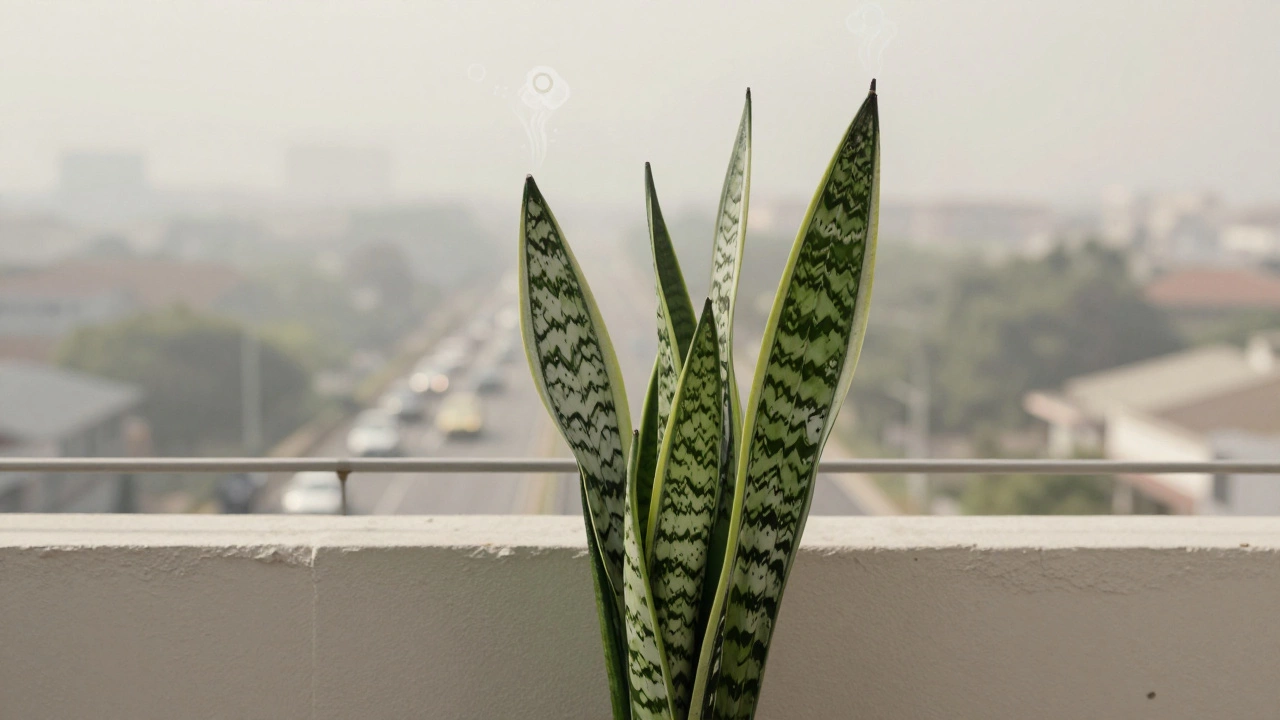
I’ve seen snake plants survive in offices with no windows. In apartments where people forgot they had them for 18 months. On balconies in Chicago winters and Phoenix summers. One reader sent me a photo last year - her snake plant had been on a fire escape for two years, through snow, wind, and heat waves. It was still green. Still upright. Still growing.
That’s not magic. It’s adaptation. And it’s why snake plants are the undisputed champion of low-maintenance balcony gardening.
What If You Still Kill It?
It’s possible. If your plant turns mushy, cut off the healthy parts and propagate them. Cut a leaf into 2-inch sections, let them dry for a day, then stick them upright in soil. New plants will grow from the base. It’s almost impossible to kill a snake plant this way.
Or just buy another. They’re cheap. A 4-inch pot costs under $10 at most garden centers. And if you’re still unsure? Start with two. Keep one as backup. You’ll be surprised how fast one turns into three.
Can snake plants survive direct sunlight on a balcony?
Yes, but not all day. Morning sun is fine - even beneficial. Harsh afternoon sun, especially in summer, can burn the leaves. If you notice brown spots or bleached patches, move it back a few feet or add a sheer curtain. Snake plants prefer bright, indirect light, but they’re more forgiving than most plants.
How often should I water my snake plant on a balcony?
In spring and summer, water every 4-6 weeks. In fall and winter, stretch it to 6-8 weeks. Always check the soil first - if it’s damp an inch down, wait. Use room-temperature water and pour slowly until it drains out the bottom. Empty the saucer after 10 minutes. Never let it sit in water.
Do snake plants attract bugs?
Rarely. They’re one of the least pest-prone plants you can grow. If you see spider mites or mealybugs, it’s usually because the plant is stressed - often from overwatering. Wipe the leaves with a damp cloth and let the soil dry out completely. You won’t need chemicals.
Is snake plant safe for pets?
No. Snake plants are toxic to cats and dogs if ingested. They can cause nausea, vomiting, or drooling. Keep them out of reach if you have curious pets. Many people place them on high shelves or hanging planters for this reason. It’s not deadly, but it’s not harmless either.
Can I grow snake plants with other plants on my balcony?
Yes, but be careful. Snake plants prefer drier soil than most plants. If you mix them with ferns or peace lilies that need regular water, you’ll overwater the snake plant. Stick with other drought-tolerant plants like succulents, ZZ plants, or aloe. Grouping plants with similar needs is the key to low-maintenance balcony gardens.
When you’re done reading this, go look at your balcony. Is there a corner that’s bare? A spot that gets a little sun but you’re too busy to care for anything? That’s where your snake plant belongs. One plant. One pot. One decision. And for years to come, it’ll be there - quiet, strong, and never asking for anything.