Vanda Orchid Seasonal Care Calculator
Your Conditions
Care Recommendations
If you’ve ever tried growing an orchid in India and ended up with a brown, shriveled mess, you’re not alone. Many gardeners think succulents or cacti are the hardest plants to keep alive. But in India’s wild mix of monsoons, scorching summers, and unpredictable winters, the real challenge isn’t drought-it’s balance. The Vanda orchid is the toughest plant to grow here, not because it’s delicate, but because it demands perfection in conditions most people can’t-or won’t-provide.
Why Vanda Orchids Break Gardeners
Vanda orchids don’t grow in soil. They’re epiphytes, meaning they cling to trees in their natural habitat, soaking up moisture from the air and rain. In India, that sounds ideal-until you realize how rarely the air stays just right. Too much humidity? Root rot sets in within days. Too dry? Leaves turn papery and drop. The sweet spot is 60-80% humidity, but most Indian homes hover between 30% in winter and 95% during monsoon. No middle ground.Temperature swings kill them too. Vandas need consistent warmth: 22-30°C during the day, no lower than 18°C at night. In Delhi, winter nights dip below 10°C. In Bangalore, summer heat spikes past 38°C. Neither works. Even a single cold snap can collapse the entire root system. Most people think they’re just ‘not good with plants.’ Really, they’re just fighting a plant that refuses to compromise.
What Most Gardeners Get Wrong
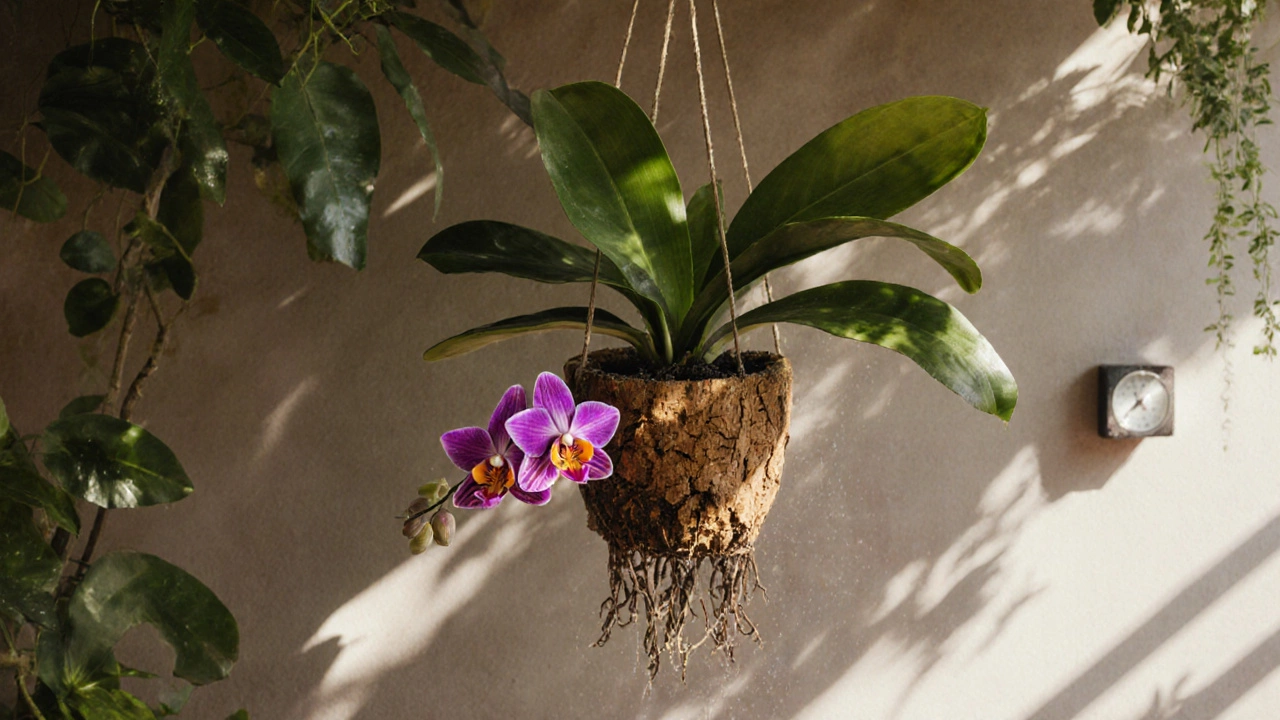
People treat Vandas like regular houseplants. They pot them in regular soil. They water them every few days. They put them on a windowsill that gets direct afternoon sun. All wrong.Vandas need bare roots. That means mounting them on cork bark, tree fern plaques, or hanging baskets with zero soil. If you bury the roots, they suffocate. Watering? Mist them three times a day in summer. In winter, once every 48 hours-maybe less. Overwatering is the #1 killer. And light? They want bright, filtered sun. Not direct rays. Not shade. Filtered. That means a sheer curtain, a north-facing balcony, or a shaded terrace with dappled light.
Even fertilizer is a minefield. Use a balanced orchid feed (20-20-20) every two weeks during active growth (March-October). But skip it in November-February. Too much nitrogen? Yellow leaves. Too little? No blooms. And don’t use tap water. Chlorine and minerals build up fast. Rainwater or distilled water is non-negotiable.
Real-Life Failures in Indian Cities
In Mumbai, a gardener in Bandra kept her Vanda on a balcony with ocean breeze. Perfect, right? Wrong. Salt spray coated the roots. Within six weeks, the roots turned black. She thought it was mold. It was salt poisoning.In Pune, a couple bought a Vanda from a nursery, potted it in cocopeat, and placed it near their AC unit. The cold air dried the roots out. The plant went dormant, then died. They didn’t realize ACs dry the air faster than any desert.
In Hyderabad, someone hung their Vanda outside under a neem tree. The shade was perfect. But the tree dropped leaves constantly. The debris trapped moisture against the roots. Fungal rot took over in three weeks.
These aren’t rare cases. They’re the norm. Vandas don’t fail because they’re weak. They fail because they’re precise. Most gardeners want a plant that adapts. Vandas don’t adapt. They either thrive or they don’t.
Who Can Actually Grow Them?
You can grow Vanda orchids in India-but only if you’re willing to build a mini-ecosystem. That means:- A shaded terrace or glasshouse with airflow
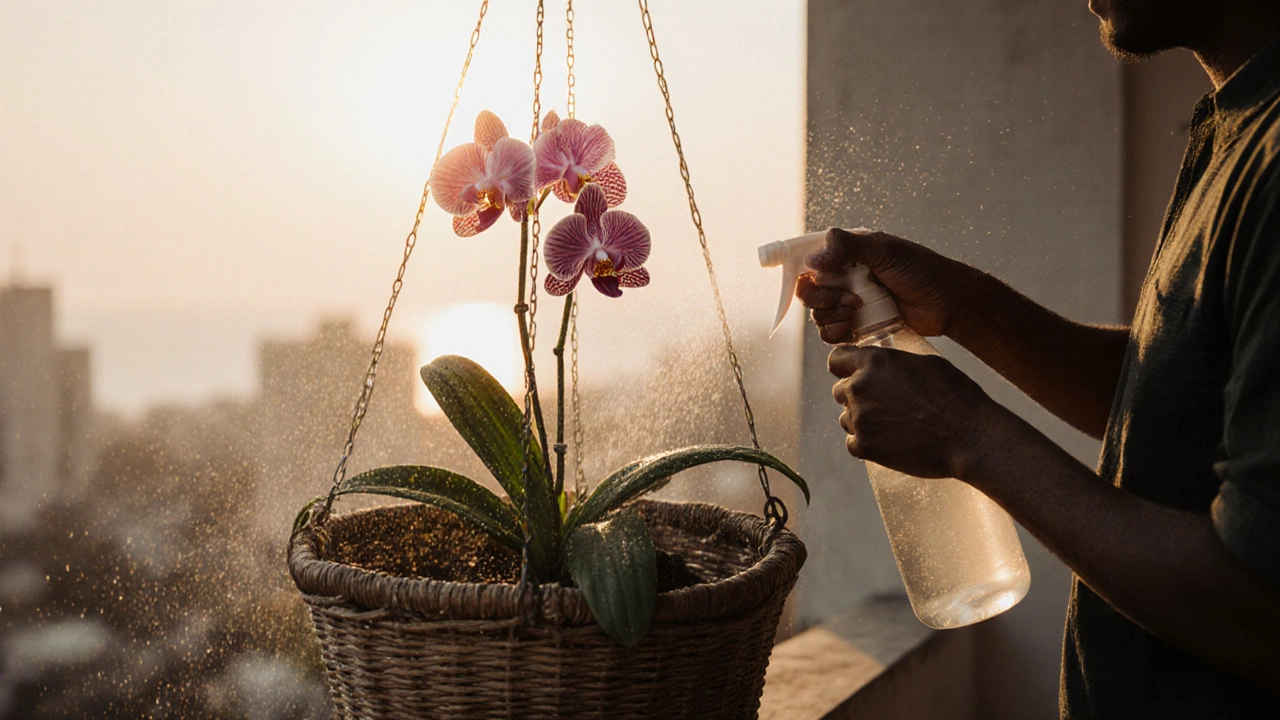
- A misting system or daily manual spraying
- Mounting on a wooden slab or hanging basket with zero soil
- Monitoring humidity with a cheap digital hygrometer
- Using only rainwater or reverse osmosis water
- Feeding only during active growth months
It’s not impossible. But it’s not casual. You need to treat it like a pet that needs feeding, bathing, and climate control. Most people give up after three months. The ones who stick with it? They’re the ones who start tracking weather patterns, adjusting misting schedules by season, and buying a small hygrometer for ₹400 from Amazon.
Alternatives That Are Easier (But Still Challenging)
If Vanda feels like too much, try these Indian-friendly orchids:- Dendrobium - Handles heat better, tolerates occasional dry spells
- Phalaenopsis - Grows in pots, needs less misting, blooms longer
- Cymbidium - Cool-tolerant, great for hill stations like Ooty or Darjeeling
None of these are easy, but they’re forgiving. Dendrobiums can survive a week without water. Phalaenopsis will bloom even under fluorescent lights. Cymbidiums laugh at 12°C nights. Vandas? They’ll just die.
What Happens When You Get It Right?
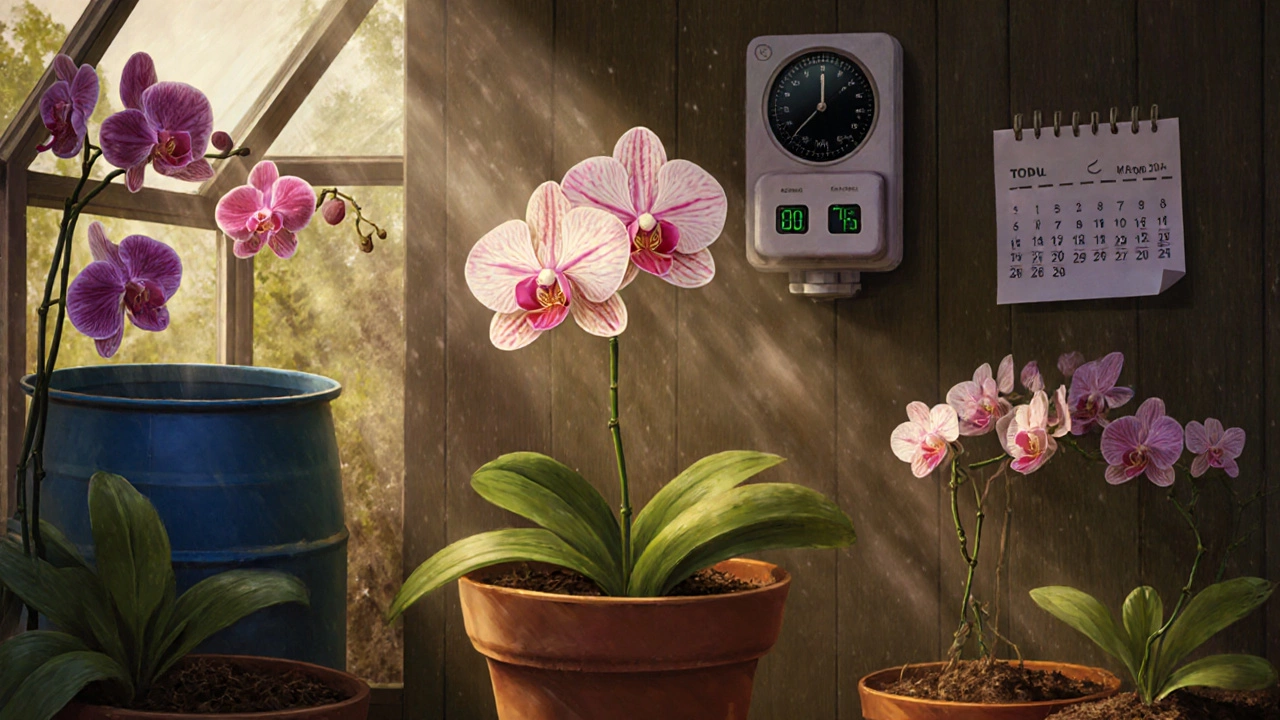
When you nail it, Vandas reward you like no other plant. Their flowers can last up to 10 weeks. Colors? Electric blue, deep purple, fiery orange. Some bloom twice a year. A single spike can carry 15-20 blooms, each the size of your palm.In Chennai, a retired teacher grew a Vanda that bloomed every March and October for 12 years. She never used fertilizer. Just rainwater, a shaded corner, and daily misting. Her neighbors would come by just to see it. She didn’t post it online. She didn’t sell it. She just enjoyed it.
That’s the secret. Vandas aren’t about winning. They’re about patience. About watching the air. About learning when to water and when to wait. They’re not for everyone. But for those who listen? They’re unforgettable.
Seasonal Guide for Vanda Care in India
| Season | Temperature Range | Watering Frequency | Light Needs | Fertilizer |
|---|---|---|---|---|
| Summer (March-June) | 28-38°C | Every 1-2 days | Filtered, morning sun only | Every 7-10 days |
| Monsoon (July-September) | 24-32°C | Every 3-4 days (reduce if humid) | Shaded, high airflow | Every 14 days |
| Winter (October-February) | 15-26°C | Every 4-7 days | Full filtered light | None |
Stick to this, and you’re already ahead of 90% of growers.
Can Vanda orchids survive in Indian homes without a greenhouse?
Yes, but only if you create a microclimate. Hang them on a shaded balcony with good airflow. Use a tray with pebbles and water to boost humidity. Mist three times daily in summer. Avoid placing them near ACs, fans, or open windows where drafts hit. A simple humidity tray and daily misting can replace a greenhouse for most urban growers.
Why do Vanda orchid roots turn black?
Black roots mean rot-usually from overwatering, poor airflow, or using tap water with chlorine and minerals. Vandas need to dry out between waterings. If roots stay wet for more than 24 hours, they start to decay. Always use rainwater or RO water. Check roots weekly: healthy roots are silvery-green when dry, bright green when wet.
Do Vanda orchids bloom every year?
Yes, if cared for properly. Most Vandas bloom twice a year-once in spring and once in autumn. But they need consistent light, humidity, and a winter rest period without fertilizer. If your plant doesn’t bloom, it’s likely getting too much water, too little light, or wrong temperatures. Don’t rush it. Let it rest in winter. Blooms follow patience.
Is tap water safe for Vanda orchids in India?
No. Tap water in most Indian cities contains chlorine, fluoride, and high mineral content. These build up on roots and cause toxicity. Always use rainwater, distilled water, or reverse osmosis water. If you must use tap water, let it sit uncovered for 24 hours to let chlorine evaporate-but that still won’t remove minerals. Rainwater is the only truly safe option.
Where can I buy healthy Vanda orchids in India?
Avoid general nurseries. Look for specialized orchid growers in Bangalore, Pune, or Coimbatore. Online platforms like Orchid Paradise (Bangalore) or Orchid Haven (Delhi) ship healthy, mounted Vandas with care instructions. Ask if the plant is mounted on cork bark with bare roots. Avoid anything potted in soil. Healthy Vandas have firm, silvery roots and no yellowing leaves.
If you’re serious about growing Vanda orchids, start small. Buy one plant. Learn its rhythm. Track the weather. Adjust your watering. Don’t rush. This isn’t a plant you conquer. It’s one you learn to live with.