Balcony Hydrangea Suitability Calculator
Let's see if your balcony is suitable for hydrangeas
Hydrangeas can thrive on balconies if you match the plant to your conditions. This calculator will help you determine if your balcony is a good match based on key factors.
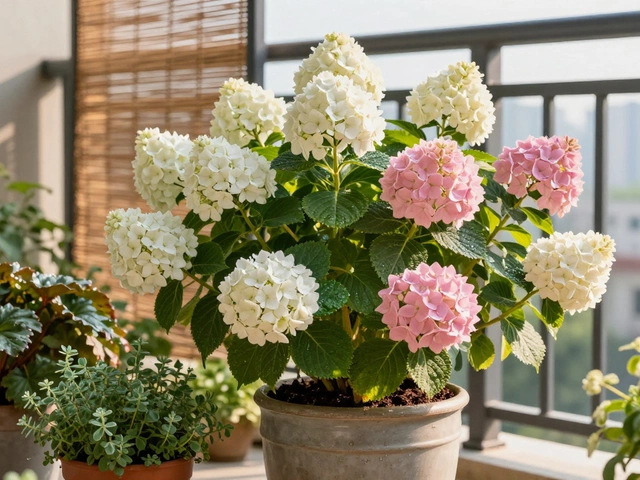
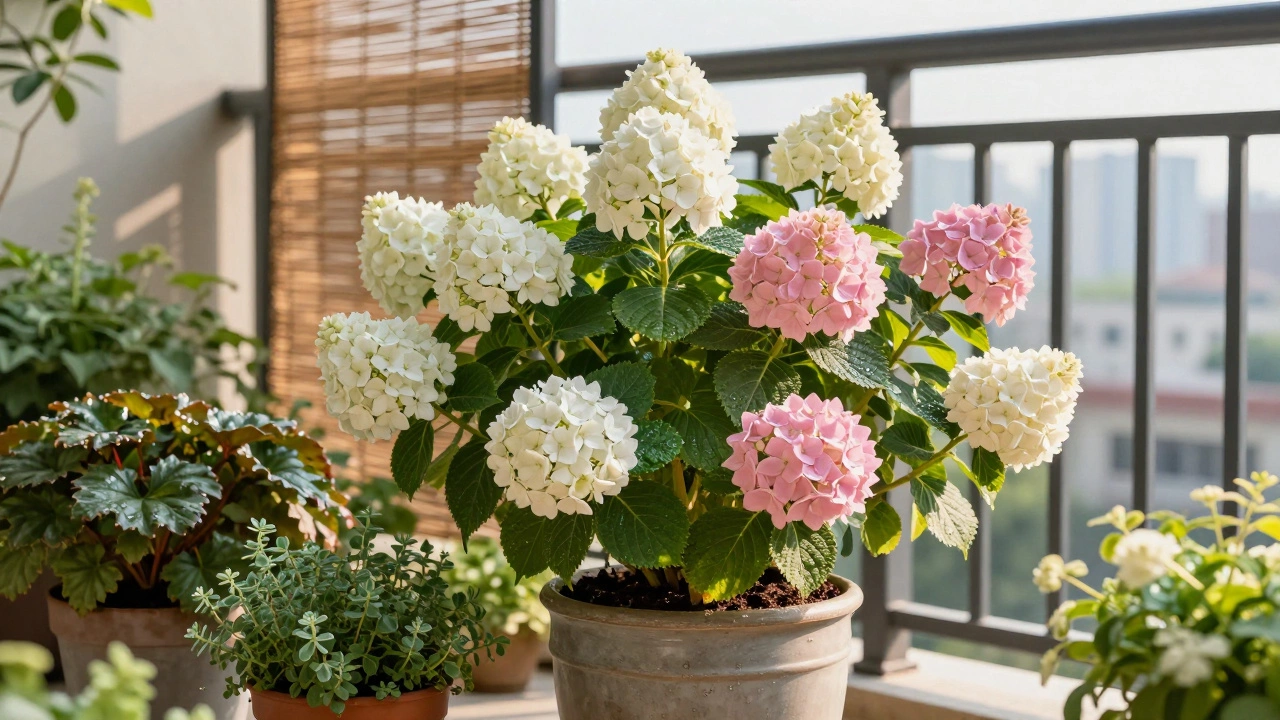
Hydrangeas look stunning with their big, fluffy blooms, but can they actually thrive on a balcony? If you’re thinking of adding one to your outdoor space, the answer isn’t just yes or no-it’s hydrangeas can work, but only if you match the plant to your balcony’s conditions. Many people assume hydrangeas need a big yard, but that’s not true. With the right setup, they can be one of the most rewarding flowering plants for a balcony garden.
What Hydrangeas Need to Survive on a Balcony
Hydrangeas aren’t picky about being in containers-they’ve been grown in pots for over a century. But they do have non-negotiable needs. First, they require consistent moisture. A balcony, especially one facing south or west, can dry out fast. Wind and sun exposure turn pots into mini ovens. A hydrangea in a small container on a hot balcony will need watering every day in summer, sometimes twice. If you forget a day, the leaves will droop and the blooms may brown before they even open.
Second, they need good drainage. Never use a pot without holes. Even the prettiest ceramic planter will kill a hydrangea if water sits at the bottom. Use a pot that’s at least 16 inches wide and deep. That gives roots room to spread and holds enough soil to retain moisture between waterings.
Third, they need the right soil. Regular garden dirt is too heavy for containers. Use a high-quality potting mix labeled for container plants. Add a handful of perlite or coarse sand to improve drainage. Avoid mixes with added fertilizer-hydrangeas are sensitive to too much nitrogen early on.
Which Hydrangea Varieties Work Best on Balconies
Not all hydrangeas are created equal for small spaces. Some grow 8 feet tall. Others stay under 3 feet. For balconies, stick to compact types:
- Panicle hydrangeas (Hydrangea paniculata) like 'Little Lime' or 'Bobo' are your best bet. They bloom on new wood, so they’re forgiving if winter kills back the stems. 'Bobo' stays under 3 feet and produces tons of cone-shaped white-to-pink flowers.
- Smooth hydrangeas (Hydrangea arborescens) like 'Annabelle' or 'Incrediball' are also great. They grow bushy and full, with large white blooms. 'Incrediball' has stronger stems that don’t flop under rain.
- Miniature mopheads like 'Cityline Paris' or 'Tiny Tuff Stuff' are bred specifically for containers. They stay under 2 feet and bloom all summer.
Avoid big-leaf hydrangeas (Hydrangea macrophylla) unless you live in a mild climate and have a sheltered, north-facing balcony. They bloom on old wood, so if winter freezes the stems, you get no flowers. Plus, they need acidic soil to turn blue-which is hard to maintain in pots.
Light and Location Matter More Than You Think
Hydrangeas on balconies need morning sun and afternoon shade. That’s the golden rule. A balcony facing east is ideal-it gets 4-6 hours of gentle sun and stays cool in the heat of the day. A west-facing balcony can work if you have a shade cloth or a tall plant nearby to block the late afternoon sun. South-facing balconies are risky unless you can provide shade for at least half the day.
If your balcony gets full sun all day, your hydrangea will struggle. Leaves will scorch, blooms will fade fast, and the plant will use up all its energy just surviving. In that case, consider alternatives like lavender, geraniums, or dwarf roses. But if you have even a little shade, hydrangeas can surprise you with how much they bloom.

Winter Care Is Non-Negotiable
Hydrangeas in pots are more vulnerable to cold than those in the ground. Roots freeze faster. If you live in USDA zones 5 or colder, you can’t leave your hydrangea outside all winter. Move it to a garage, shed, or unheated porch where temperatures stay above freezing. Don’t bring it into a warm house-that tricks it into breaking dormancy too early.
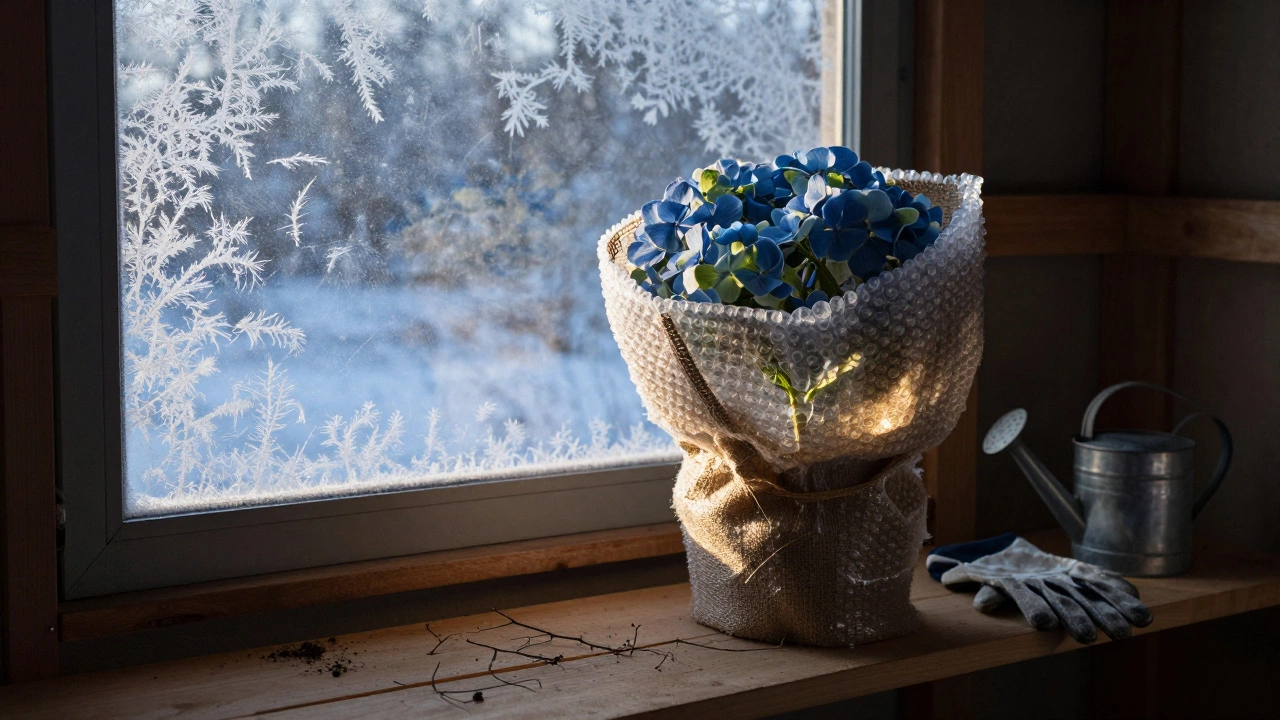
Wrap the pot in burlap or bubble wrap to insulate the roots. Water it once a month if the soil dries out completely. In early spring, bring it back outside after the last frost. Prune dead wood, and you’ll be rewarded with new growth.
If you’re in zones 6-9, you can leave the pot outside. Mulch the top of the soil with 2-3 inches of shredded leaves or bark. That keeps the roots cool in summer and insulated in winter.
How to Keep Hydrangeas Blooming All Season
Hydrangeas bloom on new growth, so they’ll keep flowering if you deadhead them. Once a bloom fades, cut it off just above the first set of healthy leaves. This encourages new buds. Don’t cut into old wood unless you’re pruning for shape.
Feed them lightly in early spring and midsummer with a balanced fertilizer-10-10-10 or something made for flowering shrubs. Too much nitrogen gives you leaves, not flowers. A slow-release granular fertilizer works better than liquid. Just sprinkle it on the soil surface and water it in.
For blue flowers, lower the soil pH with aluminum sulfate or coffee grounds. But don’t overdo it. One cup of coffee grounds per month is enough. Too much acid burns the roots. For pink flowers, add garden lime to raise the pH. Most people don’t need to tweak color-just enjoy the natural blooms.
Common Mistakes to Avoid
- Using a pot that’s too small-under 12 inches leads to root crowding and stunted growth.
- Watering from the top only-soak the soil until water runs out the bottom. Let it dry slightly before watering again.
- Putting them in full sun-even sun-loving hydrangeas need a break from hot afternoon rays.
- Pruning in fall-cutting back too hard removes next year’s buds. Only prune in early spring.
- Ignoring pests-aphids and spider mites love hydrangeas. Spray with insecticidal soap if you see sticky leaves or webbing.
What to Plant Alongside Hydrangeas on a Balcony
Hydrangeas look best with plants that match their needs. Pair them with:
- Heuchera (coral bells)-for colorful foliage that thrives in shade.
- Hostas-if your balcony is shady, they’ll fill in the space nicely.
- Creeping thyme or ivy-as ground covers around the base to retain moisture.
- Dwarf conifers-for structure and year-round green.
Avoid tall, aggressive plants like bamboo or ornamental grasses. They’ll steal water and light. Stick to companions that like similar soil and moisture levels.
Final Verdict: Are Hydrangeas Worth It on a Balcony?
Yes-if you’re willing to give them the right pot, the right spot, and consistent water. They’re not low-maintenance, but they’re not impossible either. If you’ve ever wanted to turn your balcony into a floral oasis, hydrangeas can be the star. They bloom longer than most shrubs, attract pollinators, and look luxurious without needing a yard.
Start with a 'Bobo' or 'Tiny Tuff Stuff' hydrangea in a 16-inch pot. Place it where it gets morning sun. Water daily in summer. Protect it in winter. And in a few months, you’ll have a balcony that looks like it belongs in a garden magazine.
Can hydrangeas grow in small pots?
Yes, but only if the pot is at least 16 inches wide and deep. Smaller pots dry out too fast and restrict root growth. Dwarf varieties like 'Tiny Tuff Stuff' or 'Cityline Paris' are bred for containers and stay under 2 feet tall.
How often should I water hydrangeas on a balcony?
In warm weather, water daily. In cooler months, check the soil every 2-3 days. Stick your finger 2 inches into the soil-if it’s dry, water until it drains from the bottom. Never let the soil dry out completely, but don’t let it sit soggy either.
Do hydrangeas need full sun on a balcony?
No. They need morning sun and afternoon shade. Full sun, especially on a south- or west-facing balcony, will burn the leaves and cause blooms to fade quickly. East-facing balconies are ideal.
Why are my hydrangea leaves turning brown?
Brown leaf edges usually mean underwatering or too much sun. Check if the soil is dry. If it is, water deeply. If the plant is in full sun, move it to a spot with afternoon shade. Wind can also dry out leaves-use a windbreak if needed.
Can I leave my hydrangea outside in winter?
Only if you’re in USDA zone 6 or warmer. In colder zones, move the pot to a garage or unheated porch where it won’t freeze. Wrap the pot in burlap to protect the roots. Water once a month if the soil dries out.
Do hydrangeas attract bees and butterflies?
Yes. Their large, nectar-rich blooms are popular with bees, hoverflies, and butterflies. Panicle and smooth hydrangeas are especially good for pollinators. Avoid using pesticides if you want to keep them coming back.
Next Steps for Your Balcony Hydrangea
Start by picking the right variety-go with 'Bobo' or 'Tiny Tuff Stuff' if you’re new to this. Buy a pot that’s at least 16 inches across. Fill it with quality potting mix. Plant it in early spring or fall. Water daily when it’s warm. Watch for pests. And don’t prune in fall. Come next summer, you’ll have blooms that make your neighbors ask where you bought them.
Hydrangeas on balconies aren’t just possible-they’re a game-changer for urban gardeners who want big, bold color without a yard. Just treat them like the thirsty, sun-sensitive plants they are, and they’ll reward you with months of beauty.