Kitchen Garden Compatibility Checker
Recommended Plants For You:
Ever walked into your kitchen and realized you’re out of fresh basil just as you’re about to cook? It happens to the best of us. The distance between the supermarket shelf and your plate is often too long, leaving those vibrant greens wilted and flavorless by the time they reach your hands. A kitchen garden solves this problem instantly. It turns your most-used room into a living pantry where you can snap off fresh ingredients seconds before they hit the pan.
You don’t need a sprawling backyard or a green thumb to make this work. Whether you have a sunny windowsill in Manchester or a bright corner in a high-rise apartment, there are specific plants that thrive in these conditions while providing maximum culinary value. This guide breaks down exactly which plants belong in your kitchen space, why they work, and how to keep them alive without turning your countertop into a graveyard of brown stems.
The Holy Trinity of Kitchen Herbs
When starting a kitchen garden, herb choices dictate your success rate. Not all herbs are created equal when it comes to indoor environments. Some demand full-blown greenhouse conditions, while others bounce back from neglect with surprising resilience. We focus on three categories here: the heavy hitters that survive low light, the fast growers that reward patience, and the compact varieties that fit small spaces.
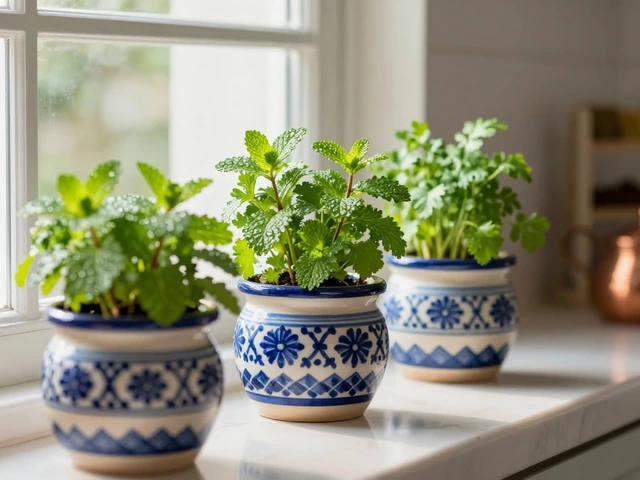
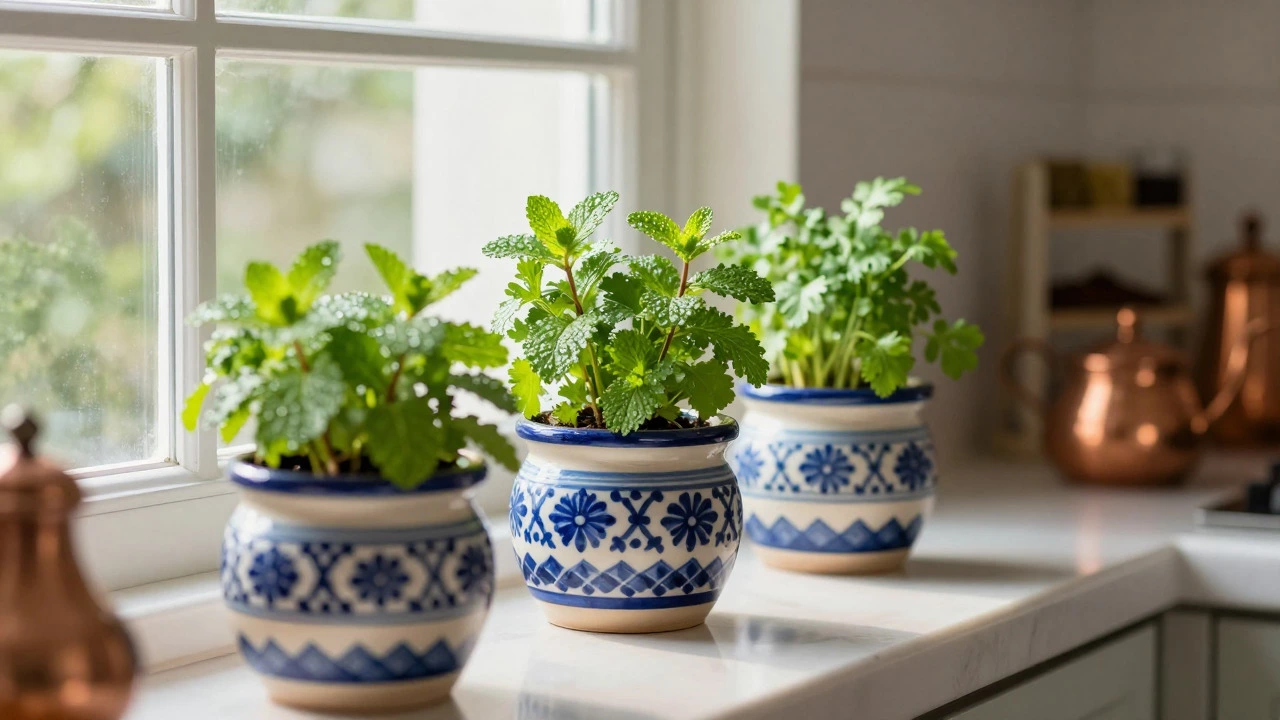
Cilantro (Coriander) is an annual herb with delicate leaves used extensively in Asian and Latin American cuisines. Unlike mint, cilantro bolts (goes to seed) quickly in heat, but indoors, you can control its lifecycle. It prefers cooler temperatures around 15-20°C. If your kitchen gets warm during summer afternoons, move the pot slightly away from direct sunbeams. Harvest outer leaves first to encourage bushier growth.
Parsley is a biennial herb available in flat-leaf and curly varieties, rich in vitamins K and C. Flat-leaf Italian parsley has a stronger flavor profile suitable for cooking, while curly parsley serves primarily as garnish. Parsley grows slowly initially but forms a dense rosette that yields continuously for months. It requires consistent moisture; let the top inch of soil dry out between waterings to prevent root rot.
Vegetables That Fit on Countertops
Herbs are great, but what if you want actual vegetables? You might think tomatoes and peppers require outdoor gardens, but dwarf and micro varieties have changed the game. These plants are bred specifically for container life, offering substantial harvests without demanding square footage.
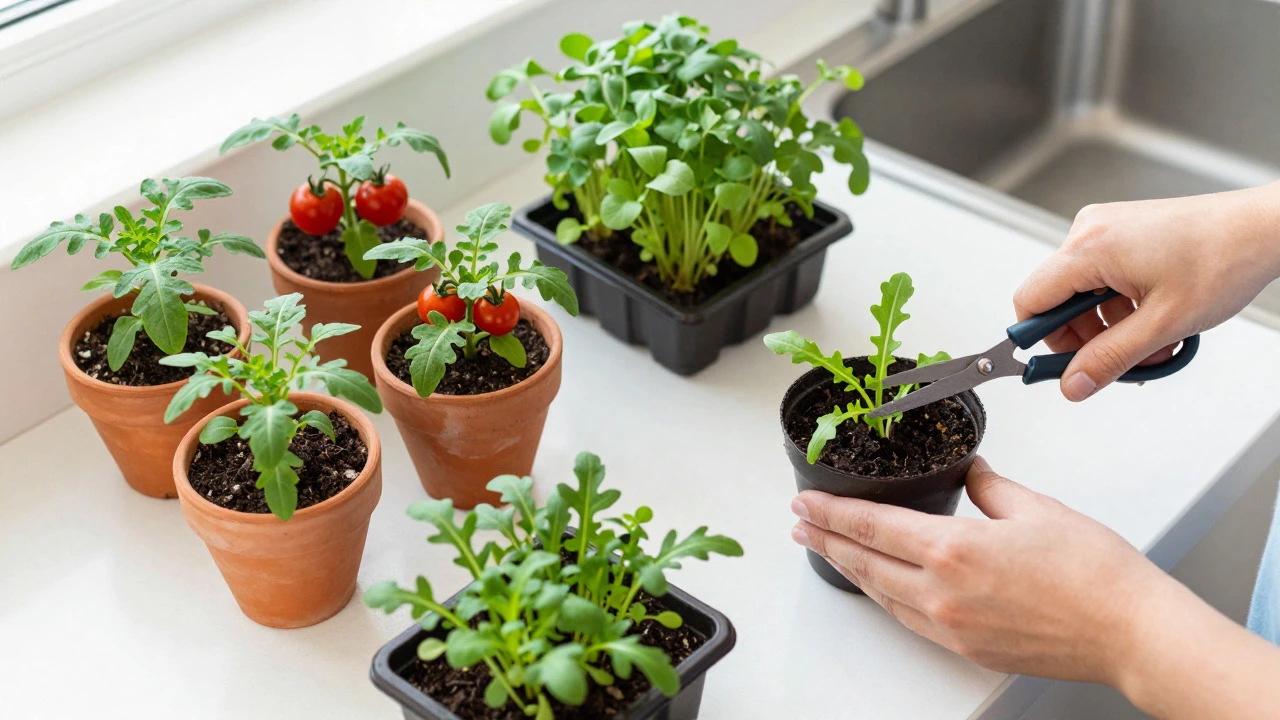
- Microgreens: These are not just salad toppings; they are nutritional powerhouses. Radish, pea shoot, and sunflower microgreens mature in 7-14 days. You only need a shallow tray, peat-free compost, and indirect light. They regenerate once or twice before needing replanting, making them incredibly efficient for daily use.
- Dwarf Tomatoes: Varieties like 'Tiny Tim' or 'Patio Princess' stay under 30cm tall. They produce cherry-sized fruits that ripen beautifully indoors if placed near a south-facing window. Remember, tomatoes are hungry eaters. Feed them with a liquid tomato fertilizer every two weeks to support fruit development.
- Leafy Greens: Spinach, arugula, and lettuce grow rapidly in deep pots. Use a "cut-and-come-again" method: snip leaves 2cm above the base, and the plant will push new growth within a week. This approach extends the harvest period significantly compared to pulling entire heads.
| Plant Type | Light Requirement | Water Frequency | Harvest Time | Space Needed |
|---|---|---|---|---|
| Microgreens | Indirect/Bright | Daily misting | 7-14 days | Small tray (10x10cm) |
| Dwarf Tomatoes | Direct Sun (6+ hrs) | Every 2-3 days | 60-80 days | Medium pot (20cm diameter) |
| Leafy Greens | Partial Shade | When topsoil dries | 3-4 weeks | Deep pot (15cm depth) |
| Chives | Full Sun to Partial | Moderate | Continuous | Small pot (10cm diameter) |
Light: The Non-Negotiable Factor
Plants photosynthesize using light energy. Without sufficient photons, even the hardiest succulent will stretch and die-a condition known as etiolation. In a typical UK kitchen, natural light varies drastically by season and orientation. Understanding your window’s direction is critical before buying any plant.
South-Facing Windows receive the most intense and longest duration of sunlight throughout the day. This is prime real estate for fruiting plants like dwarf tomatoes, peppers, and cucumbers. However, be cautious in summer; glass can magnify heat, scorching leaves. Rotate pots weekly to ensure even growth.
North-Facing Windows provide soft, indirect light with minimal intensity fluctuations. Ideal for leafy herbs like mint, parsley, and chives. Avoid placing sun-loving plants here unless you supplement with artificial lighting.
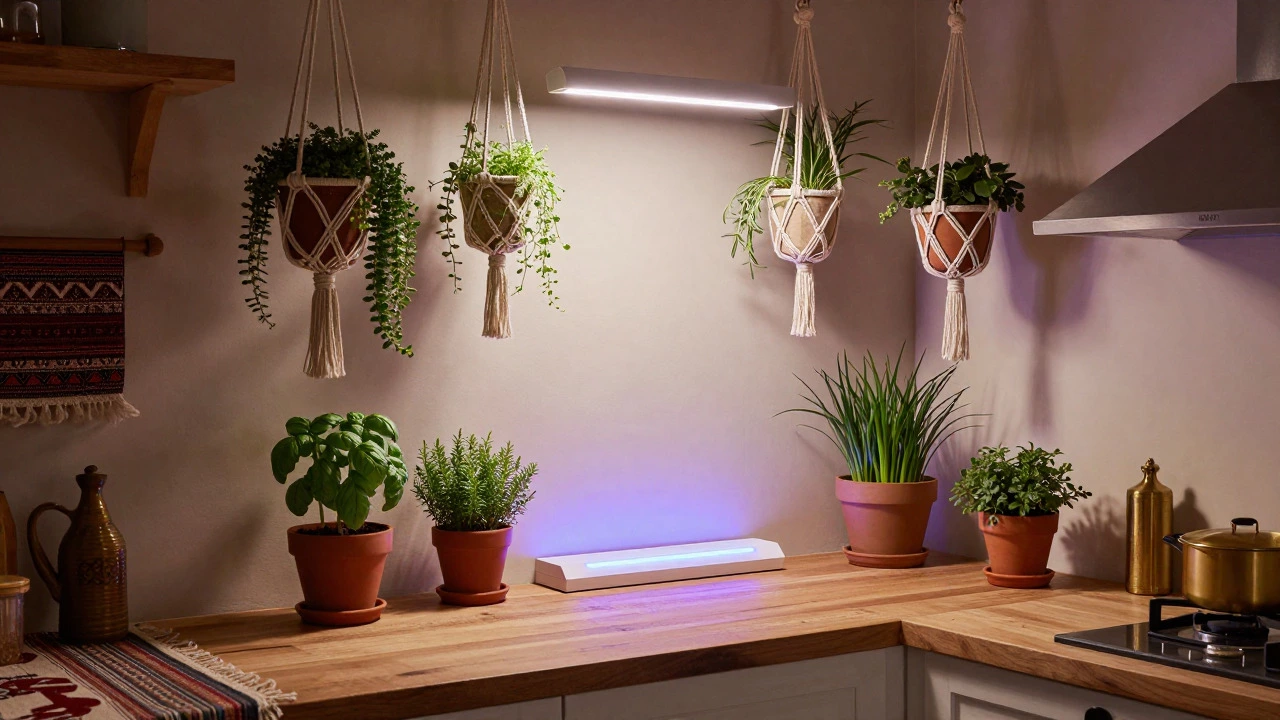
If your kitchen lacks adequate natural light, consider LED grow lights. Modern panels are slim, energy-efficient, and emit the blue-red spectrum plants crave. Place them 15-30cm above foliage and run them for 12-14 hours daily. This setup mimics spring conditions, triggering robust growth regardless of weather outside.
Potting Mix and Drainage Essentials
Using garden soil in indoor pots is a recipe for disaster. Outdoor earth compacts easily, suffocating roots and harboring pests. Instead, opt for a high-quality multi-purpose compost mixed with perlite or vermiculite. Perlite adds air pockets, improving oxygen flow to roots and preventing waterlogging.
Drainage holes are mandatory. Even self-watering pots must allow excess water to escape. Standing water breeds fungus gnats and causes root rot, which kills plants faster than drought. Line saucers with gravel to elevate pots slightly, ensuring bottom drainage isn’t blocked.
Fertilization needs differ indoors versus outdoors. Rain and wind naturally replenish nutrients in garden beds, but potted plants rely entirely on what you provide. Use a balanced liquid fertilizer diluted to half strength every four weeks during active growth (spring/summer). Reduce feeding in winter when metabolic rates slow down.
Troubleshooting Common Kitchen Garden Issues
Even experienced gardeners face setbacks. Identifying problems early saves plants and reduces frustration. Here are frequent issues and their solutions:
- Yellowing Leaves: Often indicates overwatering or nutrient deficiency. Check soil moisture; if soggy, reduce watering frequency. If dry, apply a general-purpose fertilizer.
- Leggy Growth: Stems become long and weak due to insufficient light. Move plants closer to windows or add grow lights. Pinch back tips to encourage branching.
- Pest Infestations: Aphids and whiteflies love tender indoor shoots. Wipe leaves with neem oil solution or introduce ladybugs if possible. Isolate affected plants immediately to stop spread.
- Dropping Buds: Common in flowering herbs like rosemary. Caused by temperature swings or humidity drops. Maintain stable room temperatures and group plants together to create a humid microclimate.
Designing an Aesthetic Yet Functional Space
A kitchen garden shouldn’t look chaotic. Integrating plants into your decor enhances usability and visual appeal. Vertical solutions maximize limited floor space. Magnetic spice racks can hold small herb pots, while hanging macramé planters free up counter space.
Group plants with similar care requirements together. Clustering thirsty herbs like basil and mint allows easier watering routines. Keep drought-tolerant species like oregano separate to avoid accidental overhydration. Label pots clearly-especially when seedlings look identical-to track individual needs.
Finally, embrace imperfection. Brown tips happen. Pests visit occasionally. These experiences teach valuable lessons about plant biology and environmental balance. Each failure refines your technique, leading to healthier harvests over time.
What is the easiest plant to grow in a kitchen?
Mint is widely considered the easiest plant for kitchen gardens. It tolerates lower light, recovers quickly from pruning, and grows vigorously in containers. Just ensure it has its own pot to prevent invasive spreading.
Can I grow tomatoes indoors?
Yes, but choose dwarf or patio varieties specifically bred for containers. Standard tomatoes require too much space and light. Position dwarf tomatoes near south-facing windows and supplement with LED grow lights if natural light is insufficient.
How often should I water kitchen garden plants?
There’s no fixed schedule. Check soil moisture by inserting your finger one inch deep. Water only when the top layer feels dry. Overwatering is more harmful than underwatering for most indoor herbs and vegetables.
Do kitchen plants need fertilizer?
Yes, because potting mix depletes nutrients over time. Apply a diluted liquid fertilizer every 4-6 weeks during spring and summer. Avoid fertilizing in winter when plant growth slows down.
What should I do if my herbs turn yellow?
Yellowing usually signals overwatering or poor drainage. Ensure pots have holes and aren’t sitting in standing water. If soil is dry, consider adding a balanced fertilizer. Adjust care based on whether the issue stems from excess or lack of resources.