Balcony Privacy Planner
Select your preferences below to get a personalized plant recommendation.
Your Recommended Privacy Screen
Pro Tip:
Loading tip...
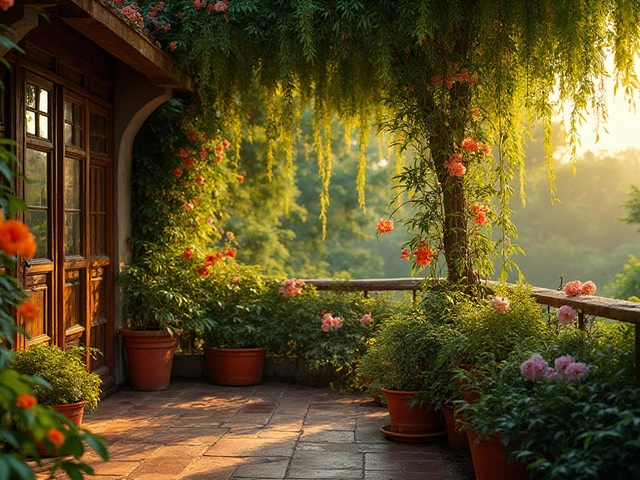
Living in a city often means trading space for convenience. You get the buzz of urban life, but you lose the quiet sanctuary of your own backyard. If your balcony feels like an extension of someone else’s living room, you’re not alone. The good news is that nature offers some of the best solutions for reclaiming your privacy without building permanent structures.
Creating a green screen isn’t just about blocking views; it’s about creating a psychological barrier that lets you relax. Whether you need instant cover or are willing to wait for a lush wall of foliage, there are specific plants designed to thrive in containers and provide dense coverage. This guide breaks down exactly what to plant, where to put it, and how to maintain your private oasis.
What is the fastest way to get privacy on a balcony?
The fastest method involves using large, mature specimens of bamboo or tall ornamental grasses. These plants can reach significant height quickly if purchased as established bushes rather than small seedlings. Alternatively, combining trellises with fast-growing climbers like ivy or clematis provides immediate vertical structure while the plants fill in over weeks.
The Best Fast-Growing Screeners
When you want results now, speed matters. Some plants shoot up vertically, creating a natural curtain that blocks sightlines from neighbors above or beside you. These varieties are ideal if you have a short timeline before summer gatherings or if you simply cannot stand feeling exposed any longer.
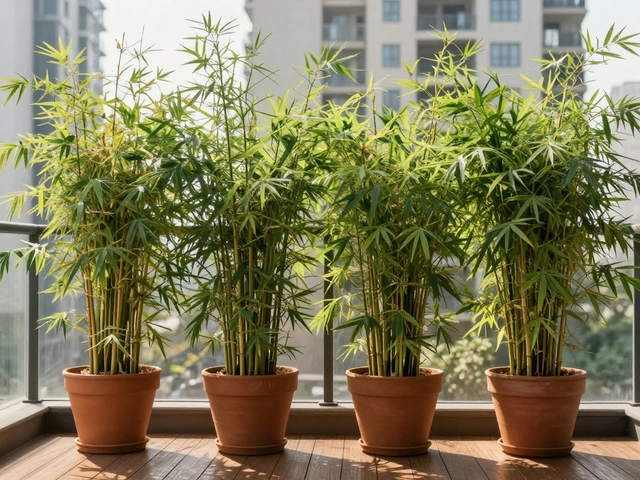
Bamboo is the gold standard for rapid vertical growth. Specifically, clumping varieties like Fargesia are perfect for containers because they don’t send out invasive runners like running bamboo does. In a large pot, a Fargesia can grow two to three feet in a single season. It looks elegant, stays evergreen in mild climates, and creates a solid visual barrier. Just ensure the pot has drainage holes, as bamboo hates sitting in waterlogged soil.
Another quick option is Ornamental Grasses, particularly tall varieties like Miscanthus or Panicum. These plants form dense clumps that sway in the wind, adding movement and sound to your space. They are low-maintenance and tolerate drought well once established. For maximum privacy, plant them in a row along the railing. Their height varies from four to eight feet depending on the species, allowing you to tailor the screen to your balcony’s proportions.
- Bamboo (Clumping): Grows 2-3 feet per year; evergreen; requires large pots.
- Miscanthus: Reaches 6-8 feet; deciduous; loves full sun.
- Pampas Grass: Dramatic plumes; grows 5-7 feet; needs strong wind protection.
Dense Shrubs for Year-Round Coverage
If you prefer something sturdier than grasses and more traditional than bamboo, shrubs are your best bet. These plants offer thickness and density that thin-stemmed grasses sometimes lack. They create a true "wall" effect, making it difficult for prying eyes to see through even when the leaves are sparse.
Boxwood is a classic choice for structured privacy. It grows slowly, which means less pruning, but it forms incredibly dense foliage. You can buy boxwoods in various sizes, so you can achieve instant privacy by purchasing larger specimens. Boxwoods are tough; they handle shade, pollution, and neglect better than most garden plants. However, they do require regular trimming to keep them neat and prevent them from becoming leggy.
For those in colder climates, Arborvitae (specifically dwarf varieties) is an excellent evergreen alternative. While full-sized arborvitae trees are too big for balconies, dwarf cultivars like 'Green Gem' stay compact yet grow upright. They provide greenery all winter long, ensuring your privacy doesn’t vanish when the snow falls. These trees prefer full sun but can tolerate partial shade.
| Plant Type | Growth Rate | Light Requirement | Maintenance Level |
|---|---|---|---|
| Boxwood | Slow | Shade to Full Sun | Medium (Pruning needed) |
| Dwarf Arborvitae | Medium | Full Sun | Low |
| Holly (Dwarf) | Slow | Partial Shade | Low |

Climbers for Vertical Screens
Not everyone has floor space for large pots. If your balcony is narrow, look up. Climbing plants allow you to utilize railings, walls, and trellises to create a vertical garden that acts as a privacy screen. This approach maximizes limited square footage while adding texture and color.
Ivy (Hedera helix) is one of the most effective ground-covering climbers. It spreads rapidly and creates a thick carpet of leaves that can be trained to climb walls or drape over railings. Ivy thrives in shade, making it perfect for north-facing balconies where other plants might struggle. Be cautious, though, as it can become invasive if it escapes its container. Keep it contained and trim it regularly to maintain control.
For a more colorful option, consider Clematis. This vine produces stunning flowers while providing decent coverage. Choose varieties that rebloom throughout the summer for continuous interest. Clematis needs support, so install a trellis or wire mesh along your railing. The roots prefer cool, shaded conditions, so place mulch around the base of the plant to keep the soil temperature down.
- Install a sturdy trellis or wire grid along the balcony railing.
- Plant the climber at the base of the support structure.
- Tie young stems loosely to the trellis to guide growth.
- Water consistently during the first growing season to establish roots.
- Prune after flowering to encourage bushier growth.

Container Selection and Soil Tips
The right plant won’t thrive in the wrong pot. Balcony gardening relies heavily on container selection because the pot dictates root space, moisture retention, and stability. Wind is a major factor on elevated spaces, so heavy, stable pots are safer than lightweight plastic ones that might tip over in a storm.
Choose pots that are at least 12-18 inches wide for shrubs and bamboos. Larger pots hold more soil, which retains moisture longer and provides better insulation for roots against temperature swings. Terracotta pots breathe well but dry out faster, while plastic or fiberglass pots retain moisture but may degrade under UV exposure. Self-watering containers are a game-changer for busy people, as they reduce the frequency of watering by storing excess water in a reservoir.
Soil quality is equally critical. Never use garden soil in containers; it compacts and drains poorly. Instead, use a high-quality potting mix amended with compost for nutrients and perlite for drainage. A good rule of thumb is to refresh the top inch of soil every spring to replenish lost nutrients.
Maintenance for Long-Lasting Privacy
A privacy screen is only useful if it stays healthy and dense. Neglect leads to gaps, yellowing leaves, and eventually, dead branches that ruin the aesthetic. Regular maintenance ensures your green wall remains a functional barrier and a beautiful feature.
Watering is the biggest challenge on balconies. Containers dry out faster than ground soil, especially in hot, windy weather. Check moisture levels by sticking your finger an inch into the soil; if it’s dry, water deeply until it runs out of the drainage holes. Mulching the surface of the soil helps retain moisture and reduces evaporation.
Fertilizing supports vigorous growth. Use a balanced, slow-release fertilizer in early spring to give plants a boost as they start new growth. Avoid over-fertilizing, which can burn roots and lead to weak, spindly growth. Pruning is essential for shape and density. Trim back leggy branches to encourage side shoots, which fill in gaps and make the screen thicker.
Can I grow privacy plants on a shady balcony?
Yes, several plants thrive in low light. Hostas, ferns, and ivy are excellent choices for shady balconies. While they may not grow as tall as sun-loving varieties, they create lush, dense foliage that effectively blocks views. Combine them with taller, shade-tolerant shrubs like Hydrangea for added height.
How much do privacy plants cost?
Costs vary widely. Small starter plants range from $10 to $20, while large, mature specimens can cost $50 to $100 each. Trellises and large pots add to the initial investment. However, compared to building a wooden fence or installing glass panels, plants are generally more affordable and add value through aesthetics and air purification.
Are bamboo plants invasive in pots?
Clumping bamboo is non-invasive and safe for containers. Running bamboo should never be planted in pots unless you are an expert gardener, as its rhizomes can crack ceramic pots. Stick to Fargesia or Sasa varieties for worry-free container gardening.
Do privacy plants attract pests?
Healthy plants rarely attract serious pests. However, dense foliage can harbor aphids or spider mites if airflow is poor. Ensure good spacing between plants and inspect leaves regularly. Neem oil spray is an organic solution for common infestations.
Can I combine different plants for privacy?
Absolutely. Layering plants creates a more robust screen. Place tall grasses or bamboos at the back, medium shrubs in the middle, and trailing vines or ground covers at the front. This multi-layered approach fills gaps quickly and adds visual depth to your balcony.