Hard Soil Tool Selector
Answer three questions to find the perfect tool for your situation.
Recommended Tool:
Why this fits:
Configure your settings and click "Recommend My Tool" to see our suggestion.
There is nothing more frustrating than striking your shovel against the ground and having it bounce off like a tennis ball. If you are staring at a patch of rock-hard earth, wondering how on earth you are supposed to plant anything there, you are not alone. Compacted or heavy clay soil is a common problem, especially in regions with wet winters followed by hot summers. The good news? You don't need a backhoe to fix it. You just need the right tool for the job.
The "best" tool isn't a single magic wand; it depends on whether you want to break your back, save your spine, or preserve the soil structure entirely. Below, we break down the top contenders for breaking up hard soil, from manual picks to modern mechanical aids, so you can choose the one that fits your budget and physical limits.
Understanding Why Your Soil Is Hard
Before swinging any tool, it helps to know what you are fighting. Soil compaction happens when air pockets between soil particles are squeezed out, usually by foot traffic, heavy machinery, or rain washing away organic matter. In clay soil, this is exacerbated because clay particles are tiny and pack tightly together when dry.
If you dig a hole and the sides are smooth and slick, you have compacted clay. If the bottom feels like concrete, you might be hitting the hardpan layer-a dense subsoil that roots cannot penetrate. Understanding this distinction matters because some tools work better for surface loosening, while others are designed to fracture deep layers without turning the soil over.
The Top Manual Tools for Breaking Hard Soil
Manual tools offer precision and zero carbon footprint. They require effort, but they also give you immediate feedback on the soil’s condition. Here are the most effective options.
| Tool | Best For | Effort Level | Key Feature |
|---|---|---|---|
| Garden Spade | Small patches, edging | High | Sharp edge for slicing |
| Mattock | Rocky, very hard soil | Very High | Ax-like blade for chopping |
| Broadfork | Large areas, no-till gardening | Medium | Leverages body weight |
| Cultivator | Surface loosening, weeds | Low | Multiple tines for raking |
1. The Garden Spade: The Workhorse
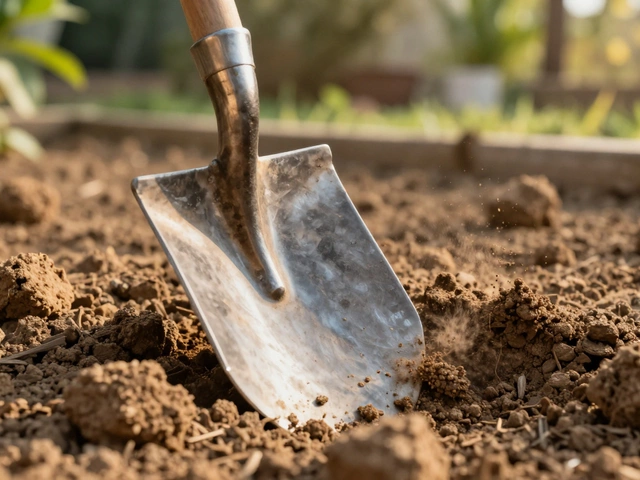
The standard Garden Spade is likely already in your shed. However, not all spades are created equal for hard soil. Look for a pointed spade rather than a square-edged shovel. The pointed tip acts like a wedge, concentrating force into a smaller area to penetrate compacted layers. Steel blades are essential here; plastic-coated handles help reduce vibration shock to your wrists during repetitive strikes.
To use it effectively, step firmly on the shoulder of the blade to drive it vertically into the ground. Then, lever the handle backward to lift and break the clod. This method works well for small beds but will exhaust you quickly if you have more than a few square meters to cover.
2. The Mattock: The Heavy Hitter
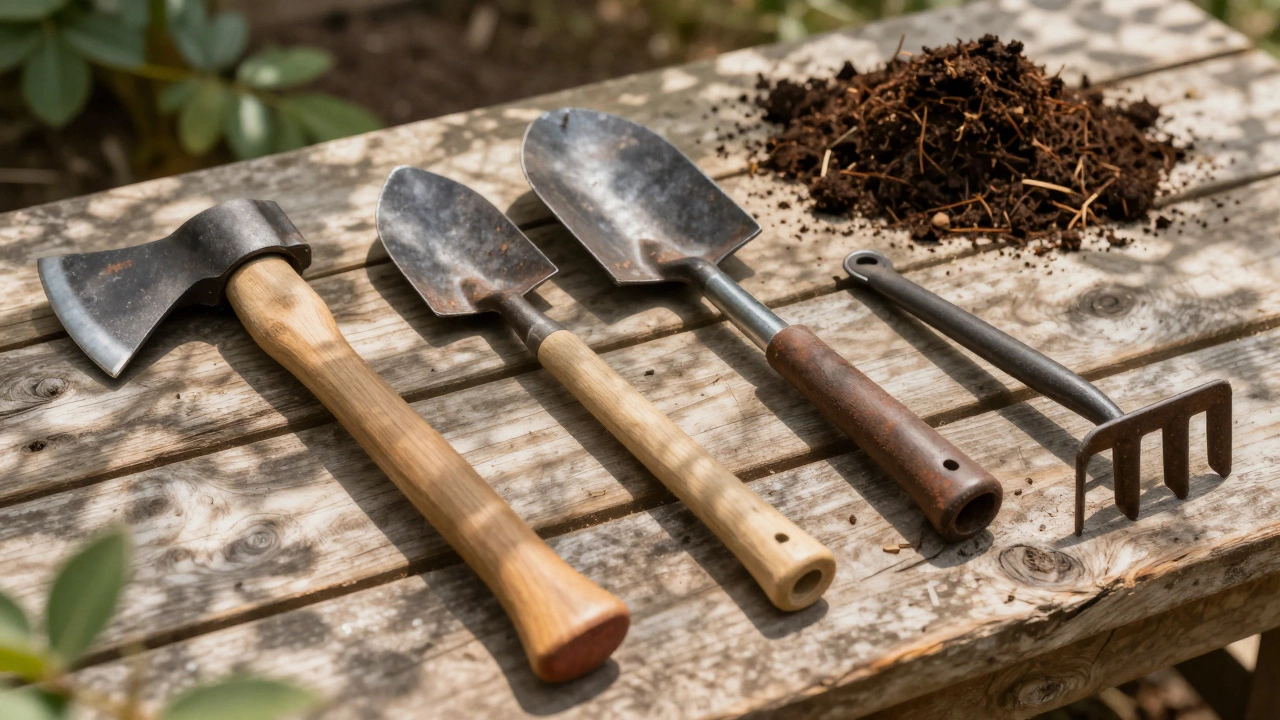
If your soil contains stones or is extremely dense, a Mattock is superior to a spade. It features a short head with two perpendicular faces: one flat (like an adze) and one sharp (like an axe). The sharp side chops through roots and hard crusts, while the flat side digs and lifts.
Use the mattock like a pickaxe, driving the point into the soil and using leverage to crack it open. It is particularly useful for creating trenches or breaking up stubborn clay banks. Be cautious, though-the swinging motion requires good technique to avoid back strain or hitting hidden rocks.
3. The Broadfork: The Back-Saver
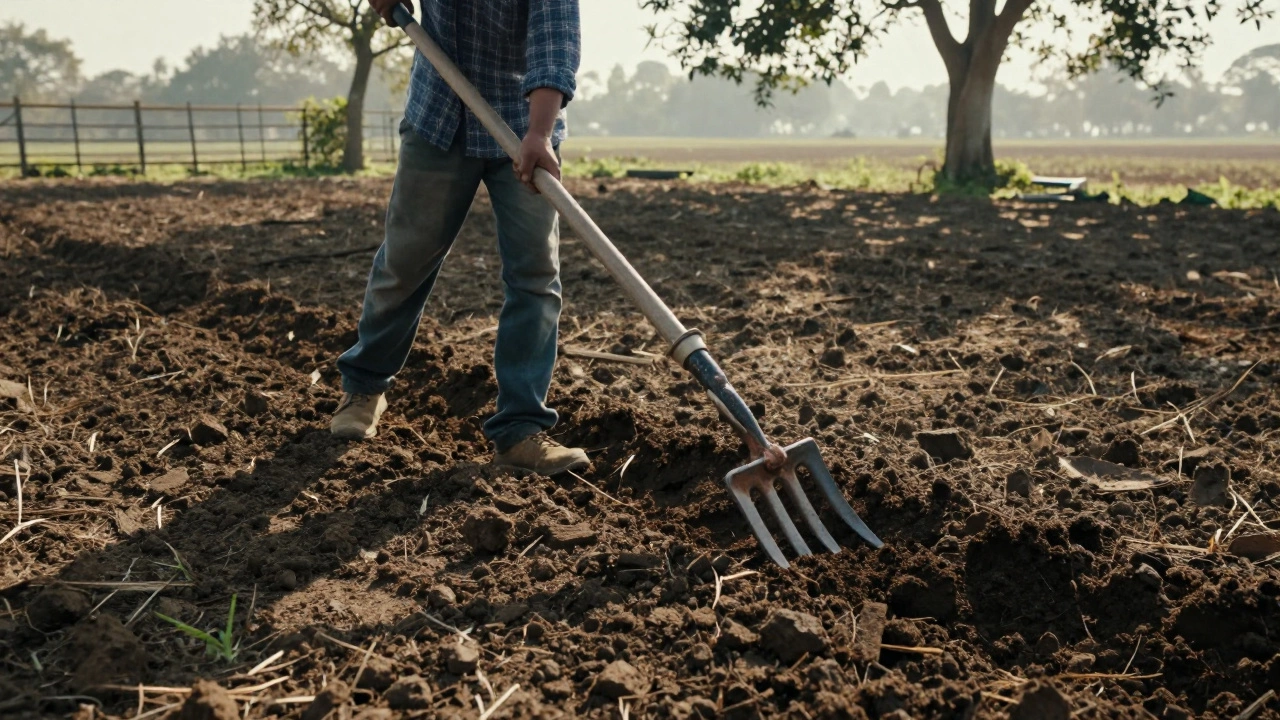
The Broadfork is arguably the best tool for large areas of hard soil if you want to avoid digging entirely. Resembling a giant pitchfork with long, sturdy tines and footrests, it allows you to stand on the tool and push it deep into the ground. Once inserted, you lean back on the handles to lever the soil upward, aerating it without inverting the layers.
This method preserves soil biology-worms and microbes stay in their proper zones-and significantly reduces physical strain. It is ideal for converting lawns into gardens or preparing large vegetable plots. The initial cost is higher than a spade, but the ergonomic benefit is worth it for anyone with back issues.
Mechanical Options for Larger Jobs
When manual labor isn’t enough, mechanical tools come into play. These are faster but require careful handling to avoid further compaction or damaging underground utilities.
4. The Rotary Tiller
A Rotary Tiller (or cultivator) uses rotating blades to churn the soil. Small walk-behind models are suitable for home gardens, while larger tractor-mounted versions handle acres. Tillers are fast but controversial among soil scientists. Over-tilling can destroy soil structure, kill beneficial fungi, and bring weed seeds to the surface where they germinate.
If you use a tiller, limit its depth to 6-8 inches and only run it when the soil is slightly moist-not too wet (which creates clods) and not too dry (which turns soil to dust). Never till a lawn directly; remove sod first to avoid clogging the blades.
5. The Subsoiler
For extreme compaction below the root zone, a Subsoiler is the professional choice. It consists of a single, narrow shank that penetrates deep into the ground (up to 18 inches) and fractures the hardpan without bringing subsoil to the surface. This is often pulled behind a tractor but smaller hand-pulled versions exist for serious gardeners.
Subsoiling is less disruptive than tilling and specifically targets the impermeable layer that causes waterlogging. It is best used before planting perennial crops or establishing new lawns.
Choosing the Right Tool for Your Situation
Your choice should depend on three factors: soil type, area size, and physical ability.
- Small beds (< 10 sq m): Use a pointed spade or hand fork. Precision matters more than speed.
- Medium plots (10-50 sq m): A broadfork is ideal for health and soil structure. A mattock helps if rocks are present.
- Large areas (> 50 sq m): Consider a rotary tiller for speed, but follow up with compost to rebuild soil life. Or rent a subsoiler if compaction is severe.
- Back problems: Invest in a broadfork or a lightweight electric cultivator. Avoid heavy swinging motions.
Pro Tips for Working Hard Soil
Tools alone won’t solve the problem permanently. Here’s how to make your efforts last:
- Work when damp: Soil that crumbles easily when squeezed is ready to work. If it sticks to your hands, it’s too wet. If it cracks, it’s too dry.
- Add organic matter: After breaking up the soil, mix in 2-3 inches of compost or well-rotted manure. This improves drainage and structure over time.
- Mulch heavily: Cover bare soil with straw or wood chips to prevent re-compaction from rain impact.
- Plant cover crops: Clover or winter rye send deep roots that naturally aerate the soil as they grow and decay.
Frequently Asked Questions
What is the easiest way to break up hard soil?
The easiest physical method is using a broadfork. It requires less upper-body strength than a spade because you use your legs and body weight to drive the tines in. For minimal effort, consider renting a rotary tiller, though this may harm soil biology if overused.
Can I break up hard soil without digging?
Yes. No-till methods include using a broadfork to aerate deeply without flipping soil, adding thick layers of compost on top (sheet mulching), or planting deep-rooted cover crops that naturally loosen the earth as their roots decompose.
Is a mattock better than a spade for clay soil?
A mattock is better if the soil is rocky or extremely dense. Its axe-like blade chops through resistance more effectively than a spade’s slicing edge. However, for general clay soil, a pointed spade is sufficient and easier to control for precise digging.
How do I stop my soil from becoming hard again?
Prevent compaction by avoiding walking on wet soil, adding organic matter annually to improve structure, and keeping the ground covered with mulch. Healthy, biologically active soil resists compaction better than sterile dirt.
Should I use a tiller on very hard soil?
Only if necessary. Tillers can struggle with extreme hardness and may damage the machine or create uneven chunks. If using a tiller, pre-loosen the soil with a spade or broadfork first, and ensure the soil is moist but not muddy to avoid clumping.
What tool breaks up soil the fastest?
A powered rotary tiller or subsoiler is the fastest option for large areas. For small spaces, a mattock allows rapid chopping action compared to the slower lifting motion of a spade.