Blueberry Pot Size Calculator
Your Balcony Setup
Recommended Blueberry Setup
Important: Blueberries need acidic soil (pH 4.5-5.5). Always use ericaceous compost, never regular garden soil.
Can you really grow blueberries on a balcony? The answer isn’t just yes-it’s yes, and they’ll thrive if you give them the right setup. Many people assume blueberries need vast orchards or deep soil, but that’s not true. In fact, compact varieties bred for containers do better in small spaces than in sprawling gardens. If you live in Manchester, with its cool, damp climate, you’re in a good spot. Blueberries love the kind of chilly winters and mild summers we get here.
Blueberries Don’t Need Much Space-Just the Right Pot
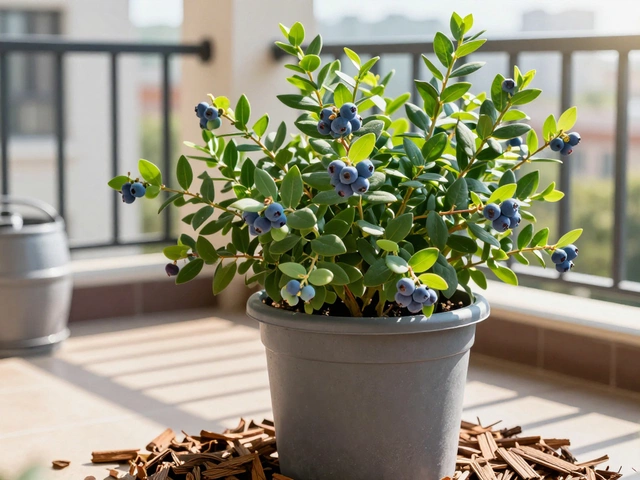
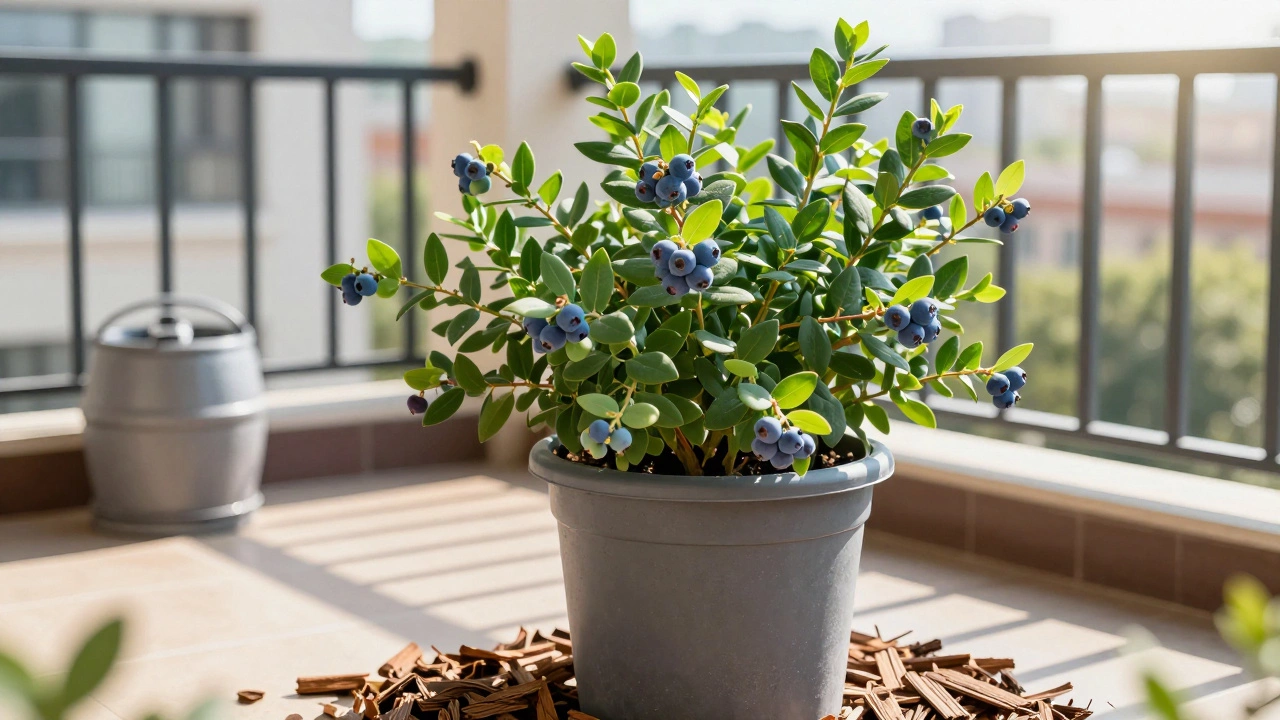
You don’t need a huge balcony. Even a 1m x 1m space is enough. The key is the container. Blueberry roots spread out more than they go deep, so choose a wide, shallow pot. A 45cm diameter pot with at least 40cm depth works best. Go for plastic, fiberglass, or glazed ceramic. Avoid unglazed terracotta-it dries out too fast, and blueberries hate that.
One common mistake? Using regular garden soil. Blueberries need acidic soil, with a pH between 4.5 and 5.5. Most UK garden soils are too alkaline, especially in cities where lime from old buildings leaches into the ground. That’s why you need potting mix designed for acid-loving plants. Look for peat-free ericaceous compost. Mix in a bit of pine bark or coir for drainage. Don’t add garden soil, compost, or manure-they’ll raise the pH and kill your plants.
Choose the Right Variety for Your Balcony
Not all blueberries are made for pots. You need dwarf or semi-dwarf types. Here are the top three that work in UK balconies:
- Top Hat - Grows only 30-45cm tall. Perfect for small spaces. Berries are sweet and ripen in July.
- Patriot - A bit taller (60-90cm), but very hardy. Great for colder spots. Produces heavy crops in late summer.
- Bluecrop - A classic. Needs a bigger pot (50cm+), but gives you the most fruit. Ideal if you have a larger balcony or plan to grow more than one.
These varieties are self-fertile, meaning you only need one plant to get berries. But if you have room for two different types, you’ll get more fruit and better flavor. Cross-pollination boosts yield by up to 30%.
Location, Sunlight, and Weather Protection
Blueberries need at least 6 hours of direct sun a day. South-facing balconies are ideal in the UK. East-facing works too, if it gets full morning sun. North-facing? Skip it. You’ll get leafy plants but no berries.
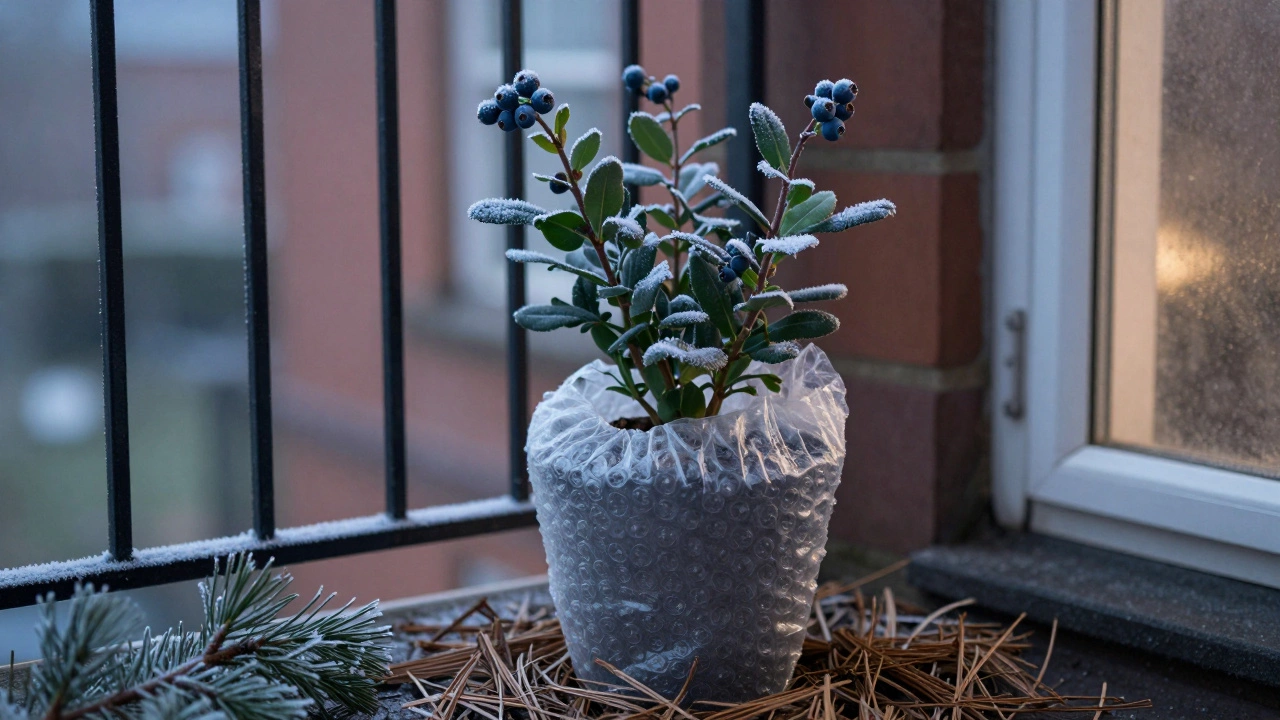
Wind is a silent killer. Manchester’s gusts can dry out leaves and damage flowers. If your balcony is exposed, use a trellis, windbreak screen, or even a row of tall herbs like rosemary to shield the plants. Don’t let them sit in freezing wind all winter. Move pots close to the wall or wrap them in bubble wrap if temperatures drop below -5°C.
Watering: The Most Important Rule
Blueberries are like thirsty guests-they need consistent moisture, but never soggy roots. Water daily in spring and summer, especially when the weather turns dry. Check the top 2cm of soil. If it’s dry, water. If it’s damp, wait.
Use rainwater if you can. Tap water in the UK is often hard, with calcium and magnesium that raise soil pH over time. If you only have tap water, add a teaspoon of white vinegar to every 5L of water once a month. It helps keep the acidity right. A drip irrigation system on a timer makes this easy. Even a simple watering can with a fine rose works.
Feeding: Don’t Overdo It
Blueberries don’t need heavy feeding. In fact, too much fertilizer burns their roots. Start feeding in early spring with a slow-release, acid-loving plant food. Look for one with ammonium sulfate or sulfur-coated urea as the nitrogen source. Avoid anything with lime or calcium nitrate.
Feed once in March, again in May, and a light third dose in July. Stop after that. Overfeeding leads to leaf burn, weak growth, and fewer berries. A good rule: less is more. If your plant looks healthy and green, you’re doing fine.
Pruning and Winter Care
Pruning sounds scary, but it’s simple. In late winter (February), cut out any dead, damaged, or crossing branches. Remove old canes that are more than 5 years old-they stop producing well. Aim to keep 4-6 strong, young stems per plant. That’s it.
Winter is when blueberries rest. They need cold to set fruit next year, so don’t bring them indoors. But if you get a hard freeze, cover the pot with horticultural fleece or move it under a porch. Mulch the top of the soil with pine needles or wood chips to keep roots insulated and moist.
When Will You Get Berries? And How Many?
Don’t expect fruit in the first year. Most plants take 2-3 years to really settle in. Year one? You’ll see flowers, maybe a few berries. Year two? More fruit. Year three? You’ll be picking a bowlful. A healthy potted blueberry can produce 1-2kg of berries each season. That’s enough for pancakes, yogurt, or freezing for winter smoothies.
Harvest when berries turn deep blue and come off the stem easily. If you have to tug, they’re not ready. Pick every few days in peak season (late July to early September). Birds love them too-cover the plant with netting once the berries start to color.
Common Mistakes (And How to Avoid Them)
- Mistake: Using regular potting soil. Solution: Always use ericaceous compost.
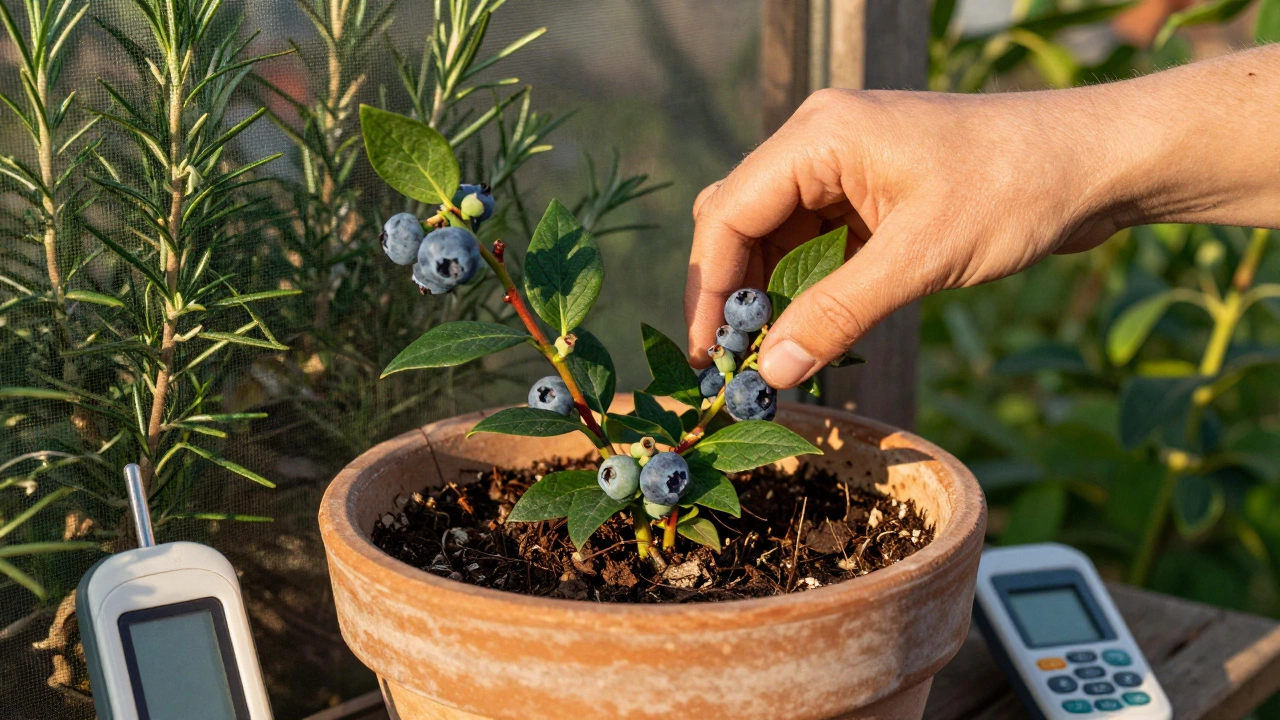
- Mistake: Letting the soil dry out. Solution: Water daily in summer. Use a moisture meter if you forget.
- Mistake: Planting in a pot that’s too small. Solution: Start with at least 45cm diameter.
- Mistake: Not testing soil pH. Solution: Buy a cheap pH meter (£10 online). Test every 6 months.
What If Your Blueberries Look Sick?
Yellow leaves with green veins? That’s iron chlorosis-sign of alkaline soil. Fix it fast: water with rainwater + vinegar, and apply chelated iron fertilizer. Brown leaf edges? Too much salt or hard water. Flush the soil with a lot of rainwater. No flowers? Not enough sun, or the plant was stressed last winter. Move it to a sunnier spot next year.
Blueberries are forgiving once you get the basics right. They’re not fussy like roses or finicky like citrus. They just want acidity, water, sun, and a little patience.
Final Thought: It’s Worth It
Imagine picking fresh blueberries in July-right from your balcony. No trips to the store. No plastic containers. Just sweet, tart, antioxidant-rich fruit you grew yourself. In a city like Manchester, where green space is limited, a single blueberry plant can bring joy, flavor, and a sense of wildness to your daily life. You don’t need a garden. You just need a pot, the right soil, and a little care.
Can I grow blueberries in a small pot on my balcony?
Yes, but only if the pot is big enough. Use a container at least 45cm wide and 40cm deep. Smaller pots dry out too fast and restrict root growth. Dwarf varieties like Top Hat work best in tight spaces.
Do I need more than one blueberry plant?
Not strictly, but it helps. Blueberries are self-fertile, so one plant will produce fruit. But planting two different varieties (like Top Hat and Patriot) improves pollination, boosts yield by up to 30%, and extends your harvest window.
What soil should I use for blueberries in pots?
Use ericaceous compost-specifically made for acid-loving plants. Avoid regular potting soil, garden soil, or compost. These raise the pH and kill blueberry roots. Mix in pine bark or coir for drainage. Test the pH every 6 months-it should stay between 4.5 and 5.5.
How much sun do balcony blueberries need?
At least 6 hours of direct sunlight daily. South-facing balconies are best in the UK. East-facing works if it gets full morning sun. North-facing won’t work-your plant will grow leaves but not berries.
When do blueberries ripen on a balcony in the UK?
In the UK, most varieties ripen between late July and early September. Top Hat berries are ready by mid-July, while Bluecrop and Patriot hold out until August. Pick when berries are deep blue and slip off easily. Don’t pull them-tugging damages the plant.