Balcony Garden Planner
Not sure what will survive on your balcony? Estimate your daily direct sunlight hours below to get personalized plant recommendations.
🥗 Best Edibles
🌸 Best Ornamentals
💧 Watering Guide
Enter your sunlight data to see which plants will thrive in your specific microclimate.
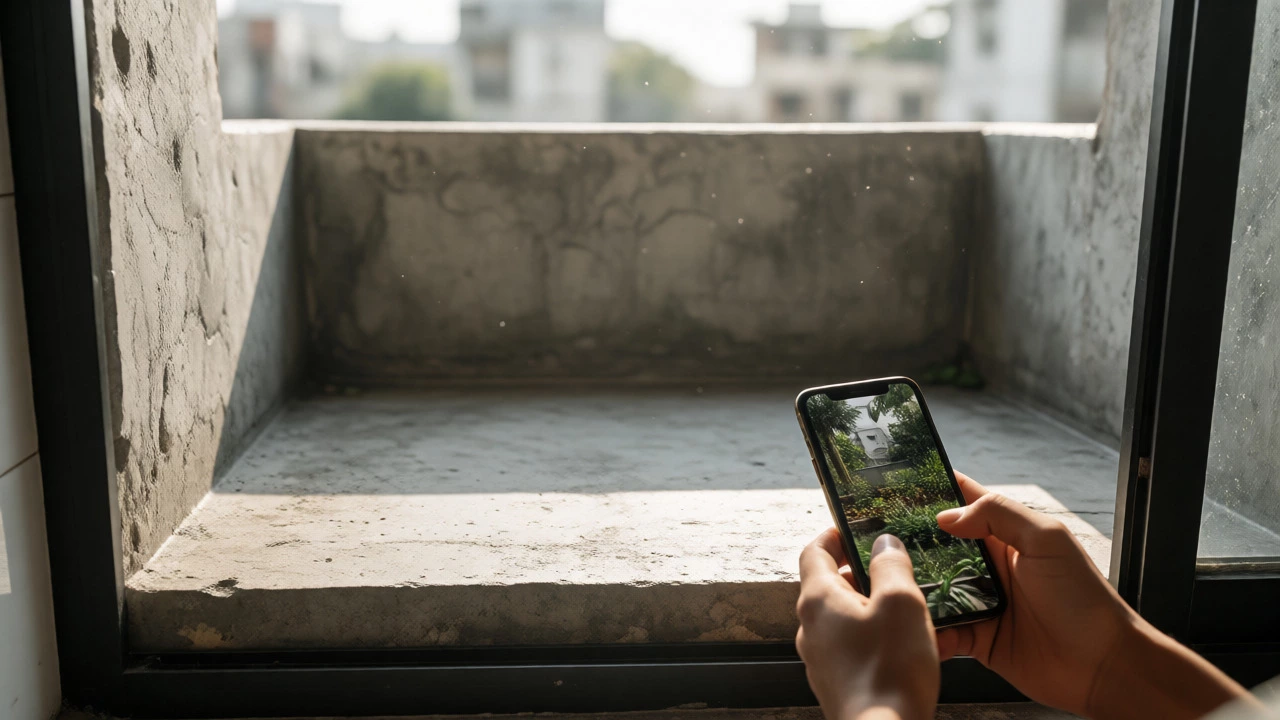
You’re staring at that empty concrete slab outside your kitchen window. It’s maybe four feet wide and six feet long. You’ve seen photos of lush green oases on Instagram and wondered if it’s actually possible to grow anything there without turning your landlord’s property into a mud pit. The short answer is yes. But the longer, more honest answer is that success depends entirely on three things: how much light you get, what your building allows, and whether you pick plants that won’t die in a week.
Starting a balcony garden isn’t just about sticking pots in corners. It’s a mini-engineering project. In Manchester, where the sun often hides behind grey clouds for days, or in London where wind whips around high-rise towers, the rules change. This guide cuts through the noise to tell you exactly what works, what fails, and how to avoid the most common beginner mistakes.
Check Your Light Before Buying Anything
Most people buy pretty plants first and realize later they have no idea where to put them. Don’t do that. Spend one full day observing your balcony. Note when the sun hits specific spots. Is it morning sun only? Afternoon blaze? Or is it permanently shaded by the building next door?
Light dictates everything. If you have less than two hours of direct sunlight, you’re in shade territory. Herbs like basil will stretch and flop. Tomatoes won’t fruit. You need leafy greens-lettuce, spinach, kale-or ornamental ferns. If you have six or more hours of direct sun, you’re in luck. That’s enough for peppers, strawberries, and dwarf tomatoes. Between two and six hours is partial shade, which suits herbs like mint, parsley, and chives surprisingly well.
| Sunlight Level | Best Edibles | Best Ornamentals | Watering Frequency |
|---|---|---|---|
| Full Sun (6+ hrs) | Dwarf Tomatoes, Peppers, Strawberries | Lavender, Marigolds, Geraniums | Daily in summer |
| Partial Shade (3-5 hrs) | Basil, Chives, Mint, Lettuce | Fuchsias, Begonias, Impatiens | Every 2-3 days |
| Shade (<2 hrs) | Spinach, Swiss Chard, Arugula | Ferns, Hostas, Coleus | Weekly check |
Negotiate with Your Landlord and Check Weight Limits
Before you spend a penny, read your lease. Some UK landlords strictly forbid soil-based containers because they leak water onto lower balconies. Others allow hydroponics or self-watering pots. Get this in writing if you can. A dispute over a muddy stain could cost you your deposit.
Then think about weight. Soil is heavy. Wet soil is heavier. A standard 10-liter pot filled with compost weighs roughly 8-10 kg when saturated. Stack ten of those, plus a few bags of fertilizer and a watering can, and you’re looking at nearly 100 kg of static load. Most modern balconies are designed to handle live loads (people moving around) better than dead loads (heavy stationary objects). If you’re on an older Victorian terrace, be cautious. Stick to plastic pots rather than terracotta, and use lightweight peat-free compost mixes containing perlite or vermiculite to reduce bulk.
Choose the Right Containers and Soil
Terracotta looks classic but dries out fast and cracks in frost. Plastic retains moisture better and is lighter. Fabric grow bags are excellent for drainage and root health but look messy unless hidden inside decorative baskets. For vertical space, wall-mounted planters save floor area but dry out quickly due to wind exposure.
Never dig up garden soil from a park. It’s compacted, may contain pests, and drains poorly in containers. Buy bagged multi-purpose compost. For edibles, mix in slow-release organic fertilizer granules. Compost breaks down over time, so top-dress with fresh compost every spring. If you’re growing deep-rooted veggies like carrots, choose pots at least 30 cm deep. Shallow pots suit lettuce and radishes perfectly.
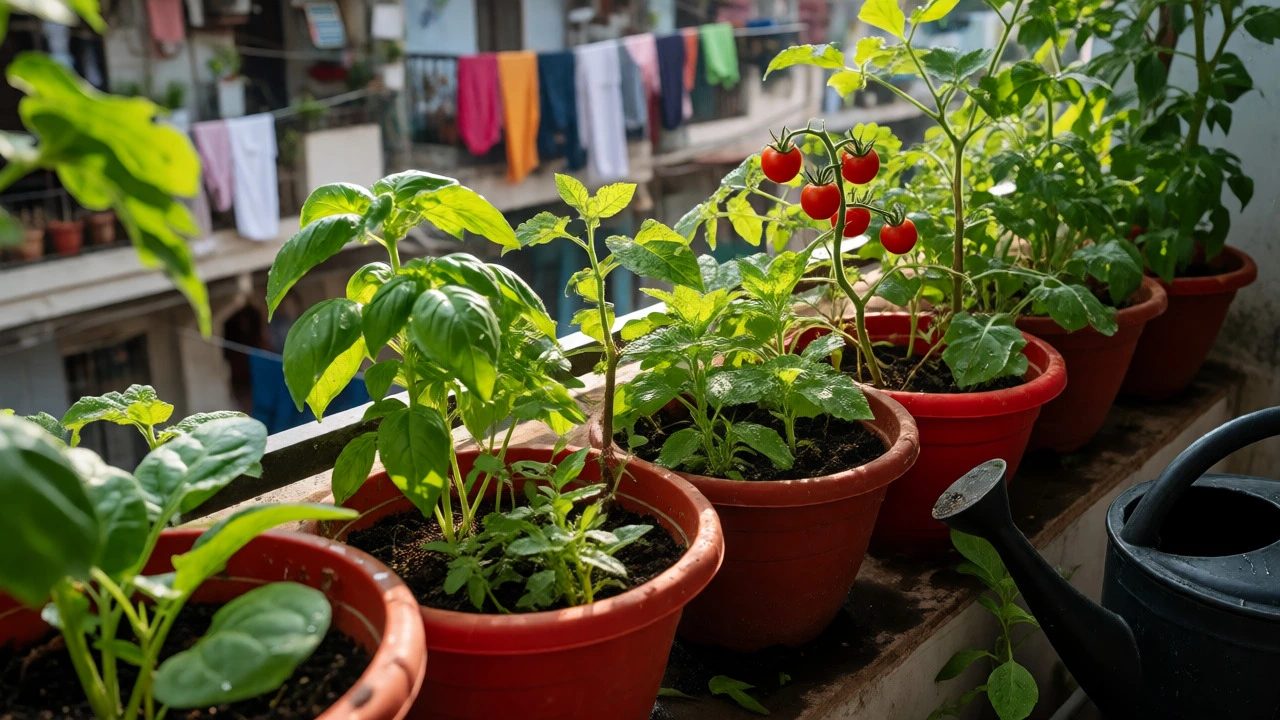
Start Small with High-Reward Plants
Don’t try to grow corn or pumpkins on a balcony. They take up too much space for minimal yield. Focus on high-value, low-maintenance crops. Fresh basil tastes infinitely better than supermarket basil. Homegrown cherry tomatoes taste like candy compared to mealy red spheres. Salad leaves can be cut-and-come-again, giving you weeks of harvests from one pot.
- Herbs: Basil, mint, chives, parsley. Fast-growing, forgiving, and expensive to buy fresh.
- Leafy Greens: Lettuce, rocket, spinach. Grow quickly, shallow roots, tolerate shade.
- Fruiting Plants: Dwarf tomato varieties (like ‘Tumbling Tom’), patio peppers, strawberries. Need sun and regular feeding.
- Flowers for Pollinators: Nasturtiums (edible flowers), borage, calendula. Attract bees, improve yields, look great.
Master Watering Without Flooding the Neighbors
Containers dry out faster than ground soil. On a hot, windy day, a small pot might need watering twice. Neglect it for 48 hours, and your plants turn to crisp. Overwater it, and roots rot. The finger test works best: stick your index finger into the soil up to the second knuckle. If it feels dry, water. If it’s damp, wait.
Always use pots with drainage holes. Put saucers underneath to catch runoff, but empty them after 30 minutes. Standing water breeds mosquitoes and causes root rot. Consider self-watering containers for weekends away. They have a reservoir at the bottom that wicks water up as needed. For larger setups, a simple drip irrigation kit connected to a tap timer costs under £30 and saves massive amounts of time.
Protect Against Wind and Cold
Balconies, especially higher floors, act as wind tunnels. Wind strips moisture from leaves and snaps stems. Use hardy plants or create windbreaks with taller, sturdy plants at the edge. Bamboo screens attached to railings help, but ensure they’re securely tied. In autumn, bring tender plants like basil indoors before the first frost. Hardy crops like kale and garlic can stay out year-round in most UK climates.
Frost protection matters. Wrap terracotta pots in bubble wrap or hessian to prevent cracking. Move sensitive pots against the house wall, which radiates stored heat overnight. If you live in northern England, expect colder winters; mulch the surface of pots with straw or bark chips to insulate roots.
Harvest Often to Keep Plants Productive
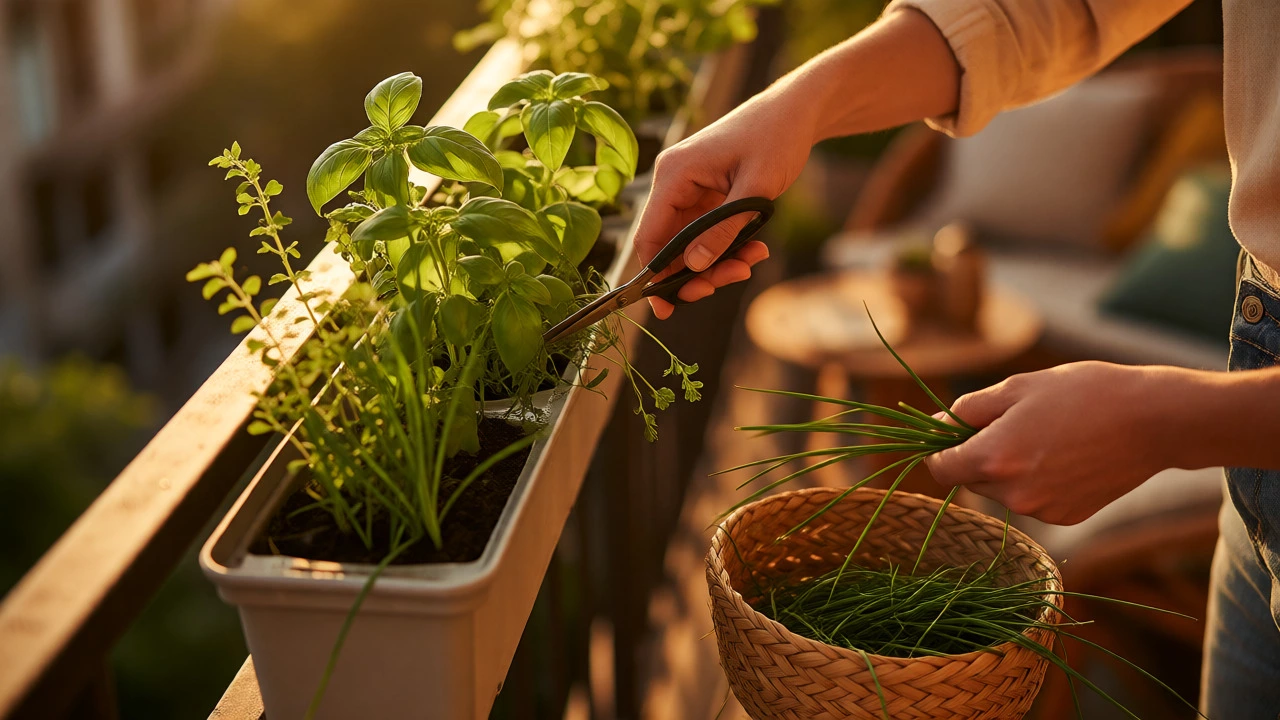
Many beginners let plants go to seed too early. Pinch off basil flowers to keep leaves sweet. Pick tomatoes when fully red; leaving them on the vine slows new fruit production. Regular harvesting signals the plant to produce more. It also keeps the garden looking tidy and prevents leggy growth.
Keep a notebook. Write down what you planted, when you sowed seeds, and how it performed. Did the mint take over the whole pot? Did the tomatoes fail due to lack of sun? Next year, you’ll know exactly what to tweak. Gardening is iterative. Failure is data, not defeat.
Do I need permission to start a balcony garden?
If you rent, check your tenancy agreement. Many leases prohibit soil-based gardens due to water damage risks. Owners should check freehold vs. leasehold obligations or HOA rules. Usually, non-permanent structures like pots are fine, but permanent installations require approval.
What is the best soil for balcony pots?
Use high-quality bagged multi-purpose compost mixed with perlite for drainage. Avoid garden soil, which compacts in pots and lacks nutrients. Add slow-release organic fertilizer for long-term nutrition.
How many plants can I fit on a small balcony?
It depends on size and light. A typical 2m x 2m balcony can hold 4-6 medium pots (20-30L) plus hanging baskets. Vertical gardening increases capacity significantly. Ensure airflow between pots to prevent mold.
Can I grow vegetables in winter on my balcony?
Yes, but limited. Hardy crops like kale, spinach, broad beans, and garlic survive UK winters. Tender plants like tomatoes and basil must be harvested or brought indoors. Use fleece covers during frost.
How do I deal with slugs and snails on a balcony?
They climb walls and railings. Use copper tape around pot rims, beer traps, or organic ferric phosphate pellets. Inspect undersides of leaves daily. Removing them manually at dusk is effective.