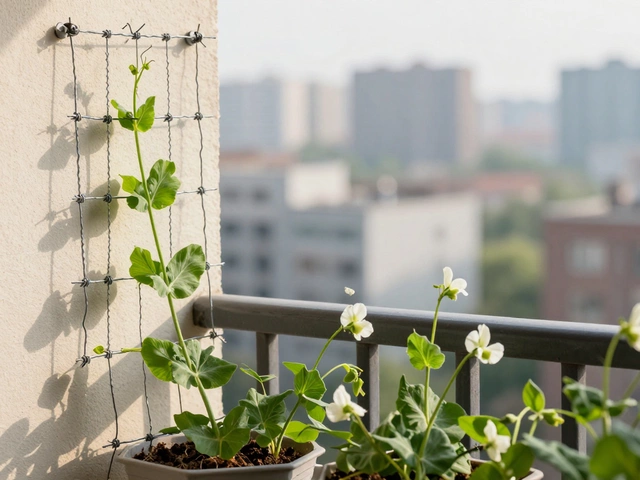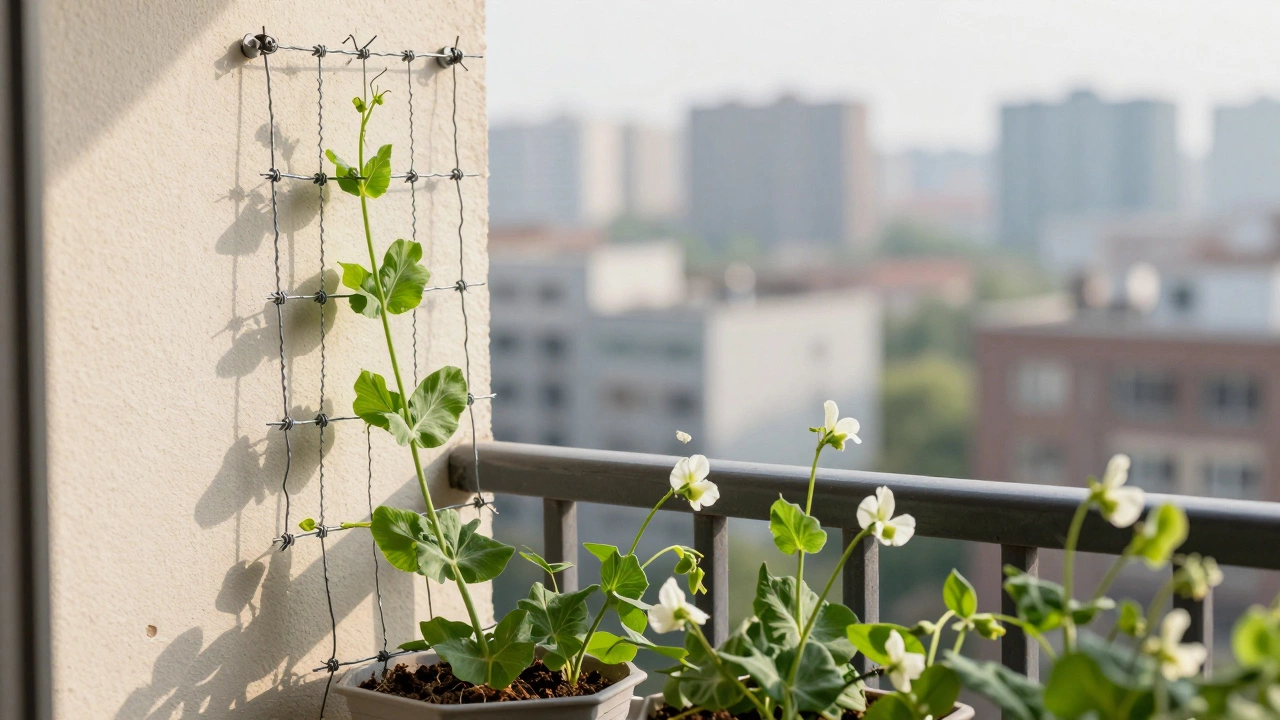
If you’re growing tomatoes, cucumbers, peas, or beans on a balcony, space is tight. You don’t have room for sprawling vines, but you still want a good harvest. That’s where a trellis comes in. But buying one can cost £20 or more. And if you’re on a budget, or just like fixing things yourself, you might wonder: can you use chicken wire as a trellis? The short answer is yes - and it’s one of the cheapest, simplest ways to grow more on a small balcony.
Why Chicken Wire Works as a Trellis
Chicken wire isn’t just for keeping chickens out of your garden - it’s also great for holding up climbing plants. Its grid pattern gives vines and tendrils something to grab onto. Unlike smooth metal poles or plastic nets, the gaps in chicken wire (usually 1 inch or 2.5 cm) are perfect for thin stems to wrap around. It’s flexible, easy to cut with tin snips, and doesn’t rust quickly if you get the galvanized kind.
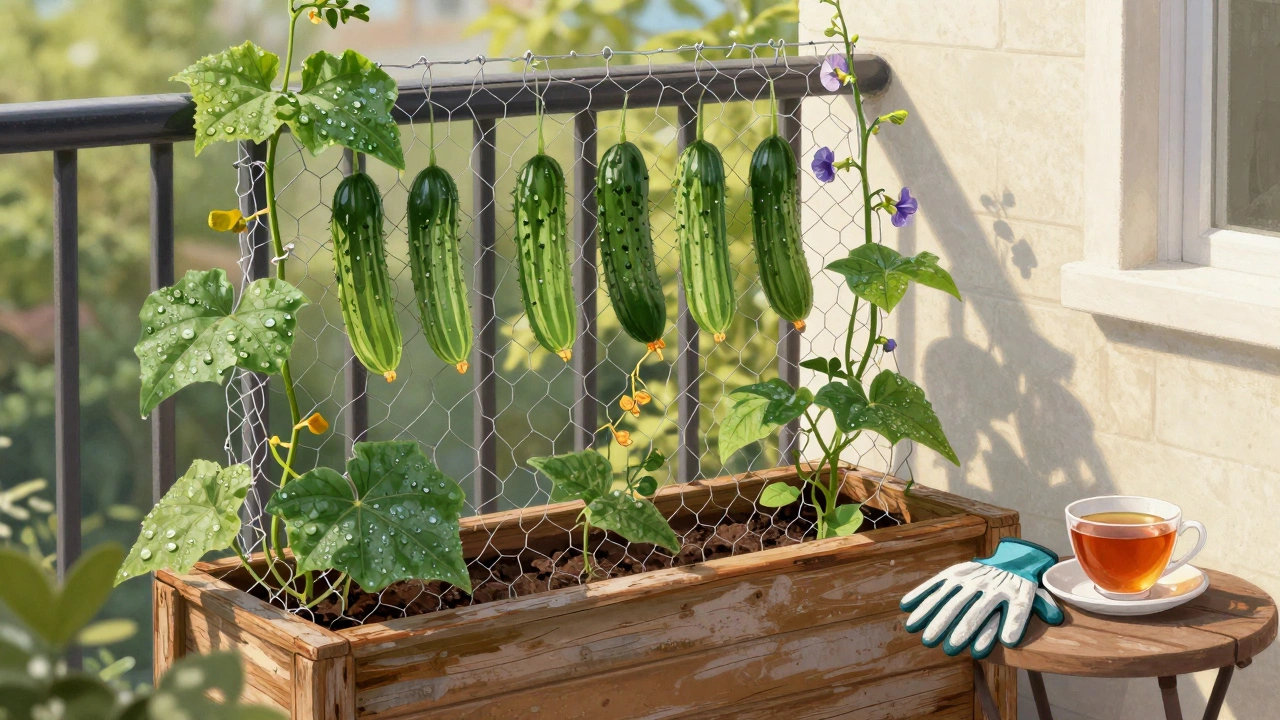
People in Manchester, London, and other UK cities with small balconies have been using it for years. One reader, Maria from Salford, grew 14 pounds of cucumbers last summer on a 3ft x 4ft balcony using chicken wire stretched between two wall brackets. She didn’t buy a single trellis. Just £8 worth of wire, some zip ties, and 20 minutes of setup.
What Plants Grow Best on Chicken Wire Trellises
Not all climbing plants are the same. Some need thick support. Others just need a light grip. Chicken wire is ideal for plants with thin, flexible vines:
- Peas - Sweet peas, snow peas, and snap peas cling to the wire easily. They grow fast and don’t get heavy.
- Beans - Both bush beans (if trained early) and pole beans work well. Pole beans can get heavy, so make sure the wire is secured tightly.
- Cucumbers - Especially slicing varieties. The wire keeps fruit off the ground, reducing rot and pests.
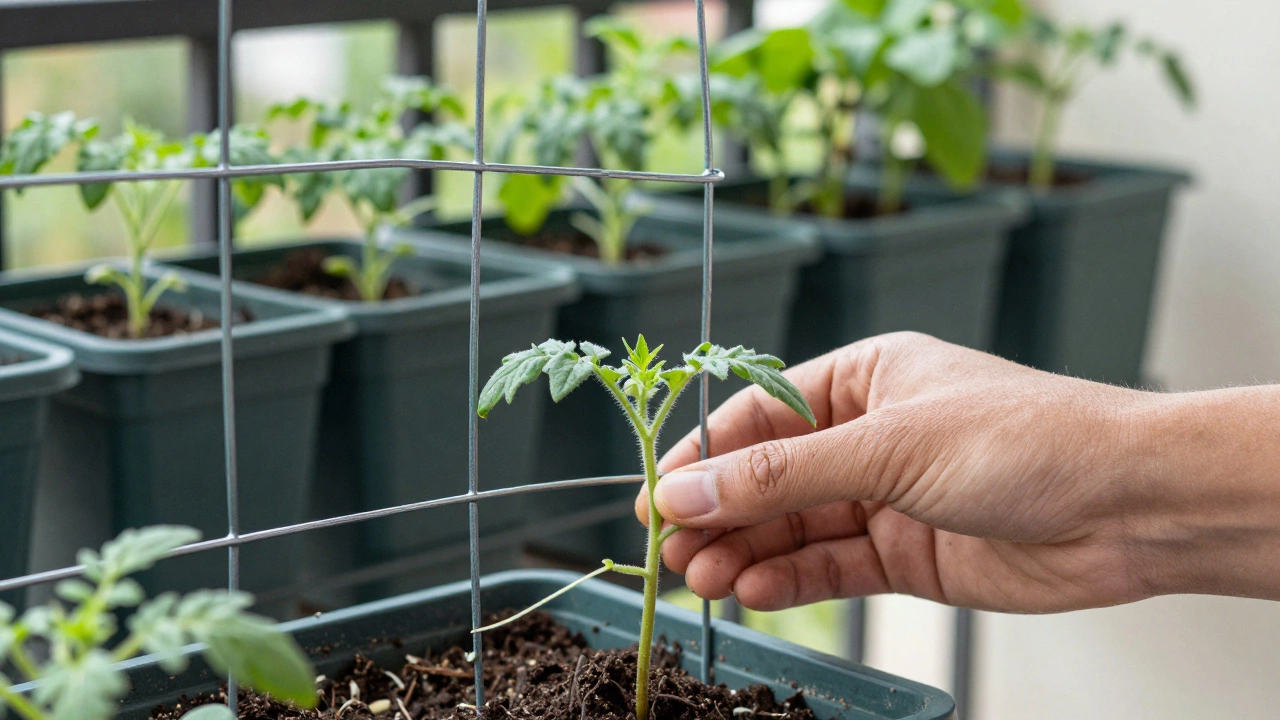
- Tomatoes - Only for dwarf or determinate types. Indeterminate tomatoes get too heavy and will sag through the mesh. Use this for cherry tomatoes, not beefsteak.
- Passionfruit - If you’re lucky enough to grow it in a sheltered balcony, the tendrils love chicken wire.
- Winter squash - Not recommended. Too heavy. The wire will bend or tear.
Heavy plants like pumpkins or large melons? Skip chicken wire. Use wooden frames or metal A-frames instead.
How to Install a Chicken Wire Trellis on a Balcony
Installing a chicken wire trellis takes under 30 minutes. Here’s how to do it right:
- Choose the right wire - Get galvanized steel chicken wire, 1 inch (2.5 cm) mesh. Avoid plastic-coated versions - they break down in sunlight and don’t hold up in rain. Look for 18-gauge thickness. Thinner wire bends too easily.
- Measure your space - Most balconies have railings or walls. Measure the height and width where you want to hang it. A 4ft tall by 6ft wide section is common.
- Cut the wire - Use heavy-duty wire cutters or tin snips. Wear gloves. The edges are sharp. Roll out the wire on the ground first, then cut to size.
- Attach it securely - Don’t just staple it to wood. Balconies get windy. Use U-nails, zip ties, or S-hooks. If you have a metal railing, wrap the wire around it and twist the ends tight. If you have a brick wall, use wall anchors and screws with washers. For planters, attach a wooden frame to the planter edge and staple the wire to it.
- Keep it taut - Loose wire flaps in the wind and doesn’t support plants well. Pull it tight as you attach it. Use tensioners or extra zip ties at the corners.
- Plant at the base - Put your seedlings or seeds 4-6 inches from the base of the wire. Let them grow up naturally. Don’t tie them - let them find the wire on their own.
Pro tip: If your balcony has a privacy screen, attach the wire to the screen instead of the railing. It looks neater and doesn’t block light.
Pros and Cons of Chicken Wire Trellises
Like any tool, chicken wire has trade-offs. Here’s what you gain - and what you lose:
| Pros | Cons |
|---|---|
| Costs under £10 for a 4ft x 6ft section | Not strong enough for heavy fruits like melons or large squash |
| Easy to cut and shape to fit any space | Can rust over time if not galvanized |
| Allows air flow, reducing mildew and fungus | Sharp edges can snag gloves or clothing |
| Looks natural and blends with plants | May need replacing every 2-3 years in wet climates |
| Recyclable and reusable | Not ideal for very windy balconies unless secured tightly |
Alternatives to Chicken Wire
If chicken wire doesn’t feel right for your setup, here are other cheap options:
- String trellis - Use jute twine tied between horizontal lines. Great for peas and beans. Cheap, but needs restringing each season.
- Plastic netting - Sold in garden centers. Lightweight, but breaks in UV light after one season.
- Reclaimed bamboo stakes - Tie them into a teepee. Works for beans and cucumbers. Looks rustic, but takes more space.
- Wire mesh panels - Stiffer than chicken wire, better for tomatoes. More expensive (£15-£25), but lasts longer.
Chicken wire wins on price and ease. If you’re testing vertical gardening for the first time, start here.
Common Mistakes to Avoid
Even simple setups can go wrong. Here’s what not to do:
- Don’t use ungalvanized wire - It rusts fast in UK rain. Within a year, it turns to powder. Always choose galvanized.
- Don’t hang it loosely - Wind will shake the plants and snap stems. Tight is better.
- Don’t plant too close - Crowding leads to poor air flow. Keep plants at least 6 inches from the wire base.
- Don’t forget to check in winter - Remove the wire if you’re not growing over winter. Snow and ice can bend it. Store it dry.
- Don’t assume it lasts forever - Even galvanized wire lasts 2-5 years. Plan to replace it when it starts to sag or rust.
When to Skip Chicken Wire Altogether
There are times when chicken wire just won’t cut it:
- Your balcony gets constant strong winds (like on a top-floor flat).
- You want to grow heavy crops like pumpkins, watermelons, or large squash.
- Your railing or wall can’t support any weight - check building rules first.
- You’re growing root vegetables like carrots or potatoes - they don’t climb.
In those cases, go for a freestanding trellis or a raised planter with a built-in support. But for most balcony gardeners, chicken wire is the quiet hero.
Final Thoughts
Using chicken wire as a trellis isn’t a hack - it’s a smart, time-tested solution. It’s what people have done for generations, even before plastic nets and fancy garden gadgets. On a small balcony, every inch counts. Chicken wire gives you vertical space without taking up floor space. It’s affordable, effective, and easy to install. And if you’re growing your own food, even a little bit, that’s something to feel proud of.
Start small. Try it with a few pea plants this spring. See how they climb. You might be surprised how much you can grow in just a few square feet.
Can chicken wire support tomato plants?
Yes, but only for dwarf or determinate varieties like ‘Tumbling Tom’ or ‘Balcony Cherry’. These stay under 3 feet tall and don’t get too heavy. Avoid indeterminate tomatoes - they grow too long and heavy, and the wire will sag or tear. Use tomato cages or wooden trellises for those.
How long does chicken wire last as a trellis?
Galvanized chicken wire lasts 2 to 5 years in the UK climate. It rusts faster in wet, salty air near the coast. If you store it indoors over winter and avoid constant moisture, it can last longer. Replace it when it starts to flake or bend under plant weight.
Is chicken wire safe for edible plants?
Yes, if it’s galvanized. Galvanized wire has a zinc coating that’s safe for food crops. Avoid painted or plastic-coated wire - those coatings can leach chemicals over time. Always rinse vegetables before eating, as you would with any garden produce.
Can I reuse chicken wire from last year?
Absolutely. Many gardeners in Manchester and Glasgow reuse chicken wire for 2-3 seasons. Just clean it off with a hose, check for rust or bends, and reattach it in spring. If it’s still sturdy, there’s no need to buy new.
Will chicken wire attract pests?
No, chicken wire itself doesn’t attract pests. In fact, it helps by keeping fruit off damp soil, which reduces slugs and rot. But if you leave old plant debris on it, insects may hide there. Clean it out after harvest to keep pests away.
Can I use chicken wire for flowers?
Yes - especially for climbing flowers like sweet peas, clematis, or morning glories. The wire gives them structure and helps them bloom higher, where they catch more light. It’s a great way to add color to a balcony without taking up floor space.
Next Steps
Ready to try it? Here’s what to do next:
- Visit your local hardware store or online supplier. Buy 10ft of 18-gauge galvanized chicken wire (£8-£12).
- Measure your balcony space. Cut the wire to fit.
- Attach it to your railing, wall, or planter with zip ties or U-nails.
- Plant peas or beans at the base in early April.
- Check weekly. Let the plants climb. Enjoy the harvest.
It’s not magic. But it’s one of the most effective ways to grow more in a tiny space - and it costs less than a cup of coffee.