Plant Growth Lighting Calculator
Enter your plant type and current light conditions to determine the optimal LED grow light setup for healthy growth.
If you’ve ever watched your houseplant struggle near a window in winter, you know natural light isn’t always enough. That’s when people start asking: Do LED lights help plants grow? The answer isn’t just yes-it’s more specific than you think. Not all LED lights are created equal, and using the wrong kind can waste electricity without helping your plants at all.
How Plants Use Light
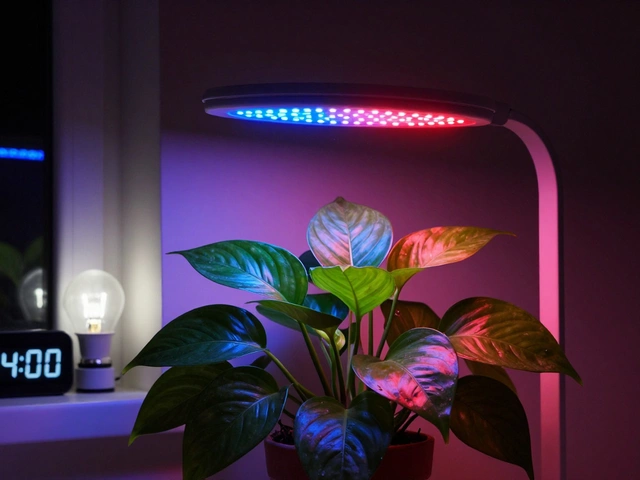
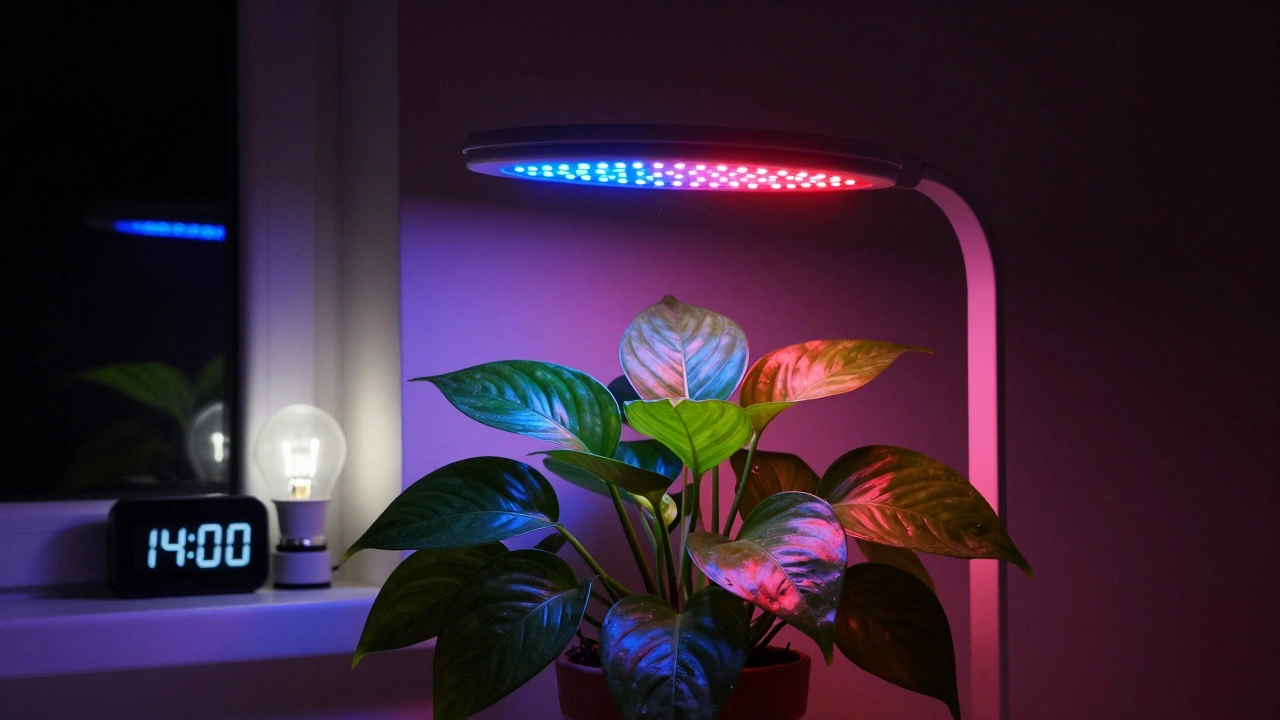
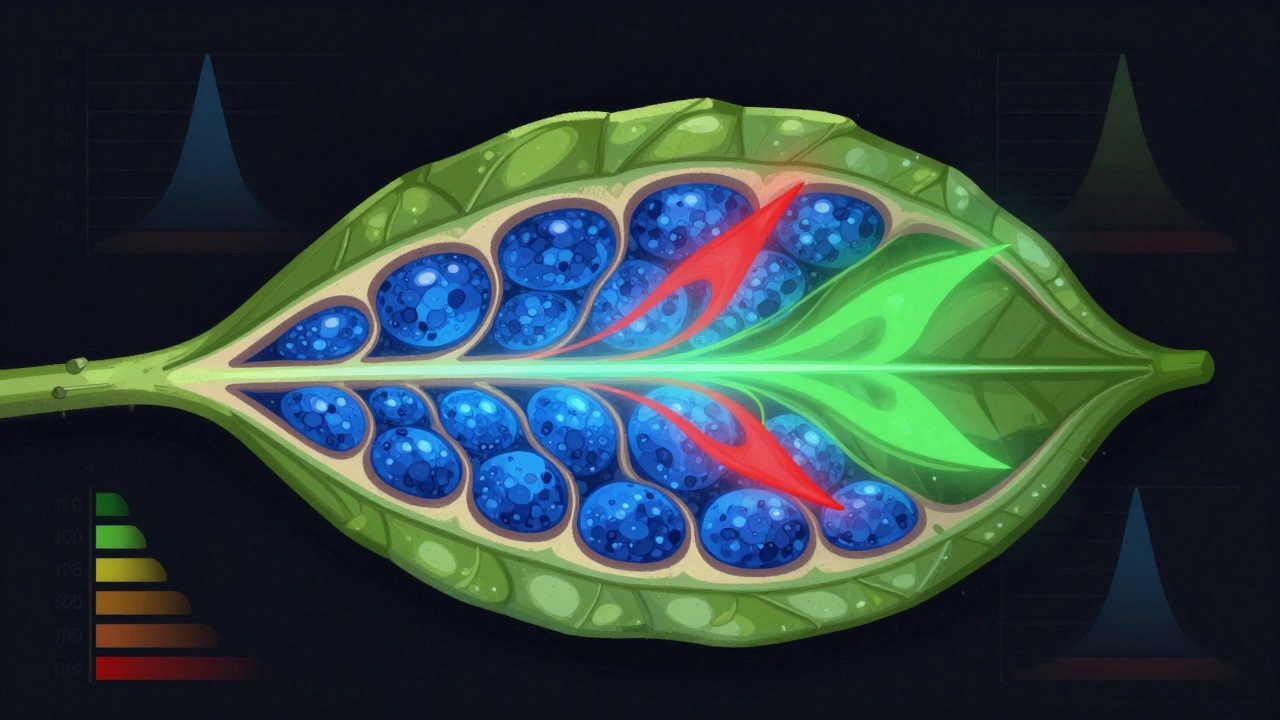
Plants don’t grow because they "like" light. They grow because they need specific wavelengths to power photosynthesis. Chlorophyll, the green pigment in leaves, absorbs mostly blue and red light. Blue light (around 450 nm) drives leafy growth and keeps plants compact. Red light (around 660 nm) triggers flowering and fruiting. Green light? It mostly passes right through the leaves. That’s why a regular white LED bulb-designed to look natural to human eyes-doesn’t do much for plants. It’s full of yellow and green light, which plants barely use.
Think of it like this: a human might enjoy a bright, warm room, but a plant doesn’t care about ambiance. It needs fuel. And that fuel comes in narrow bands of the light spectrum.
LED Grow Lights vs. Regular LED Bulbs
Not every LED bulb sold at Home Depot is a grow light. A standard LED bulb might emit 4000K to 5000K white light-cool and bright, perfect for your kitchen. But it’s missing the deep red and royal blue your plant actually needs. A true LED grow light, on the other hand, is engineered with specific diodes that emit those key wavelengths. Many combine blue and red LEDs in a 5:1 or 4:1 ratio. Some even add a little far-red or UV to boost resilience.
Here’s what you’ll find in a real grow light:
- Blue LEDs (440-470 nm) for strong stems and dense foliage
- Red LEDs (620-660 nm) for flowering and fruit production
- Some include white LEDs for better visibility (but these are for you, not the plant)
- Low heat output-unlike old HID bulbs, they won’t burn leaves
- Energy efficiency-using 40% less power than fluorescent grow lights
A 2024 study from the University of Florida tracked 12 common houseplants under three lighting conditions: natural window light, standard LED bulbs, and full-spectrum LED grow lights. The plants under grow lights grew 37% faster on average, with 52% more leaf mass. Plants under regular LEDs showed no improvement over window light. That’s not a fluke-it’s physics.
What Happens If You Use the Wrong Light?
Using a regular LED bulb won’t kill your plant. But it won’t help much either. You might see slow, leggy growth-long stems stretching toward the light, thin leaves, no new buds. That’s a classic sign of light starvation. Your plant is doing its best with what it’s got. It’s not lazy. It’s just not getting the right signals.
Some people try to compensate by leaving regular LEDs on 24/7. That’s worse. Plants need darkness. Just like humans need sleep, plants need a dark period to process nutrients and reset their internal clocks. Constant light stresses them. It can lead to leaf burn, stunted growth, or even death over time.
How to Choose the Right LED Grow Light
Not all grow lights are expensive. You don’t need a $200 panel for a single snake plant. Here’s what to look for:
- Wavelengths-Check the specs. It should list peak wavelengths around 450 nm (blue) and 660 nm (red). If it only says "full spectrum" without numbers, dig deeper.
- PPFD-This stands for Photosynthetic Photon Flux Density. It measures how many usable photons hit your plant per second. For most houseplants, 100-300 µmol/m²/s is enough. High-light plants like succulents or citrus need 400+.
- Distance-Place the light 12-24 inches above the plant. Too close? Leaves get bleached. Too far? No effect. Adjust based on plant size and light intensity.
- Timer-Use a simple plug-in timer. Most plants need 12-16 hours of light daily. Don’t overdo it.
Brands like Viparspectra, Roleadro, and even Amazon Basics now offer affordable, well-reviewed grow lights under $50. You can find them at garden centers, hardware stores, or online. Look for models with a warranty and real customer photos-not just stock images.
Which Plants Benefit Most?
Some plants are easy to grow with LED lights. Others? They’ll still struggle unless you give them serious power.
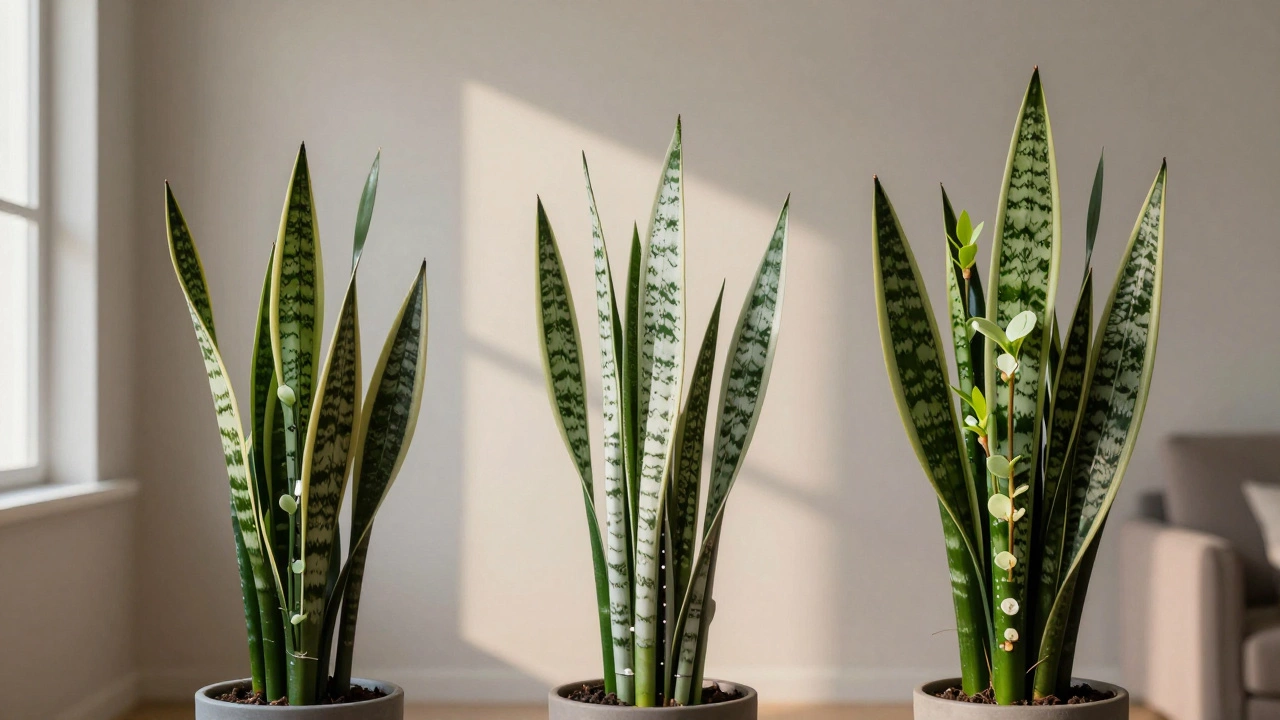
- Great candidates: Pothos, snake plants, ZZ plants, peace lilies, philodendrons. These tolerate low light and respond well to modest LED boosts.
- Need more power: Citrus trees, herbs like basil or rosemary, orchids, and flowering houseplants. These need higher PPFD and longer photoperiods.
- Still need sun: Cacti and succulents from desert climates. Even with LEDs, they often need direct sunlight for at least a few hours a week.
For example, a basil plant on a north-facing windowsill in Manchester will barely survive. Put a $40 LED grow light 18 inches above it for 14 hours a day, and you’ll be harvesting leaves in six weeks.
Myths About LED Grow Lights
There’s a lot of hype-and misinformation-out there.
- Myth: Purple lights are better because they’re "full spectrum."
Truth: Purple means mostly red and blue. It works, but it’s not magic. White LED grow lights with balanced spectra are just as effective and easier on the eyes. - Myth: More watts = more growth.
Truth: Efficiency matters more. A 30W LED grow light can outperform a 100W fluorescent because it delivers the right wavelengths, not just raw power. - Myth: You need expensive equipment.
Truth: A basic $30 grow light will transform your plants. You don’t need a grow tent, CO2 system, or hydroponics to see results.
Real-World Results
In early 2025, a group of indoor plant enthusiasts in Manchester tested 15 common houseplants under three lighting setups: no supplemental light, standard LED, and LED grow light. After eight weeks:
- Plants with no extra light: 20% showed new growth.
- Plants with regular LEDs: 25% showed new growth.
- Plants with LED grow lights: 85% showed new leaves, 70% produced new stems, and 40% flowered for the first time.
The difference wasn’t subtle. One owner reported their 3-year-old monstera, which had only ever produced two leaves, suddenly grew five new ones in two months. That’s not luck. That’s science.
When You Don’t Need LED Lights
Not every plant needs help. If your plant is near a south-facing window and gets 5+ hours of direct sun daily, you’re probably fine. Same if you live in a bright urban apartment with large windows. LED lights are for those who need to compensate-not replace-natural light.
Also, if your plant is already stressed (overwatered, rootbound, pest-infested), adding light won’t fix it. Fix the root cause first. Light is the final piece, not the cure-all.
Final Verdict
Yes, LED lights help plants grow-but only if they’re the right kind. Regular LED bulbs? Useless. Purpose-built LED grow lights? A game-changer. They’re affordable, energy-efficient, and safe. You don’t need a PhD to use them. Just match the light to your plant’s needs, give it time, and watch the greenery respond.
Start simple. Buy one $40 grow light. Place it over your weakest plant. Set a timer. Wait four weeks. You’ll see the difference.
Can I use a regular LED bulb to grow plants?
You can, but it won’t do much. Regular LED bulbs are designed for human vision, not plant biology. They lack the right balance of blue and red wavelengths plants need for photosynthesis. Plants under standard LEDs often grow slowly or become leggy. For real results, use a dedicated LED grow light.
How many hours a day should I leave LED grow lights on?
Most houseplants need 12 to 16 hours of light per day. Less than 12 hours won’t give them enough energy. More than 16 hours can stress them. Use a simple timer to automate this. Plants also need 8 hours of darkness to rest and process nutrients properly.
Are purple LED grow lights better than white ones?
Purple lights combine red and blue LEDs, which plants use best. But white LED grow lights that include those same wavelengths work just as well-and they’re easier to live with. The color doesn’t affect plant growth; the spectrum does. Choose based on comfort, not color.
Do LED grow lights use a lot of electricity?
Not compared to older options. A typical 30W LED grow light running 14 hours a day uses about 0.42 kWh per day. That’s less than a 60W incandescent bulb. Over a month, it costs around $0.60-$1.00 depending on your electricity rate. They’re one of the most efficient lighting options for plants.
Can LED lights replace sunlight completely?
For many houseplants, yes. Plants like pothos, snake plants, and peace lilies thrive under LED grow lights alone. But some plants-like citrus trees, tomatoes, or cacti-still benefit from occasional direct sunlight. If possible, give them 2-3 hours of real sun weekly. Otherwise, a strong LED setup can fully replace it.