Plant Deficiency Diagnostic Tool
Select the symptoms you are observing in your plants below to determine if you need Nitrogen or Magnesium.
Select a symptom on the left to see the diagnosis.
You’ve probably heard the gardening folk wisdom: sprinkle some Epsom salt on your roses or tomatoes, and they’ll grow bigger, greener, and faster. It’s a cheap fix, easy to find at any pharmacy, and smells like nothing. But does it actually add nitrogen to your soil? If you’re trying to boost leafy growth or fix yellowing plants, this distinction matters. Because if you think Epsom salt is a nitrogen source, you might be feeding your garden the wrong thing entirely.
| Substance | Primary Nutrients | Nitrogen Content (%) | Magnesium Content (%) | Best Used For |
|---|---|---|---|---|
| Epsom Salt | Magnesium, Sulfur | 0% | 9.8% | Correcting Mg deficiency, improving enzyme function |
| Urea | Nitrogen | 46% | 0% | Rapid leafy growth, high-demand crops |
| Ammonium Sulfate | Nitrogen, Sulfur | 21% | 0% | Acid-loving plants, nitrogen boost |
| Kieserite | Magnesium | 0% | ~27% | High-intensity magnesium correction |
The Short Answer: No Nitrogen Here
Let’s cut through the noise immediately. Epsom salt is chemically known as magnesium sulfate heptahydrate. Its formula is MgSO₄·7H₂O. Look closely at that chemical structure. You have Magnesium (Mg), Sulfur (S), Oxygen (O), and Hydrogen (H). Do you see an N for Nitrogen? Nope. There is absolutely zero nitrogen in Epsom salt. So, if your goal is to increase nitrogen levels to push out lush green leaves, Epsom salt won’t do the job. It’s not a nitrogen fertilizer. It’s a magnesium supplement.
This confusion often stems from the fact that both nitrogen and magnesium are essential macronutrients. Plants need them in relatively large amounts compared to micronutrients like iron or zinc. When a plant lacks either, it shows signs of stress. Yellowing leaves (chlorosis) can look similar whether the culprit is low nitrogen or low magnesium. That visual similarity leads many gardeners to assume that if one fixes yellowing, the other might too. But they work in completely different ways within the plant’s biology.
Why People Think It Adds Nitrogen
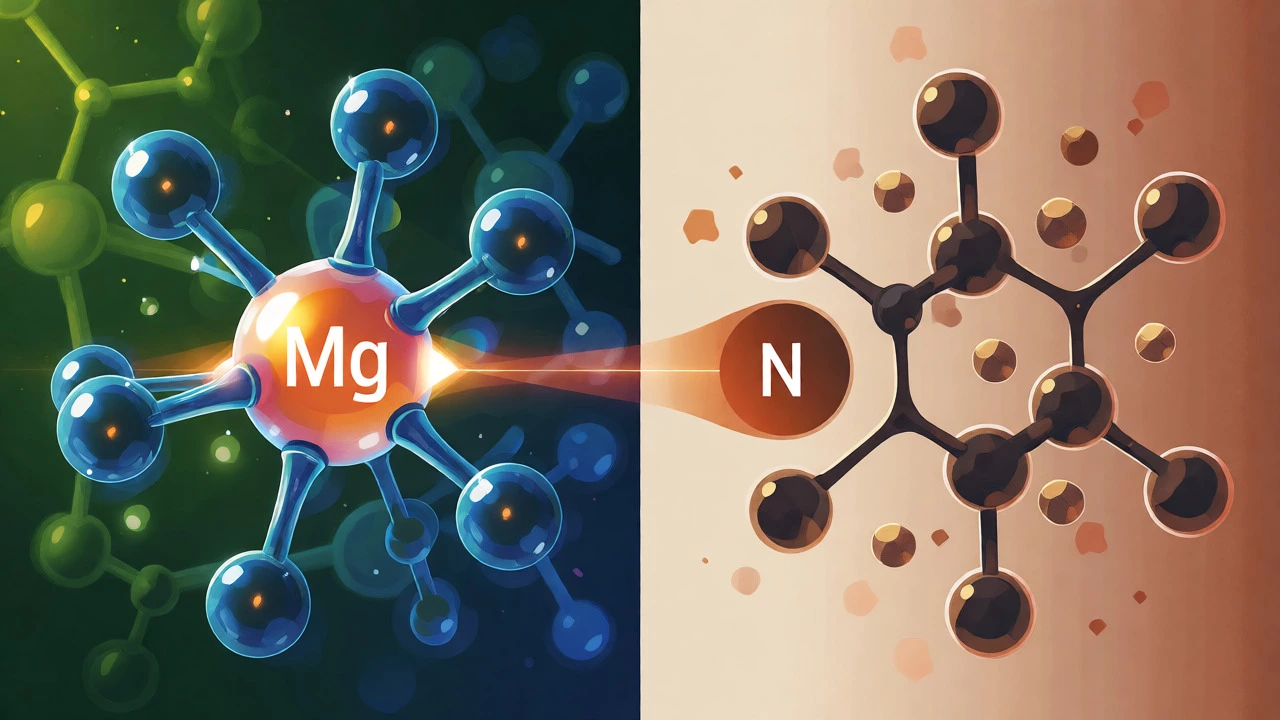
If you search online, you’ll find thousands of blog posts claiming Epsom salt boosts nitrogen uptake. Why? Because magnesium plays a critical role in how plants process nitrogen. Think of nitrogen as the raw material for building proteins and chlorophyll. Magnesium is part of the machinery that helps assemble those materials. Specifically, magnesium is the central atom in the chlorophyll molecule. Without enough magnesium, a plant cannot effectively use the nitrogen available in the soil, even if there’s plenty of it.
So, when you add Epsom salt to soil deficient in magnesium, the plant suddenly becomes more efficient at using existing nitrogen. The leaves turn greener, and growth seems to spike. It looks like you added nitrogen, but you actually just unlocked the potential of the nitrogen already there. This indirect effect is powerful, but it’s not the same as adding new nitrogen to the soil profile. If your soil is truly low on nitrogen, no amount of Epsom salt will fix it. You need a nitrogen source like composted manure, blood meal, or a synthetic urea-based fertilizer.
When Epsom Salt Actually Helps Your Garden
Just because it doesn’t add nitrogen doesn’t mean it’s useless. In fact, for specific problems, it’s one of the most effective tools in your shed. The key is knowing when your plants are screaming for magnesium rather than nitrogen. Magnesium deficiency is surprisingly common in sandy soils, which drain quickly and leach nutrients away, or in heavily fertilized gardens where high potassium levels can block magnesium absorption.
Look for these specific symptoms before reaching for the box:
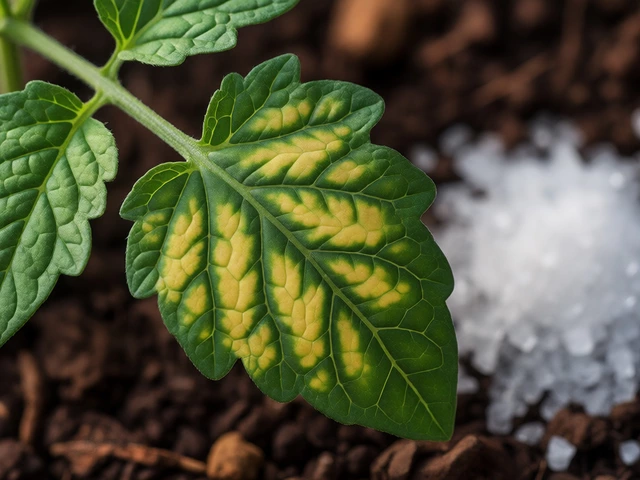
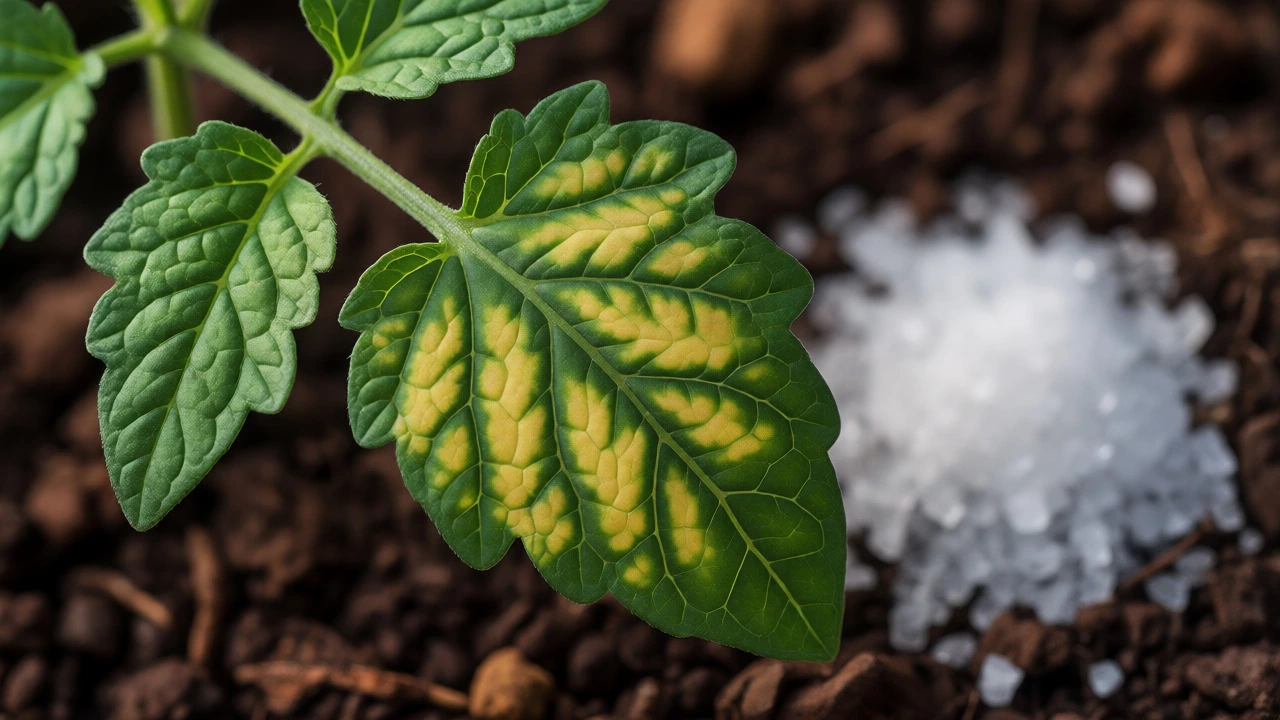
- Interveinal Chlorosis: The veins of older leaves stay green while the tissue between them turns yellow. This is the classic sign of magnesium deficiency. Nitrogen deficiency usually yellows the entire leaf, starting with the oldest ones.
- Purple or Reddish Tints: Sometimes, stressed plants produce anthocyanins, turning leaves purplish. While this can indicate phosphorus issues, it often accompanies magnesium stress in cool weather.
- Blossom End Rot in Tomatoes: While calcium is the primary suspect here, magnesium deficiency can interfere with calcium transport. If your tomatoes are rotting at the bottom despite adequate watering, check your magnesium levels.
- Sweet Corn Stripes: Young corn leaves may show yellow stripes along the edges. This is a textbook magnesium shortage indicator.
Certain plants are also heavy feeders of magnesium. Roses, peppers, tomatoes, and potatoes are notorious for needing extra magnesium. If you’re growing these in containers or poor soil, a regular dose of Epsom salt can prevent these deficiencies before they start. It’s preventative maintenance, not a cure-all for every yellow leaf.
How to Apply It Correctly
Since Epsom salt isn’t a general fertilizer, you shouldn’t dump it everywhere. Overuse can lead to nutrient imbalances, particularly interfering with calcium uptake. Too much magnesium can lock out calcium, leading to blossom end rot or tip burn in lettuce. Precision matters.
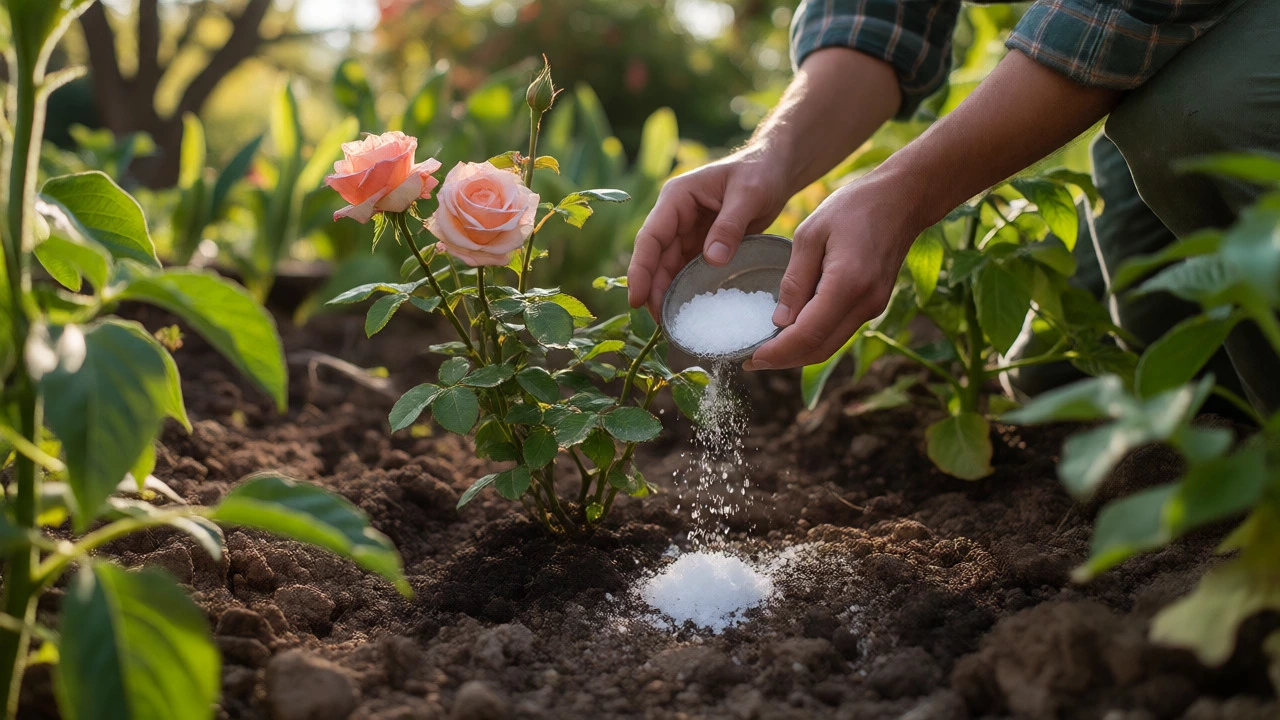
For soil application, mix about two tablespoons per gallon of water. Water the base of the plant thoroughly. This method works best for established shrubs and trees. For container plants, where nutrients wash out quickly, a weaker solution-half a tablespoon per gallon-applied monthly during the growing season keeps magnesium levels steady without overwhelming the root zone.
Foliar spraying is another highly effective method. Plants absorb nutrients directly through their leaves, bypassing soil issues entirely. Mix one tablespoon per gallon of water and spray the leaves early in the morning or late in the evening to avoid sunburn. This gives a quick boost if you notice deficiency signs mid-season. It’s faster than waiting for roots to uptake nutrients from the soil, but it’s temporary. You’ll still need to address the underlying soil health for long-term results.
The Role of Sulfur
We haven’t talked much about sulfur, the other main component of Epsom salt. Sulfur is essential for protein synthesis and enzyme activity. It contributes to the flavor of cruciferous vegetables like broccoli, cabbage, and Brussels sprouts. If your brassicas taste bland, sulfur deficiency might be partly to blame. Most gardeners don’t worry about sulfur because it’s present in rainwater and organic matter, but in very sandy or heavily cropped soils, it can become limiting. Epsom salt provides a small but useful amount of soluble sulfur, complementing its magnesium benefits.
However, don’t rely on Epsom salt as your primary sulfur source if you have a severe deficiency. Gypsum (calcium sulfate) is often preferred for sulfur correction because it adds calcium instead of magnesium, avoiding the risk of tipping the Ca:Mg balance. Use Epsom salt specifically when you know magnesium is the missing piece.
Testing Before Treating
The biggest mistake home gardeners make is guessing. They see yellow leaves and assume it’s a lack of something, then throw products at the problem. A simple soil test removes the guesswork. Many university extension services offer affordable testing kits that measure pH, nitrogen, phosphorus, potassium, and secondary nutrients like magnesium and calcium.
If your test shows low magnesium but adequate nitrogen, Epsom salt is your friend. If your test shows low nitrogen and normal magnesium, skip the Epsom salt and apply a nitrogen-rich amendment like feather meal or composted poultry litter. If both are low, use them together. Testing saves money and prevents over-fertilization, which can harm beneficial soil microbes and pollute local waterways.
Common Myths Debunked
Let’s tackle a few persistent myths. First, "Epsom salt makes plants grow faster." Not necessarily. It makes healthy plants healthier if they were deficient. If your plant has all the nutrients it needs, adding more magnesium won’t speed up growth; it might even slow it down due to ion competition. Second, "It repels pests." Some claim it deters slugs or voles. There’s little scientific evidence to support this. Slugs glide right over it. Voles don’t care about the taste. Rely on physical barriers or targeted baits for pest control, not minerals.
Third, "It improves soil structure." Unlike gypsum, which helps break up clay by displacing sodium, Epsom salt doesn’t significantly alter soil texture. It dissolves completely and moves into the plant or leaches away. Don’t expect it to loosen compacted earth. For that, you need organic matter like compost or cover crops.
Can I use Epsom salt instead of fertilizer?
No, Epsom salt is not a complete fertilizer. It only provides magnesium and sulfur. It lacks nitrogen, phosphorus, and potassium, which are the primary macronutrients plants need for overall growth. Use it as a supplement to correct specific deficiencies, not as a replacement for a balanced fertilizer program.
Will Epsom salt help my yellow tomato leaves?
It depends on why they are yellow. If the yellowing is between the veins on older leaves (interveinal chlorosis), it is likely a magnesium deficiency, and Epsom salt will help. If the entire leaf is pale yellow, including the veins, it is likely a nitrogen deficiency, and Epsom salt will not help. Check the pattern of yellowing before applying.
Is Epsom salt safe for all plants?
Generally, yes, but caution is needed. Acid-loving plants like azaleas and blueberries prefer lower pH and may not benefit from the slight alkalinity change, though Epsom salt is nearly neutral. Plants sensitive to high salt concentrations, such as ferns or certain houseplants, should be used sparingly. Always start with a lower concentration if unsure.
How often should I apply Epsom salt?
For most garden vegetables and flowers, applying once a month during the active growing season is sufficient. For heavy feeders like tomatoes and peppers, bi-weekly applications can be beneficial. Avoid frequent applications in winter or dormancy periods, as plants do not take up nutrients efficiently then, leading to salt buildup.
Does Epsom salt raise soil pH?
Epsom salt is essentially neutral in terms of pH impact. It does not significantly acidify or alkalinize the soil like lime or sulfur amendments do. Its primary effect is nutritional, providing ions for plant uptake rather than altering the hydrogen ion concentration in the soil solution.