Bonsai Watering Guide
Find the perfect watering schedule for your new bonsai tree. Based on species and location, this tool will show you how often to water and what to watch for.
Your Watering Schedule
Most people think bonsai trees are delicate, high-maintenance plants that only experts can keep alive. That’s not true. If you’ve ever stared at a tiny tree in a shallow pot and wondered how it survives, you’re not alone. Bonsai trees aren’t magic. They’re just regular trees trained to stay small. With the right basics, even someone who’s killed a cactus can grow a healthy bonsai.
Start with the right tree
Not all trees make good beginner bonsai. Some need constant humidity, precise temperatures, or years of shaping before they look right. Stick to hardy species that forgive mistakes. The best choices for first-timers are:
- Juniper - Tolerates dry air and irregular watering. Grows slowly, so you won’t feel rushed.
- Ficus - Thrives indoors. Loses leaves if stressed, but grows new ones fast.
- Chinese Elm - Adapts to indoor or outdoor conditions. Easy to prune and shape.
- Japanese Maple - Gorgeous fall color, but needs protection from strong sun and wind.
Avoid pine, spruce, or cedar as your first tree. They’re beautiful, but they demand more experience. Buy from a local nursery, not a gas station or online seller who ships bare-root trees. A healthy bonsai has firm roots, green leaves, and no signs of mold or pests.
Watering is everything
Most bonsai die from too much or too little water - not because they’re fancy, but because people treat them like houseplants. A bonsai pot is tiny. It holds maybe a cup of soil. That soil dries out fast, especially in sun or heat. But if you water every day, the roots rot.
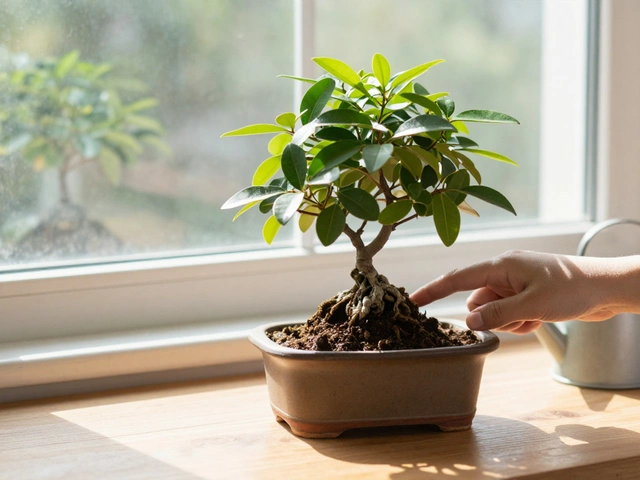
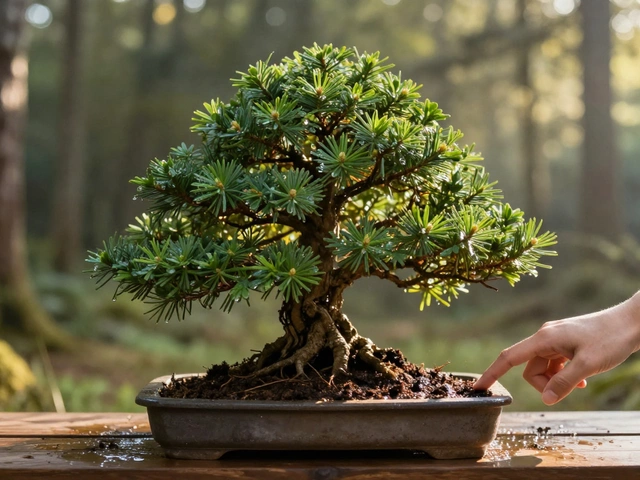
Here’s how to get it right: Stick your finger into the soil up to the first knuckle. If it feels dry, water. If it’s damp, wait. That’s it. No schedule. No timer. No guessing.
When you water, do it slowly. Pour until water runs out the bottom. Let it drain completely. Don’t leave the pot sitting in a saucer of water. That’s how root rot starts. In summer, you might water every 2-3 days. In winter, maybe once a week. Watch the soil, not the calendar.
Light and location matter more than you think
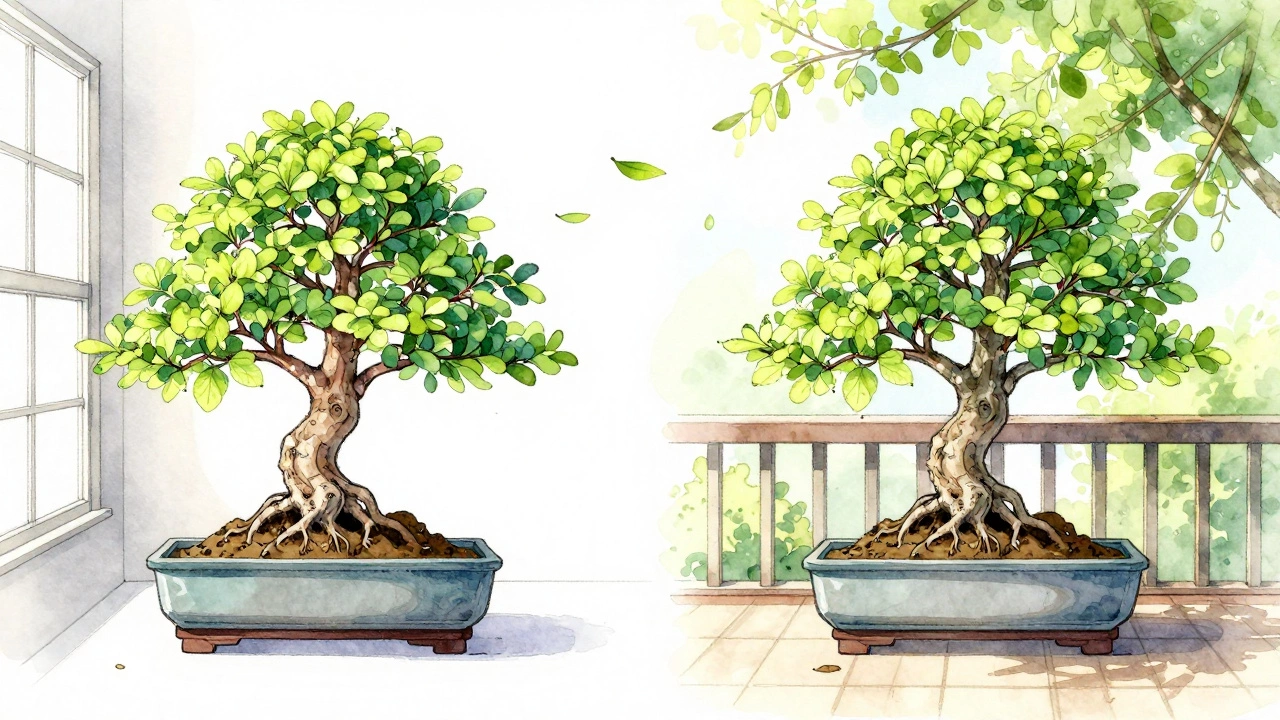
Bonsai trees aren’t indoor decorations. They’re outdoor plants that can tolerate indoor conditions for short periods. If you keep your bonsai inside year-round, it will weaken. Most need at least 4-6 hours of direct sunlight daily.
Place your tree near a south-facing window if you’re keeping it indoors. East or west windows work too, but it won’t grow as fast. In spring and summer, move it outside. A balcony, patio, or even a shaded spot under a tree is fine. Bring it back inside when temperatures drop below 40°F (4°C).
Don’t put it in full sun all day if you just moved it outdoors. That’s like taking someone from a basement into a desert. Ease them in. Start with morning sun and shade in the afternoon. After a week, it can handle more.
Pruning keeps it small - and beautiful
Pruning isn’t optional. It’s how you control shape and encourage dense growth. You’ll do two kinds: maintenance pruning and structural pruning.
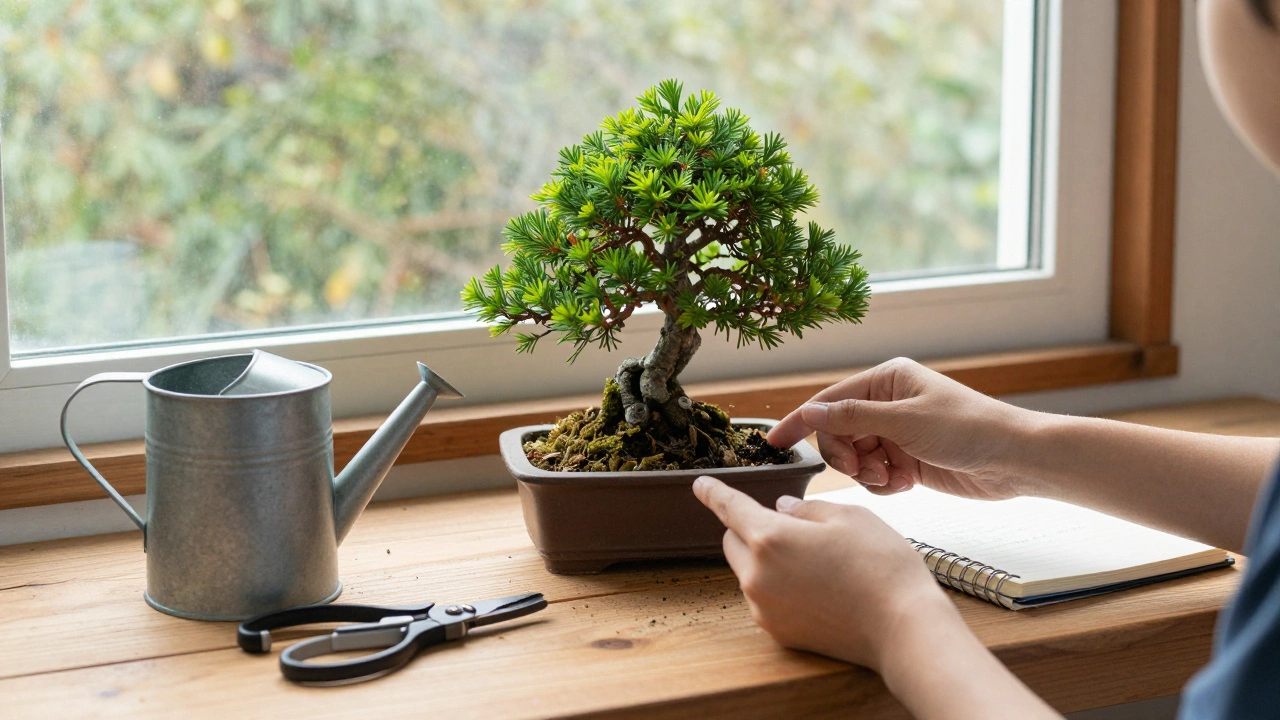
Maintenance pruning is regular. Every few weeks, pinch off new shoots that grow too long. Use your fingers, not scissors, for soft new growth. It’s cleaner and less stressful for the tree. Cut back anything that sticks out or looks messy. The goal isn’t perfection - it’s balance.
Structural pruning is for shaping. Do this in late winter or early spring, before new growth starts. Use sharp, clean shears. Remove branches that cross, grow inward, or make the tree look lopsided. Don’t cut more than 30% of the foliage at once. Trees need leaves to make food.
After pruning, keep the tree in shade for a few days. It’s recovering. Don’t water right after heavy pruning - wait a day. Wet soil + pruning wounds = rot risk.
Soil and repotting - the hidden key
Bonsai soil isn’t regular potting mix. It’s gritty, fast-draining, and doesn’t hold water. Regular soil turns to mud in a small pot. That kills roots.
Use a mix of akadama (a baked clay), pumice, and lava rock in a 2:1:1 ratio. You can buy pre-mixed bonsai soil at garden centers. If you can’t find it, mix regular potting soil with coarse sand or perlite - about half and half.
Repot every 2-3 years for young trees, every 4-5 for older ones. Spring is best. Gently remove the tree, shake off old soil, and trim the roots - cut back about 20-30%. This keeps the roots from choking the pot. Put it back in fresh soil, water well, and keep it in shade for 2 weeks.
Don’t repot a sick tree. Wait until it’s strong. Don’t repot right after pruning. Give it time to recover.
Fertilizing - less is more
Bonsai trees grow slowly. They don’t need much food. Over-fertilizing burns roots and kills trees faster than underwatering.
Use a balanced, liquid fertilizer (10-10-10) every 2-4 weeks during spring and summer. Stop in fall. No fertilizer in winter. Dilute it to half strength. Pour it with water - never dry on soil.
Some people use slow-release pellets. They’re fine if you follow the package. But liquid is easier to control. If your leaves turn yellow or drop, you’re probably feeding too much. Stop for a month and see if it improves.
Common mistakes beginners make
- Watering on a schedule instead of checking the soil
- Keeping the tree indoors all year
- Using regular potting soil
- Pruning too much at once
- Buying a tree that’s already stressed or over-pruned
- Thinking it needs to look like a picture from a book
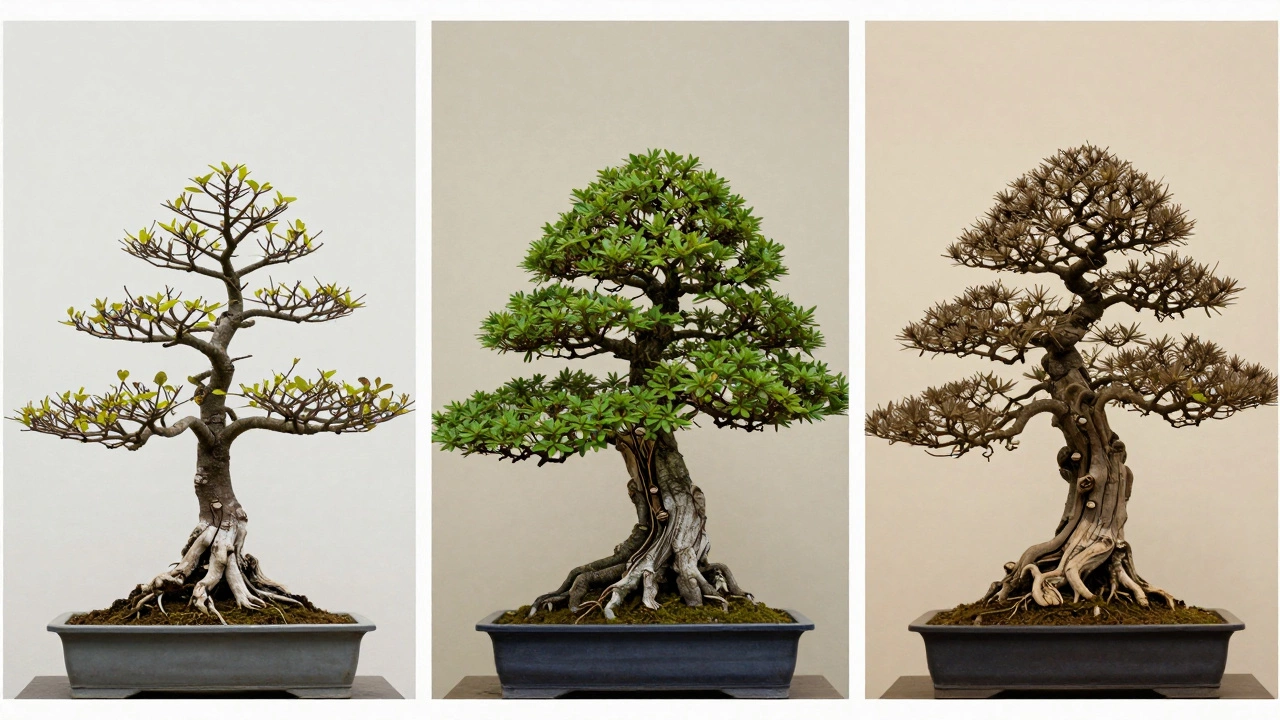
The biggest mistake? Giving up too soon. Bonsai don’t grow overnight. A tree that looks great after 5 years took 3 years to get to that point. You’re not failing if your tree doesn’t look perfect after 6 months. You’re learning.
What to expect in the first year
Month 1-3: The tree adjusts. Some leaves may drop. That’s normal. Don’t panic. Keep it watered and in good light.
Month 4-6: New growth appears. Start pinching back shoots. You’ll see where you want to shape the tree.
Month 7-12: Branches thicken. Roots fill the pot. You’ll start to see the tree’s character. It won’t look like a magazine photo yet - and that’s okay.
By the end of the year, you’ll know your tree. You’ll feel when it needs water. You’ll recognize healthy buds. That’s the real win. Not the shape. Not the size. The connection.
Next steps
Once you’ve got the basics down - watering, light, pruning, soil - you can start experimenting. Try wiring branches to guide their direction. Try different pot styles. Try growing from seed. But don’t rush. Bonsai isn’t a project. It’s a habit.
Join a local bonsai club. Watch videos from trusted sources like the Bonsai Empire channel. Read books by John Naka or Yuji Yoshimura. But remember: no one else’s tree is your tree. Your job isn’t to copy. It’s to care.
Can I keep a bonsai tree indoors permanently?
Most bonsai trees need outdoor seasons to thrive. Indoor-only bonsai usually weaken over time and die within 2-3 years. Ficus and some tropical species can survive indoors longer, but even they need bright light and seasonal outdoor time. For best results, treat your bonsai like a plant that belongs outside - bring it in only when temperatures drop below 40°F (4°C).
How often should I repot my bonsai?
Young bonsai (under 5 years old) need repotting every 2 years. Mature trees can go 4-5 years. Signs it’s time: roots circling the pot, water running straight through without soaking in, or slow growth despite good care. Always repot in early spring, before new buds open.
Why are my bonsai leaves turning yellow?
Yellow leaves usually mean one of three things: overwatering, underwatering, or too much fertilizer. Check the soil - if it’s soggy, cut back on water. If it’s bone dry, water deeply. If you’ve been fertilizing every week, stop for a month. Also, sudden changes in light or temperature can cause temporary yellowing. Wait a few weeks before assuming it’s a problem.
Can I use regular potting soil for my bonsai?
No. Regular potting soil holds too much water and compacts over time. Bonsai roots need air as much as water. Use a gritty mix of akadama, pumice, and lava rock, or a pre-made bonsai soil. If you must improvise, mix equal parts potting soil and coarse sand or perlite - but this is a temporary fix.
How long does it take for a bonsai to look mature?
It takes at least 5-7 years of consistent care to develop a tree that looks naturally aged. Some trees take decades. But you don’t need perfection to enjoy it. Even a simple, healthy bonsai with one well-placed branch can be deeply satisfying. The beauty isn’t in age - it’s in the attention you give it.
If you’ve made it this far, you’re already better than most people who buy bonsai. You didn’t just buy a tree - you started a relationship. Keep watering. Keep watching. Keep caring. That’s all it takes.