Bonsai Watering Calculator
How Often Should You Water Your Bonsai?
The #1 mistake beginners make with bonsai is overwatering. This tool helps you calculate the right frequency based on your tree's species and growing conditions.
Most people think bonsai trees are delicate, high-maintenance trophies only experts can grow. But that’s not true. A bonsai tree doesn’t need fancy tools, expensive soil, or a greenhouse. It just needs consistent, simple care. If you’re new to bonsai, the hardest part isn’t learning how to prune or wire branches-it’s knowing what to do every day without overthinking it. You don’t need to be a gardener to keep a bonsai alive. You just need to pay attention.
Start with the right tree
Not all trees make good beginner bonsai. Some species are forgiving. Others will die if you miss a watering. For your first tree, pick one of these three: Juniper, Ficus, or Chinese Elm. Junipers are tough and handle dry air well. Ficus trees thrive indoors and bounce back from mistakes. Chinese Elms are hardy, grow fast, and show clear signs when they’re unhappy. Avoid expensive or rare species like pine or maple until you’ve had a tree for at least a year.
Buy from a local nursery or a trusted online seller who ships live plants with proper root protection. Avoid buying from flea markets or tourist shops where trees are often stressed or already dying. A healthy beginner bonsai should have green leaves, firm branches, and moist (not soggy) soil. The pot should be shallow, with drainage holes. If the roots are circling tightly or the soil smells bad, walk away.
Watering: The #1 mistake beginners make
Overwatering kills more bonsai than underwatering. But so does letting the soil dry out completely. The trick isn’t to water on a schedule-it’s to check the soil every day.
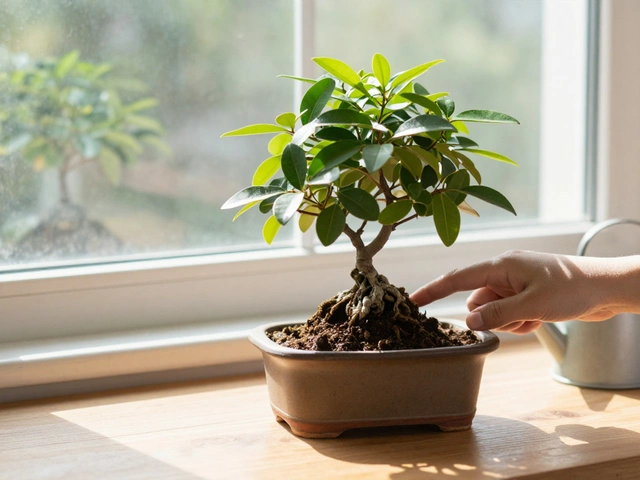
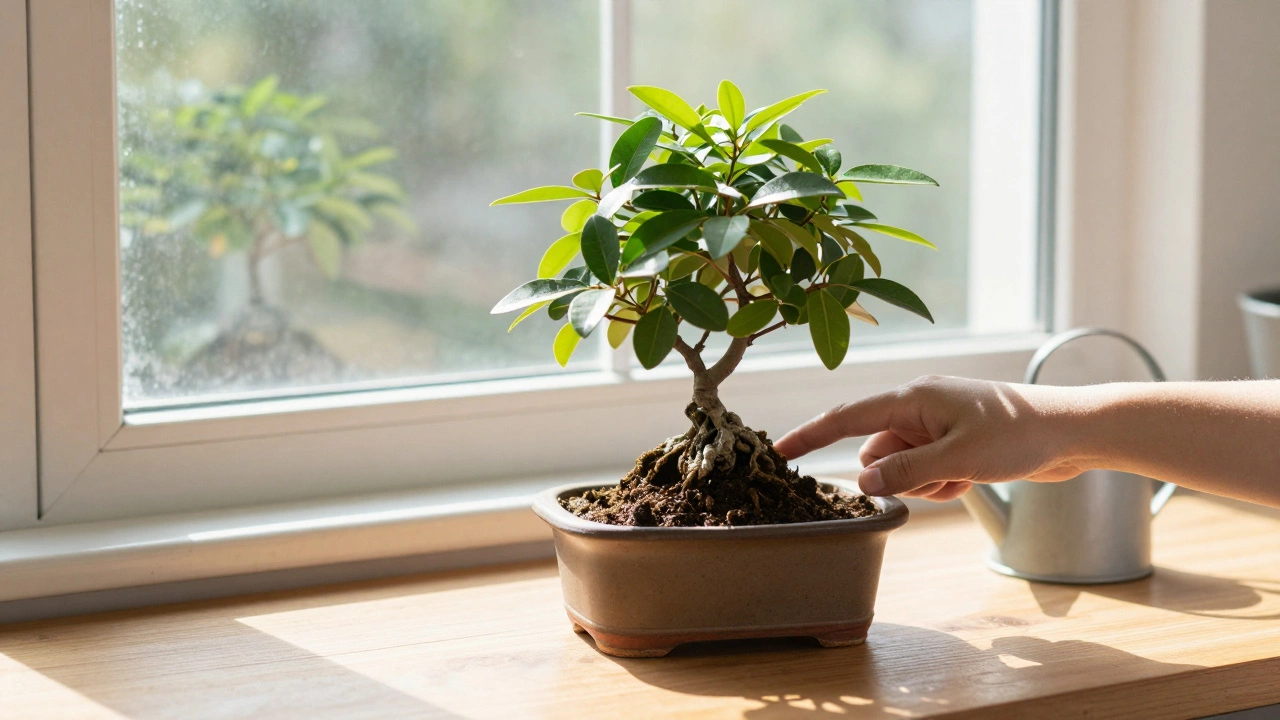
Stick your finger about half an inch into the soil. If it feels dry, water. If it’s still damp, wait another day. When you do water, soak the soil until water runs out the bottom. Let the pot drain fully. Never let the bonsai sit in a saucer of water. That’s how root rot starts.
Use room-temperature water. Cold water shocks the roots. Rainwater is ideal, but tap water works fine if you let it sit out overnight to let chlorine evaporate. In winter, when indoor heating dries the air, mist the leaves lightly in the morning. Don’t spray at night-it traps moisture and invites fungus.
Light: Where to put your bonsai
Bonsai trees need light, but not all light is the same. Most indoor bonsai need bright, indirect sunlight. A south-facing window is best in the northern hemisphere. East or west windows work too, but you might need to rotate the tree every few weeks so all sides get even light.
If your tree starts dropping leaves, turning yellow, or growing long, weak branches, it’s not getting enough light. Move it closer to the window. Don’t put it in direct midday sun through glass-that can scorch the leaves. Outdoor bonsai need partial shade in summer. Junipers and Chinese Elms can stay outside year-round in mild climates, but bring them inside when temperatures drop below freezing.
Don’t rely on artificial grow lights unless you’re in a basement or windowless room. A regular LED lamp won’t cut it. You need full-spectrum grow lights, and even then, they’re not as good as natural light.
Soil and repotting: Don’t panic
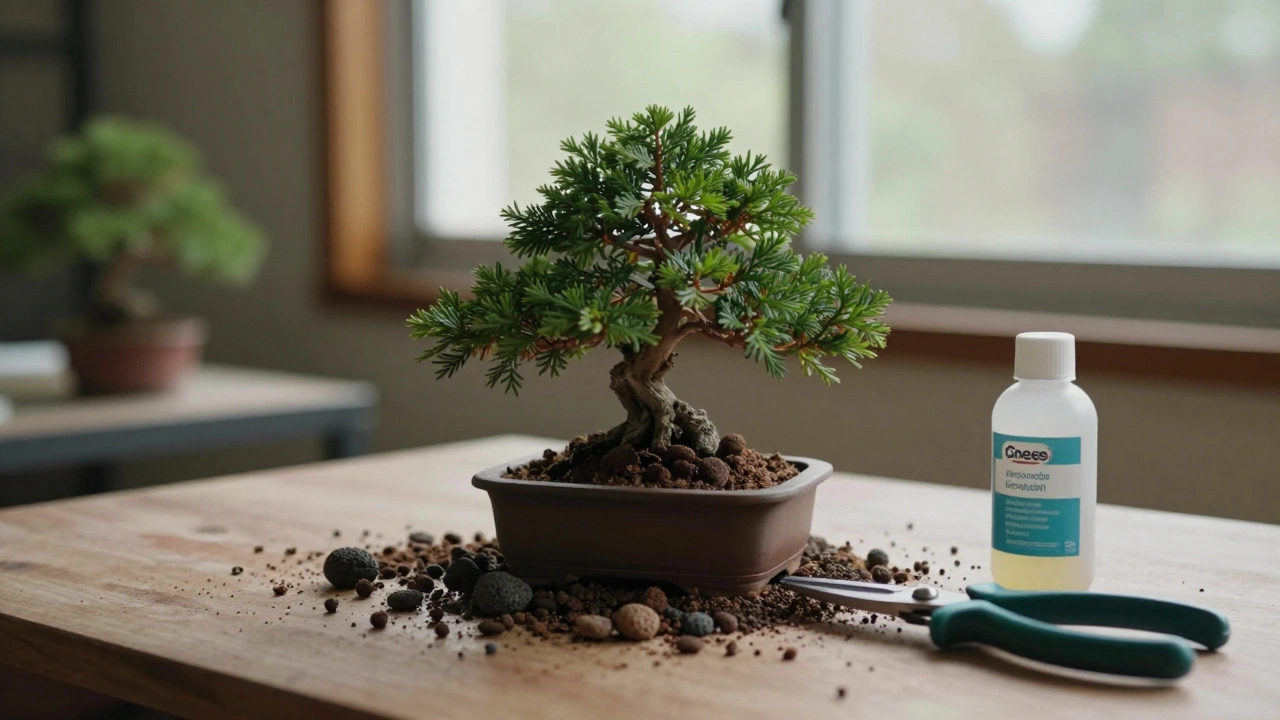
Bonsai soil isn’t regular potting mix. It’s a special blend that drains fast and holds just enough moisture. Most beginner bonsai come in a mix of akadama, pumice, and lava rock. This mix lets air reach the roots while preventing waterlogging.
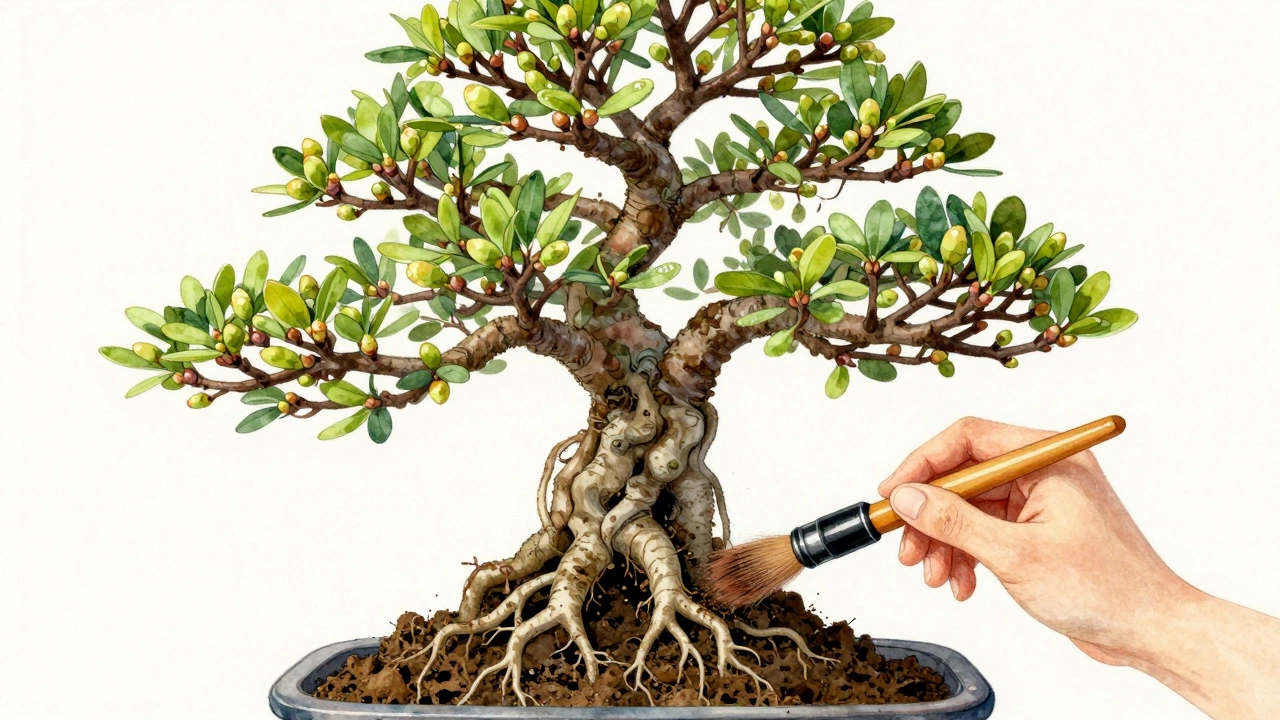
You don’t need to repot your bonsai every year. Most trees only need repotting every 2-3 years. Signs it’s time: water runs straight through the pot without soaking in, roots are visible on the surface, or the tree stops growing. Repot in early spring, before new growth starts. Gently remove the tree, trim about 20% of the roots, and replant in fresh bonsai soil. Don’t fertilize for 4-6 weeks after repotting.
Don’t use regular garden soil. It compacts. Don’t use cactus soil alone-it drains too fast. Buy a premade bonsai soil mix from a garden center or online. It’s cheaper than you think and saves you from killing your tree.
Pruning and shaping: Less is more
Pruning isn’t about making your bonsai look like a sculpture. It’s about keeping it healthy and balanced. Remove dead or crossing branches. Trim back long shoots that grow out of shape. Use sharp, clean scissors. Don’t cut too much at once. A good rule: never remove more than 25% of the foliage in one go.
Wiring is optional for beginners. It’s used to bend branches into position, but it’s easy to damage the bark if you’re not careful. If you want to try it, use aluminum wire, wrap it loosely, and check it every few weeks. Remove it before it cuts into the bark. Most beginners should focus on pruning first. Let the tree grow naturally for a year before you start shaping.
Fertilizing: Feed lightly, not often
Bonsai trees grow in small pots with limited soil. They need nutrients, but too much fertilizer burns the roots. Use a balanced liquid fertilizer-like 10-10-10-diluted to half strength. Apply every 2-4 weeks during spring and summer. Stop feeding in fall and winter. Your tree doesn’t need food when it’s dormant.
Don’t use compost tea, manure, or miracle-gro. These are too strong. Stick to a simple, water-soluble bonsai fertilizer. You can buy it at any garden center. A 100ml bottle lasts months. A little goes a long way.
Common problems and how to fix them
Yellow leaves? Usually overwatering. Let the soil dry out longer between waterings.
Leaf drop? Could be low light, dry air, or sudden temperature changes. Move the tree to a brighter spot and keep it away from radiators or drafty windows.
White spots on leaves? Probably scale insects. Wipe them off with a cotton swab dipped in rubbing alcohol. Or spray with neem oil once a week for two weeks.
Roots rotting? The soil stayed wet too long. Repot immediately. Cut off any black, mushy roots. Use fresh soil. Water less.
If your tree looks sick, don’t panic. Bonsai are resilient. Most problems are fixable if you catch them early. The key is observation. Check your tree every day. Notice the color of the leaves. Feel the soil. Watch how the branches grow. You’ll learn its rhythm.
What to expect in the first year
Your first bonsai won’t look like the ones in magazines. That’s fine. In the first 3 months, you’ll learn how to water it right. By 6 months, you’ll notice new buds forming. At 12 months, you’ll see real progress-the trunk thickens slightly, branches become more defined, and you’ll feel proud because you didn’t kill it.
Bonsai isn’t about instant results. It’s about patience. You’re not growing a tree. You’re building a relationship with one. Some days, it’ll look perfect. Other days, it’ll look like it’s dying. That’s normal. You’ll learn to trust the process.
After a year, you’ll know if you want to keep going. Maybe you’ll buy a second tree. Maybe you’ll start wiring branches. Maybe you’ll join a local bonsai club. Or maybe you’ll just enjoy your little tree on the windowsill, quiet and alive, because you cared for it every day.
How often should I water my bonsai tree?
Check the soil every day. Water only when the top half-inch feels dry. Soak the soil until water drains from the bottom, then let it drain fully. Never leave the pot sitting in water. Frequency depends on season, temperature, and pot size-sometimes every 2 days, sometimes once a week.
Can I keep a bonsai tree indoors?
Yes, but only certain species. Ficus, Chinese Elm, and Juniper can thrive indoors if they get bright, indirect light. Avoid placing them near heaters or air conditioners. Most outdoor bonsai, like pines and maples, need to live outside year-round. Indoor bonsai still need seasonal rest-don’t keep them in warm rooms all winter.
Do bonsai trees need special soil?
Yes. Regular potting soil holds too much water and suffocates roots. Use a mix of akadama, pumice, and lava rock for good drainage and airflow. You can buy premade bonsai soil online or at garden centers. It’s inexpensive and worth the investment.
When should I prune my bonsai?
Prune during spring and summer when the tree is actively growing. Remove dead or crossing branches anytime. Avoid heavy pruning in fall or winter. For shaping, wait until the tree is healthy and established-usually after its first year. Never remove more than 25% of the leaves at once.
Why are the leaves on my bonsai turning brown?
Brown leaves usually mean underwatering, too much sun, or dry air. Check the soil-if it’s dry, water deeply. If the tree is in direct sunlight through a window, move it back. Mist the leaves in the morning if indoor air is dry. If the browning is only on older leaves, it may be natural shedding.
Is bonsai care expensive?
Not at all. A beginner bonsai tree costs £15-£40. Soil mix is £8-£12 per bag. Basic pruning shears cost £10. Fertilizer lasts months. You don’t need wires, pots, or tools right away. Most expenses come after you’ve had your first tree for a year and want to upgrade.