Bonsai Watering Calculator
How to Use This Calculator
Based on the article "How to Make Your Bonsai Happy: Simple Care Tips That Actually Work"
💡 Important: The article states "watering is the #1 reason bonsai die" and emphasizes checking soil moisture rather than following a schedule.
💧 Never water on a schedule: Always check soil moisture first - stick your finger half an inch into the soil.
⚠️ Overwatering warning: If you see yellowing leaves or root rot, reduce watering frequency immediately.
🌿 Optimal Watering Schedule
Estimated Watering Frequency:
Moisture Check:
Article Advice: Water only when soil feels dry at 0.5 inches depth.
Most people think bonsai are delicate, high-maintenance plants that need perfect conditions to survive. The truth? A happy bonsai doesn’t need fancy tools or hours of daily attention. It just needs consistency, patience, and a few basic things done right. If your bonsai is losing leaves, turning yellow, or looking weak, it’s not dying from neglect-it’s probably being over-cared for.
Watering: Less Is More
Watering is the #1 reason bonsai die. People water daily because they see the soil dry out and assume the tree is thirsty. But bonsai roots rot fast in soggy soil. The trick isn’t how often you water-it’s how you check.
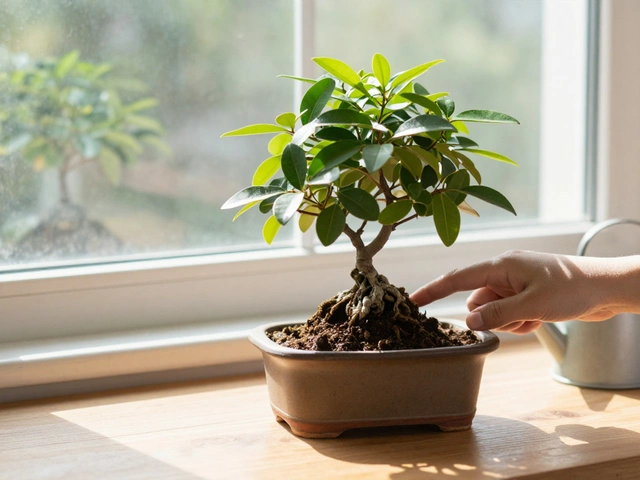
Stick your finger about half an inch into the soil. If it’s damp, leave it alone. If it’s dry, water thoroughly until water runs out the drainage holes. Then wait. Most bonsai need water every 3 to 7 days, depending on the season. In winter, some go two weeks without water. In summer, you might need to water every other day. But never on a schedule. Always check the soil first.
Use room-temperature water. Cold water shocks the roots. Rainwater is ideal, but tap water works fine if you let it sit out overnight. Avoid letting the pot sit in a saucer of water. That’s how root rot starts.
Light: It Needs Sun, Not Just a Window
Most bonsai are outdoor trees. They evolved to grow in full sun, not on a windowsill. Keeping a juniper or maple inside year-round is like forcing a dog to live in a closet. It won’t thrive.
Place your bonsai outside in a spot that gets morning sun and afternoon shade. That’s the sweet spot for most species. If you live in a place with harsh winters, bring it inside only when temperatures drop below freezing. Even then, it needs bright light-ideally a south-facing window. But don’t leave it inside for more than a few weeks. Bonsai need seasonal changes. They need cold to rest. They need heat to grow.
Indoor bonsai like ficus or Chinese elm can survive longer inside, but they still need 4-6 hours of direct sunlight. A dim corner won’t cut it. If your tree’s leaves are small, pale, or falling off, it’s not getting enough light. Move it. Now.
Soil: Don’t Use Regular Potting Mix
Regular potting soil holds too much water. It suffocates bonsai roots. Bonsai need fast-draining soil that lets air reach the roots. The standard mix is 1 part akadama, 1 part pumice, and 1 part lava rock. You can buy this pre-mixed, or make your own.
Akadama is a special clay that breaks down slowly and holds just enough moisture. Pumice and lava rock create air pockets. Together, they let water drain fast but still hold enough for the roots to breathe. If you’ve been using regular potting soil, your tree’s roots may already be rotting. Repotting every 2-3 years (for younger trees) or 3-5 years (for mature ones) is essential. Do it in early spring, before new growth starts.
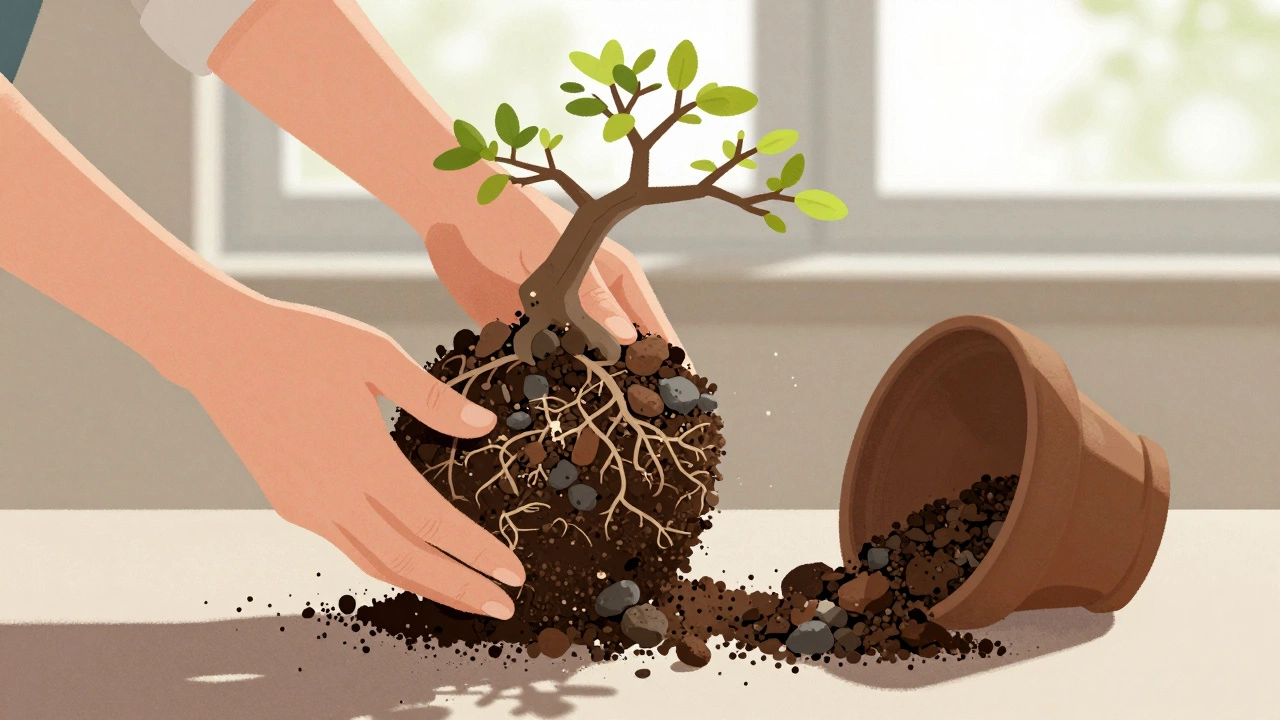
When repotting, gently remove old soil, trim any thick, circling roots, and loosen the root ball. Don’t cut too much-just enough to encourage new feeder roots. Then repot in fresh soil. Water well, and keep it shaded for a week while it recovers.
Pruning: Shape It, Don’t Starve It
Pruning isn’t about making your bonsai look like a sculpture. It’s about keeping it healthy. Every tree needs to balance its roots and leaves. If you let it grow wild, the top gets heavy and the roots starve. If you prune too hard, the tree panics and goes into survival mode.
Use sharp, clean shears. Cut back new growth when it has 5-6 leaves. Pinch off the tips with your fingers to encourage branching. Remove any dead or crossing branches. Don’t prune in winter-wait until spring or summer when the tree is actively growing.
Wire shaping is optional. If you do it, use aluminum or copper wire, not steel. Wrap it loosely so it doesn’t cut into the bark. Remove it after 4-6 months. If you leave it too long, it will scar the tree. And never wire a weak or sick tree. Wait until it’s strong.
Fertilizing: Feed Lightly, Not Often
Bonsai don’t need fertilizer like lawn grass. Too much burns the roots. Use a balanced, slow-release organic fertilizer-like fish emulsion or pelletized compost-once a month during the growing season (spring to early fall). Stop feeding in late summer. The tree needs to harden off before winter.
Never fertilize a dry tree. Water it first, then feed. Never fertilize right after repotting. Wait at least 4 weeks. And never use lawn fertilizer. It’s too strong. A good rule: if you’re unsure, skip it. A bonsai that gets no fertilizer for a month will be fine. One that gets too much might not survive.
Seasons Matter More Than You Think
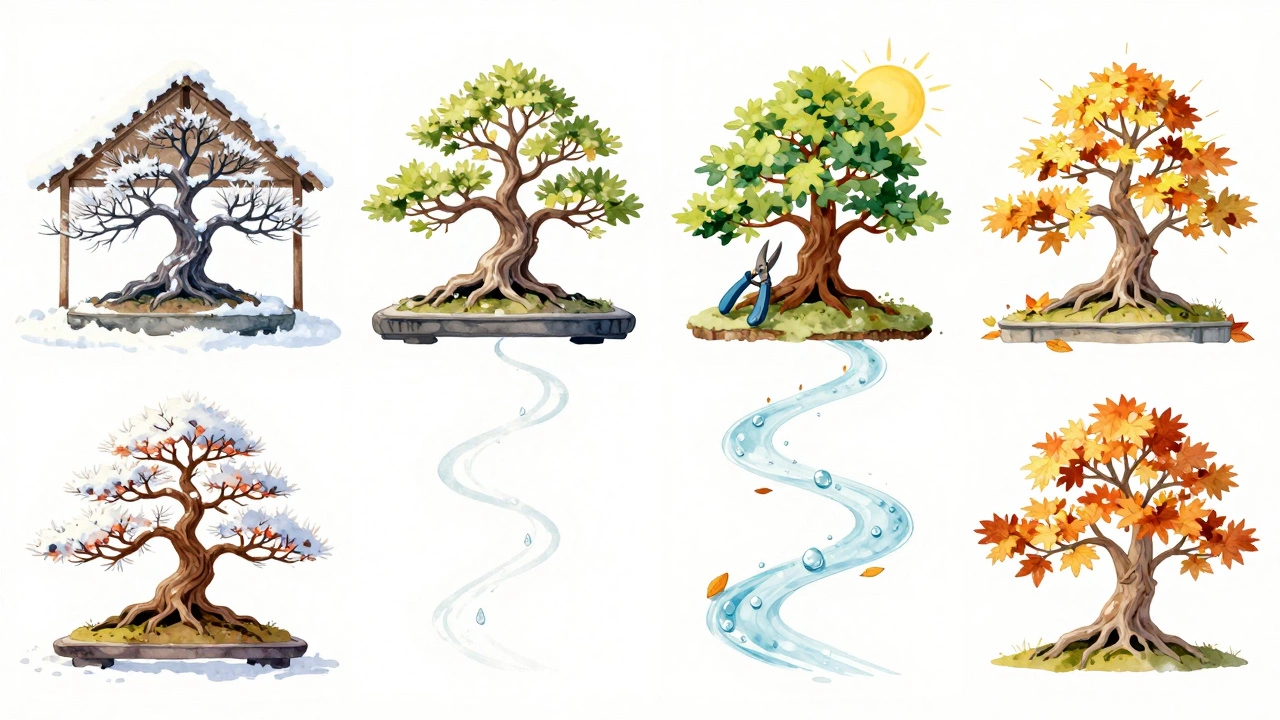
Bonsai don’t live in a constant spring. They follow nature. In winter, they go dormant. Their growth slows. Their water needs drop. Their leaves may fall. That’s normal. Don’t panic. Don’t overwater. Don’t bring it inside unless it’s freezing.
In spring, new buds appear. That’s when you prune, repot, and feed. In summer, growth is fast. Watch for pests. Keep it shaded from midday sun. In fall, growth slows. Stop fertilizing. Let the leaves change color. In winter, let it rest. Keep it in a cool, dark place-like a garage or unheated shed. If you live in a mild climate, it can stay outside. Just protect it from icy winds.
Most bonsai die in winter-not because it’s too cold, but because people keep them warm and wet indoors. Let them sleep.
Signs Your Bonsai Is Happy
A happy bonsai doesn’t scream for attention. It just looks like itself. Healthy leaves are firm, not limp. New growth appears each season. The bark stays smooth and intact. Roots stay white and firm, not black or mushy. If you see these signs, you’re doing fine.
If the leaves turn yellow and drop in spring, it’s probably overwatered. If they curl and dry in summer, it’s too hot or dry. If new shoots die back, it might need more light or a repot. Listen to the tree. It tells you what it needs.
Don’t compare your bonsai to pictures online. Those are years of work by experts. Your tree just needs to live. And if it’s alive, growing slowly, and not losing leaves every month-you’re already winning.