Soil Amendment Calculator
Garden Details
Recommended Plan
-
Primary Compost-Improves structure & nutrients
-
Secondary Coarse Sand-Aids drainage (Clay only)
-
Additive Gypsum-Breaks up heavy clay
-
Maintenance Mulch-Retains moisture
-
Chemical Garden Lime-Raises pH (Acidic soil)
-
Chemical Sulfur-Lowers pH (Alkaline soil)
Application Instructions:
Select your details and click calculate.
Enter your garden details to generate a soil improvement plan.
Have you ever dug into your garden bed and felt like you were working with concrete or dust? You are not alone. Whether you live in the clay-heavy grounds of Manchester or a sandy patch elsewhere, poor soil is the number one reason plants struggle. But here is the good news: soil is alive. It changes. And you can turn that stubborn, lifeless dirt into rich, dark earth that feeds your plants naturally.
You do not need expensive chemicals or magic powders. You just need to understand what is wrong with your soil and add the right ingredients. This guide will walk you through identifying your soil type, adding organic matter, balancing pH, and keeping it healthy long-term. By the end, you will have a plan to transform your garden bed from a plant graveyard into a thriving ecosystem.
What does 'bad soil' actually look like?
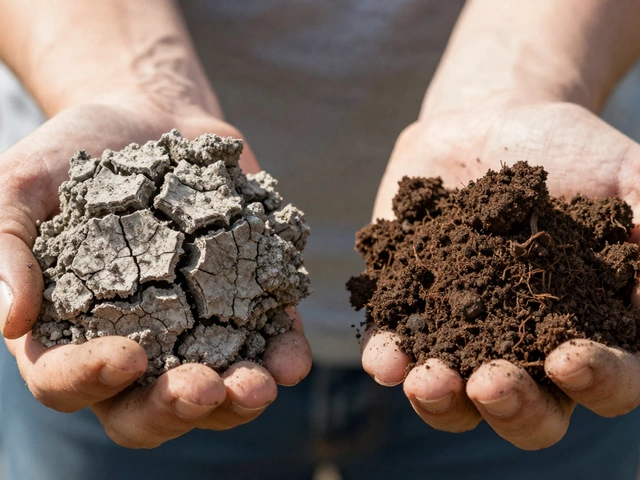
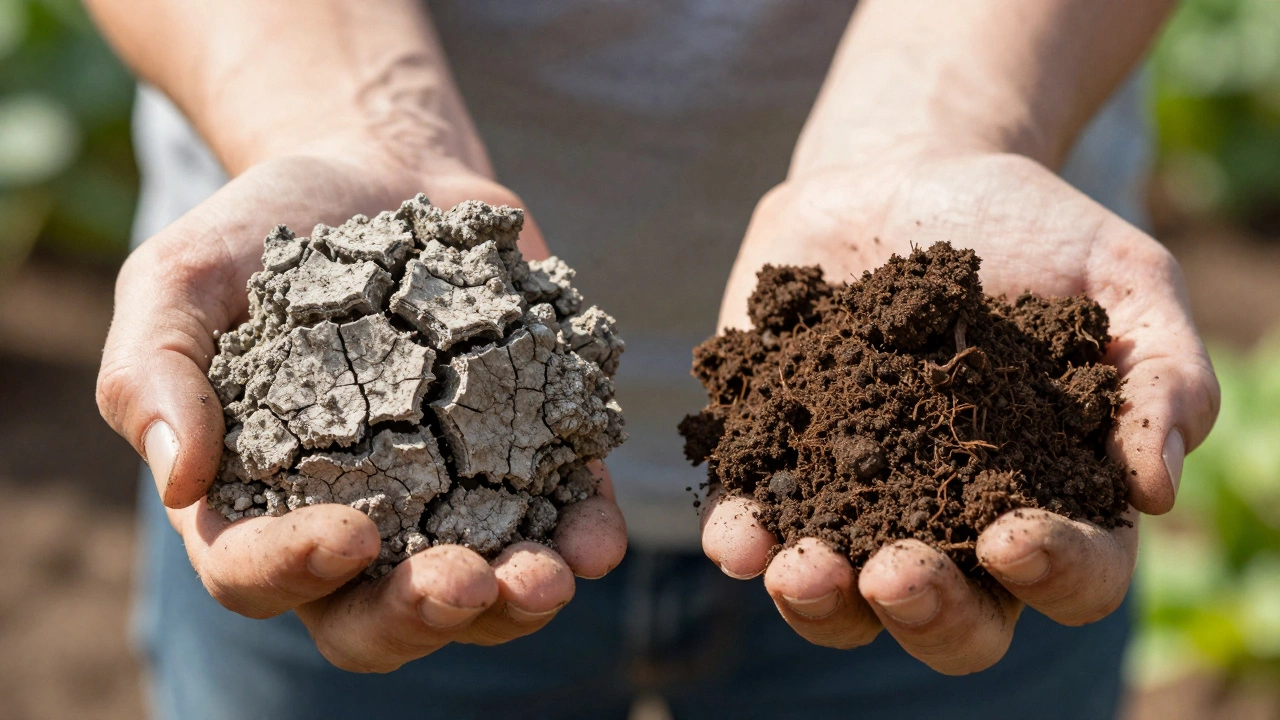
Bad soil usually shows clear signs. Clay soil stays wet, becomes hard as rock when dry, and sticks to your hands. Sandy soil feels gritty, drains water too fast, and rarely holds nutrients. Compacted soil is dense, has few roots, and looks grey or pale instead of dark brown. If your plants yellow, stunt, or die despite watering, your soil likely lacks structure or nutrients.
Identify Your Soil Type First
Before you throw anything at the ground, you need to know what you are dealing with. There are three main types of soil: clay, sand, and silt. Most gardens have a mix, but one type usually dominates. Knowing which one rules your plot tells you exactly what to add.
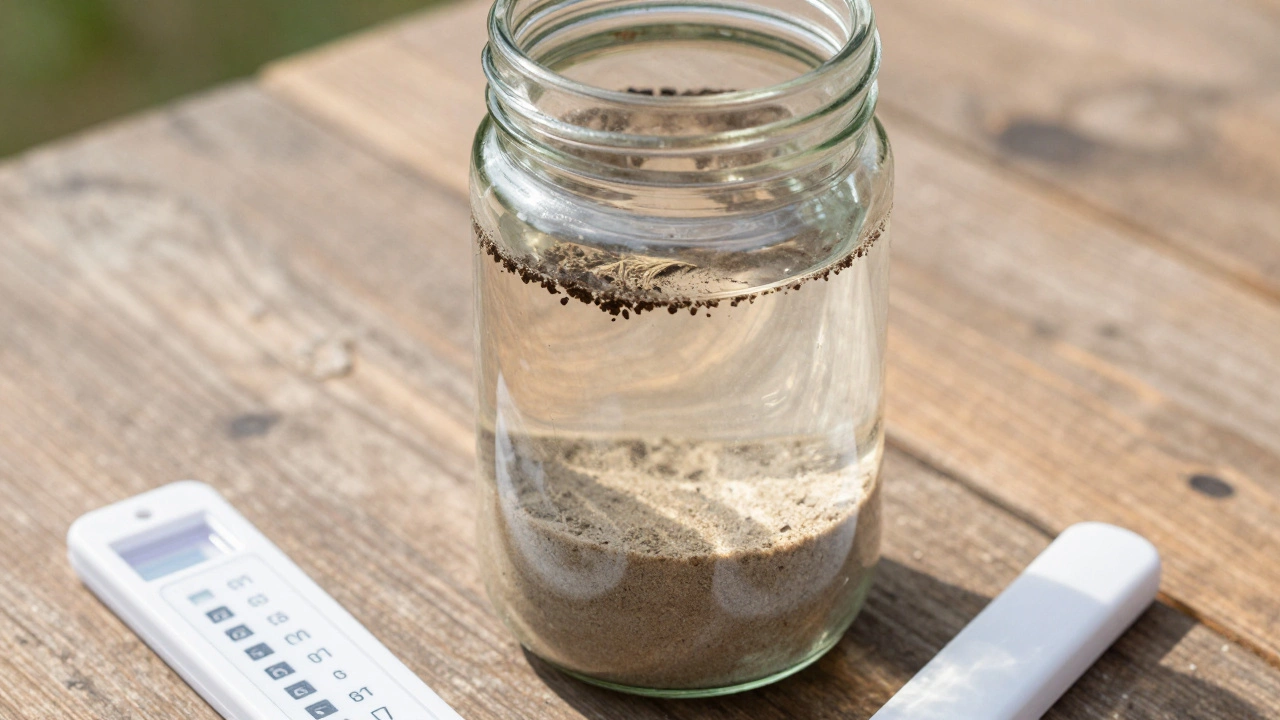
The Jar Test is the easiest way to check. Fill a clear jar halfway with soil from your garden. Add water until it is nearly full, then shake it hard for two minutes. Let it sit for 24 hours. The soil will settle into layers. Sand sinks first (bottom), silt settles in the middle, and clay floats on top. Measure the thickness of each layer. If the bottom layer is thick, you have sandy soil. If the top layer is dominant, you are fighting clay.
If you want more precision, buy a simple soil test kit is a tool that measures pH and nutrient levels in your garden soil. These kits cost around £10-£15 and tell you if your soil is too acidic or alkaline. In the UK, many local councils offer free soil testing services for residents. Use these results to guide your amendments.
Add Organic Matter: The Golden Rule
No matter your soil type, the single best thing you can do is add organic matter. This includes compost, well-rotted manure, leaf mold, and green waste. Organic matter acts like a sponge in sandy soil, holding water and nutrients. In clay soil, it creates air pockets, improving drainage and root penetration.
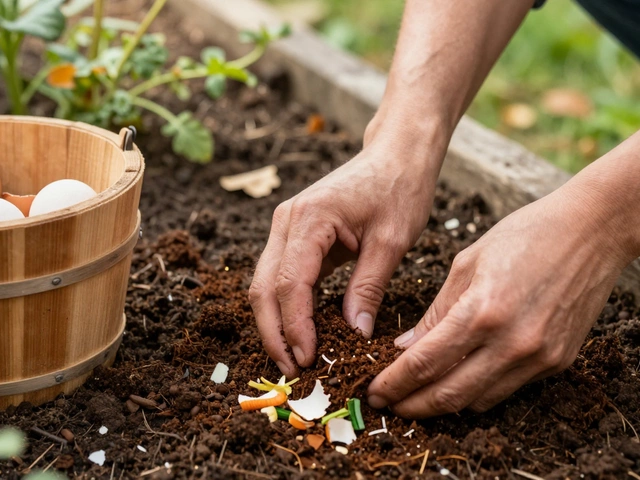
- Compost: The gold standard. It adds nutrients, improves structure, and introduces beneficial microbes. Aim for 2-3 inches spread over the surface before digging in.
- Well-Rotted Manure: Cow, horse, or sheep manure works wonders. Make sure it is aged (at least six months) so it does not burn plants. Fresh manure contains high ammonia levels that damage roots.
- Leaf Mold: Shredded leaves left to decompose for a year create a fibrous material that retains moisture beautifully. Great for mulching around trees and shrubs.
- Green Waste: Grass clippings, vegetable scraps, and weeds (without seeds) can be composted or added directly to beds in thin layers.
Avoid peat moss. While it improves texture, it is environmentally damaging to harvest and loses its water-holding ability once dried out. Stick to renewable organic sources.
Fix Clay Soil: Break Up the Gunk
Clay soil is tough. It holds water tightly, leading to waterlogged roots in winter and cracked, impenetrable surfaces in summer. Plants suffocate because there is no air space between particles.
To fix clay, you must break up the compaction. Do not dig when the soil is wet-this makes it worse. Wait for a dry spell, then use a broadfork or garden fork to loosen the top 12-18 inches. Do not turn the soil over; just pierce it to create channels for air and water.
After loosening, mix in generous amounts of compost and coarse sand. Yes, sand helps, but only if mixed thoroughly with organic matter. Adding sand alone to clay can create a concrete-like substance. The goal is to separate clay particles with organic material.
Gypsum (calcium sulfate) is another option. It helps disperse clay particles without changing pH. Apply 1-2 pounds per 100 square feet, then water deeply. Gypsum works slowly, so expect improvements over several seasons.
Improve Sandy Soil: Hold On to Nutrients
Sandy soil feels light and gritty. Water runs through it quickly, taking nutrients with it. Plants often show yellow leaves (nitrogen deficiency) because the food washes away before they can absorb it.
Your job is to increase water retention. Add large amounts of organic matter-compost, manure, or composted bark. Work this into the top 6-8 inches of soil. Organic matter binds sand particles together, creating tiny pockets that hold moisture.
Mulch heavily. A 2-3 inch layer of straw, wood chips, or shredded leaves on the surface prevents evaporation and keeps the soil cool. As the mulch breaks down, it adds more organic matter below.
Consider planting cover crops like clover or vetch in fallow periods. These plants grow deep roots that bring up nutrients and leave behind organic residue when cut down.
Balancing pH: Not Too Acidic, Not Too Alkaline
Most vegetables and flowers thrive in slightly acidic to neutral soil (pH 6.0-7.0). If your pH is outside this range, nutrients become locked up, even if they are present in the soil.
Raising pH (if too acidic): Add garden lime (calcium carbonate). Apply according to package instructions based on your soil test results. Lime also adds calcium, which strengthens cell walls in plants.
Lowering pH (if too alkaline): Add sulfur or acidifying fertilizers like ammonium sulfate. Alternatively, use pine needles or oak leaf mulch, which slowly acidify the soil as they decompose. Blueberries, azaleas, and rhododendrons love acidic conditions.
Do not guess with pH adjustments. Over-correcting can shock plants. Retest after three months to see if further action is needed.
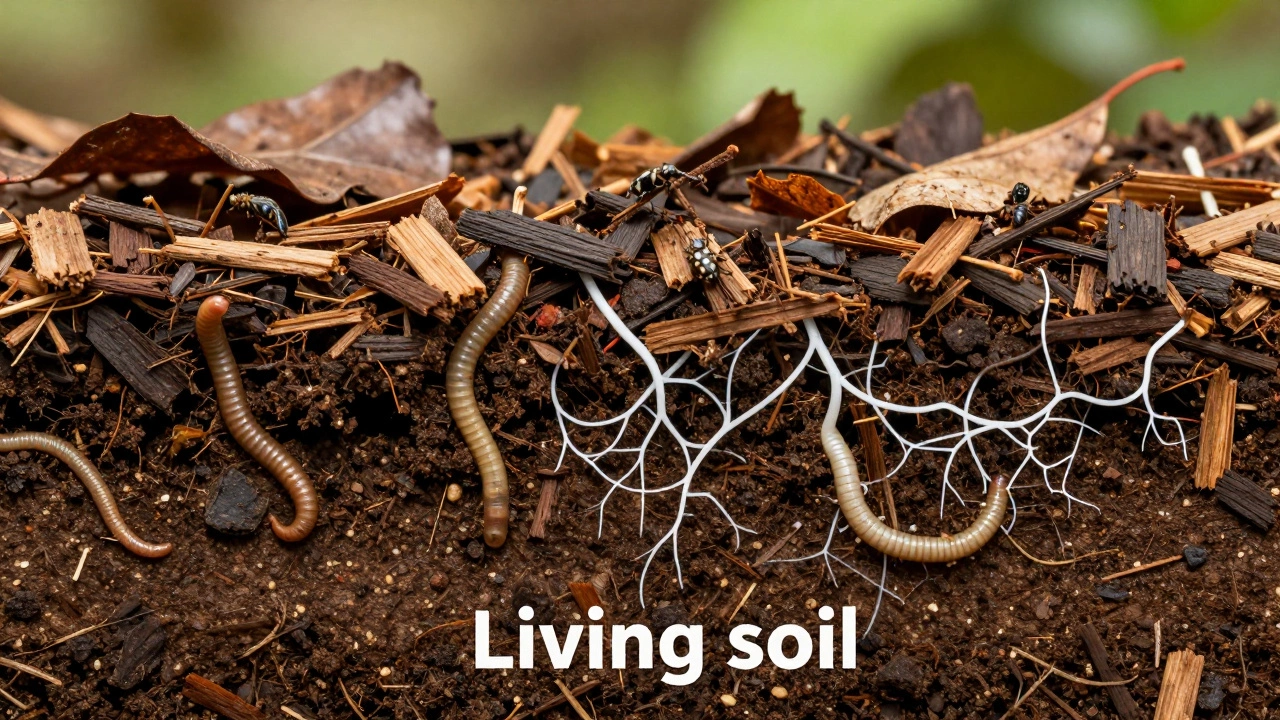
Build a Living Soil Ecosystem
Good soil is not just dirt and fertilizer-it is a living community. Earthworms, fungi, bacteria, and insects work together to break down organic matter, cycle nutrients, and aerate the ground.
Encourage worms by keeping the soil moist and covered with mulch. Worms castings are packed with nutrients and improve soil structure dramatically. Avoid tilling excessively, as this disrupts fungal networks and worm habitats.
Fungi play a crucial role too. Mycorrhizal fungi form symbiotic relationships with plant roots, extending their reach for water and nutrients. To support fungi, avoid synthetic fungicides and reduce chemical fertilizers. Organic matter feeds both bacteria and fungi.
No-till gardening is gaining popularity for this reason. Instead of digging, lay compost on top and let nature do the work. Over time, the soil becomes looser and richer without mechanical disturbance.
Maintain Soil Health Year-Round
Improving soil is not a one-time project. It requires ongoing care. Here is how to keep your soil in top shape:
- Mulch annually: Refresh mulch layers every spring and fall to protect against erosion and temperature swings.
- Rotate crops: Plant different families in different areas each year to prevent nutrient depletion and disease buildup.
- Plant cover crops: In winter, sow rye, clover, or buckwheat to protect bare soil and add organic matter when turned under.
- Test regularly: Check pH and nutrient levels every 2-3 years to adjust amendments as needed.
- Reduce foot traffic: Keep paths clear of planting beds to avoid compaction. Use stepping stones or raised beds if necessary.
Remember, healthy soil takes time. You might not see dramatic changes in the first season, but consistent effort pays off. Within two to three years, your soil should be darker, crumbly, and teeming with life.
| Amendment | Best For | Benefits | Application Rate |
|---|---|---|---|
| Compost | All soil types | Improves structure, adds nutrients, supports microbes | 2-3 inches per season |
| Coarse Sand | Clay soil | Increases drainage when mixed with organic matter | 1 part sand to 3 parts compost |
| Gypsum | Heavy clay | Disperses clay particles, adds calcium | 1-2 lbs per 100 sq ft |
| Wood Chips | Sandy soil | Retains moisture, suppresses weeds | 2-4 inches deep as mulch |
| Garden Lime | Acidic soil | Raises pH, adds calcium | Follow soil test recommendations |
How long does it take to improve bad soil?
Visible improvements usually appear within one growing season, but significant transformation takes 2-3 years. Consistent addition of organic matter and reduced tillage accelerate the process. Patience is key-soil biology rebuilds slowly.
Can I use coffee grounds to improve soil?
Yes, used coffee grounds add nitrogen and improve soil structure. However, they are acidic only when fresh. Once brewed, they are near-neutral. Mix them into compost or sprinkle thinly on soil. Do not apply thick layers, as they can mat and repel water.
Is it better to dig or no-till?
No-till is generally better for long-term soil health. Digging disrupts microbial networks and brings weed seeds to the surface. No-till methods preserve soil structure and encourage earthworm activity. Start with minimal disturbance and build organic layers on top.
What causes soil compaction?
Compaction happens from heavy machinery, frequent foot traffic, or working soil when wet. It reduces pore space, limiting oxygen and water movement. Prevent it by using designated paths, avoiding wet-ground work, and adding organic matter to maintain structure.
How much compost should I add?
Aim for 2-3 inches of compost spread over the surface before incorporating into the top 6-8 inches of soil. For established beds, top-dress with 1 inch annually. More is not always better-excessive compost can lead to nutrient imbalances.