Broccoli Farming Profitability Calculator
Estimate your earnings from a single acre of broccoli. Adjust the sliders to match your local conditions (yield, market prices, and input costs).
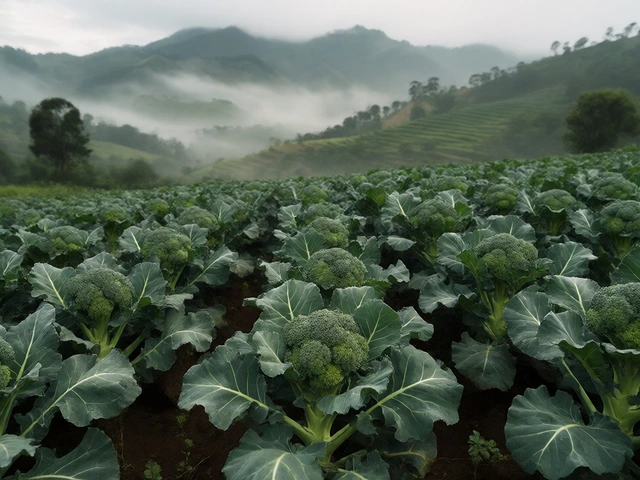
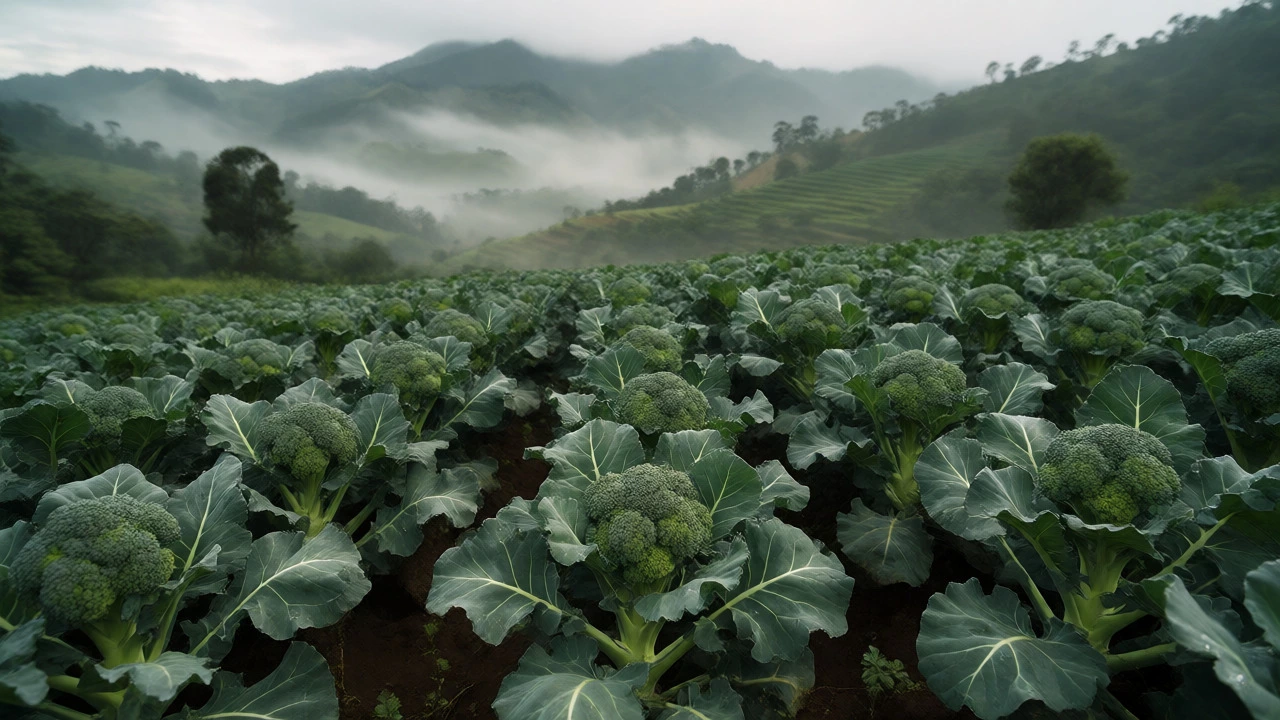
Most Indian farmers grow tomatoes, onions, or potatoes. They know the risks, the buyers, and the harvest cycles by heart. But what about Broccoli? Is it a niche curiosity or a serious cash crop for your land? If you are looking at your plot of land and wondering if switching to this green floret makes financial sense, you are asking the right question. The short answer is: yes, but only if you treat it like a business, not just a garden experiment. Broccoli offers higher margins than common staples, but it demands stricter climate control and faster logistics. Let’s break down the numbers, the risks, and the reality of growing broccoli in India today.
The Real Economics of Broccoli vs. Traditional Crops
You might think that because everyone eats rice and roti, broccoli will never sell. That was true ten years ago. Today, urban centers in Mumbai, Bangalore, Delhi, and Pune are seeing a surge in health-conscious consumers. Supermarkets and online grocery apps are actively sourcing local vegetables to cut import costs.
Here is the basic math for a small-scale farmer (1 acre) in a suitable region like Ooty, Coorg, or parts of Himachal Pradesh:
- Yield: A well-managed acre can produce 4-6 tons of fresh broccoli heads.
- Farm Gate Price: Prices fluctuate between ₹30 to ₹80 per kg depending on season and location. In off-seasons, it can touch ₹100+.
- Gross Revenue: At an average conservative price of ₹50/kg and 5 tons yield, you make ₹2.5 lakhs per acre.
- Costs: Seeds, fertilizer, labor, and irrigation usually cost around ₹80,000-₹1 lakh per acre.
- Net Profit: You could clear ₹1.5 lakhs per acre in a single cycle (90-100 days).
Compare this to cabbage or cauliflower, where margins are often thinner due to massive supply floods. Broccoli has less competition. Fewer farmers grow it properly, which keeps prices stable and high.
| Crop | Average Yield (kg) | Avg. Market Price (₹/kg) | Gross Income (₹) | Est. Net Profit (₹) |
|---|---|---|---|---|
| Broccoli | 5,000 | 50 | 250,000 | 150,000 |
| Cauliflower | 8,000 | 15 | 120,000 | 60,000 |
| Cabbage | 10,000 | 10 | 100,000 | 40,000 |
| Tomato | 15,000 | 20 | 300,000 | 100,000 |
Notice the tomato line. Tomatoes have high volume but volatile prices. One bad week in the mandi can wipe out your profits. Broccoli prices are more consistent because the buyer base is specific-restaurants, export houses, and premium retail chains.
Climate is Your Biggest Boss
You cannot grow broccoli anywhere in India year-round. It is a cool-season crop. If you try to force it in the scorching heat of Rajasthan or coastal Kerala without protection, you will lose money fast.
Broccoli thrives in temperatures between 15°C and 20°C. When it gets hotter than 25°C, the heads become loose, yellowish, and bitter. This ruins the market value. So, where does it work?
- Hill Stations: Nilgiris (Ooty), Kodaikanal, Darjeeling, Shimla, and Manali. These areas offer natural cooling.
- Punjab & Haryana: Winter months (October to February) are perfect. You need to time the sowing so the harvest hits January-March.
- Maharashtra & Karnataka: Regions with moderate winters like Nashik or the Deccan Plateau edges can work with careful variety selection.
If you live in the plains, you must rely on winter crops. If you live in the hills, you can stretch the season longer. Do not ignore soil pH either. Broccoli hates acidic soil. Aim for a pH of 6.0 to 7.0. Add lime if your soil is too sour.
Seed Selection and Nursery Management
Do not save seeds from last year’s broccoli. Hybrid seeds perform significantly better in Indian conditions. Look for varieties bred for heat tolerance and uniform head formation. Popular hybrids available in the Indian market include Green Magic, Parthenon, and Solstice.
Start in a nursery bed. Sow seeds in trays or raised beds covered with netting to keep pests away. After 25-30 days, when seedlings have 4-5 true leaves, transplant them to the main field. Space them 60 cm apart in rows 45 cm apart. Proper spacing allows air circulation, which reduces fungal diseases-a major killer in humid Indian climates.
Irrigation and Fertilizer Strategy
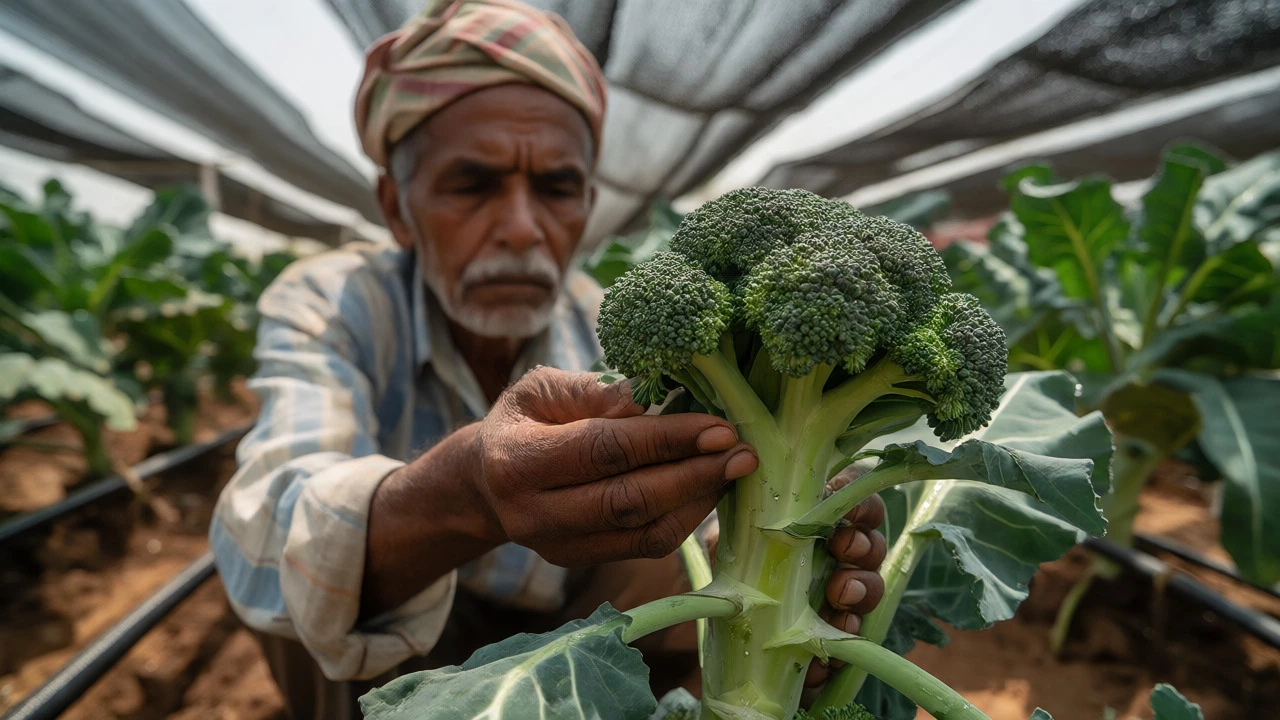
Broccoli is thirsty but hates wet feet. Overwatering causes root rot; underwatering leads to buttoning (tiny, unmarketable heads). Drip irrigation is the best investment here. It saves water and delivers nutrients directly to the roots.
Feed your crop heavily. Broccoli is a heavy feeder. You need nitrogen for leaf growth early on, then balanced NPK as heads form. Use organic compost liberally before planting. Top dress with urea or calcium ammonium nitrate during the vegetative stage. Calcium deficiency causes tip burn, making the crop unsellable. Ensure your fertilizer mix includes micronutrients like boron and molybdenum.
Pest Control: The Silent Profit Killer
If you ignore pests, you will harvest nothing. The diamondback moth and aphids love broccoli. In India, these pests multiply rapidly in warm weather.
- Diamondback Moth: Caterpillars eat holes in leaves and heads. Use pheromone traps to monitor populations. Spray neem oil or spinosad at first sign of damage.
- Aphids: They suck sap and spread viruses. Yellow sticky traps help catch adults. Introduce ladybugs if possible.
- Fungal Diseases: Downy mildew appears in damp, cool weather. Rotate crops every season. Never plant broccoli after other brassicas (cabbage, cauliflower) in the same spot.
Prevention is cheaper than cure. Once the heads form, avoid strong chemical sprays because residue limits export potential and fetches lower prices in premium markets.
Selling Your Harvest: Where Does the Money Come From?
Growing is half the battle. Selling is the other half. Do not dump your broccoli at the local wholesale mandi (market) unless you have no choice. Mandi agents take huge commissions, and prices are dictated by daily oversupply.
Instead, target these channels:
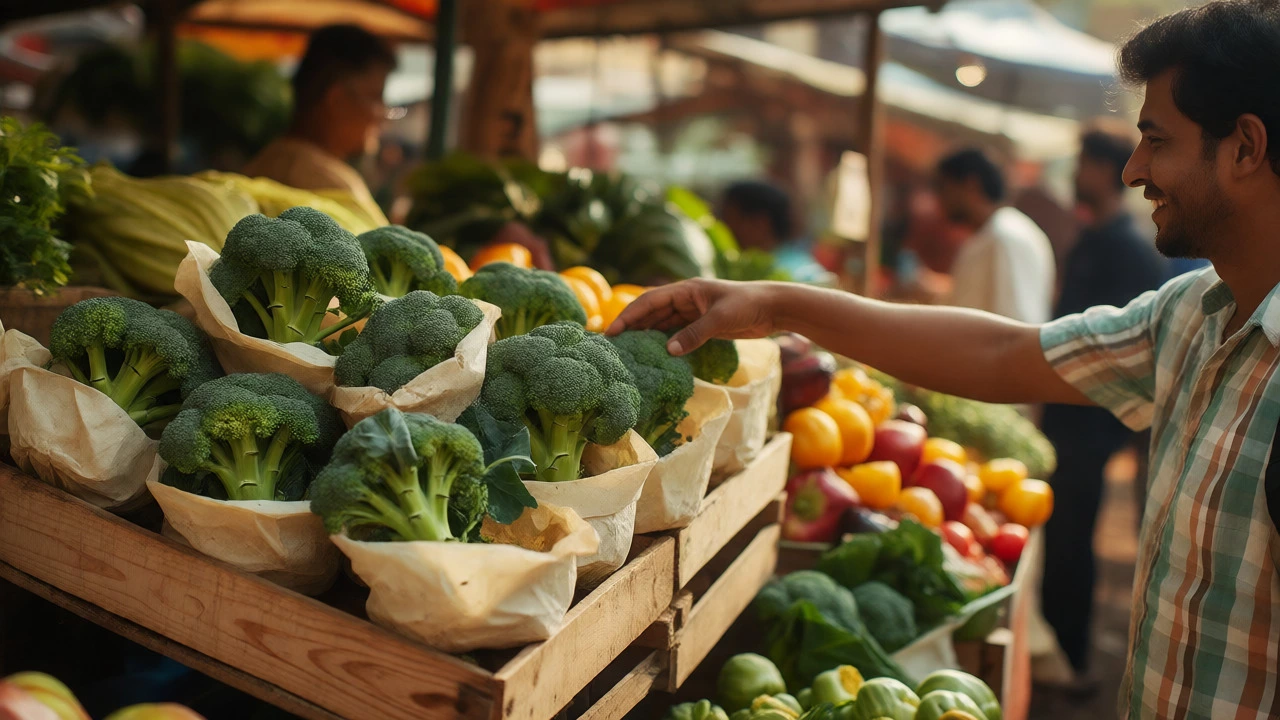
- Direct-to-Consumer: Sell via Instagram, WhatsApp groups, or local farmers' markets. You get full retail price (₹80-₹120/kg). Packaging matters-use clean, breathable bags.
- Restaurants and Cafés: Urban cafes serving healthy bowls need consistent supply. Offer them weekly deliveries. They pay steady rates and build loyalty.
- Online Grocery Apps: Platforms like BigBasket, Blinkit, or Swiggy Instamart source locally. You may need to meet strict quality and packaging standards.
- Export Houses: If you are near ports or airports, look into exporters. They require GlobalGAP certification, which is rigorous but lucrative.
Timing your harvest is critical. Broccoli must be harvested when the flower buds are tight and dark green. If they start opening into yellow flowers, the value drops by 50%. Harvest early morning while it’s cool, and pre-cool the heads immediately. Cold chain logistics extend shelf life from 3 days to 10 days.
Risks You Must Accept
It is not all sunshine and profit. Here are the pitfalls:
- Market Volatility: If too many farmers switch to broccoli in one season, prices crash. Diversify slightly-grow some carrots or peas alongside.
- Post-Harvest Loss: Broccoli wilts fast. Without cold storage, you lose 20-30% of your crop to spoilage.
- Labor Costs: Harvesting broccoli is manual and skilled work. Finding reliable labor in rural areas is getting harder and more expensive.
Final Verdict: Should You Start?
If you have access to cool weather, drip irrigation, and a direct sales channel, broccoli farming in India is highly profitable in 2026. It beats traditional vegetables in margin-per-acre terms. However, it is not a "plant and forget" crop. It requires attention to detail, pest management, and smart marketing.
Start small. Try 0.5 acres first. Learn the local demand curve. Test different varieties. Once you nail the process, scale up. The Indian consumer is changing, and they are willing to pay for quality, fresh, locally grown superfoods. Be the farmer who supplies them.
Which regions in India are best for broccoli farming?
The best regions are hill stations like Ooty, Kodaikanal, Darjeeling, and Shimla due to their cool temperatures. In the plains, Punjab, Haryana, and parts of Maharashtra and Karnataka work well during the winter months (October to February) when temperatures drop below 25°C.
How long does it take to grow broccoli in India?
From transplanting to harvest, it typically takes 60 to 75 days. Including the nursery period of 25-30 days, the total cycle is approximately 90 to 100 days. Some early-maturing varieties can be ready sooner, while others take longer depending on temperature.
What is the average cost of cultivation per acre?
For a well-managed farm using hybrid seeds and drip irrigation, the cost ranges from ₹80,000 to ₹1,20,000 per acre. This includes seeds, fertilizers, pesticides, labor, irrigation electricity, and land preparation. Organic farming methods may increase labor costs but reduce input expenses.
Can I grow broccoli in summer in North India?
Generally, no. Summer temperatures in North India often exceed 30°C, which causes broccoli heads to open prematurely and turn bitter. It is best suited for Rabi (winter) crops. If you must grow in summer, use shade nets and choose heat-tolerant hybrids, but expect lower yields and quality.
Where can I sell my broccoli harvest?
You can sell to local wholesale mandis, but profits are higher through direct sales to restaurants, supermarkets, and online grocery platforms like BigBasket or Swiggy Instamart. Farmers' markets and direct home delivery via social media also offer premium prices.