Drip vs. Sprinkler Cost Calculator
Input Parameters
Results & Analysis
Long-Term Projection
- 1 Year Total Cost (Sprinkler): £0.00
- 1 Year Total Cost (Drip): £0.00
- Net Savings with Drip: £0.00
Water bills are climbing, and the old-fashioned hose or sprinkler setup is becoming a luxury few can afford. You might be wondering if switching to a drip irrigation system is actually cheaper than sticking with traditional sprinklers. The short answer is yes-but only if you look at the full picture. While the upfront price tag for drip lines looks higher, the long-term savings on water, electricity, and plant health often make it the smarter financial choice.
Let’s break down the real costs, from buying the equipment to paying your monthly utility bill. We’ll look at installation time, maintenance headaches, and how much water you’re actually wasting in the air versus delivering it straight to the roots.
The Upfront Investment: What Are You Paying For?
When you walk into a garden center, a basic oscillating sprinkler might cost you £15-£30. It plugs in, turns on, and sprays water everywhere. A simple drip kit, however, usually starts around £40-£60 for small gardens and can climb to £150+ for larger setups. On paper, sprinklers win the initial purchase race by a mile.
But here is where the math gets tricky. A standard sprinkler system requires more infrastructure to be effective. You need heavy-duty hoses, sturdy stakes to keep the heads upright, and often a timer that syncs with municipal power cycles. Drip irrigation components-like polyethylene tubing, emitters, and filters-are modular. You buy what you need. If you have a small vegetable patch, you don’t need an industrial-grade manifold. You just need a quarter-inch tubing roll and a few emitters.
| Component | Sprinkler System (Est.) | Drip Irrigation (Est.) |
|---|---|---|
| Core Equipment | £20 - £50 | £40 - £80 |
| Hoses/Tubing | £15 - £40 (Heavy duty) | £10 - £30 (Lightweight poly) |
| Timer/Controller | £15 - £30 | £15 - £30 |
| Fittings & Connectors | £5 - £10 | £10 - £25 |
| Total Estimated Start-up | £55 - £130 | £75 - £165 |
Notice the overlap? For a medium-sized garden, the gap isn’t as wide as it seems. Plus, drip tubing lasts longer than cheap plastic sprinkler heads that crack under UV exposure. If you invest in quality black polyethylene tubing rated for outdoor use, it can last five to seven seasons. Cheap sprinklers often need replacing every year or two.
The Hidden Cost: Water Waste and Evaporation
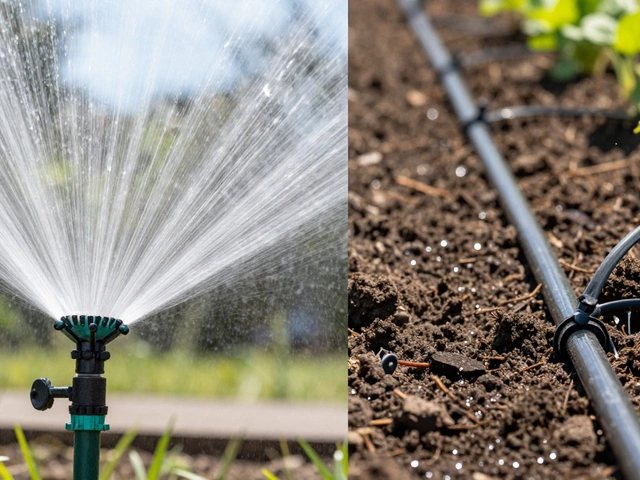
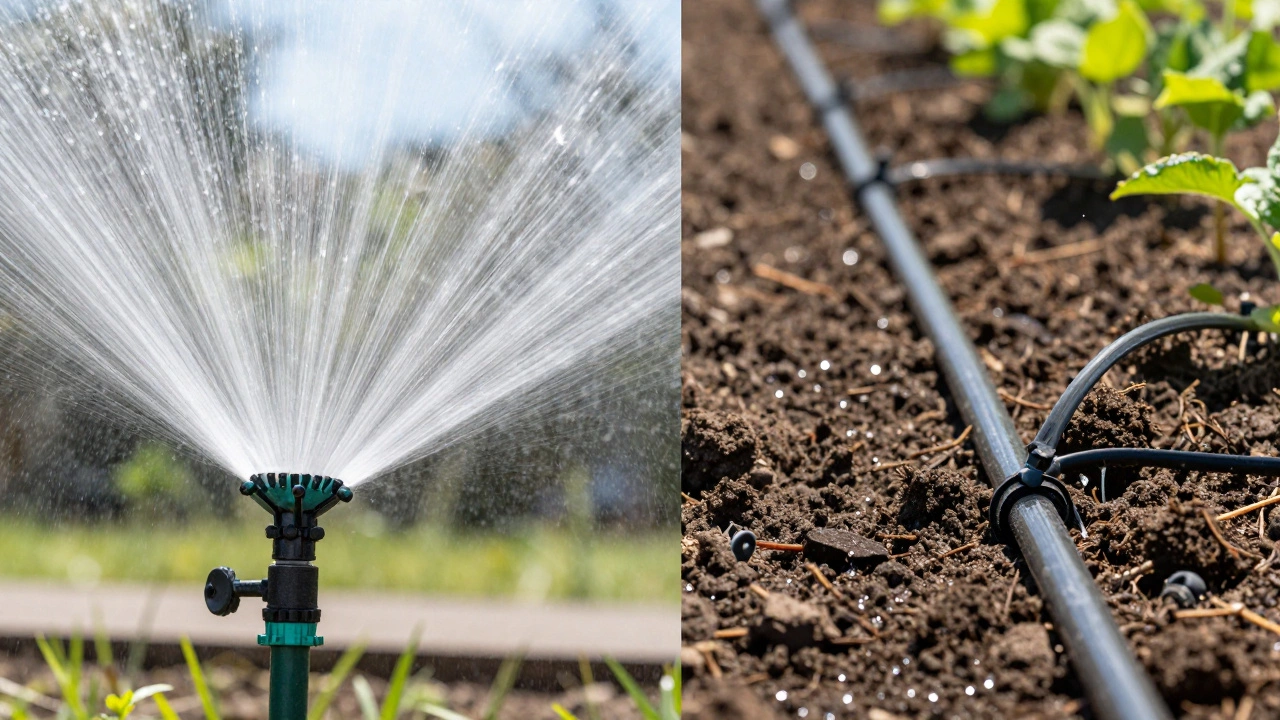
This is where drip irrigation destroys sprinklers financially. Sprinklers operate by atomizing water into the air. In Manchester’s windy summers, or even during hot afternoons anywhere in the UK, a significant portion of that water evaporates before it hits the soil. Studies suggest that overhead sprinkling can lose up to 30% of water to evaporation and wind drift. That means nearly a third of your water bill is literally disappearing into the atmosphere.
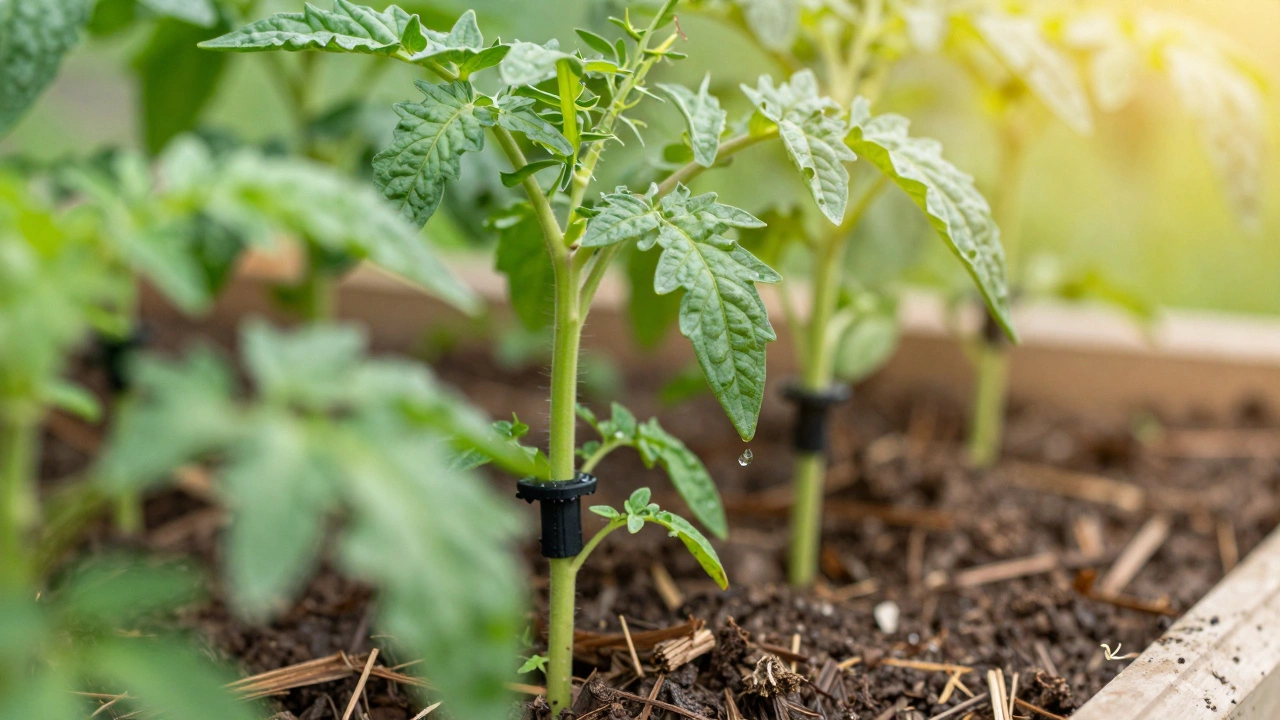
Drip irrigation delivers water directly to the root zone. There is no mist, no spray, and no wind interference. The efficiency rate of drip systems is typically between 90% and 95%. This isn’t just about saving money; it’s about conservation. If you pay per cubic meter of water used, the difference adds up fast. Let’s say your household uses 10,000 liters for gardening in peak summer. With sprinklers, you might waste 3,000 liters. At current UK water rates, that wasted water could cost you an extra £10-£15 a month during dry spells.
Over three years, those savings easily offset the higher initial cost of the drip kit. You aren’t just paying for less water; you’re paying for precision.
Installation Time: DIY vs. Professional Help
If you hire a landscaper, labor costs will skew the numbers heavily against drip irrigation. Installing a complex network of mainlines and laterals takes time. A professional might charge £150-£250 for a standard residential install. Setting up a few sprinklers takes twenty minutes. So, if you outsource everything, sprinklers remain cheaper initially.
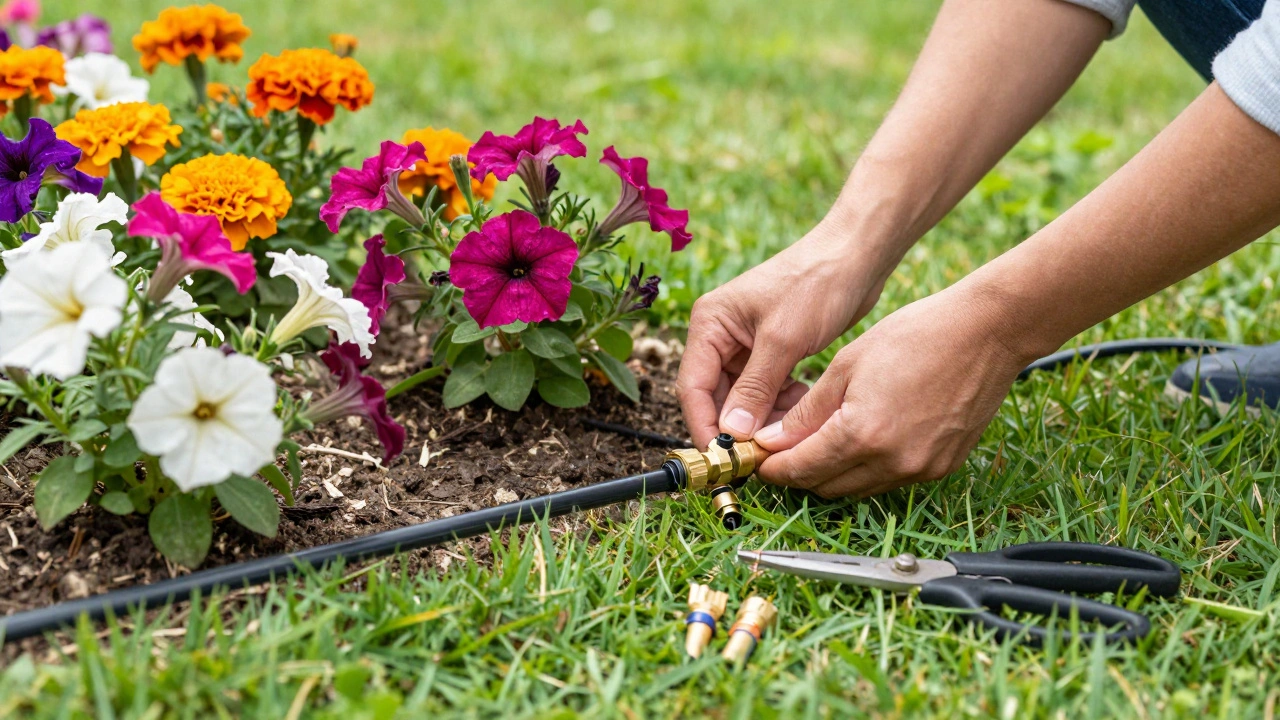
However, most homeowners tackle this themselves. Drip irrigation is surprisingly user-friendly. It’s like building Lego for your garden. You connect the filter to the tap, run the mainline along the edge of your beds, and poke holes for the emitters. No digging trenches, no pressure testing complex valves. You can lay out a basic drip system for a flower bed or vegetable plot in an afternoon. The "cost" here is your time, but it’s low-stress work compared to wrestling with kinked heavy-gauge hoses.
Maintenance: Who Wins the Long Game?
Cheap equipment breaks. Expensive equipment needs care. Sprinklers are prone to clogging from dirt and debris, but because they spray large volumes of water, minor blockages often go unnoticed until plants start wilting. They also require seasonal adjustment. As plants grow, you move the sprinkler heads. If you forget, you end up watering the pavement instead of the petunias.
Drip systems have their own quirks. The biggest enemy is clogging. Emitters have tiny openings that can get blocked by sediment or mineral buildup. This is why a good filter is non-negotiable. You need to flush the lines once or twice a season. It takes ten minutes: open the end cap, let the water run until it’s clear, and close it back up. Neglect this, and you’ll have dry spots in your garden.
On the flip side, drip systems are static. Once installed, they stay put. You don’t chase them around the yard. They protect mulch layers from being washed away, which saves you money on buying new mulch annually. Less erosion means less soil replacement. That’s another hidden saving many people overlook.
Plant Health and Yield: The Return on Investment
Money isn’t just about expenses; it’s about value. Wet leaves invite disease. Fungal infections like powdery mildew thrive in the damp conditions created by overhead sprinkling. Treating these diseases costs money for fungicides and time for pruning affected parts. Drip irrigation keeps foliage dry, drastically reducing the risk of fungal issues. Healthier plants mean better yields for vegetables and longer blooms for flowers.
If you grow tomatoes, peppers, or cucumbers, the yield difference can be substantial. Consistent moisture levels prevent blossom end rot and fruit cracking. You get more food for your effort. For ornamental gardens, you spend less time replanting dead zones caused by uneven watering. The ROI here is measured in harvest weight and aesthetic longevity.
When Sprinklers Still Make Sense
I’m not saying drip irrigation is perfect for every square inch of your property. Lawns are the exception. Trying to irrigate a large grass area with drip tape is inefficient and messy. Sprinklers are designed for turf. They provide even coverage over broad, flat surfaces. If you have a traditional English lawn, stick with a rotary sprinkler or an in-ground pop-up system. But for borders, beds, pots, and veg patches, drip is king.
Also, consider aesthetics. Some people hate seeing black tubing snaking through their flower beds. While you can bury drip lines slightly under mulch, visible tubing can be an eyesore. Sprinklers hide better when turned off. If visual appeal is your top priority and budget is secondary, sprinklers might still hold charm for certain landscape styles.
Verdict: Is It Worth the Switch?
For most gardeners in the UK, especially those facing rising water costs and unpredictable weather patterns, drip irrigation is the cheaper option in the long run. The initial outlay is modestly higher, but the savings on water bills, reduced plant loss, and lower maintenance efforts balance the scales within one to two growing seasons. It’s an investment in efficiency, not just a purchase of plastic tubes.
If you’re starting fresh, design your garden with drip in mind. Group plants with similar water needs together (hydrozoning). Use a timer to automate the process. Avoid cheap, unfiltered tap connections. Treat your system with respect, and it will pay you back in green, healthy plants and thinner utility bills.
How long does it take for drip irrigation to save money compared to sprinklers?
Typically, you will see a break-even point within one to two growing seasons. During the first year, you absorb the higher upfront cost of the drip kit. However, as water prices rise and you reduce waste by up to 30-50%, the monthly savings accumulate. By the second summer, the system has usually paid for itself through reduced water consumption and lower plant replacement costs.
Can I use drip irrigation for my lawn?
It is generally not recommended for large lawns. Drip irrigation is designed for targeted delivery to individual plants or rows. Covering a vast grassy area with drip tape would be expensive, visually cluttered, and difficult to maintain. Sprinklers remain the most cost-effective and efficient method for watering turf grass due to their ability to cover broad areas evenly.
Do drip irrigation systems clog easily?
They can, if not properly maintained. The key to preventing clogs is using a high-quality inline filter at the source and flushing the system regularly. Sediment from mains water or well water can block the tiny emitter openings. Flushing the lines once a month during peak usage and installing a pressure regulator helps ensure consistent flow and extends the life of the emitters.
Is drip irrigation better for plant health than sprinklers?
Yes, significantly. Drip irrigation keeps foliage dry, which reduces the risk of fungal diseases like powdery mildew and botrytis. It also delivers water directly to the root zone, encouraging deeper root growth and reducing surface evaporation. This leads to stronger, healthier plants that are more resistant to stress and pests compared to those watered by overhead methods.
What is the lifespan of a drip irrigation system?
With proper care, the main polyethylene tubing can last 5 to 10 years. Emitters and connectors may need replacement every 2 to 3 years depending on water quality and usage intensity. UV-resistant tubing is essential for outdoor longevity. Regular winterization-draining the lines to prevent freezing damage-is crucial in colder climates to maximize the system's lifespan.