Rice Farming Profit Calculator
Estimated Results
Enter your farming parameters above to see your potential profit.
Can you really make money growing rice? It’s not just a staple food-it’s a global industry worth over $500 billion a year. But for a small-scale farmer or someone thinking about starting out, the question isn’t about the global market. It’s about rice cultivation profit on your land, in your region, with your resources.
Rice Isn’t Just Plants in Water
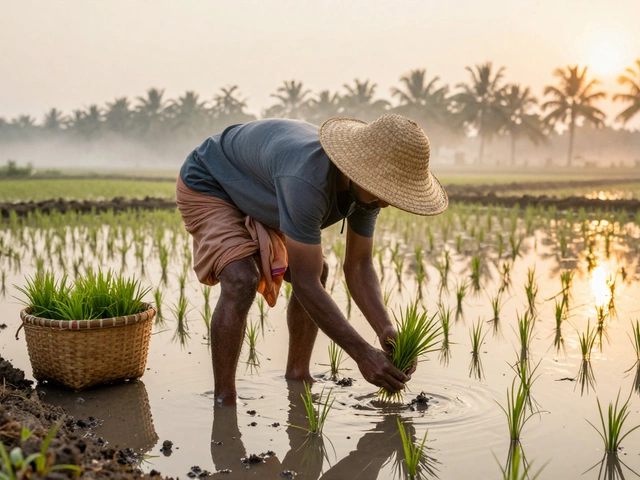
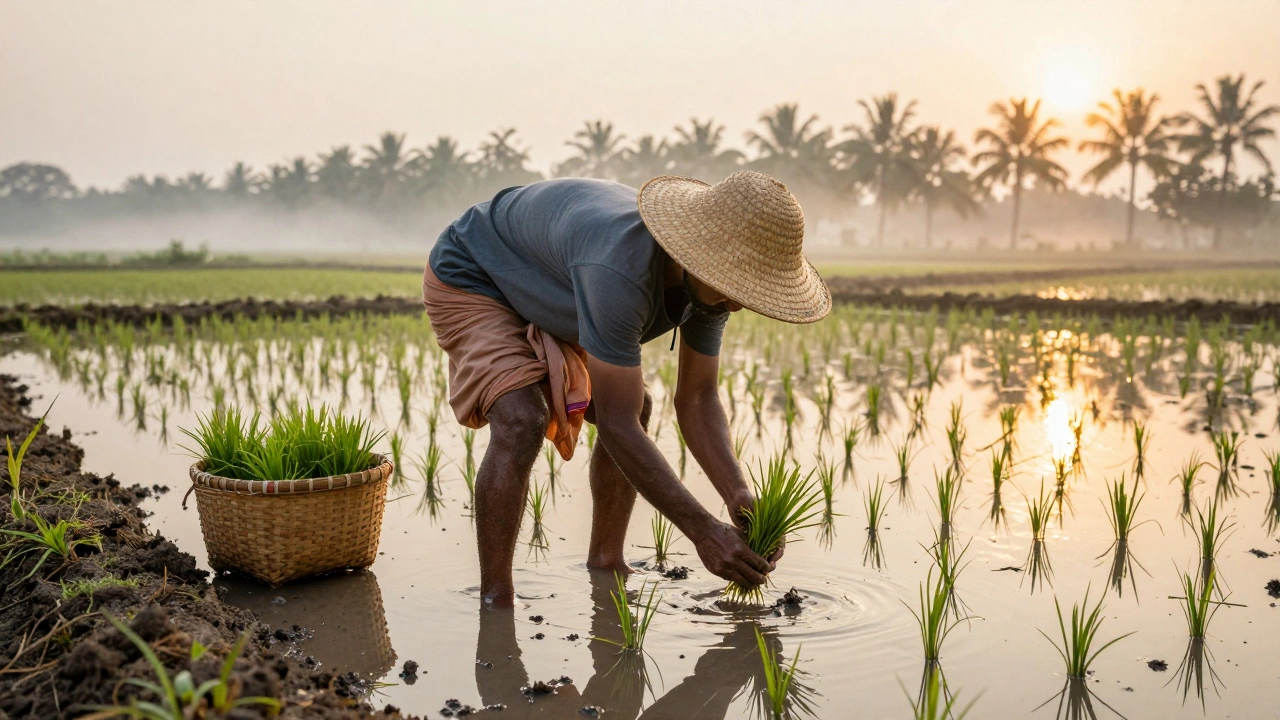
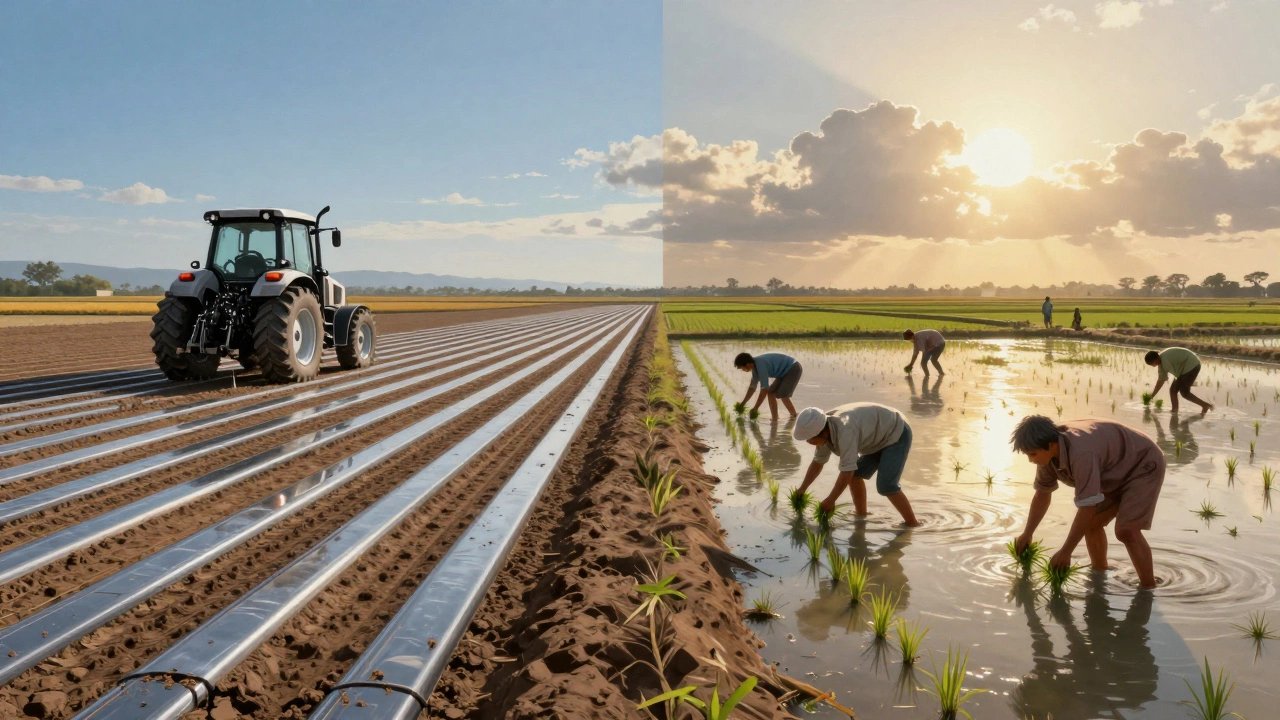
Rice farming looks simple: plant seeds, flood the field, wait, harvest. But that’s like saying baking bread is just mixing flour and water. The real work happens in the details. Rice needs consistent water, precise timing, and careful nutrient management. In many places, it’s grown in flooded paddies, but modern methods use less water through systems like alternate wetting and drying (AWD). That’s not just eco-friendly-it cuts costs. In Southeast Asia, where most rice is grown, farmers often rely on family labor and traditional tools. But in the U.S., Australia, and parts of Europe, rice is grown like a cash crop-with tractors, GPS-guided planters, and satellite soil sensors. The scale changes everything.How Much Does It Cost to Grow Rice?
Let’s break down the real numbers. For a one-acre plot in the U.S. (Arkansas or California), here’s what you’re looking at in 2025:- Seeds: $50-$80 per acre (high-yield hybrid varieties cost more but deliver 20-30% more grain)
- Fertilizer and lime: $120-$180
- Pesticides and herbicides: $60-$100
- Water and irrigation: $80-$150 (depending on local rates and efficiency)
- Land preparation and planting: $100-$200 (fuel, labor, equipment rental)
- Harvesting and drying: $150-$250 (this is often the biggest expense if you rent a combine)
- Transport and storage: $30-$70
How Much Rice Can You Actually Harvest?
Yield is everything. A poor season might give you 4,000 pounds per acre. A good one? 7,000-8,000 pounds. In top-performing regions like California’s Sacramento Valley, farmers regularly hit 8,500 pounds per acre using precision agriculture.That’s 4-5 tons of rough rice. After milling, you lose about 20%-so you’re left with 3.2-4 tons of white rice. That’s the product you sell. Prices vary wildly. In 2025, U.S. rice sells for $12-$20 per hundredweight (100 pounds). So for a 4-ton harvest, you’re looking at $960-$1,600 in gross revenue per acre.
So… Is It Profitable?
Let’s do the math. Take a mid-range scenario:- Cost: $800 per acre
- Yield: 7,000 lbs (3.5 tons)
- After milling: 2.8 tons of white rice
- Selling price: $16 per hundredweight = $448 per ton
- Revenue: $2,800
Compare that to soybeans or corn, which can be rotated and often have higher yields per acre. Rice doesn’t have the same flexibility. It’s also more labor-intensive and water-heavy. In drought-prone areas, water rights can cost more than the seeds.
Where Rice Makes the Most Sense
Rice isn’t profitable everywhere. It thrives where:- Water is cheap or abundant (river deltas, floodplains)
- Land is flat and easy to flood
- There’s local demand or export access
- You can use mechanized equipment
But what about small-scale or niche markets? That’s where things get interesting. In Italy, farmers grow Arborio and Carnaroli rice for risotto-and sell it for $5-$8 per pound. In the U.S., some organic rice farms sell directly to restaurants for $10-$15 per pound. That’s a 5x markup over commodity rice.
The Niche Advantage: Specialty Rice
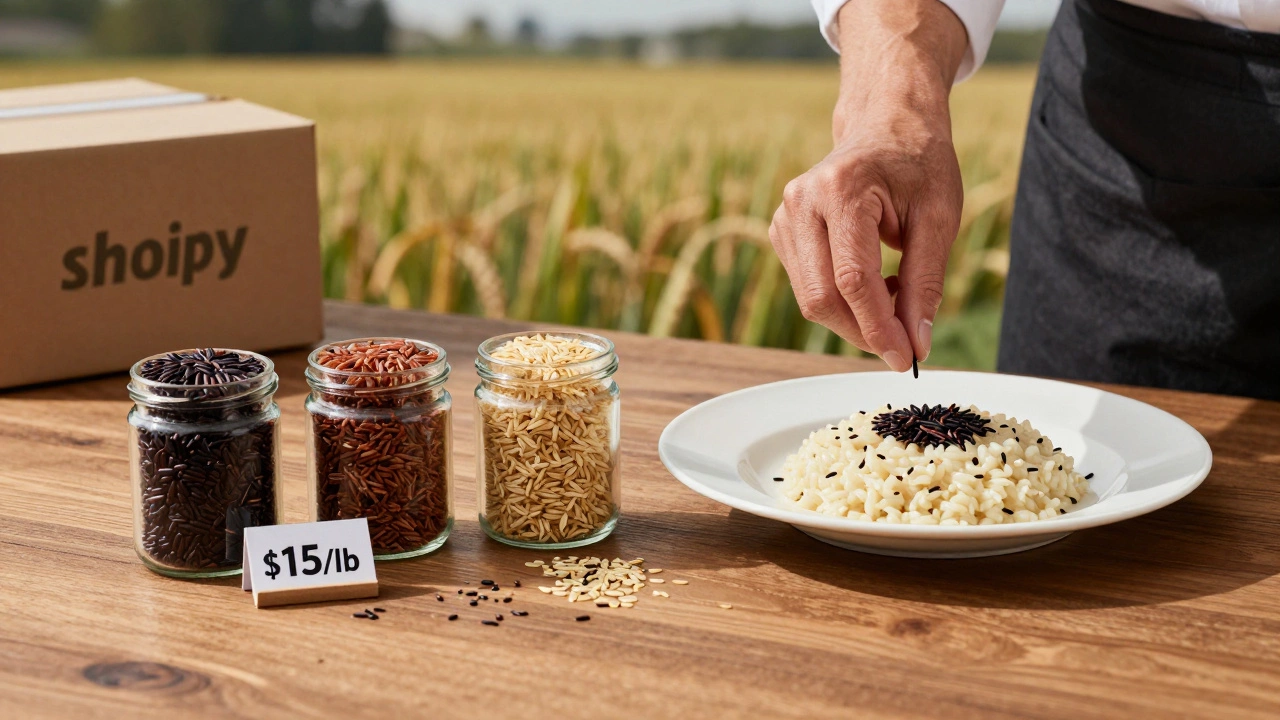
If you’re thinking about starting small, forget commodity rice. Focus on specialty varieties:- Black rice (antioxidant-rich, called "forbidden rice") - sells for $12-$20/lb
- Red rice - popular in health food stores, $8-$14/lb
- Organic rice - premium pricing, but requires 3-year certification
- Wild rice (technically a grass) - $15-$25/lb, low yield but high demand
Hidden Costs Nobody Talks About
Rice farming has invisible expenses:- Soil degradation - continuous rice growing depletes nitrogen and causes salinity. You’ll need to rotate crops or add compost.
- Water permits - in California, you might pay $200-$500 per acre just for water rights.
- Equipment maintenance - a combine that costs $200,000 needs $15,000/year in repairs.
- Market access - selling to processors requires meeting strict quality standards. One batch of moldy rice can get rejected.
And don’t forget insurance. Floods, pests, and price crashes are real risks. Crop insurance for rice averages $40-$70 per acre in the U.S.-but it’s worth it.
Who Should Avoid Rice Farming?
Rice isn’t for everyone. Avoid it if:- You’re in a dry climate with high water costs
- You only have 1-5 acres and no access to machinery
- You expect quick returns-rice takes 120-160 days to grow
- You’re unwilling to learn soil management or deal with bureaucracy
Many beginners think rice farming is easy because it’s "natural." But natural doesn’t mean simple. It means you’re working with water, insects, weather, and markets-all at once.
Real Stories from the Field
In 2023, a retired teacher in Louisiana bought 10 acres of abandoned farmland. He spent $15,000 on equipment, learned how to use a laser leveler for field grading, and partnered with a local mill. His first year, he made $14,000 profit. Second year? $28,000. He now employs two part-time workers.On the other side, a couple in Oregon tried growing organic rice on 2 acres. They didn’t test their soil pH, used flood irrigation without drainage, and lost 60% of their crop to root rot. They gave up after two years.
How to Start Small and Test the Waters
You don’t need 100 acres to try this. Here’s how to test rice farming without risking everything:- Start with 1/4 acre. Use raised beds or containers if you’re in a city.
- Buy certified seed from a local agricultural extension office-not Amazon.
- Use a simple drip system instead of flooding. You’ll use 50% less water.
- Grow one specialty variety (like black rice) and sell to a local farmers’ market.
- Track every cost and yield. Don’t guess-write it down.
After two seasons, you’ll know if you can make it work. Most people who try this find out quickly: rice isn’t a side hustle. It’s a full-time job with seasons, risks, and rewards.
Final Answer: Yes-but Only if You Do It Right
Is rice a profitable business? Yes, but only if you treat it like a business-not a hobby. Profit comes from:- Choosing the right location and variety
- Reducing water and labor costs with smart tech
- Selling premium, not commodity, rice
- Knowing your numbers before you plant
Commodity rice farming is a low-margin, high-risk game. But specialty rice? That’s where the real money is. And with climate change pushing food prices up, demand for local, sustainable rice is growing.
If you’re ready to put in the work, learn the land, and build relationships with buyers-rice can be one of the most rewarding crops you’ll ever grow. But if you’re looking for quick cash with little effort? Keep looking.
Can you grow rice in the UK?
Technically, yes-but it’s not profitable. The UK’s cool, wet climate doesn’t support the long, hot growing season rice needs. Even in southern England, you’d get less than 1,000 pounds per acre, far below the 4,000+ needed to cover costs. Water costs, lack of infrastructure, and no local market make it impractical. Stick to barley or oats.
How much water does rice farming use?
Traditional rice farming uses 2,500-5,000 gallons of water per pound of rice. That’s 3-6 times more than corn or soybeans. But modern methods like Alternate Wetting and Drying (AWD) cut that by 30-50%. In California, farmers using AWD save over 1 million gallons per acre per season.
Is organic rice more profitable?
Yes-if you can sell it. Organic rice sells for 2-4x the price of conventional rice. But certification takes three years and costs $1,000-$3,000. You also can’t use synthetic fertilizers or pesticides, which lowers yields by 10-20%. Profit comes from premium buyers: health stores, restaurants, and online customers who care about sustainability.
What’s the best rice variety for beginners?
Start with medium-grain white rice like Calrose (common in California). It’s forgiving, has good yield, and has a ready market. Avoid exotic varieties like black or red rice until you’ve mastered basics. They’re more sensitive to soil pH, water levels, and pests.
Do you need a license to grow rice?
In most places, no license is needed to grow rice for personal or local sale. But if you plan to sell commercially, you’ll need to register as a farm with your state’s agriculture department. Water rights, pesticide use, and food safety rules may also apply. Always check with your local extension office before planting.
Can you make money selling rice online?
Absolutely. Small farms in the U.S. and Europe are selling specialty rice directly through Shopify stores, Etsy, and Amazon Handmade. A 1-pound bag of organic black rice can sell for $15-$20. Shipping is the challenge, but with bulk orders and regional delivery, many are turning $5,000-$15,000 a year in profit from just 2-5 acres.