Fruit Farming Profit Calculator
Calculate your potential profit from fruit farming in India based on your crop choice, area, and expected yield.
Estimated Profit
When you think of farming in India, you might picture rice fields or tomato vines. But the real money? It’s in fruit. Not just any fruit - the kind that sells fast, stores well, and commands high prices across cities and export markets. In 2025, India exported over $4.2 billion worth of fruits. And the farmers making the most profit? They’re not growing apples in the hills or oranges in the plains by accident. They’re choosing crops with proven returns, low risk, and strong demand.
Mangoes Still Rule the Roost
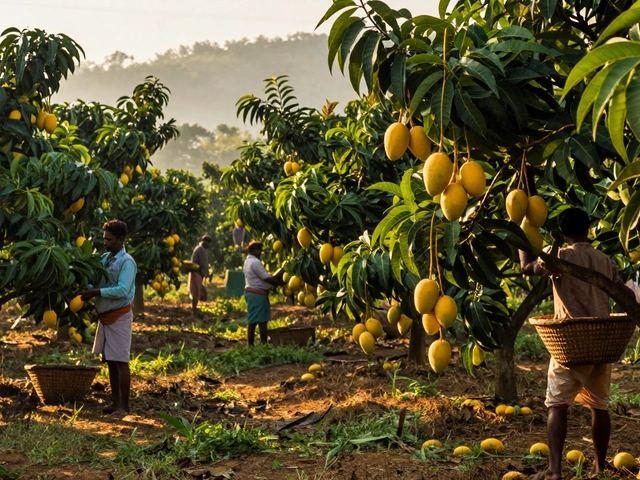
Mangoes aren’t just India’s national fruit - they’re its most profitable cash crop. Over 18 million tons are produced every year, and nearly 30% of that gets sold outside the country. Varieties like Alphonso, Kesar, and Chausa fetch premium prices. In Maharashtra and Gujarat, a single Alphonso mango tree can produce 150-200 fruits per season. At ₹150-₹250 per fruit in metro markets, that’s ₹22,500 to ₹50,000 per tree per year. A well-managed orchard of 100 trees? That’s ₹22 lakh to ₹50 lakh in gross revenue annually.
What makes mango farming stand out? It’s the timing. The season runs from April to July, right when global supply is low. Buyers in the UAE, UK, and USA pay up to 40% more for Indian Alphonso than local varieties. Plus, there’s no need for expensive cold storage. Mangoes can be shipped in ventilated crates and still arrive fresh. The biggest cost? Labor for pruning and harvesting. But with proper training and organized groups, farmers cut labor waste by 30%.
Bananas: The Quiet Money-Maker
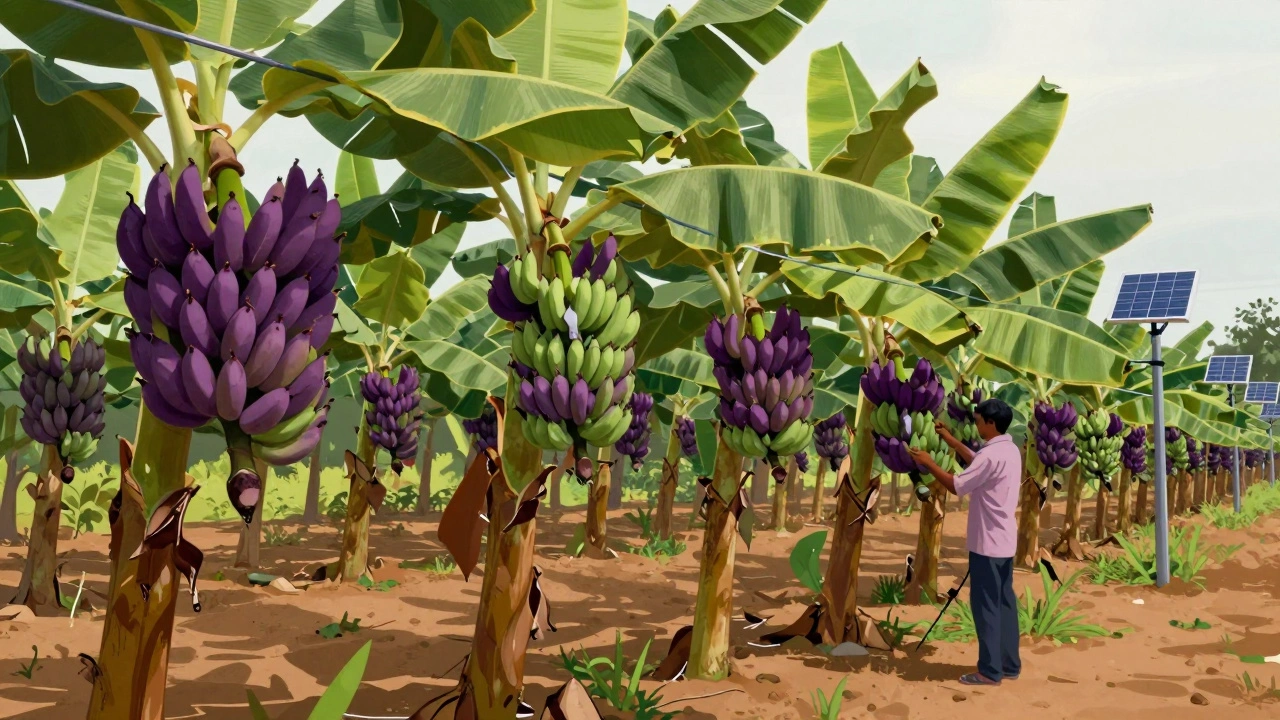
If you think bananas are cheap, you’re not looking at the right farms. In Andhra Pradesh and Tamil Nadu, farmers grow Cavendish and Rasthali bananas for export and high-end retail. Unlike mangoes, bananas yield year-round. A single bunch can weigh 40-50 kg. At ₹25-₹35 per kg in wholesale markets, that’s ₹1,000-₹1,750 per bunch. A hectare can hold 1,600-1,800 plants. That’s 1,200-1,500 bunches per harvest cycle - every 10 to 12 months.
That means ₹12 lakh to ₹26 lakh per hectare per year, before costs. The real advantage? Low input cost. Bananas need water and fertilizer, but not complex pest control. They’re also less weather-sensitive than mangoes. A good drip irrigation setup cuts water use by 50%. And because they’re harvested in bunches, labor is efficient. Farmers who sell directly to supermarkets or export agents earn 2x more than those selling to local mandis.
Citrus Fruits: The Export Goldmine
Oranges, mosambi, and kinnow are making a comeback - and not just in Punjab. Farmers in Maharashtra, Telangana, and Karnataka are switching to citrus because global demand is rising. Kinnow, a hybrid of mandarin and orange, is the star. It’s sweet, juicy, and stores longer than most citrus. In 2024, India exported over 120,000 metric tons of kinnow to the UK, Canada, and Gulf countries.
A single kinnow tree yields 100-150 kg of fruit per year. At ₹40-₹60 per kg in export-ready condition, that’s ₹4,000-₹9,000 per tree. With 200 trees per hectare, gross income hits ₹8 lakh to ₹18 lakh. The catch? Quality control. Export buyers demand uniform size, no blemishes, and specific sugar levels. Farmers who invest in sorting lines and packhouses earn 50% more. Those who don’t? They get stuck selling to local markets at half the price.
Dragon Fruit: The New High-Risk, High-Reward Crop
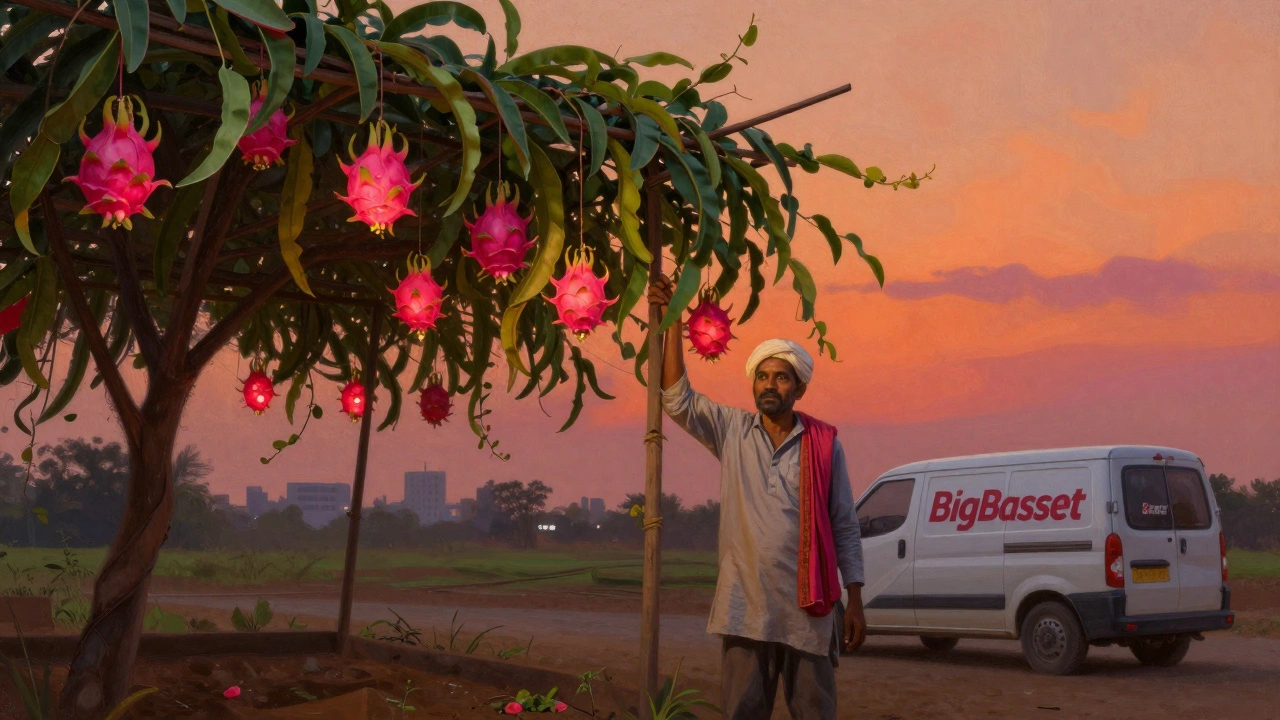
Five years ago, dragon fruit was a novelty. Today, it’s a profitable niche. Grown in Gujarat, Maharashtra, and Andhra Pradesh, it thrives in dry, hot climates where other fruits struggle. The plant needs trellises, but once established, it produces for 15-20 years. Each plant yields 5-8 kg per year. At ₹200-₹300 per kg in Delhi and Bangalore supermarkets, that’s ₹1,000-₹2,400 per plant annually.
One farmer in Jalgaon switched 2 hectares from sugarcane to dragon fruit. His yield: 12,000 kg per year. He sells directly to organic stores and online platforms. His net profit? ₹8.5 lakh per year. The downside? It takes 18-24 months to start bearing fruit. And if you don’t have a buyer lined up, you’re stuck with perishable fruit. But for farmers with access to urban markets or e-commerce, it’s one of the highest ROI crops in India today.
Guava: The Underdog with Big Potential
Guava is everywhere in India - but most farmers treat it like a backyard tree. That’s a mistake. The pink-fleshed Lucknow-49 variety is a game-changer. It’s sweeter, has fewer seeds, and keeps longer. Farmers in Uttar Pradesh and Bihar are now planting it in high-density systems - 1,500 plants per hectare.
Each tree yields 40-60 kg per year. At ₹35-₹50 per kg in city markets, that’s ₹1.4-₹3 lakh per hectare. But here’s the twist: guava is perfect for value addition. Farmers are making juice, pulp, and jam with local processing units. One cooperative in Lucknow turned 10 tons of guava into pulp and sold it to a national brand for ₹60/kg - triple the fresh fruit price. Processing turns a low-margin crop into a high-margin one.
What Farmers Are Avoiding - And Why
Not all fruits are created equal. Apples? They need cold winters and high altitude. Only Himachal, Jammu, and Uttarakhand can grow them profitably - and even there, climate change is reducing yields. Grapes? High input cost, disease-prone, and dependent on export licenses. Papaya? Oversaturated in local markets. The price crashed in 2023 when too many farmers planted it.
Coconut? It takes 6-8 years to mature. That’s too long for most smallholders. Litchi? Great in Bihar, but it spoils within 48 hours. Without cold chain access, it’s a gamble. Stick to crops with longer shelf life, clear buyers, and lower risk.
How to Start Smart
If you’re thinking of switching to fruit farming, don’t go all-in on day one. Start small. Pick one crop that matches your soil and climate. Test 10-20 plants. Learn the pruning, irrigation, and harvesting rhythm. Talk to local Krishi Vigyan Kendras (Agricultural Science Centers). They offer free training and subsidized saplings.
Join a farmer producer organization (FPO). In 2025, the government gave FPOs ₹1.2 lakh per group for cold storage and packaging. That cuts your biggest cost: getting your fruit to market. Don’t sell to middlemen. Build direct links with retailers, hotels, or online platforms like BigBasket, JioMart, or even Instagram.
Use drip irrigation. It’s not optional anymore. The government subsidizes up to 70% of the cost. A 1-acre drip system costs ₹60,000-₹80,000. But it saves ₹40,000 in water and fertilizer every year. Payback time? Just 18 months.
Bottom Line: What to Plant in 2026
For maximum profit with minimum risk:
- Mango - Best for large farms with access to export channels
- Banana - Best for steady, year-round income
- Kinnow - Best for export-focused growers with quality control
- Dragon Fruit - Best for urban-adjacent farmers with direct sales
- Guava - Best for farmers willing to process and add value
Forget the hype. The most profitable fruit isn’t the rarest - it’s the one that fits your land, your labor, and your market. Pick wisely. Start small. Scale smart.
Which fruit farming gives the highest profit per acre in India?
Mango farming, especially Alphonso variety in Maharashtra and Gujarat, gives the highest profit per acre - up to ₹50 lakh annually on 1 hectare with good management. Dragon fruit and kinnow follow closely, with ₹8-₹18 lakh per acre, depending on market access and quality control.
Is banana farming more profitable than mango farming?
Banana farming gives more consistent yearly income because it produces year-round, while mangoes are seasonal. But mangoes have higher per-season profit. A banana farm might earn ₹15-₹26 lakh per hectare per year, while a good mango orchard can hit ₹22-₹50 lakh in 3-4 months. If you have buyers for both, combine them - bananas cover the off-season.
Can small farmers make money from fruit farming?
Yes - if they focus on high-value crops like dragon fruit, guava, or kinnow and sell directly. A small plot of 0.5 acre with 100 dragon fruit plants can earn ₹5-₹8 lakh per year. The key is avoiding middlemen. Join a Farmer Producer Organization (FPO) to access subsidies, storage, and bulk buyers.
What’s the cheapest fruit to start farming in India?
Guava is the cheapest to start. Saplings cost ₹50-₹80 each, need minimal inputs, and grow fast. You can start with 50 plants on 0.2 acre. First harvest in 2 years. With direct sales, you can earn ₹1-₹1.5 lakh per year. It’s low-risk and perfect for beginners.
Which state is best for fruit farming in India?
It depends on the fruit. Maharashtra for mangoes and dragon fruit, Andhra Pradesh and Tamil Nadu for bananas, Punjab and Haryana for kinnow, Uttar Pradesh for guava, and Gujarat for both kinnow and dragon fruit. Choose based on your local climate and market access - not trends.
If you’re ready to move from gardening to farming, start with one crop. Learn its rhythm. Build your network. The land doesn’t care how big you are - it only rewards those who understand it.