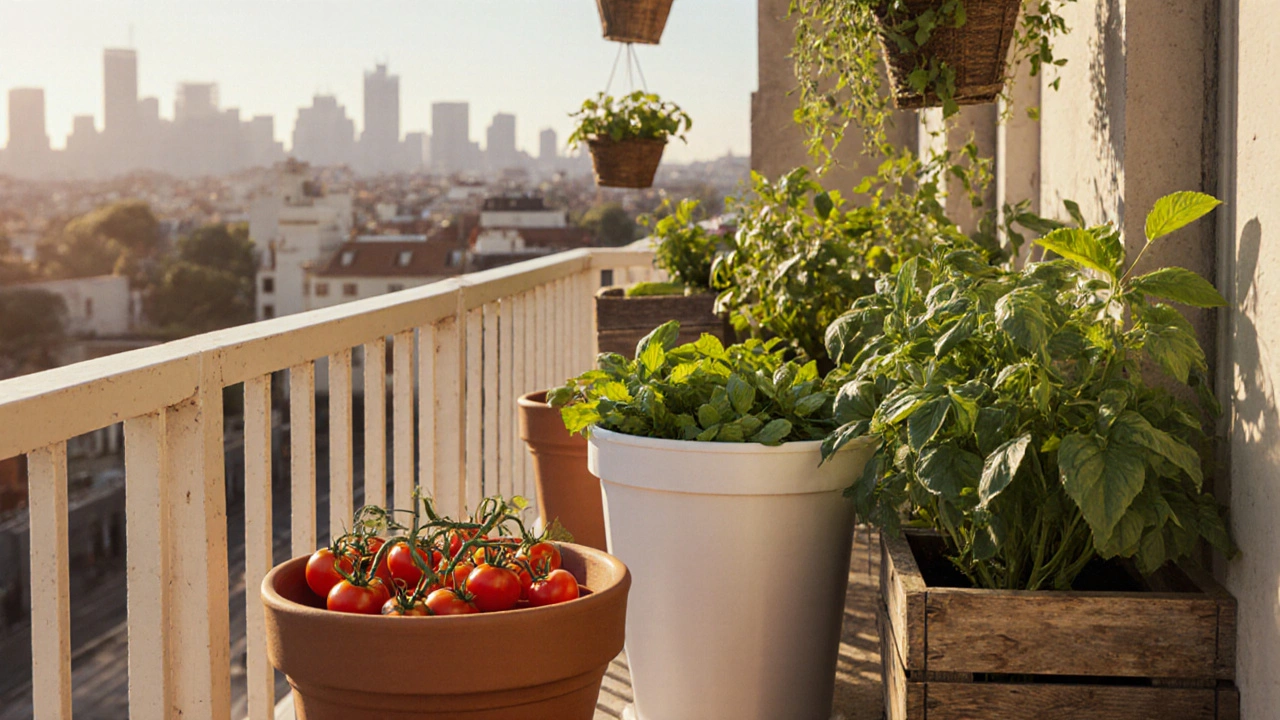
Balcony Vegetable Ideas: Grow Fresh Food Where You Live
When you’re growing balcony vegetable ideas, practical, space-smart ways to grow food on balconies and terraces. Also known as container vegetable gardening, it’s not just about sticking a pot on the railing—it’s about choosing the right plants, soil, and watering habits so your veggies actually thrive. Most people think they need a yard to grow tomatoes or chillies. That’s not true. Even a 5x5 foot balcony in Mumbai or Delhi can feed a family if you know what to plant and how to care for it.
What makes balcony gardening different isn’t the space—it’s the container gardening, growing plants in pots, buckets, or raised beds instead of the ground. Also known as potted gardening, it means you control the soil, the water, and the sun exposure. That’s a big advantage. You can use compost-rich soil instead of compacted city dirt. You can move pots to catch morning light. You can avoid pests that live in ground soil. But here’s the catch: containers dry out fast. That’s why drip irrigation isn’t always the answer—sometimes a simple morning soak works better. And if your balcony gets blazing hot in summer, you’ll need shade cloth or taller plants like okra to shield the delicate ones.
Then there’s the small space gardening, maximizing harvests in limited areas using vertical structures, tiered planters, and smart layouts. Also known as vertical gardening, it’s how you turn a flat balcony into a food wall. Think hanging baskets for strawberries, wall pockets for herbs, or trellises for beans and cucumbers. You’re not just growing food—you’re using every inch. In India, where balconies often face south or west, light is the real limiting factor. That’s why leafy greens like spinach and amaranth do better than tomatoes in shady spots. And if you’ve ever tried growing carrots in a shallow pot and got tiny roots? That’s soil depth. You need at least 12 inches for root veggies. No shortcuts.
And don’t forget the soil. Most people buy bagged potting mix and wonder why their plants die after a month. Real soil isn’t just dirt in a container—it needs food. That’s where homemade fertilizer, organic nutrient blends made from kitchen waste, compost, and natural ingredients. Also known as DIY garden feed, it’s cheaper, safer, and way more effective than chemical powders. Banana peels for potassium, eggshells for calcium, diluted buttermilk for microbes—these aren’t myths. They’re what real gardeners use.
You don’t need fancy tools. You don’t need a big budget. You just need to know what grows well in your spot, how often to water it, and how to fix problems before they kill your plants. The posts below show you exactly that: which vegetables are easiest to start with, how to avoid overwatering in pots, what to do when your balcony turns into a sauna in May, and how to reuse old buckets and bottles as planters. No fluff. No theory. Just what works on Indian balconies—right now, this season, in your hands.
Discover the best vegetables for balcony gardening, learn container setup, light, water, and pest tips, and start harvesting fresh produce from your small outdoor space.