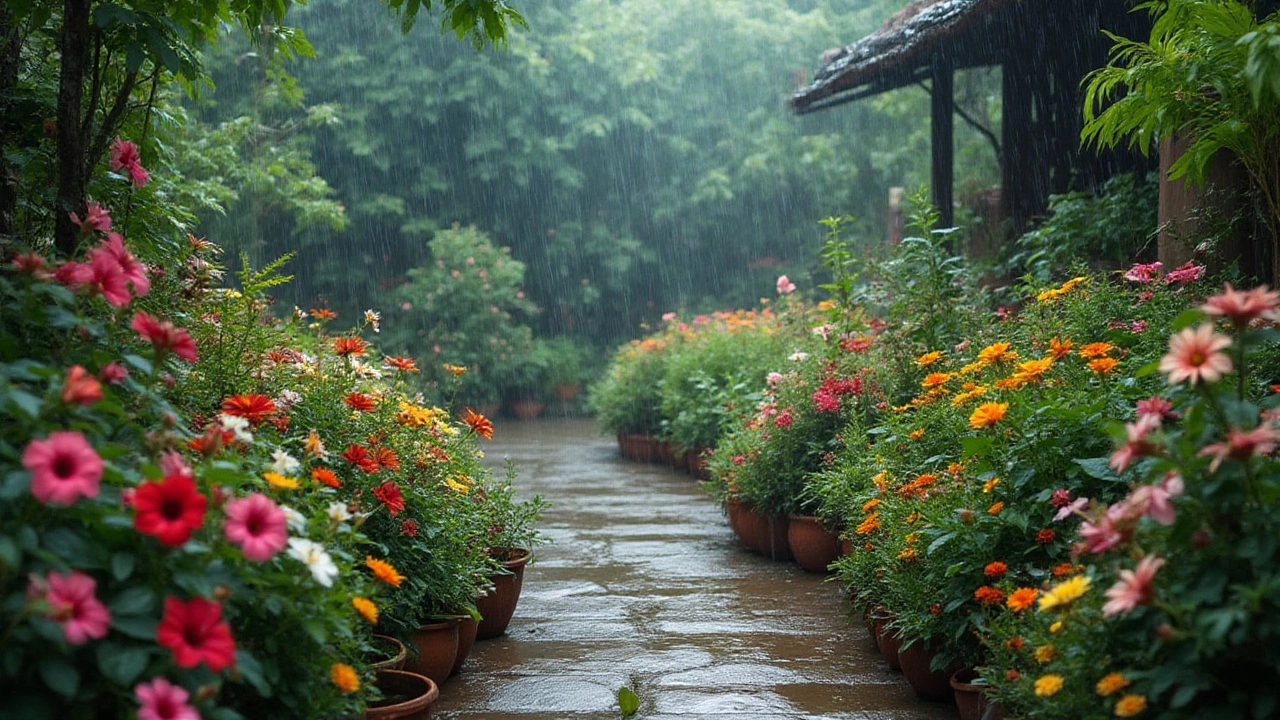
Best Rainy Season Plants for India: Top Picks That Thrive in Monsoon
When the monsoon arrives, most gardeners panic—too much water, soggy soil, moldy leaves. But the truth is, rainy season plants, plants that naturally flourish during India’s heavy monsoon rains. Also known as monsoon-tolerant flora, these are the ones that don’t just survive—they explode with color, fragrance, and life. This isn’t about forcing sun-loving plants to endure downpours. It’s about choosing what the season was made for.
India’s rainy season isn’t just about rain. It’s about humidity, warm nights, and soil that stays moist for days. That’s why plants like Mogra jasmine, a fragrant, humidity-loving flower native to India that blooms fiercely during monsoon and ferns, leafy, moisture-dependent plants that thrive in shaded, wet corners are your best friends. They don’t need daily watering—they need the kind of dampness only the monsoon brings. On the flip side, plants like bonsai or succulents? They’ll rot. You can’t fight nature. You have to work with it.
What makes a plant truly suited for India’s rainy season? It’s not just about rain tolerance. It’s about root systems that don’t drown, leaves that shed water quickly, and the ability to handle high humidity without fungal rot. Plants like caladium, a colorful foliage plant that loves wet soil and partial shade and water lilies, aquatic plants that bloom in ponds and rain-filled containers do exactly that. They’re not just pretty—they’re built for this climate. And when you pair them with smart soil prep—like adding compost to improve drainage—you’re not just gardening. You’re working with the land, not against it.
You’ll find plenty of guides telling you to water less in the monsoon. But that’s not the whole story. The real trick is knowing which plants need that extra moisture—and which ones will die from it. The posts below give you real examples: what grows wild in monsoon gardens across Kerala, how to keep Mogra blooming all season, why some plants turn yellow not from under-watering but from waterlogged roots, and how to use simple, low-cost methods to protect your plants from rot. No fancy tools. No expensive systems. Just what works in Indian homes, balconies, and backyards when the clouds roll in.