Best States for Rice in India: Where It Grows Best and Why
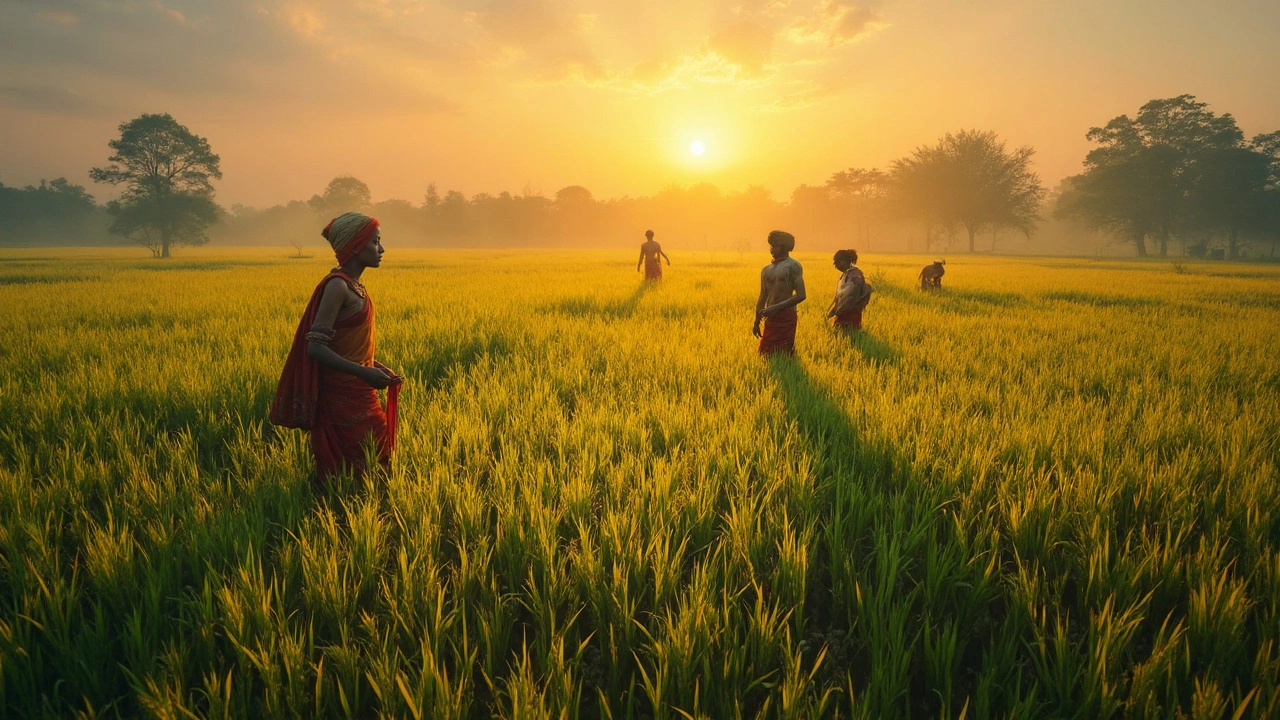
When it comes to rice cultivation in India, the backbone of the country’s food supply and a crop grown across millions of hectares. Also known as paddy farming, it’s not just a staple—it’s a way of life for millions of farmers. India grows nearly a quarter of the world’s rice, but it doesn’t happen everywhere. Some states have the perfect mix of soil, water, and climate to make rice thrive. Others struggle, even with effort. Knowing where rice grows best isn’t just about geography—it’s about understanding what makes the land work.
The top three states—West Bengal, India’s largest rice-producing state, where monsoon rains and fertile alluvial soil create ideal conditions, Uttar Pradesh, a close second with vast flat lands and strong irrigation networks, and Punjab, known for high-yield hybrid varieties and advanced farming techniques—dominate production. But it’s not just about volume. In Andhra Pradesh, rice is grown in both rain-fed and irrigated systems, with farmers using traditional and modern methods side by side. Meanwhile, Odisha, with its heavy rainfall and low-lying fields, is built for rice, even if yields are lower. These states don’t just grow rice—they’ve shaped how it’s grown across the country.
What makes these places different? It’s not magic. It’s water. Rice needs a lot of it—either from rain or controlled flooding. The soil has to hold water without turning to mud. Temperature matters too: rice doesn’t grow well below 20°C or above 40°C. That’s why northern and eastern India win. The monsoon season lines up perfectly with planting cycles. Farmers there don’t just wait for rain—they plan around it. And unlike in dry regions where drip irrigation might save water, rice farms here rely on flooding fields, something drip systems can’t do. That’s why you won’t find rice fields in Rajasthan or Gujarat the way you do in Bihar or Assam.
Even within these top states, not every farm is the same. In West Bengal, smallholders grow traditional varieties like Sona Masuri. In Punjab, large farms use high-yield seeds and fertilizers. In Odisha, farmers still use buffalo-drawn plows in some villages. But they all share one thing: they know how to work with the land, not against it. That’s the real secret behind the best rice in India.
Below, you’ll find real advice from growers and gardeners who’ve learned what works—and what doesn’t—when it comes to growing crops in India’s varied climates. Whether you’re curious about soil health, water use, or how to grow food in tough conditions, the posts ahead give you the practical side of farming in India. No fluff. Just what you need to know.
Rice cultivation is a crucial part of agriculture, demanding ideal conditions for a successful harvest. This article explores which U.S. states stand out for growing rice effectively. From climate and soil requirements to practical tips, it highlights what makes these states optimal for rice production.