Brahma Kamal: The Sacred Flower of the Himalayas and How to Grow It
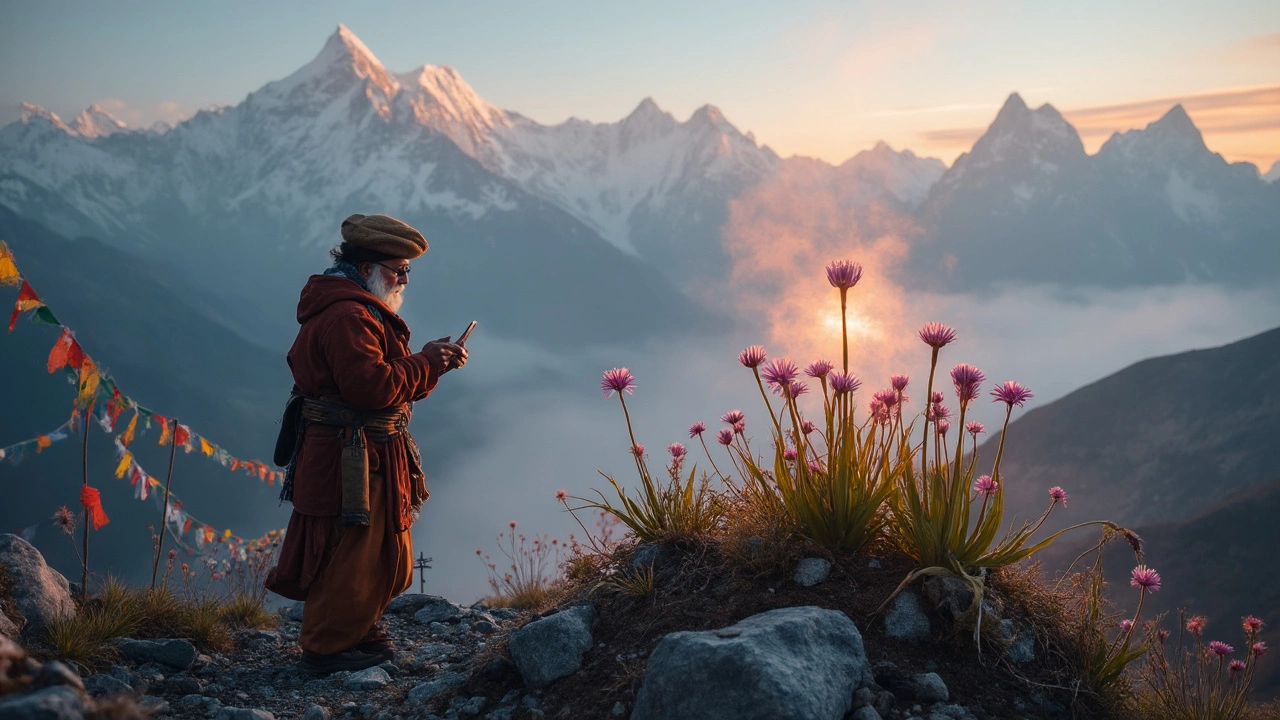
When you think of rare, sacred plants in India, Brahma Kamal, a high-altitude flowering cactus native to the Himalayas, known for its nocturnal bloom and spiritual significance in Hindu temples. Also known as Saussurea obvallata, it’s not just a flower—it’s a symbol of divine presence, often offered in temples like Kedarnath and Badrinath. Unlike most garden plants, Brahma Kamal doesn’t bloom on demand. It waits for cool nights, monsoon humidity, and altitudes above 2,500 meters. Most people never see it in bloom because it opens only once a year, usually between July and September, and fades by dawn.
This plant isn’t just spiritual—it’s ecological. It thrives where few others can: rocky slopes, freezing nights, and thin soil. That’s why it’s often grouped with other high-altitude plants, species adapted to survive extreme cold, low oxygen, and intense UV radiation in mountain regions like the Himalayan blue poppy and snow lotus. Growing Brahma Kamal outside its natural zone is tough, but not impossible. Gardeners who’ve succeeded use cold frames, well-draining soil mixes, and mimic alpine conditions by keeping roots cool and leaves dry. It doesn’t need daily watering—overwatering kills it faster than frost. Think of it like a desert cactus that only blooms under moonlight.
It’s also linked to rare flowering plants, species with limited natural distribution, slow growth cycles, and high conservation status due to habitat loss and overharvesting. Many wild populations are under threat from pilgrims plucking blooms and climate change shrinking its mountain habitat. That’s why home cultivation matters—not just for beauty, but for preservation. If you’ve ever seen a photo of Brahma Kamal glowing under a full moon, you know why people fight to grow it. It’s not about having the most exotic plant. It’s about holding a piece of the Himalayas in your garden.
What you’ll find in the posts below isn’t just care tips. It’s real-world stories from gardeners who’ve tried and failed, then succeeded—with soil mixes that work, containers that mimic altitude, and timing that matches the monsoon rhythm. You’ll learn why drip irrigation won’t help, why compost is risky, and how to tell if your plant is dying or just resting. This isn’t a generic guide. It’s the practical truth from people who’ve stared at a dead Brahma Kamal and wondered what went wrong. And now, you won’t have to wonder anymore.
Some flowers play hard to get, but the Brahma Kamal from the Himalayas takes things to an extreme—waiting up to 7 years just to show off its famous bloom. This article reveals why the Brahma Kamal is so special, how to tell if it's about to bloom, and what to do if you actually want to grow one at home. You’ll learn practical care tips, the cultural legends surrounding this flower, and mistakes to avoid. For gardeners hunting rare and legendary blooms, here’s the inside scoop.