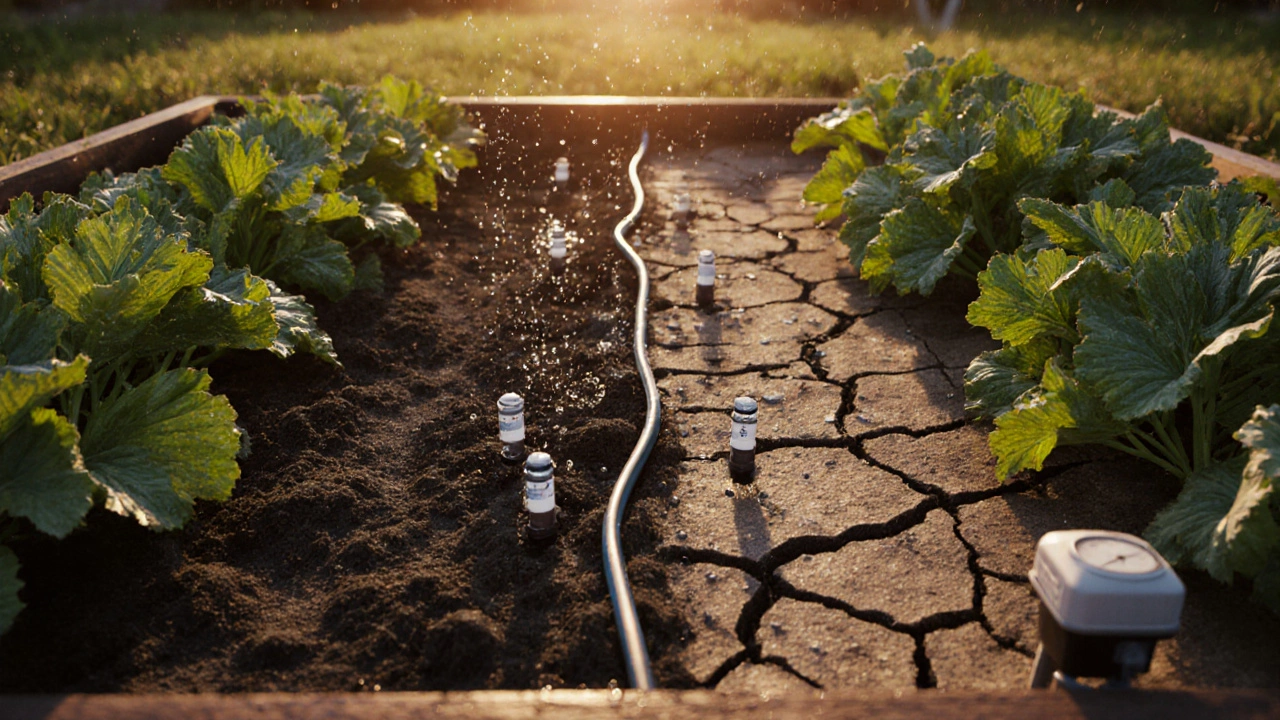
Drip Emitters Per Zone: How Many You Really Need and Why It Matters
When you set up a drip emitter, a small device that releases water slowly and directly to plant roots. Also known as dripper, it's one of the most efficient ways to water plants without wasting a drop. But putting too many or too few on a single zone can ruin your whole system. Too many emitters and your water pressure drops—some plants get drips, others get nothing. Too few and you’re left with dry patches, stressed plants, and higher bills. The right number isn’t about guesswork. It’s about matching your emitter flow rate, pipe size, and plant needs.
The key is understanding irrigation zones, groups of plants with similar water needs that share the same water line and pressure. You don’t put a thirsty tomato next to a drought-tolerant succulent in the same zone. That’s why the best drip systems split plants into zones based on water demand. Each zone should have emitters with the same flow rate—like all 1 GPH or all 2 GPH. Mixing them causes imbalance. Most home gardeners stick to 4–8 emitters per zone for small plants, but larger trees or rows of veggies might need 10–12 if your line can handle it. Check your water pressure: if it’s below 20 PSI, fewer emitters per line are safer. High pressure? You can push more, but only if your tubing is rated for it.
Another thing people forget: drip irrigation, a method that delivers water slowly to the root zone using tubes and emitters. isn’t just about the emitters. It’s about the whole setup. Your main line, sublines, filters, and pressure regulators all play a part. If your filter is clogged or your pressure reducer is missing, even the perfect number of emitters won’t work right. That’s why posts like "Dripper vs Emitter: Key Differences in Drip Irrigation" and "What Is Better Than Drip Irrigation for Water Efficiency in Gardens?" matter—they show you how the pieces fit together. You don’t just count emitters. You design a system that works with your soil, climate, and plants.
In India’s hot, dry regions, getting drip emitters per zone right means the difference between a thriving garden and a wasted season. A zone with 6 emitters at 1 GPH each gives you 6 gallons per hour. That’s fine for a row of herbs or small shrubs. But if you’ve got 12 emitters on the same line, you’re asking for 12 gallons per hour—most home systems can’t handle that without losing pressure. And if you’re using 4 GPH emitters for a large tree? Then maybe only 2–3 per zone is enough. It’s not about copying what someone else did. It’s about matching your setup to your real conditions.
Below, you’ll find real-world guides from gardeners who’ve tested this in Indian homes and terraces. Some show how to fix uneven watering. Others explain how to add emitters without re-piping. You’ll see what works for balcony gardens, rooftop farms, and backyard plots. No theory. Just what actually happens when you get the numbers right—or wrong.
Learn how to calculate the exact number of drip emitters needed per irrigation zone, choose the right flow rate, and design a balanced system for healthy gardens.