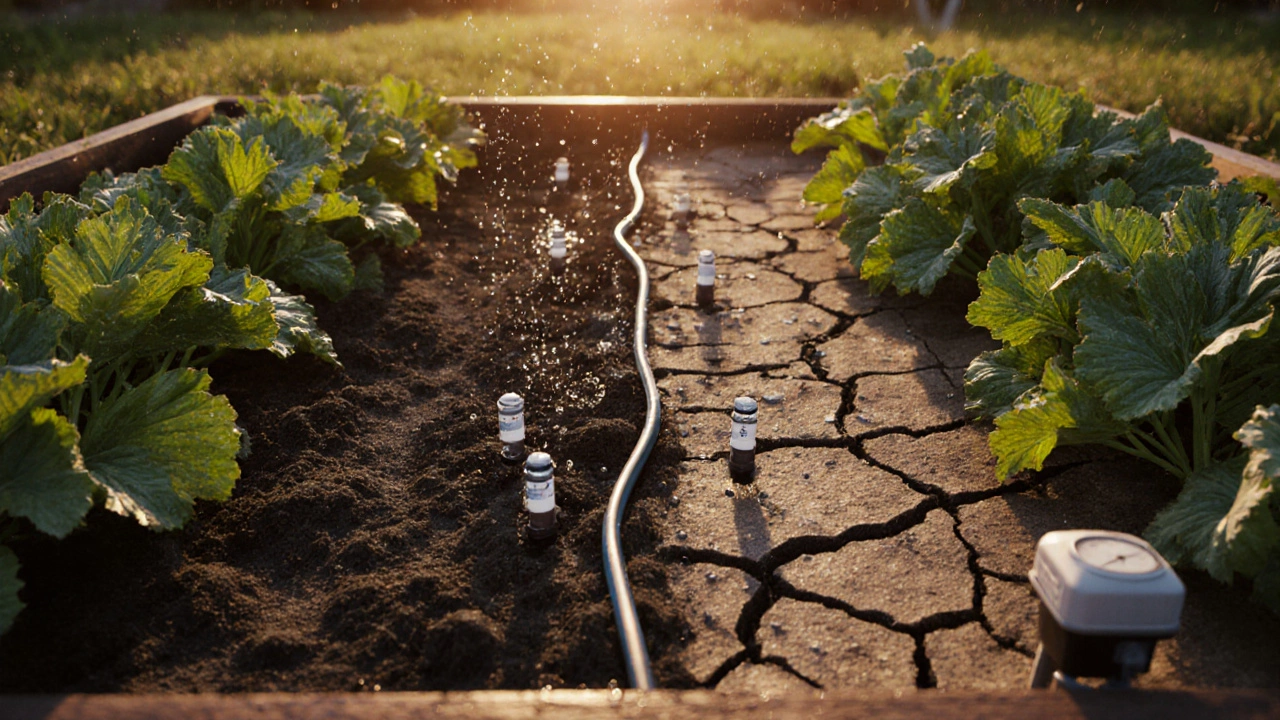
Drip Irrigation Design: How to Set Up a System That Actually Saves Water
When you think of drip irrigation design, a targeted watering system that delivers water slowly and directly to plant roots. Also known as micro-irrigation, it’s one of the most efficient ways to water gardens in India’s hot, dry seasons. But most people set it up wrong. They run it every day, assume all plants need the same flow, or ignore soil type—ending up with wet soil that invites rot, not healthy roots.
A good drip irrigation system, a network of tubes, emitters, and timers that deliver water precisely where needed isn’t just about hardware. It’s about understanding your soil, your plants, and your climate. In India, where water is scarce and temperatures spike, a poorly designed system wastes more than water—it wastes time, money, and effort. The right setup cuts water use by up to 60% compared to sprinklers, but only if you match the emitter flow to your plant’s root zone. For example, a tomato plant needs more water than a succulent, and clay soil holds moisture longer than sandy soil. That’s why one-size-fits-all kits fail.
Related tools like soaker hoses, porous tubes that seep water along their length work well for rows of vegetables, while emitters, small devices that release water drop by drop are better for individual shrubs or potted plants. And while drip systems are great, they’re not always the best. Mulching, rainwater harvesting, and subsurface irrigation can do even more with less maintenance. The key isn’t picking the fanciest gadget—it’s designing a system that listens to your garden, not the other way around.
What you’ll find below are real solutions from gardeners who’ve been there. No theory. No fluff. Just what works: how to fix leaky lines, how to adjust for monsoon rains, why running drip irrigation daily kills more plants than it helps, and how to tell if your emitters are clogged or just working too slow. Whether you’re growing veggies on a balcony, herbs on a terrace, or trees in your backyard, these posts show you how to make your water go further—without guesswork.
Learn how to calculate the exact number of drip emitters needed per irrigation zone, choose the right flow rate, and design a balanced system for healthy gardens.