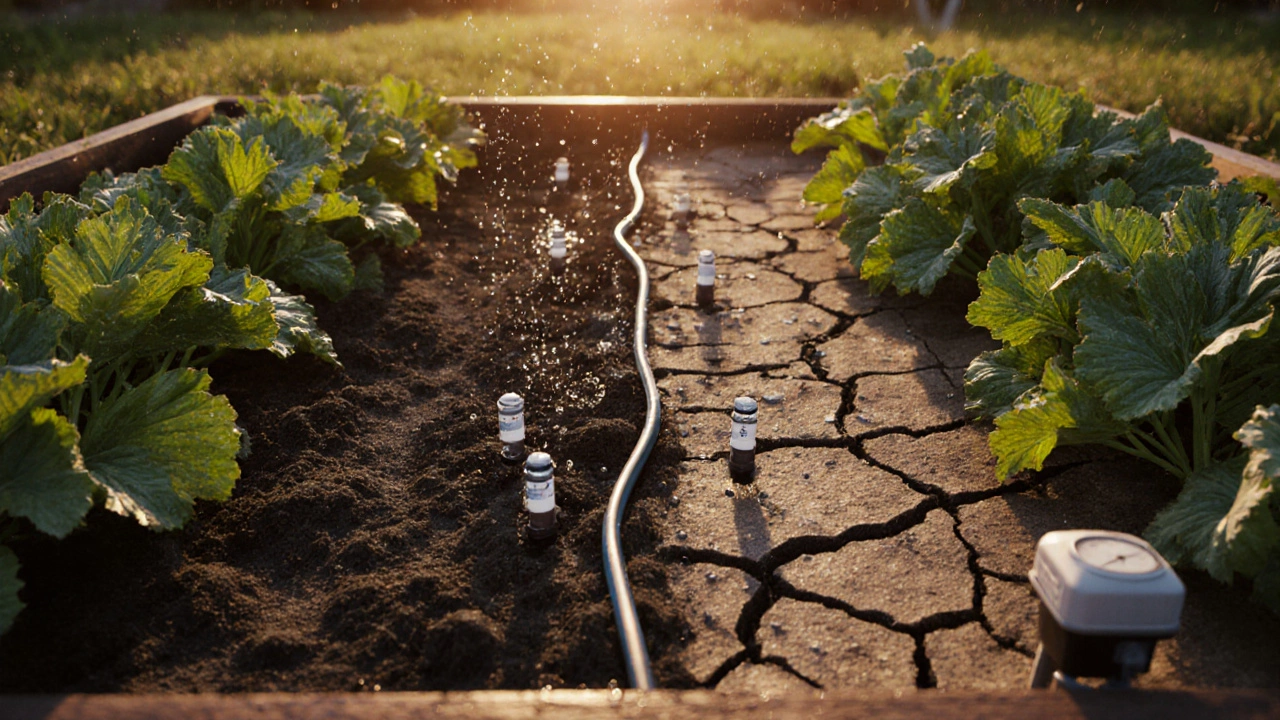
Drip System Layout: Design Tips for Efficient Watering in Indian Gardens
When you set up a drip system layout, a targeted watering method that delivers water directly to plant roots through tubes and emitters. Also known as drip irrigation, it’s one of the most efficient ways to water gardens in India’s hot, dry seasons. Unlike sprinklers that lose half their water to evaporation, a well-planned drip system uses up to 60% less water while keeping roots happy. But here’s the catch—most people install it wrong. They copy a YouTube video or follow a generic diagram, then wonder why their plants are still struggling.
A good drip system layout, a tailored arrangement of tubes, emitters, and valves designed for specific plant needs and soil types isn’t about how many drippers you use—it’s about where you put them. For example, a tomato plant needs water near its base, but a cluster of herbs in a raised bed needs evenly spaced emitters. Your soil matters too. Clay soil holds water longer, so you space emitters farther apart. Sandy soil drains fast, so you need more emitters closer together. And don’t forget the slope. If your garden is on a hill, pressure-compensating emitters keep water flowing evenly downhill.
Many Indian gardeners skip testing their water pressure, which leads to clogged emitters or uneven flow. A simple pressure gauge costs less than ₹200 and can save you weeks of frustration. Also, filter your water. Dust, minerals, and algae from tank water or borewells can block tiny drip holes. A basic screen filter fixes 90% of these issues. And timing? Don’t water at noon. Early morning is best—less evaporation, fewer fungal problems. You can run your system every other day in summer, even less in monsoon.
Related tools like soaker hoses, porous tubes that seep water slowly along their length work well for rows of vegetables, but they’re not as precise as emitters. For small spaces like balconies or terrace gardens, a simple drip layout with 1-2 emitters per pot beats a full system. And if you’re serious about saving water, pair your drip system with mulching, a layer of organic material like straw or coconut coir that traps moisture and cools roots. Mulch cuts evaporation by half and reduces how often you need to turn on the system.
You’ll find posts here that break down exactly how to plan a drip layout for different plants—from bonsai trees to terrace veggies. Some show you how to fix common mistakes like overwatering, which is still a problem even with drip systems. Others compare drippers vs emitters, or explain why running it daily is a myth. You’ll also see how soil health and water efficiency go hand in hand. This isn’t theory. These are real fixes from gardeners in Pune, Bengaluru, and Jaipur who’ve tried it, failed, and figured it out.
Whether you’re growing vegetables on a balcony, herbs on a terrace, or fruit trees in your backyard, the right drip system layout makes all the difference. It’s not about fancy gadgets. It’s about smart placement, right timing, and understanding your plants’ real needs. Below, you’ll find practical guides that skip the fluff and show you exactly how to make it work where you live.
Learn how to calculate the exact number of drip emitters needed per irrigation zone, choose the right flow rate, and design a balanced system for healthy gardens.