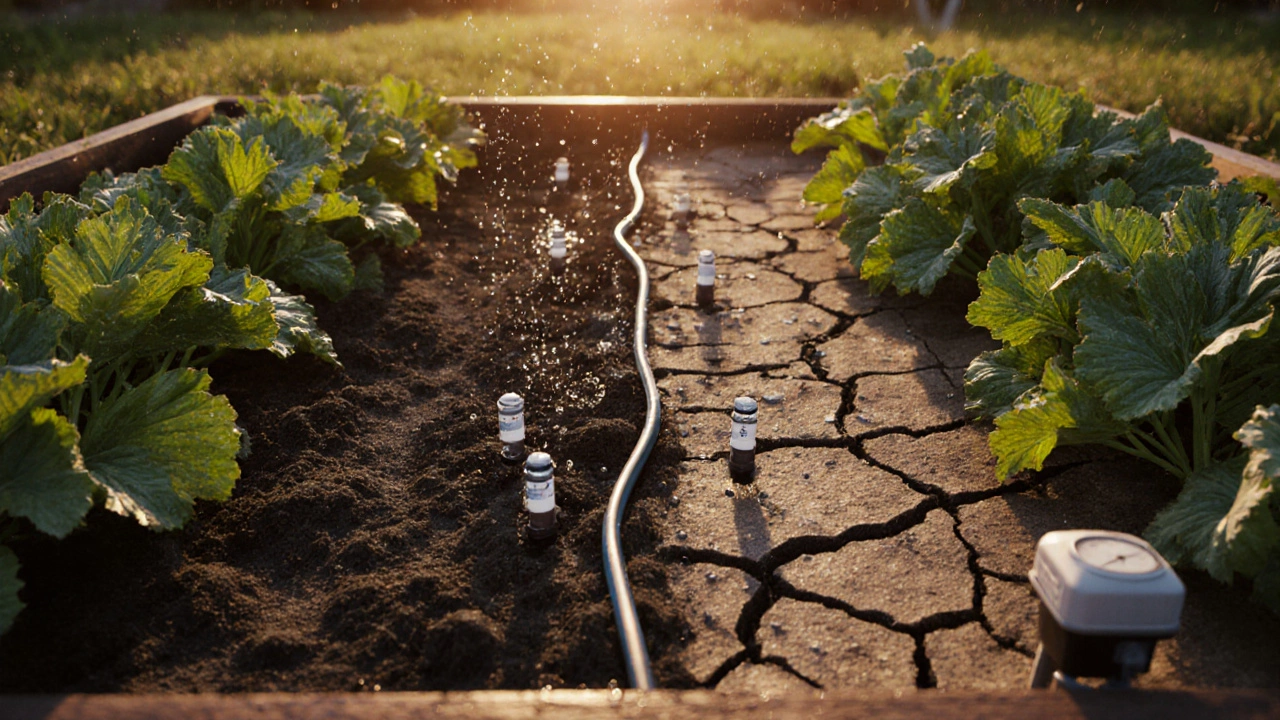
Emitter Flow Rate: What It Means and How It Affects Your Drip Irrigation
When you're setting up a emitter flow rate, the amount of water a drip emitter releases per hour, usually measured in liters per hour (LPH). It's the heartbeat of your drip system—too low and your plants go thirsty, too high and you're wasting water and money. In India’s hot, dry regions, getting this number right can mean the difference between a thriving garden and a patch of stressed plants.
Emitter flow rate isn’t just about the number on the package. It connects directly to drip irrigation, a method that delivers water slowly and directly to plant roots, which works best when matched to soil type, plant needs, and climate. A 2 LPH emitter might be perfect for a potted basil on your balcony, but it’ll drown a deep-rooted mango tree. On the flip side, a 4 LPH emitter could dry out a seedling in a small container. The key is matching flow rate to plant demand, not just running the same system everywhere.
Related to this are water efficiency, how well your system delivers water without waste, and irrigation design, the layout and planning that ensures every emitter serves its purpose. Many gardeners in India install drip systems but skip the design phase—putting all emitters on one line, ignoring pressure drops, or using the same flow rate for everything. That’s like using one size of shoe for every foot. You’ll end up with dry spots, soggy patches, and high water bills.
What you’ll find in the posts below are real-world fixes and insights from people who’ve been there. You’ll learn how to test your system’s actual flow rate with a simple bucket and stopwatch, why some emitters clog faster than others in hard water areas, and how to choose between 1 LPH, 2 LPH, or 4 LPH emitters based on what you’re growing. There’s also a direct comparison between drippers and emitters—something many confuse—and how to fix uneven watering in terrace gardens where pressure varies across levels.
This isn’t theory. These are the fixes that work in Indian homes, balconies, and small farms. Whether you’re growing tomatoes in pots, herbs on a rooftop, or vegetables in a backyard, your emitter flow rate is the silent factor that decides success or failure. Get it right, and your plants will thank you with growth, not wilting.
Learn how to calculate the exact number of drip emitters needed per irrigation zone, choose the right flow rate, and design a balanced system for healthy gardens.