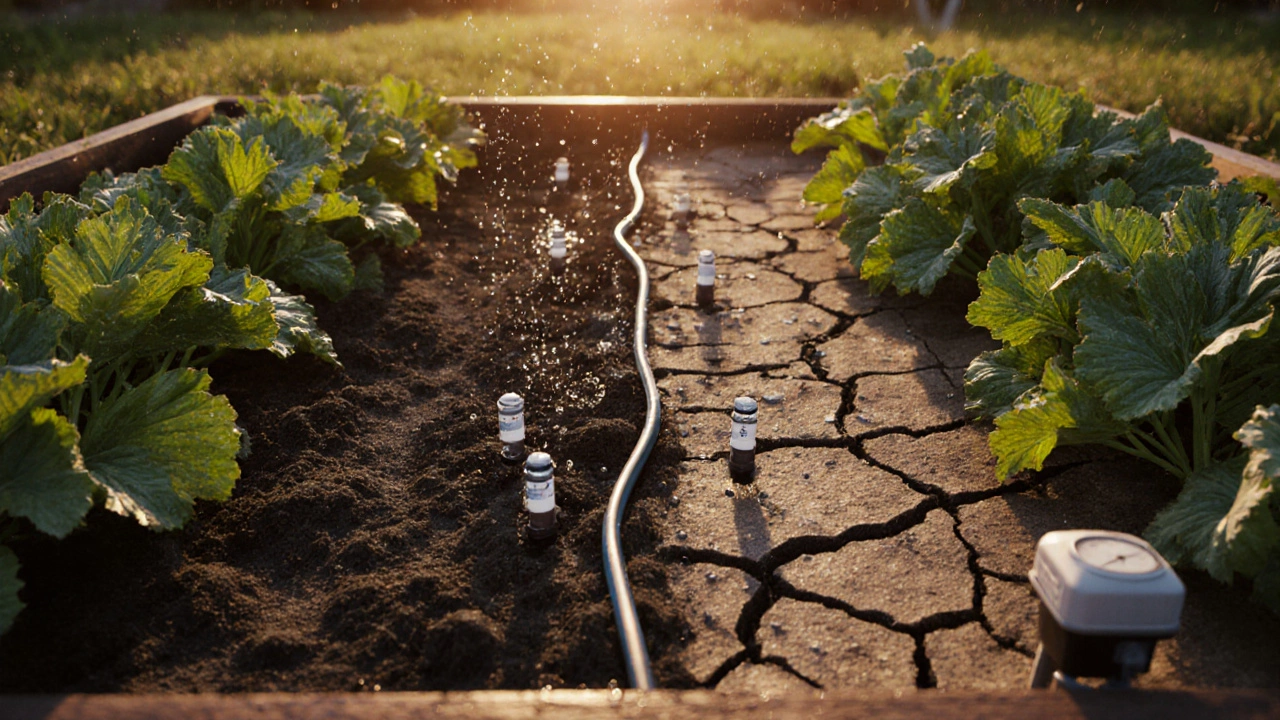
Irrigation Zone Spacing: How to Design Efficient Water Zones for Your Garden
When you set up irrigation zone spacing, the arrangement of water delivery areas in your garden based on plant needs and soil type. Also known as water zone layout, it determines how evenly and efficiently your plants get water. Get this wrong, and you’re either drowning some plants while others dry out—or wasting water and money. The right spacing isn’t about symmetry; it’s about matching water output to what each group of plants actually uses.
Think of your garden as a collection of teams, not a single unit. Plants with deep roots like tomatoes and peppers need less frequent but deeper watering. Shallow-rooted herbs and leafy greens? They crave regular, light moisture. Grouping them into separate irrigation zones, distinct areas in a garden that receive the same watering schedule and volume lets you control exactly how much each team gets. This is where drip irrigation, a low-pressure system that delivers water slowly directly to plant roots shines. Unlike sprinklers that soak everything equally, drip systems let you place emitters exactly where needed—12 inches apart for dense beds, 24 inches for trees, 36 inches for drought-tolerant shrubs. The key is matching emitter flow rate to plant demand and spacing them so their wetting patterns overlap just enough to cover the root zone without overlap waste.
Soil type changes everything. Clay holds water longer, so you can space drip lines farther apart. Sandy soil drains fast—you’ll need tighter spacing and more frequent cycles. And don’t forget sunlight. A sunny spot dries out twice as fast as a shady one. That means your east-facing balcony veggies need a different zone than your west-facing ones, even if they’re the same plant. soil moisture, the amount of water held in the soil available to plant roots is your real guide. Stick your finger in the dirt. If it’s damp two inches down, wait. If it’s dry, it’s time to water. No timer, no guesswork.
You’ll find in the posts below real-world examples of how people fix broken watering systems, adjust spacing for different climates, and save water without sacrificing growth. Some use drip lines on terraces. Others swap sprinklers for soaker hoses. A few even redesign their zones after killing plants with too much or too little water. These aren’t theory pages—they’re fixes that worked. Whether you’re growing veggies on a balcony, herbs on a windowsill, or trees in a backyard, the right irrigation zone spacing makes the difference between a garden that thrives and one that just survives.
Learn how to calculate the exact number of drip emitters needed per irrigation zone, choose the right flow rate, and design a balanced system for healthy gardens.