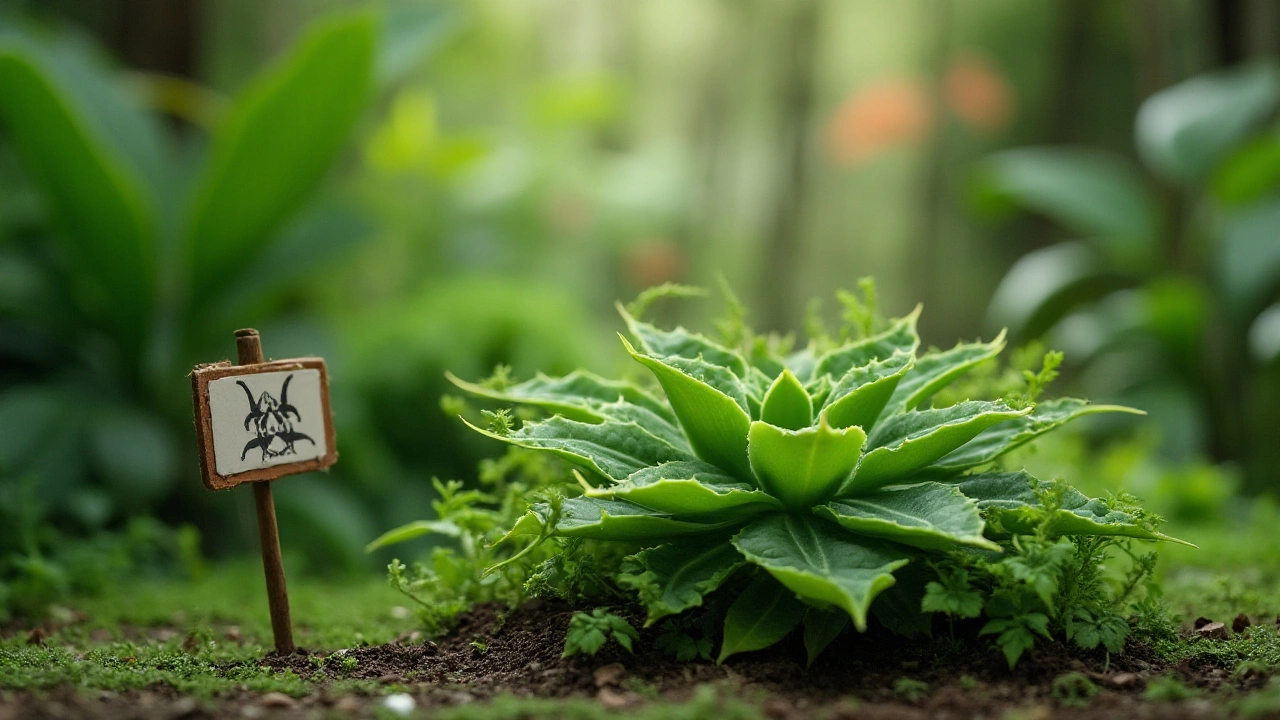
Mother of Thousands: The Easy Plant That Spreads Like Wildfire
When you hear Mother of Thousands, a hardy succulent known for producing hundreds of tiny plantlets along its leaf edges. Also known as Kalanchoe daigremontiana, it doesn’t just grow—it multiplies on its own, dropping baby plants like confetti. This isn’t your average houseplant. It’s a survival machine, built for dry climates and neglect, which is why it’s become a favorite in Indian homes and balconies. You won’t find it in fancy nurseries often, but if you’ve ever seen a pot full of tiny green sprouts popping up out of nowhere, you’ve met it.
What makes Mother of Thousands so wild is how it reproduces. Unlike most plants that need seeds or cuttings, this one grows miniature clones directly on its leaves—sometimes hundreds at a time. These plantlets fall off, land on soil, and root themselves in days. No effort. No waiting. It’s like nature’s version of copy-paste. That’s also why it’s often called airborne plantlets—they don’t need roots to start growing. Just a breeze, a bit of dirt, and boom: a new plant. This trait makes it perfect for busy gardeners in cities like Mumbai or Delhi, where time and water are tight. But it’s also why many people regret letting it loose in their gardens. Once it starts, it rarely stops.
It thrives in bright, indirect light and hates overwatering. If your soil stays wet, the roots rot fast. But if you let it dry out between waterings? It’ll reward you with thick, fleshy leaves and a steady stream of new babies. You’ll find it growing wild in cracks of balconies, on window sills, even in old pots left outside. It doesn’t need fertilizer. It doesn’t need attention. It just needs warmth and a little sun. That’s why it’s the opposite of Vanda orchid, which needs perfect humidity and airflow to survive. Mother of Thousands? It laughs at those rules.
But here’s the catch: it’s invasive. In places like Kerala or Tamil Nadu, it’s taken over garden edges, stone walls, and even potted plants. People who start with one pot end up with dozens. That’s why many treat it like a weed—pull it, bin it, forget it. But if you want it? Keep it in a pot. Don’t plant it in the ground. Let it grow where you can control it. And if you want to share it? Just pluck a plantlet and drop it in a new pot. Done.
What you’ll find below are real stories from Indian gardeners who’ve grown, fought, and loved this plant. Some used it to fill empty balconies with almost zero effort. Others tried to kill it—and failed. A few even turned it into a business, selling the plantlets online. You’ll learn how to grow it safely, how to stop it from taking over, and why it’s one of the most misunderstood plants in Indian homes. No fluff. No theory. Just what works.
The Mother of Thousands is a captivating succulent known for its prolific propagation abilities, but its toxicity to humans raises important safety considerations. This article explores the potential risks associated with this plant, as well as its alluring benefits for sustainable gardening enthusiasts. Discover practical insights into safely incorporating this plant into your home or garden, along with careful handling and planting tips. Learn about its vital role in sustainable gardening practices and how to maintain a balanced environment in your green spaces.