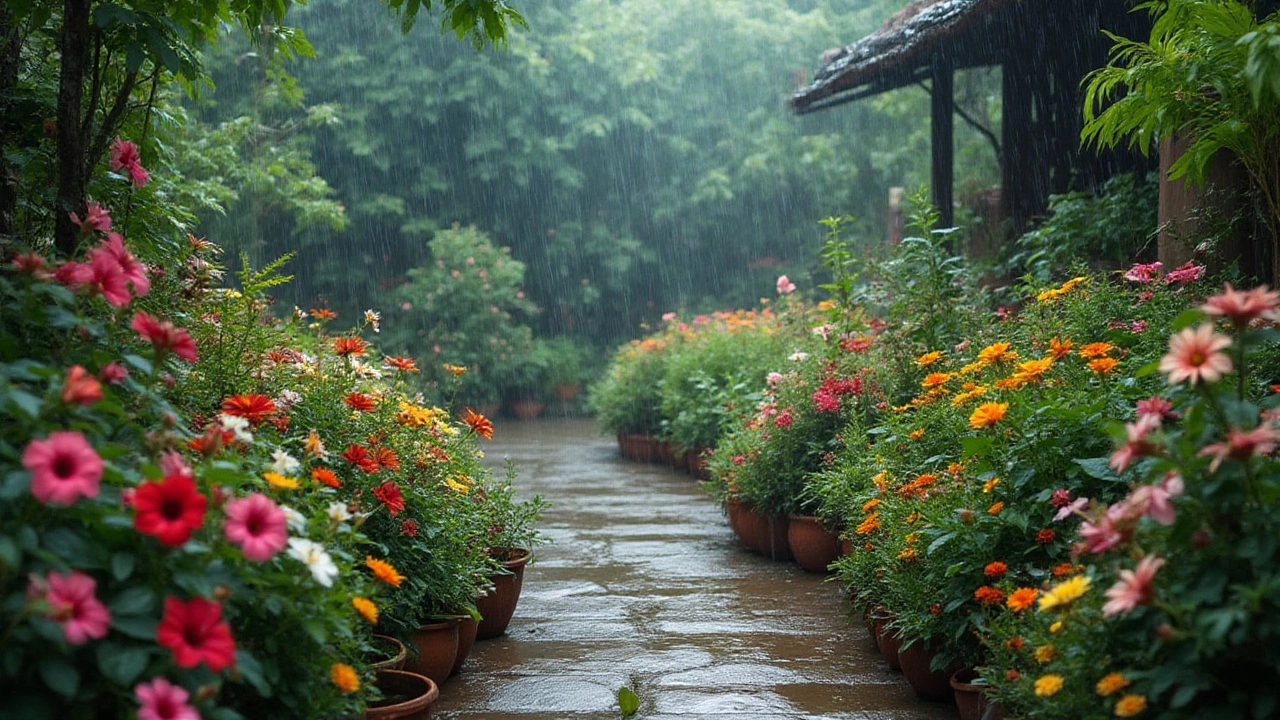
Rainy Season Flowers in India: Best Monsoon Blooms and How to Grow Them
When the monsoon hits, India transforms—not just in color, but in scent. The rainy season flowers in India, plants that bloom naturally during the monsoon months, relying on high humidity and heavy rainfall to trigger flowering. Also known as monsoon flowers, these aren’t just pretty—they’re part of India’s cultural rhythm, from temple offerings to evening walks under jasmine-laced balconies. Unlike tropical plants that need constant care, these flowers have evolved to thrive when most gardeners think everything will drown. They don’t need daily watering. In fact, overwatering kills them faster than drought.
The star of the season is the Mogra jasmine, a fragrant, white-blooming vine known scientifically as Jasminum grandiflorum, deeply tied to Indian traditions and monsoon celebrations. Also called Indian rain flower, it blooms in clusters that release scent after dusk, making it the most loved rainy season bloom. But Mogra isn’t alone. Plants like canna lilies, tall, bold flowers with bright red or orange blooms that thrive in wet soil, and marigolds, a hardy annual that blooms nonstop when rain cools the air are just as common. Even water lilies, floating blooms that need still water but explode in color during monsoon find their perfect moment in backyard ponds.
What makes these flowers work isn’t luck—it’s timing. They bloom when the soil stays moist but drains well, when temperatures drop below 35°C, and when humidity hits 70% or higher. That’s why most people fail: they treat them like summer flowers and overwater. You don’t need drip irrigation. You don’t need fancy pots. You just need to plant them in raised beds or containers with good drainage, and let the rain do the rest. A little compost in the soil helps, and a light mulch keeps the roots cool. No pesticides. No daily checks. Just wait for the first big shower, and watch the buds appear.
Some of these flowers, like Mogra, can even be grown on balconies—if you give them a south-facing wall and a trellis. Others, like canna lilies, do best in ground beds where their roots can spread. The key is matching the plant to your space, not forcing your space to fit the plant. And while some gardeners chase exotic blooms, the real magic happens with the ones that already know how to survive India’s wet season.
Below, you’ll find real guides from gardeners who’ve cracked the code—how to plant Mogra so it blooms all season, why some flowers vanish after the rains stop, and which monsoon blooms actually need less care than your houseplants. No fluff. Just what works in Indian homes, terraces, and backyards when the clouds roll in.