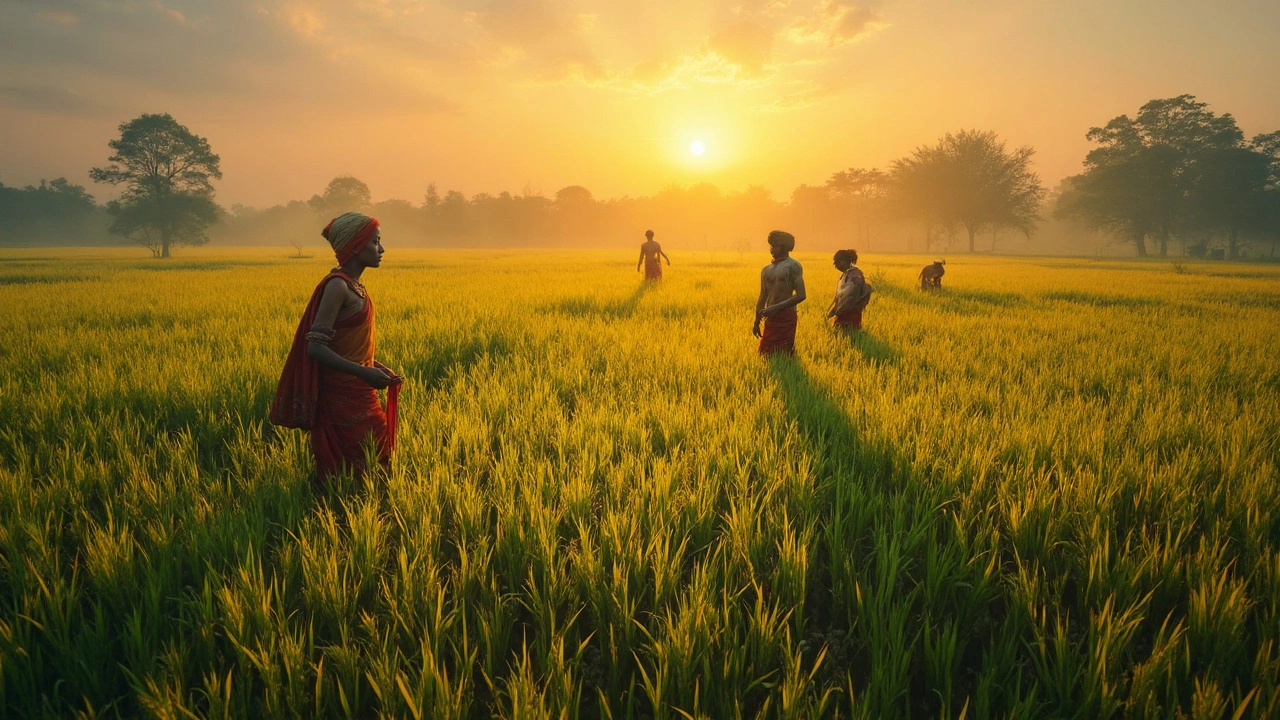
Rice Growing in India: Best Practices, Tools, and Common Mistakes
When it comes to rice growing, the process of cultivating rice as a staple crop, especially in India’s monsoon-driven agricultural zones. It’s not just about planting seeds and waiting—it’s about timing, water, soil, and smart tools that work with nature, not against it. In India, rice is grown across dozens of states, from the flooded fields of West Bengal to the terraced paddies of Uttarakhand. But what works in one region often fails in another. Many gardeners and small farmers treat rice like any other crop, and that’s where things go wrong.
Drip irrigation, a method of delivering water directly to plant roots with minimal waste is often promoted for water efficiency, but it’s rarely the right fit for rice. Rice needs standing water during its early growth stages—something drip systems can’t provide. Instead, farmers who succeed use controlled flooding, then switch to intermittent drying as the plant matures. This balance is key. Too much water too late? You’ll get root rot. Too little early on? The seedlings die. soil for rice, a clay-rich, water-retentive type of soil that holds moisture without turning to mud is non-negotiable. Sandy or compacted soil? You’ll struggle. The fix? Mix in compost and organic matter to improve structure. You don’t need expensive gear—just the right understanding of how rice behaves.
One of the biggest mistakes? Overwatering after the seedling stage. You’ll see yellowing leaves, weak stems, and stunted growth—not because the plant is hungry, but because its roots can’t breathe. Some farmers try to speed things up with chemical fertilizers, but that kills soil microbes and makes future harvests harder. Instead, successful growers use organic rice farming, a method that avoids synthetic inputs and relies on natural nutrient cycles, crop rotation, and compost. Neem oil, for example, keeps pests in check without poisoning the water or the soil. And yes, it works even in humid monsoon conditions.
There’s no single recipe for rice growing in India. The climate varies too much. But what all good growers share is attention to detail: checking water levels daily, testing soil texture before planting, and adjusting based on weather, not schedules. You don’t need a big farm to grow good rice. Even a backyard plot can yield enough for your family if you follow the basics. And with the right tools—like rainwater harvesting systems or mulch to reduce evaporation—you can cut water use by half without hurting yield.
Below, you’ll find real-world guides from gardeners who’ve cracked the code on rice in India’s toughest conditions. Some show how to grow it in containers. Others reveal how to revive tired soil for better harvests. You’ll see what works in Tamil Nadu’s heat and what fails in Punjab’s dry spells. No fluff. No theory. Just what actually helps rice grow stronger, healthier, and with less waste.
Rice cultivation is a crucial part of agriculture, demanding ideal conditions for a successful harvest. This article explores which U.S. states stand out for growing rice effectively. From climate and soil requirements to practical tips, it highlights what makes these states optimal for rice production.