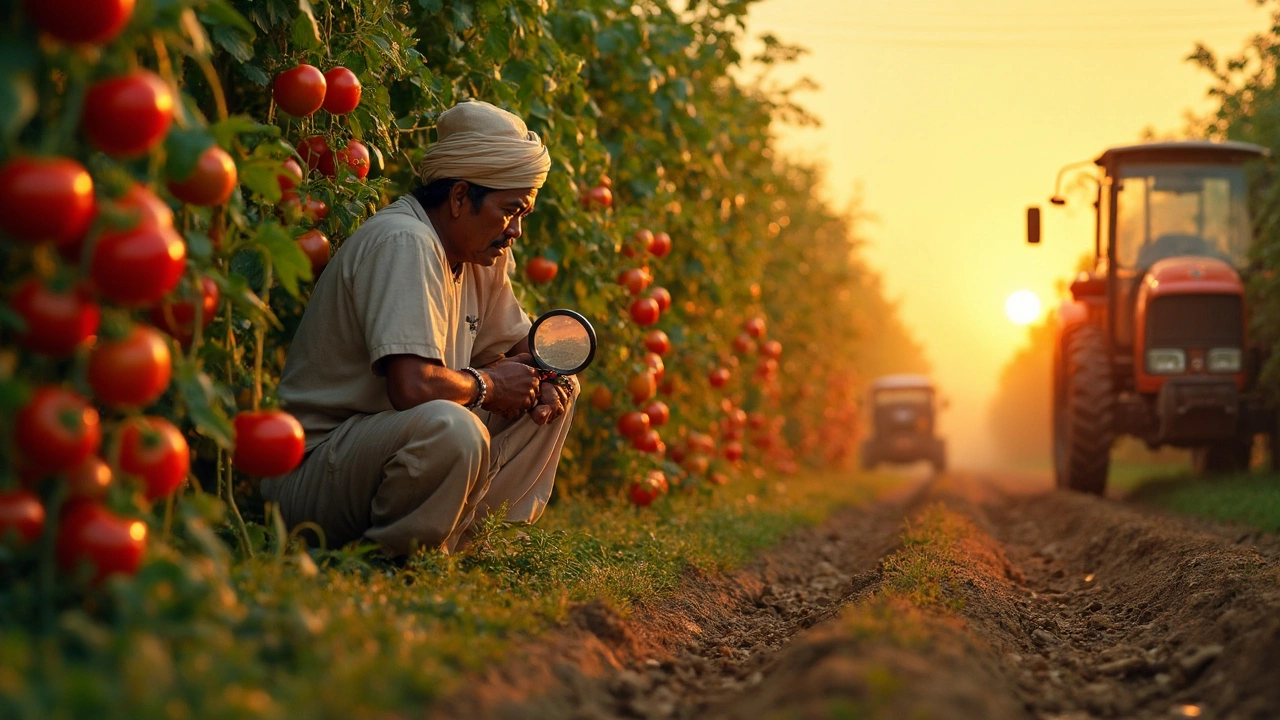
Tomato Farming in India: Best Practices, Common Mistakes, and Smart Solutions
When you grow tomato farming, the practice of cultivating tomatoes for home or commercial use, often using science-backed methods to improve yield and plant health. Also known as tomato cultivation, it’s one of the most popular and profitable crops for Indian gardeners, whether on a balcony, terrace, or small farm. But most people fail not because tomatoes are hard—they’re not—but because they treat them like regular plants. Tomatoes demand precision: the right water, the right soil, and the right timing. Get any of those wrong, and you’ll end up with blossom end rot, yellow leaves, or a crop that never sets fruit.
What makes tomato farming in India unique is the climate. From the humid monsoons of Kerala to the dry heat of Rajasthan, your approach has to change. A drip irrigation system that works in Pune might drown your plants in Mumbai. That’s why drip irrigation, a method that delivers water slowly and directly to plant roots, reducing waste and preventing disease is so critical—but not every day. Running it daily is a common mistake. Most successful growers water every 2–3 days, checking soil moisture with their fingers. And if your soil is compacted? You’re already fighting an uphill battle. soil for tomatoes, a loose, well-draining mix rich in organic matter, essential for strong root development and nutrient uptake needs to be aerated and amended with compost, not just dumped into a pot and forgotten.
Then there’s pests. Chemical sprays might give quick results, but they kill bees, harm your soil, and leave residues. The smart growers use neem oil, a natural insecticide derived from the neem tree, proven to repel aphids, whiteflies, and spider mites without toxic side effects. It’s cheap, safe, and works better than most synthetic options. And don’t ignore mulch. A simple layer of dried leaves or straw keeps the soil cool, cuts evaporation, and stops weeds from stealing nutrients.
You’ll find posts here that cut through the noise. No fluff. No theory without practice. Just real fixes: how to tell if your tomato plant is overwatered, why some varieties thrive on balconies while others need open ground, and how to use homemade fertilizers that cost less than a cup of coffee. You’ll see what works in Delhi’s summer heat, how to grow tomatoes in 10x10 spaces, and why the toughest part isn’t the plant—it’s the timing. Whether you’re growing on a rooftop in Bangalore or a backyard in Punjab, the principles are the same: feed the soil, not the plant; water smart, not often; and let nature help, not fight it.
Tomato farming in India offers potential profits due to the country's growing demand and favorable climate. However, like any agricultural endeavor, it comes with challenges such as pest control and market fluctuations. Understanding the cost of inputs, proper farming techniques, and strategic marketing are essential for success. Exploring innovative practices like greenhouse farming or organic cultivation can boost profit margins. The article delves into the aspects that can make tomato farming a fruitful venture.
Continue reading...