Drip Irrigation Suitability Calculator
Assess Your Garden
Your Drip Irrigation Suitability
This indicates a moderate suitability for drip irrigation in your garden.
⚠️ Key issues to address:
- Shallow-rooted plants may suffer from inadequate surface moisture
- Hard water will cause frequent clogging requiring monthly maintenance
Everyone talks about how great drip irrigation is-water saved, plants happier, less work. But here’s the thing: drip irrigation isn’t magic. It works brilliantly in the right setup, but it also has real, annoying problems that catch people off guard. If you’re thinking about installing one, you need to know what can go wrong before you dig in.
It Gets Clogged-All the Time
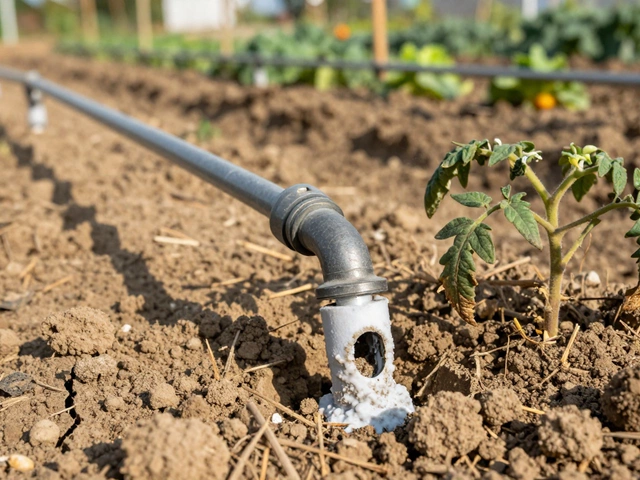
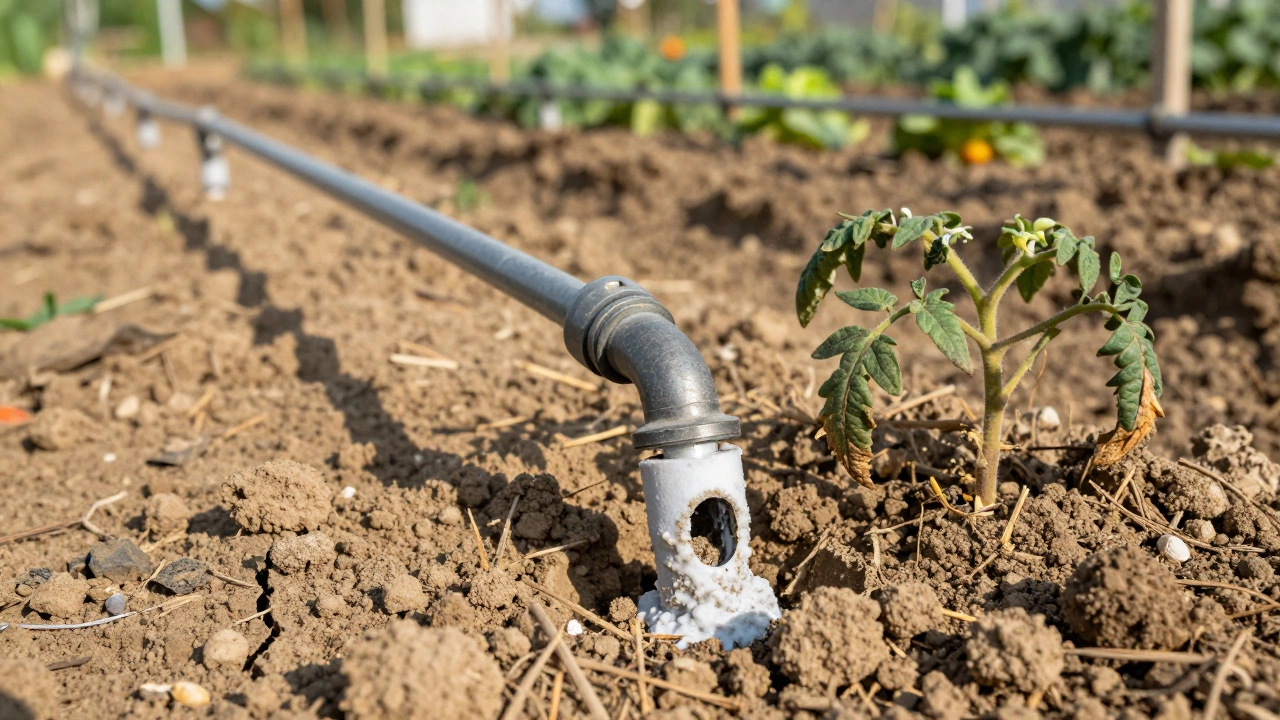
The tiny emitters on drip lines are no bigger than a pinhole. That’s fine until minerals, algae, or dirt get in. In areas with hard water, like Manchester, calcium and magnesium build up fast. Even filtered water can carry fine particles that slowly choke out the flow. I’ve seen systems where half the plants turned yellow because one emitter got blocked. You can’t just walk away and assume it’s working.
Fixing this means cleaning filters monthly, flushing lines every few weeks, and sometimes replacing emitters every year. It’s not a set-and-forget system. If you’re not willing to do routine maintenance, drip irrigation will turn into a headache.
It’s a Pain to Move or Adjust
Imagine you planted tomatoes in a row last spring. You laid your drip lines just right. Now, in late summer, you decide to add a few herbs between them. Good luck. Drip tubing is buried or pinned down. You can’t just lift it up and shift it like a hose. You have to cut the line, add a T-connector, install new emitters, and reseal everything. It’s messy, time-consuming, and often leaves leaks.
That’s why drip systems work best in permanent beds-raised garden beds, orchards, or rows of shrubs. If you rotate crops every season or like to change your layout often, drip irrigation fights you. Soaker hoses or overhead sprinklers are far easier to reposition.
It Doesn’t Cover Everything
Drip irrigation delivers water straight to the roots. That’s great for deep-rooted plants like peppers or roses. But what about shallow-rooted greens like lettuce or spinach? They need moisture near the surface. A drip line buried 2 inches down won’t reach them well. You end up with dry tops and wet bottoms-plants that look stressed even though the system is running.
Some gardeners try to solve this by adding surface emitters or misters, but that defeats the purpose of drip irrigation. You’re mixing systems, which means more parts to fail. If you grow a mix of shallow and deep-rooted plants, drip irrigation forces you to compromise.
It’s Expensive to Install Right
Buy a $20 kit from the hardware store and you’ll get plastic tubing, a few emitters, and a timer. It’ll leak, clog, and fall apart in a season. A proper drip system needs pressure regulators, backflow preventers, inline filters, and quality tubing that won’t crack in winter. In the UK, frost can burst cheap lines overnight.
Professional-grade systems cost £200-£500 for a small garden. That’s more than a good sprinkler setup. And if you mess up the design-say, putting too many emitters on one line-you get uneven watering. One plant drowns, another starves. You’re not just paying for parts. You’re paying for knowledge.

It Can Encourage Root Problems
When water only comes from one spot, roots grow straight toward it. That’s fine if you’re watering deeply and infrequently. But if you run the system too often, roots never go deep. They stay shallow, clustered around the dripper. That makes plants vulnerable to drought, wind, and heat.
Worse, in clay soils, water pools just below the emitter. Roots sit in wet dirt for too long. That’s how root rot starts. I’ve seen tomato plants die from a fungus that spread because the drip line kept the soil soggy right at the stem. Drip irrigation doesn’t automatically mean healthy roots. It just means water goes where you tell it to-and sometimes, that’s the wrong place.
It’s Hard to Spot Problems Early
With a sprinkler, you can see if water’s spraying sideways or pooling in a corner. With drip, everything’s hidden. You might not notice a broken line until your basil is brown and crispy. There’s no visual clue. You have to walk the garden, check each emitter by hand, and test flow rates. It’s easy to miss a failure.
Some smart systems have sensors and apps, but those cost hundreds more. For most home gardeners, drip irrigation is a silent system. And silent problems are the worst kind.
It Doesn’t Work Well in Cold Weather
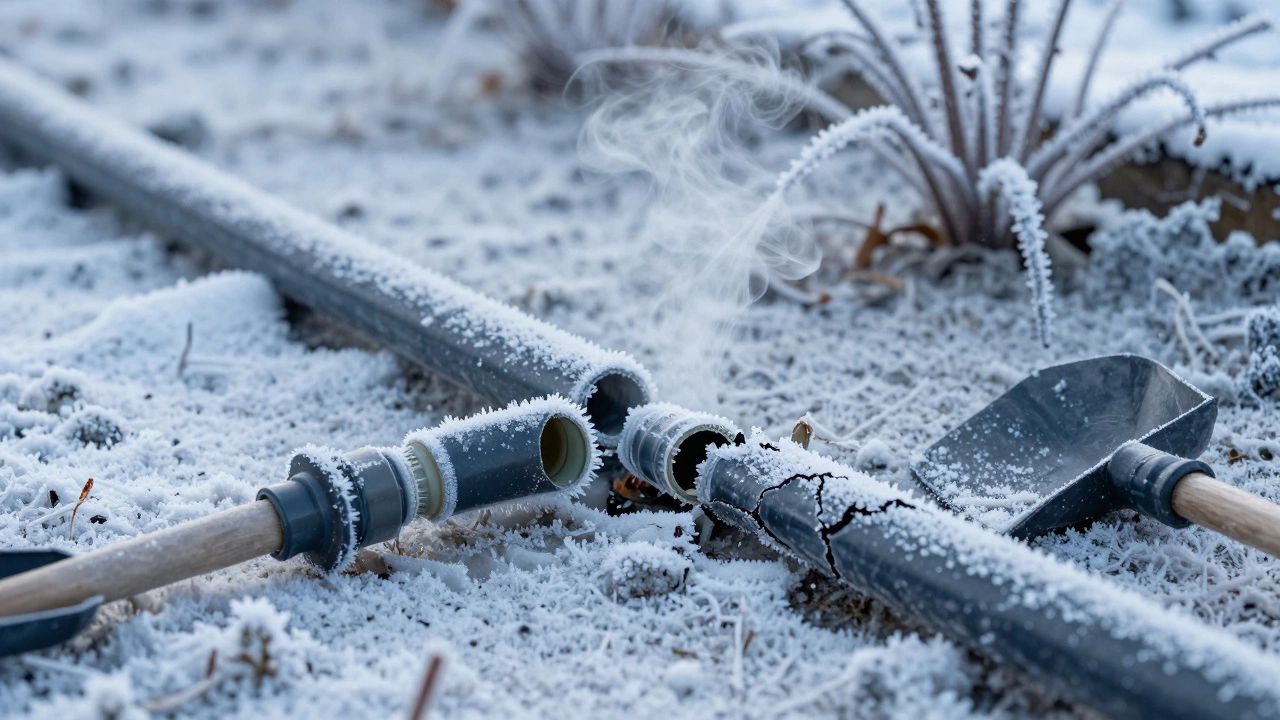
If you live where winter hits-like Manchester-you have to drain the system every year. Left with water inside, freezing temperatures crack the tubing and emitters. That’s not just a repair. It’s a full teardown and rebuild.
Even in autumn, cold nights can slow water flow. Emitters freeze up, even if the pipe doesn’t burst. You’ll get inconsistent watering when your plants need it most. Many gardeners switch to hand-watering or mulching in winter because drip irrigation becomes unreliable.
It’s Not Always the Most Efficient
People think drip irrigation saves water by design. But if you leave it running too long, or if the soil doesn’t absorb water well, you’re just wasting it underground. Runoff isn’t visible, so you don’t realize you’re overwatering.
Studies show that in sandy soils, drip systems can lose up to 30% of water to deep percolation. In compacted clay, water pools and evaporates slowly. The real savings come from smart scheduling-not the system itself. Without a soil moisture sensor or weather-based controller, you’re guessing. And guessing leads to waste.
It’s Not for Every Garden
Drip irrigation shines in large, permanent plantings with consistent water needs. Think vegetable rows, berry bushes, or tree orchards. But for small containers, hanging baskets, or mixed flower beds? It’s overkill. You’ll spend more time maintaining it than enjoying your garden.
And if you’re on a tight budget, the upfront cost and ongoing upkeep make it a poor return. A simple watering can, a few buckets, and a little routine are often better choices.
So Is It Worth It?
Drip irrigation isn’t bad. It’s just not perfect. It works best when you know its limits. If you’re willing to clean it, check it, adjust it, and accept that it won’t handle every plant type, then it’s a solid tool. But if you want something easy, cheap, and flexible? Look elsewhere.
There’s no one-size-fits-all solution in gardening. Drip irrigation is a specialist tool-not a universal fix. Know its flaws before you buy it.
Why does my drip irrigation system keep clogging?
Clogging happens because the tiny openings in emitters trap minerals, algae, or dirt. Hard water makes it worse. To prevent it, install a screen filter at the water source, clean it monthly, and flush the lines every few weeks. If you’re in a hard water area like Manchester, consider a water softener or use filtered water.
Can I use drip irrigation for potted plants?
You can, but it’s usually not worth it. Pots dry out quickly and need frequent, light watering. Drip systems are designed for slow, steady delivery over large areas. For pots, a self-watering container or simple watering can is easier and more precise. If you must use drip, use individual emitters with timers and check them daily.
Do I need a pressure regulator for drip irrigation?
Yes. Most household water pressure is too high for drip systems-over 40 PSI can burst tubing or blow out emitters. A pressure regulator drops it to 20-30 PSI, which is safe. Skip this, and you’ll have leaks, broken parts, and wasted water. It’s one of the cheapest and most important parts to install.
How often should I run my drip system?
It depends on your soil, plants, and weather. In summer, most gardens need 2-3 sessions per week, 30-60 minutes each. In cooler months, once a week is enough. Never rely on a timer alone. Check the soil 2 inches down-if it’s damp, skip watering. Overwatering is the #1 mistake with drip systems.
Is drip irrigation better than sprinklers?
It depends on your goal. Drip is better for saving water and targeting roots. Sprinklers are better for cooling plants, covering lawns, or watering shallow-rooted crops. If you have a mixed garden with vegetables, flowers, and shrubs, sprinklers are easier to manage. Drip is more efficient, but only if maintained properly.