Balcony Plant Matchmaker
Top Recommendation
Alternative Options
Imagine stepping out onto your small urban balcony and being greeted by a burst of color or the fresh scent of basil. It sounds like a dream, but many city dwellers assume that limited space equals limited greenery. The truth is, you don’t need a sprawling backyard to enjoy gardening. In fact, some of the most resilient and rewarding plants thrive in containers under partial sun. If you are looking for the absolute easiest plant to grow on a balcony, you are likely hunting for something that forgives missed waterings, tolerates wind, and doesn’t require a degree in botany.
The answer isn't just one single species; it depends slightly on whether you want food, flowers, or foliage. However, if we had to pick the undisputed champion of low-effort balcony gardening, it would be petunias. They bloom relentlessly, handle heat well, and come in varieties that resist rain damage. But let’s look at the full picture. We will break down the best options based on what you actually want from your balcony: edible greens, vibrant blooms, or structural greenery.
Why Balcony Gardening Is Different
Before picking up a trowel, you need to understand the unique environment of a balcony. Unlike a ground-level garden, your plants are suspended in air. This means roots dry out faster because they have access to air on all sides, not just the top. Wind can also be a factor, especially on higher floors, which can desiccate leaves or knock over tall stems.
Light is another critical variable. A south-facing balcony receives direct sunlight for most of the day, making it perfect for sun-lovers like tomatoes and lavender. A north-facing spot might only get indirect light, which suits leafy greens and ferns. Assessing your light exposure is the first step to choosing the right easy-care plant. If you ignore this, even the hardiest plant will struggle.
The Edible Champions: Herbs That Survive Neglect
If you cook at home, growing herbs is the most practical use of balcony space. They save money, reduce plastic waste from packaging, and add flavor to every meal. Among herbs, some are tougher than others.
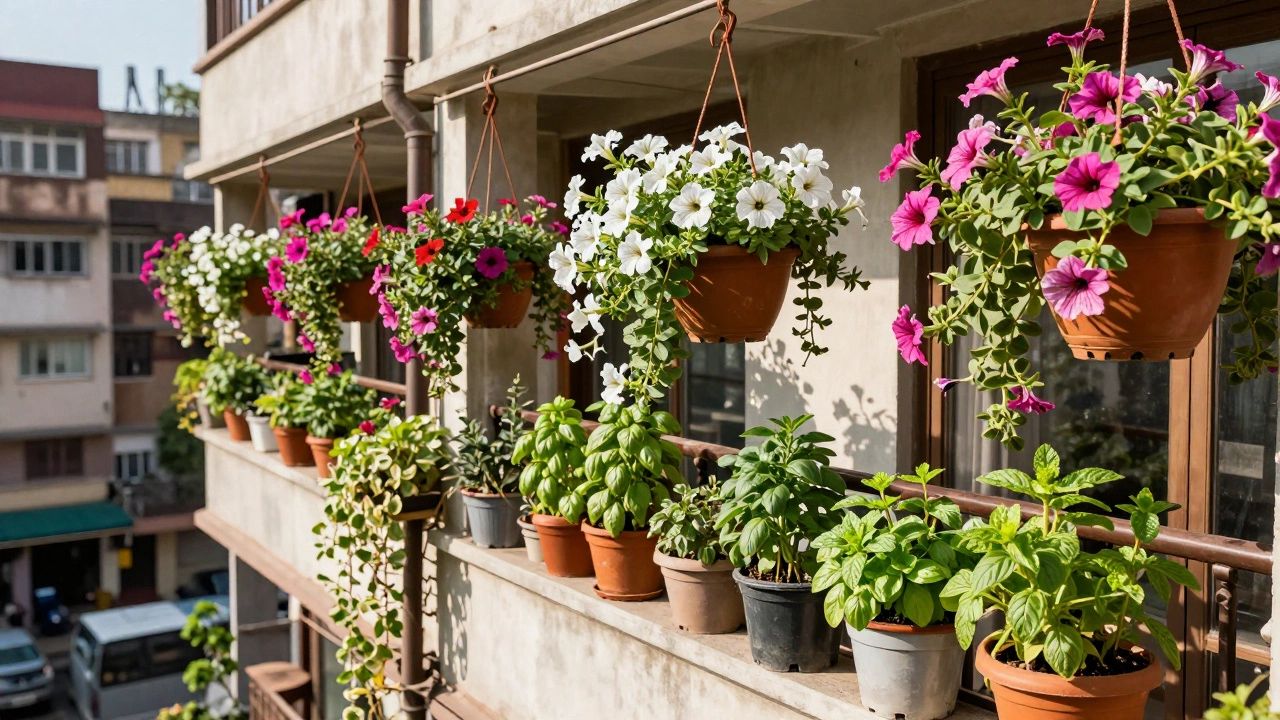
- Basil is a fast-growing culinary herb that thrives in warm, sunny conditions and requires regular harvesting to encourage bushier growth. Basil loves heat and sun. It grows quickly, often doubling in size within weeks. The trick with basil is to pinch off the flower buds as soon as you see them. If you let it flower, the leaves turn bitter. Keep the soil slightly moist, and you will have fresh pesto ingredients all summer long.
- Mint is an aggressive perennial herb that spreads rapidly via runners and prefers partial shade to prevent leaf scorch. Mint is nearly impossible to kill. In fact, it’s so vigorous that you should always keep it in its own pot. If you plant mint in the ground or share a container with other plants, it will choke them out. It tolerates lower light levels better than basil, making it great for shadier balconies. Just give it plenty of water, and it will reward you with endless sprigs for teas and cocktails.
- Rosemary is a woody evergreen shrub adapted to Mediterranean climates that requires excellent drainage and infrequent watering once established. Rosemary is drought-tolerant and smells incredible when brushed against. It prefers drier soil, so if you tend to overwater plants, rosemary is your safety net. It needs good airflow to prevent fungal issues, which makes it ideal for breezy balconies.
Flowering Powerhouses: Color Without the Fuss
For visual impact, annual flowers are the way to go. They bloom from spring until the first frost, providing continuous color without the complex pruning required by perennials.
- Petunias are trailing or bushy annual flowering plants known for their prolific blooming habit and ability to withstand hot, dry weather. As mentioned earlier, petunias are the gold standard for easy balcony flowers. Look for "wave" varieties if you want trailing vines that spill over the edge of hanging baskets. They need deadheading (removing spent blooms) to keep producing new flowers, but many modern hybrids are self-cleaning, meaning they drop old flowers automatically.
- Marigolds are hardy annual flowers that produce bright orange and yellow blooms while naturally deterring pests like aphids and nematodes. Marigolds are tough cookies. They handle poor soil and irregular watering better than almost any other flower. Beyond their beauty, they act as a natural pest repellent. Planting marigolds near your vegetables can help protect them from bugs without using chemicals.
- Zinnias are fast-maturing annuals that offer a wide range of vibrant colors and attract pollinators like bees and butterflies. Zinnias grow incredibly fast from seed. You can sow them directly into pots in early spring, and they will bloom within two months. They love heat and hate humidity, so they are perfect for hot, dry summers. Their sturdy stems make them less likely to flop over in windy conditions compared to more delicate flowers.
Foliage and Structure: Greenery That Lasts
Sometimes you want texture rather than blooms. Foliage plants provide structure and a lush backdrop for your colorful flowers and herbs.
- Succulents are drought-resistant plants with thick, fleshy leaves that store water, requiring minimal irrigation and well-draining soil mixes. Succulents like echeveria or sedum are ideal for sunny, hot balconies where pots dry out quickly. They require very little water-often just once a week or even less. Ensure your pots have drainage holes; standing water is the only thing that kills succulents. They add a modern, architectural touch to any space.
- Spider Plants are resilient houseplants that adapt well to semi-outdoor environments, producing baby plantlets that can be propagated easily. While typically indoor plants, spider plants tolerate bright, indirect light on a balcony beautifully. They are virtually indestructible and will send out arching stems with baby plants (spiderettes) that you can snip off and replant. They prefer consistent moisture but forgive occasional dry spells.
| Plant Type | Light Requirement | Water Needs | Difficulty Level | Best For |
|---|---|---|---|---|
| Petunias | Full Sun | Moderate | Very Easy | Color & Hanging Baskets |
| Basil | Full Sun | Regular | Easy | Cooking & Pesto |
| Mint | Partial Shade | High | Very Easy | Teas & Cocktails |
| Rosemary | Full Sun | Low | Easy | Drought Tolerance |
| Succulents | Full Sun | Very Low | Very Easy | Modern Decor |
Essential Tips for Balcony Success
Even the easiest plants need a few basic conditions to thrive. Here is how to set yourself up for success without buying expensive equipment.
- Choose the Right Pot: Plastic pots retain moisture longer than terracotta, which is porous and dries out fast. If you use terracotta, expect to water more frequently. Always ensure there are drainage holes at the bottom. Waterlogged roots lead to root rot, the number one killer of container plants.
- Use Quality Soil: Do not dig up dirt from the ground. Garden soil compacts in pots, suffocating roots. Use a high-quality potting mix designed for containers. These mixes include perlite or vermiculite to keep the soil loose and airy.
- Water Smartly: Check the soil before watering. Stick your finger about an inch deep into the dirt. If it feels dry, water thoroughly until water runs out of the drainage holes. If it feels damp, wait. Overwatering is more common than underwatering among beginners.
- Fertilize Lightly: Container plants use up nutrients quickly because rain and watering flush them out. Use a balanced liquid fertilizer every four to six weeks during the growing season. Too much fertilizer can burn roots, so follow the package instructions carefully.
Common Mistakes to Avoid
New balcony gardeners often fall into a few traps. Recognizing these early can save your plants.
- Ignoring Wind: Tall plants like sunflowers or unsecured tomato cages can topple in high winds. Use heavy pots or anchor plants to the railing if necessary.
- Overcrowding: Plants need airflow to prevent fungal diseases. Don’t cram too many plants into one small pot. Give each plant enough room to breathe.
- Neglecting Drainage: Placing pots on saucers that collect standing water creates a swampy environment. Empty saucers after watering, or elevate pots on feet to allow water to escape freely.
What is the easiest vegetable to grow on a balcony?
Leaf lettuce and spinach are the easiest vegetables. They grow quickly, don't require deep soil, and can tolerate partial shade. Cherry tomatoes are also popular but need more sun and support stakes.
How often should I water balcony plants?
There is no fixed schedule. Check the soil daily. In hot summer weather, you may need to water every day or even twice a day. In cooler months, weekly watering might suffice. Always check soil moisture before adding water.
Can I grow fruit trees on a balcony?
Yes, dwarf citrus trees like Meyer lemons or calamondins can grow in large pots on sunny balconies. They require more care than herbs, including winter protection in colder climates and regular feeding.
Do balcony plants need fertilizer?
Yes, container plants deplete nutrients faster than ground plants. Use a slow-release granular fertilizer at planting time and supplement with liquid feed every few weeks during the active growing season.
What plants survive in shade on a balcony?
Ferns, hostas, impatiens, and coleus thrive in low-light conditions. Herbs like mint and parsley also do well in partial shade, though they may grow slower than in full sun.