Want to grow your own food in just 30 days? In India, where seasons shift fast and space is often limited, picking the right plants makes all the difference. You don’t need a huge backyard or months of waiting - some of the most useful veggies sprout, grow, and are ready to harvest in under a month. These aren’t just quick - they’re reliable, nutritious, and perfect for balconies, terraces, or even windowsills.
Radishes: The Speed Champion
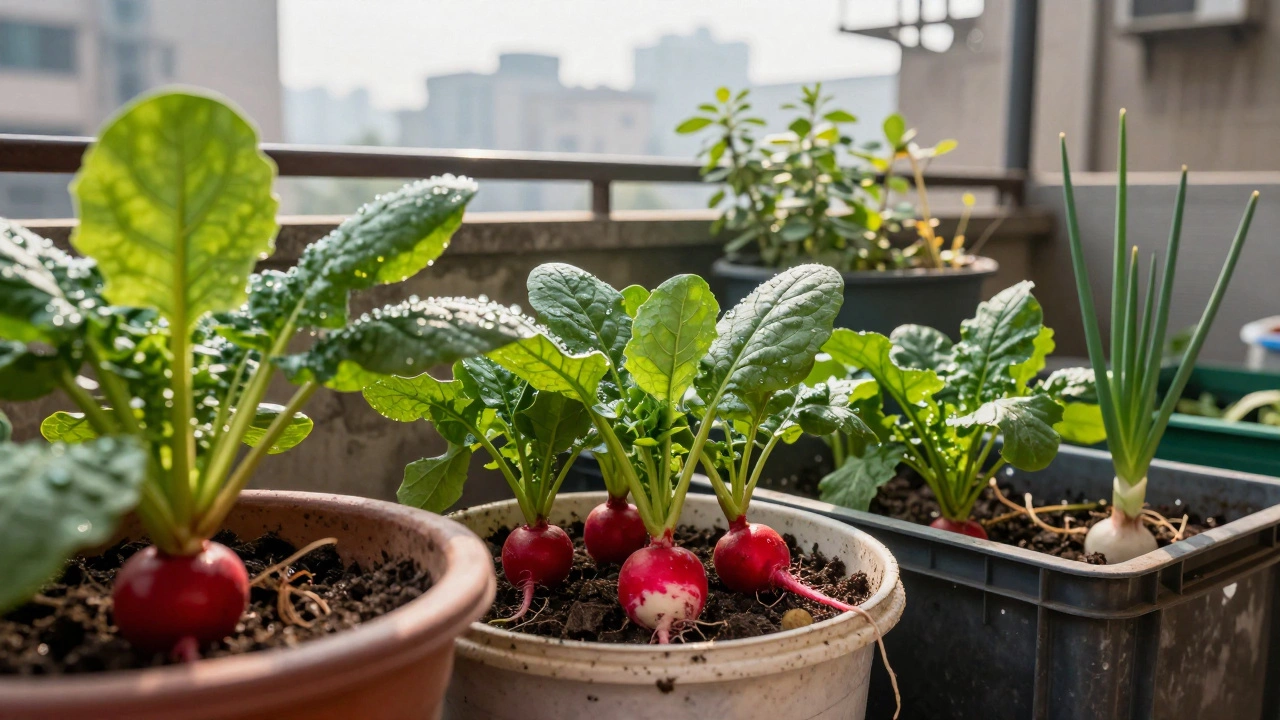
Radishes are the undisputed champions of 30-day harvests. Sow them in early spring or late monsoon, and you’ll see red, crisp roots in 20 to 25 days. Varieties like Cherry Belle and French Breakfast thrive in loose, well-drained soil. They don’t need much space - just 15 cm between plants. In places like Pune, Delhi, or Bangalore, gardeners plant radish seeds right after the winter chill fades. The best part? You can eat the leaves too. They’re mild, peppery, and great in salads or stir-fries.
Spinach (Palak): A Nutrient Powerhouse
Spinach grows fast in cool weather. In northern and central India, February to April is prime time. Sow seeds directly in soil or in pots. With regular watering and partial sun, spinach leaves are ready to pick in 25 to 30 days. Unlike some plants that need transplanting, spinach prefers to stay put. Once you start harvesting outer leaves, the plant keeps producing. A single plant can feed a family for weeks. It’s packed with iron, calcium, and vitamins - perfect for daily meals like saag or soups.
Leafy Greens: Lettuce and Mustard
Lettuce and mustard greens (sarson ke patte) are two more fast-growers. Lettuce, especially loose-leaf types like Salad Bowl, takes 28 to 35 days. It grows best in cooler months - think October to March. Mustard greens, on the other hand, love slightly warmer soil and are ready in just 20 to 25 days. Both are ideal for container gardening. A 12-inch pot can hold six plants. In Tamil Nadu and Kerala, home gardeners grow mustard greens alongside rice paddies, using the same moist soil conditions.
Green Onions (Shallots): Cut and Regrow
Green onions are one of the easiest plants to grow. You don’t even need seeds - just take the white root end of store-bought onions, plant them in soil, and water daily. In 25 days, you’ll have fresh green stalks ready to chop. They grow well in pots, trays, or even old buckets. In Maharashtra and Gujarat, farmers and families use green onions as a daily spice. The best part? Once you cut the tops, they regrow. You can harvest multiple times from one planting.
Beetroot: Color and Crunch
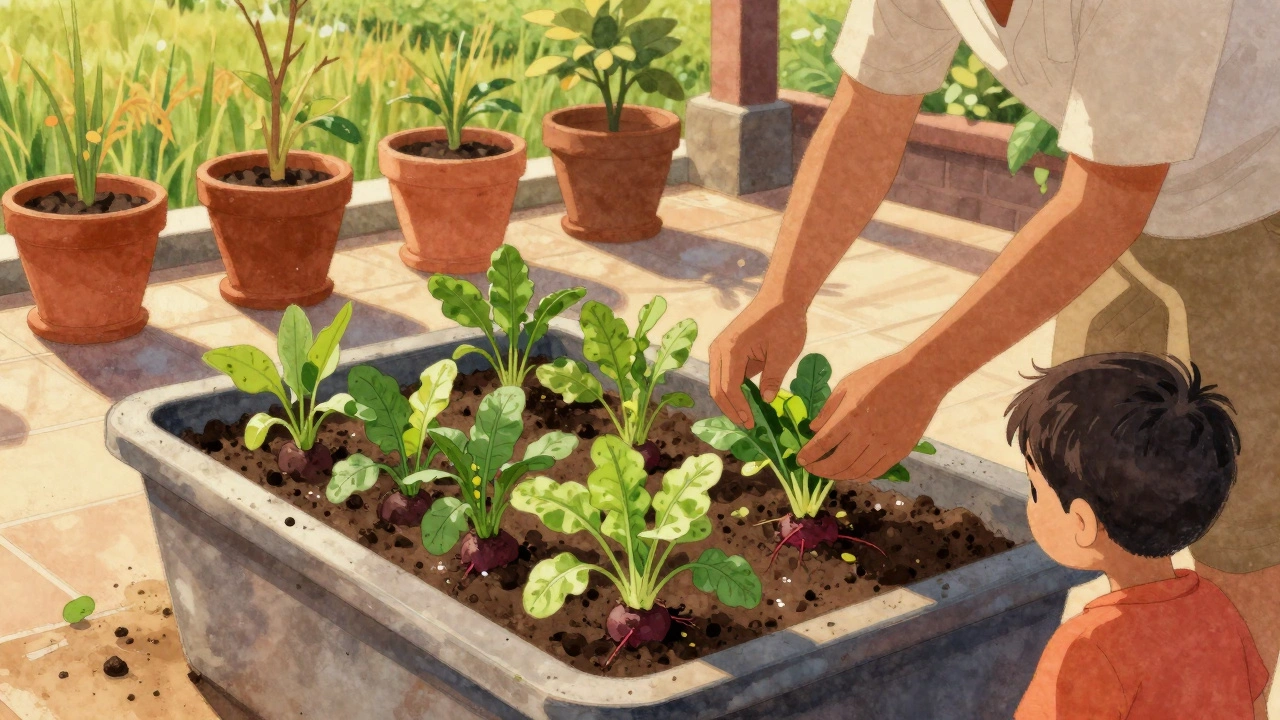
Beetroot might sound slow, but many varieties - like Early Wonder - are ready in 28 to 32 days. They grow best in cooler, well-composted soil. In Rajasthan and Haryana, gardeners plant them in late January for a March harvest. Beets don’t just give you roots - their bright red leaves are edible too. They taste like spinach, just a little earthier. Plant seeds 2 cm deep and keep the soil moist. Thin seedlings to 8 cm apart so the roots have room to swell.
Why These Plants Work in India
These veggies succeed because they match India’s climate cycles. Most grow best between October and April - when temperatures stay between 15°C and 25°C. That’s the sweet spot for fast growth without bolting (going to seed too early). They also need less water than rice or maize. That’s why they’re perfect for urban homes, terrace gardens, and small farms. No fancy tools needed - just soil, seeds, and daily watering.
What Doesn’t Work in 30 Days
Not all plants are quick. Tomatoes, peppers, and eggplants take 60 to 90 days. Carrots and potatoes need 70+ days. Even though they’re popular, they won’t fit a 30-day window. Don’t waste time on them if you’re looking for fast results. Stick to leafy greens and root crops that naturally mature fast.
Pro Tips for Success
- Use seed packets labeled “fast-growing” or “baby harvest” - they’re bred for speed.
- Plant in raised beds or pots with good drainage. Clay soil slows growth.
- Water in the morning. Evening watering invites pests and fungus.
- Feed plants with compost tea after 10 days. A little organic boost helps them grow faster.
- Harvest leaves early. The younger they are, the tastier and more tender.
Real-Life Example: A Delhi Balcony Garden
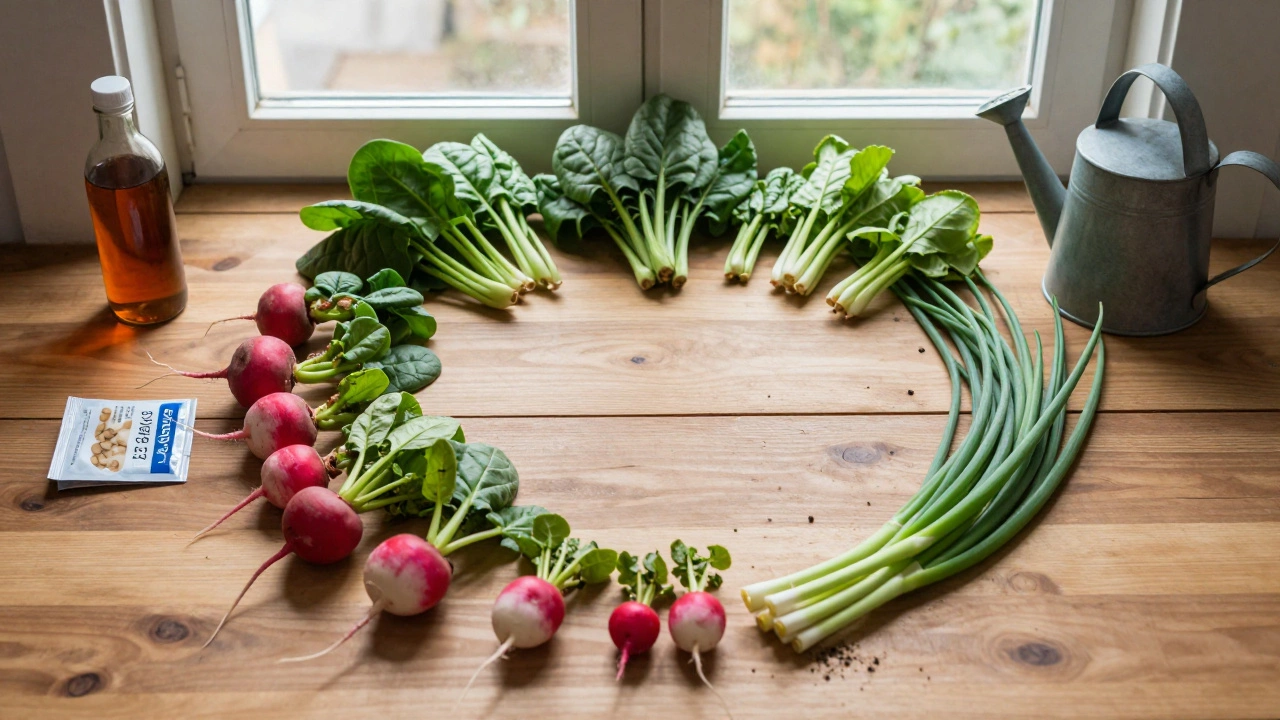
In South Delhi, a family of four grows radishes, spinach, and green onions on their 5-square-meter balcony. They use recycled buckets and plastic crates filled with soil and compost. Every 30 days, they harvest enough greens for two meals. No supermarket trips. No plastic packaging. Just fresh food, grown in under a month. They started with one packet of radish seeds. Now, they save seeds from each harvest.
Seasonal Timing for India
Timing matters. Here’s when to plant for a 30-day harvest:
- October-November: Radishes, lettuce, mustard greens
- December-February: Spinach, beetroot, green onions
- March-April: Radishes, spinach (in cooler regions)
- May-September: Avoid fast-growing veggies - too hot. Try heat-tolerant herbs like coriander instead.
India’s monsoon season isn’t ideal for these plants. Too much rain, too much humidity - they rot. Wait for the dry, cool months. That’s when your garden will thrive.
Why This Matters
Fast-growing plants aren’t just about speed. They’re about food security, cost savings, and reconnecting with what you eat. In cities like Hyderabad, Jaipur, or Lucknow, more people are growing their own greens. It’s not a trend - it’s practical. You save money. You eat cleaner. You reduce waste. And you feel something rare: control over your food.
Can I grow these plants indoors?
Yes, but only if you have at least 4-6 hours of sunlight daily. A south-facing windowsill works best. Use grow lights if natural light is weak. Spinach, lettuce, and green onions do well indoors. Radishes and beetroot need deeper pots (at least 20 cm) and more light to form roots.
Do I need fertilizer for these plants?
Not heavy doses. A mix of compost and coco peat is enough. If your soil is poor, add organic fertilizer like vermicompost tea every 10-12 days. Avoid chemical fertilizers - they burn young roots and kill beneficial microbes. Less is more here.
Why do my radishes taste spicy or woody?
That happens when they’re left in the ground too long or when the soil gets too hot. Harvest radishes as soon as they’re the size of a cherry. In warmer weather, they bolt faster. Plant them in cooler months and check daily. If they start to crack or look pale, harvest immediately.
Can I plant these seeds in the same pot?
Yes, but keep spacing in mind. Plant radishes with spinach - they grow at different depths and don’t compete. Avoid mixing fast growers with slow ones. Don’t plant beetroot with green onions - their roots tangle. Stick to one or two types per container for best results.
Where can I get seeds for these plants in India?
Local nurseries in cities like Delhi, Bengaluru, and Pune sell fast-growing vegetable seeds. Online stores like Ugaoo, Greenmylife, and Amazon India have certified packets. Look for brands like Johnny’s Selected Seeds or Navdanya for organic, non-GMO options. Always check the days to maturity on the packet - it should say 25-35 days.
Next Steps
Start small. Buy one packet of radish seeds and one of spinach. Plant them in two pots. Water them every morning. In 30 days, you’ll have your first homegrown meal. That’s all it takes. No experience needed. No expensive tools. Just time, a little soil, and curiosity.