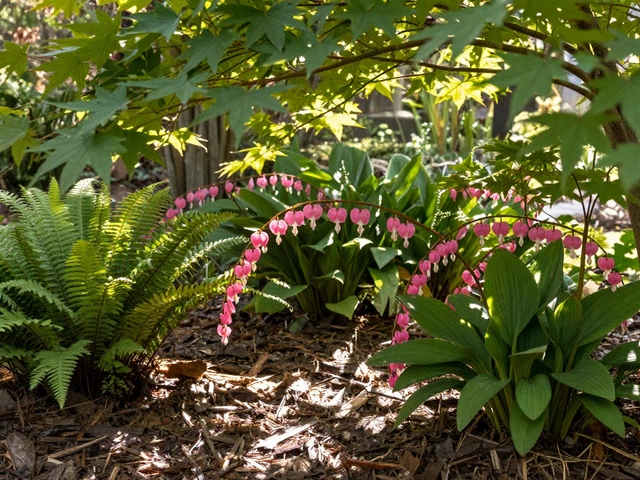
Bleeding hearts are one of those plants that turn any shady corner into a romantic, old-fashioned wonder. Their heart-shaped pink or white blooms dangle like tiny lanterns on arching stems, and they do it all without needing full sun. But if you plant them in the wrong spot, you’ll get weak stems, few flowers, or worse - a plant that just gives up and dies. So where do you actually put bleeding hearts to make them thrive?
They Need Shade, Not Sunlight
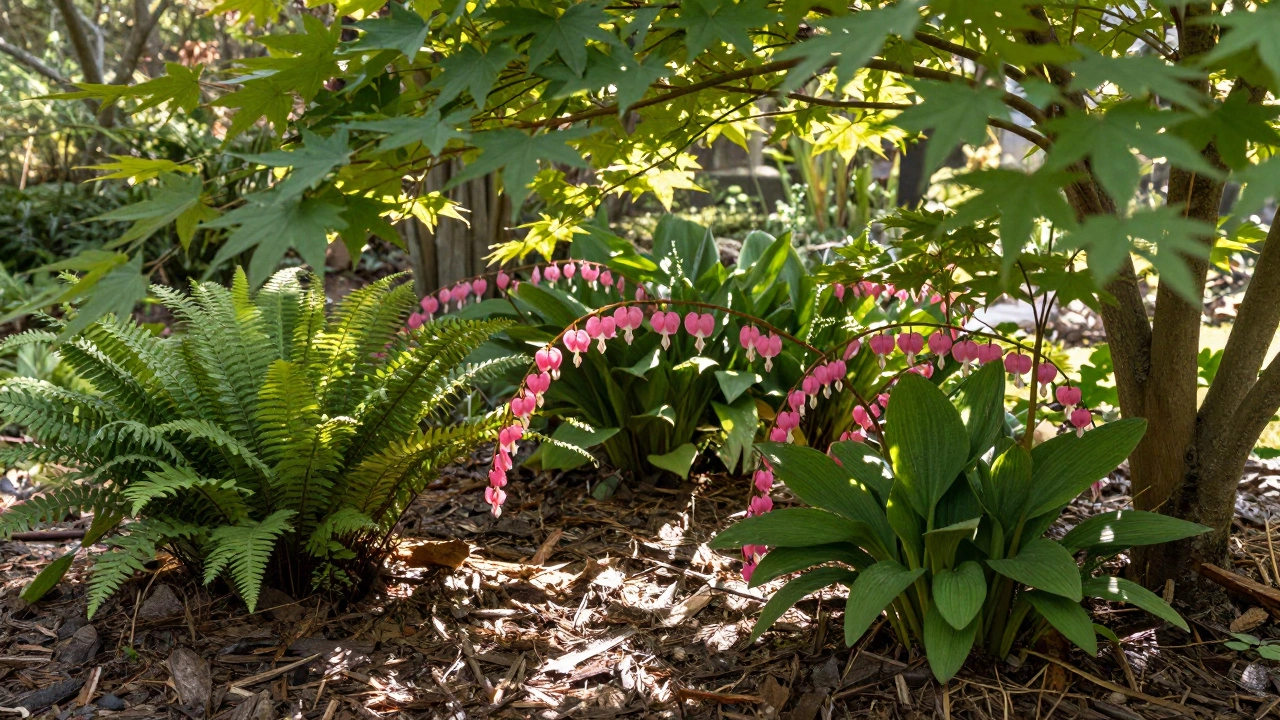
Forget the idea that all flowers need six hours of sun. Bleeding hearts (Lamprocapnos spectabilis) are woodland plants. In the wild, they grow under trees, where the canopy filters the light. Plant them in full sun, especially in the afternoon, and their leaves will scorch, turn brown, and drop early. Even in cooler climates, morning sun with afternoon shade is the sweet spot. If your garden gets hot afternoon rays, plant them under a deciduous tree or next to a north-facing wall. That’s why they’re perfect for shady borders, under mature maples, or beside a garden shed.
Soil That’s Rich and Drainage-Friendly
Bleeding hearts don’t like soggy feet or dry, rocky dirt. They need soil that holds moisture but drains well. Think of the forest floor - it’s loose, full of decomposed leaves, and never waterlogged. Mix compost into your planting hole, or use a blend of garden soil, peat moss, and perlite. If your soil is heavy clay, raise the bed a few inches. If it’s sandy, add more organic matter. A good test? Dig a hole, fill it with water, and watch how fast it drains. If it takes more than 10 minutes, you’ve got a problem. Bleeding hearts will rot in wet soil and struggle in dry sand.
Plant Them Where They Won’t Be Disturbed
Once bleeding hearts settle in, they don’t like to be moved. They develop deep, fibrous roots that don’t handle transplanting well. Pick their spot carefully. Don’t plant them near vegetables you’ll be digging up every season. Avoid areas where you plan to add new shrubs or install a path. They’re best placed in permanent beds - near the back of a flower border, under a pergola, or beside a stone bench. They’ll come back year after year, often getting bigger and more beautiful with time. A well-placed bleeding heart can live 10 years or more without being touched.
Don’t Plant Them Too Close to Other Plants
Bleeding hearts are slow to emerge in spring, and they’re easily crowded out. If you plant them right next to fast-growing perennials like hostas or daylilies, you’ll barely see them until midsummer. Give them at least 18 to 24 inches of breathing room. Pair them with plants that bloom later, so their faded foliage doesn’t look out of place. Ferns, astilbes, and lungworts make great neighbors. They all like the same shady, moist conditions and won’t compete aggressively. You can even tuck them into a woodland garden with wild ginger or trilliums for a natural, layered look.
Use Mulch - But Not Too Much
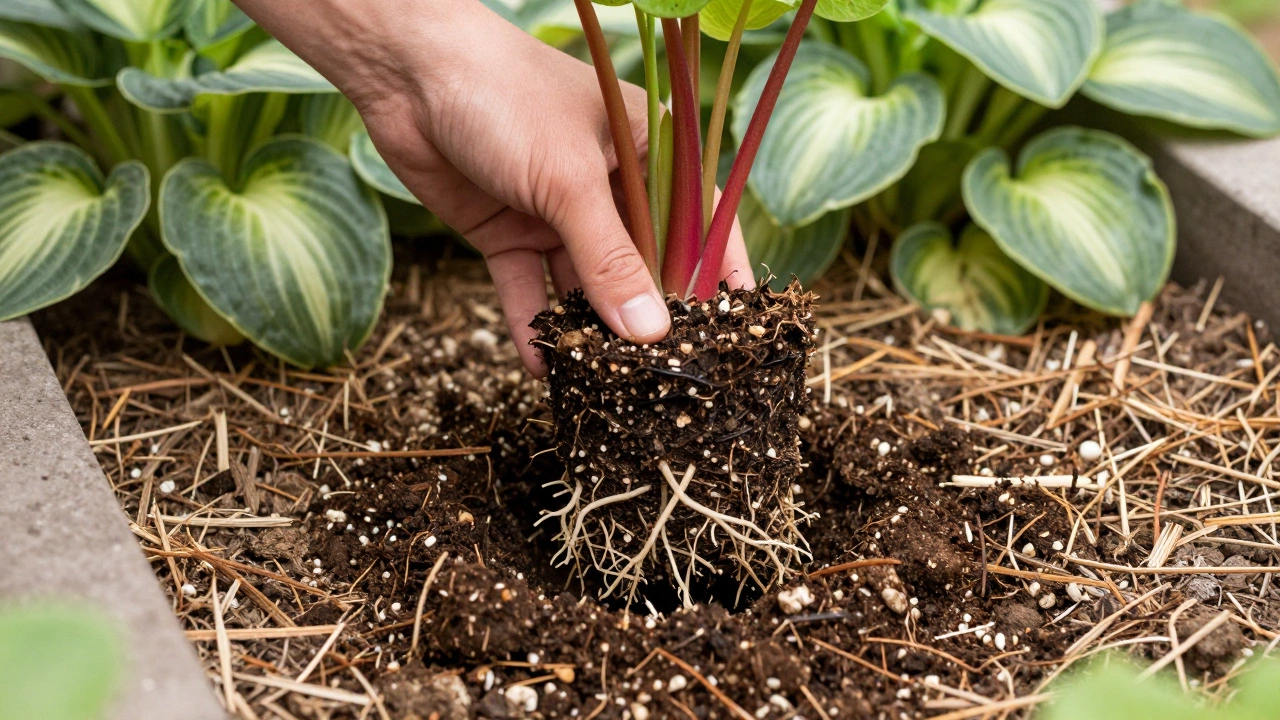
A light layer of shredded leaves or bark mulch helps keep soil cool and moist. That’s exactly what bleeding hearts want. But pile it on too thick, and you’ll trap moisture around the crown, inviting rot. Keep mulch to about 1 to 2 inches deep, and pull it back slightly from the base of the stems. Reapply every spring after the ground thaws. Mulch also hides their messy, yellowing leaves after flowering. Yes, they die back in early summer. That’s normal. Don’t panic. The plant isn’t dead - it’s resting. The roots are still alive underground, waiting for next spring.
Planting Time Matters
You can plant bleeding hearts in spring or fall. Spring planting gives them the whole growing season to get established. Fall planting works too, as long as you get them in the ground at least six weeks before the first hard frost. That way, roots can grow before the soil freezes. Avoid planting in summer. The heat stresses them, and they’re likely to sulk or vanish. If you buy them in bloom at the nursery, that’s fine. Just make sure they’re not rootbound. Gently loosen the roots before planting. Water deeply right after, and keep the soil damp for the first few weeks.
What Not to Do
- Don’t plant them under evergreen trees - the soil is too dry and acidic.
- Don’t fertilize heavily. Too much nitrogen makes leaves grow but kills flowers.
- Don’t cut them back after blooming unless the leaves turn ugly. Let them fade naturally - they feed the roots.
- Don’t water daily. Let the top inch of soil dry out between waterings.
Why This Matters
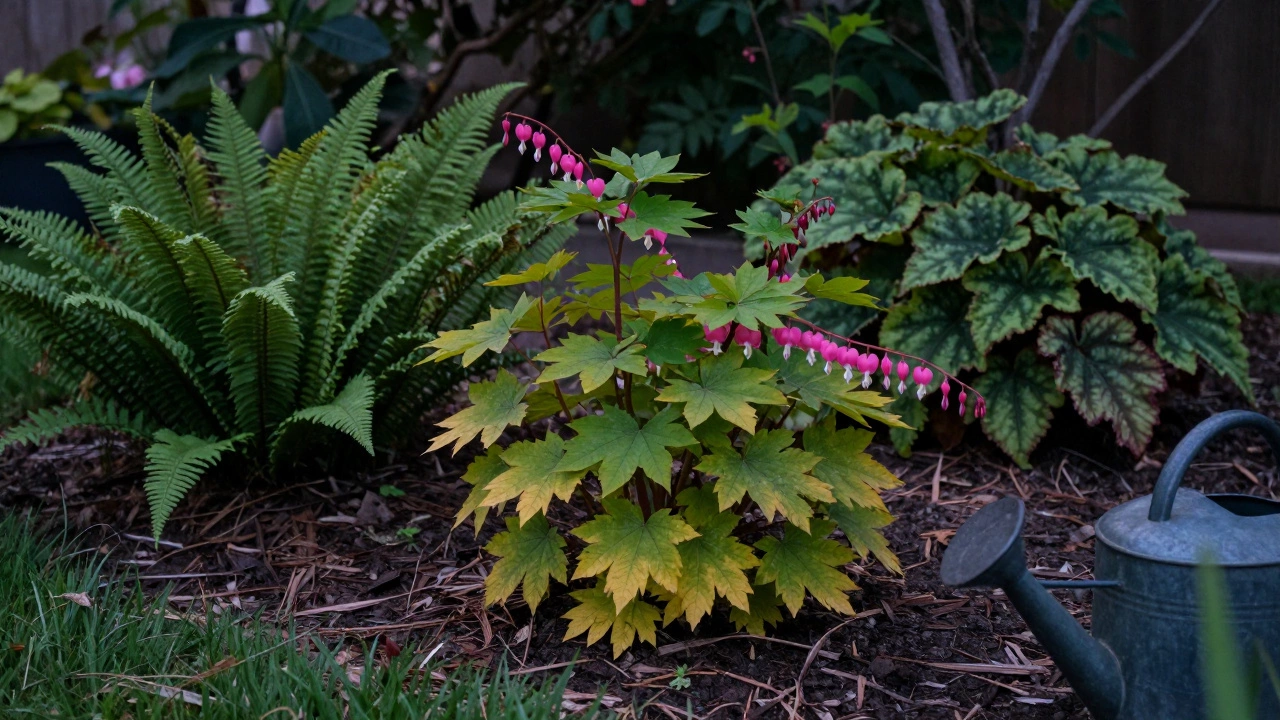
Bleeding hearts aren’t high-maintenance, but they’re picky about their spot. Get the light, soil, and space right, and they’ll reward you with delicate blooms for years. They’re one of the few perennials that bring charm to areas most gardeners give up on. A shady corner with a bleeding heart becomes a quiet escape - not just a patch of dirt. And because they’re not invasive, you can plant them near walkways or patios without worrying about them taking over.
What to Plant Alongside Them
Good companions make the garden feel intentional. Here are a few that work well:
- Hostas - for bold foliage that hides fading bleeding heart leaves
- Heuchera (Coral Bells) - colorful leaves that contrast with the delicate flowers
- Ferns - texture and rhythm that echo the arching stems
- Astilbe - feathery plumes that bloom after bleeding hearts fade
- Wild Ginger - low, ground-hugging plant that loves the same shade
These plants all share the same needs: shade, moist soil, and no competition. Together, they create a layered, low-effort garden that looks lush without constant care.
| Factor | Best Condition | What to Avoid |
|---|---|---|
| Light | Partial to full shade | Full sun, especially afternoon |
| Soil Type | Moist, rich, well-draining | Clay that holds water, sandy soil that dries fast |
| Spacing | 18-24 inches apart | Planted too close to fast-growing perennials |
| Planting Time | Early spring or early fall | Summer or during heatwaves |
| Mulch | 1-2 inches of shredded leaves or bark | Thick mulch covering the crown |
What Happens If You Get It Wrong?
If you plant bleeding hearts in full sun, expect crispy leaves and no flowers. If the soil is too wet, the roots rot, and the plant vanishes overnight. Too dry? The stems go limp, leaves yellow, and it goes dormant too soon. These aren’t tough plants. They’re delicate, but they’re not mysterious. Once you understand their woodland roots, their needs become obvious. They’re not asking for much - just shade, moisture, and peace.
Final Tip: Let Them Be
Bleeding hearts don’t need pruning, staking, or special treatments. They bloom, they fade, they disappear. Then, next spring, they come back stronger. Don’t dig them up. Don’t move them. Don’t overwater. Just give them the right spot once, and they’ll stay. That’s the quiet magic of a well-placed bleeding heart. It’s not flashy. It doesn’t shout. But in the right corner of your garden, it’s unforgettable.
Can bleeding hearts grow in full shade?
Yes, bleeding hearts thrive in full shade - even under dense trees. In fact, they often bloom better in deep shade than in partial sun. The key is moist, rich soil. If the soil is too dry under a tree, add compost and mulch to retain moisture. They’ll reward you with more flowers than in sunnier spots.
Do bleeding hearts come back every year?
Yes, they’re perennial in USDA zones 4-9. After blooming in spring, they naturally die back by midsummer. The roots stay alive underground and send up new shoots the next spring. Don’t remove them when they disappear - they’re not dead. Just waiting.
Can I plant bleeding hearts in containers?
Yes, but only in large pots with good drainage. Use a mix of potting soil, compost, and perlite. Place the container where it gets morning light and afternoon shade. Keep the soil consistently moist - containers dry out faster than ground soil. They won’t last as long as in the ground, but they’ll bloom beautifully for 2-3 years.
Why are my bleeding hearts not blooming?
Most likely, they’re getting too much sun or not enough moisture. If they’re in a sunny spot, move them. If the soil is dry, water deeply once a week and add mulch. Also, avoid fertilizing - too much nitrogen encourages leaves over flowers. Older plants may skip a year if stressed, but they usually bounce back.
Are bleeding hearts toxic to pets?
Yes, all parts of the plant are toxic to dogs and cats if ingested. Symptoms include vomiting, diarrhea, and lethargy. Keep them away from pets that dig or chew plants. If you have curious animals, plant them in areas pets can’t reach - like raised beds or behind fences.