Indian Flower Market Demand Estimator
Top Recommended
Best Choice for Profit
Marigold
Dominates volume due to ritualistic necessity.
Premium Value
Highest Margin/Stem
Rose
Preferred for gifting and luxury decor.
Regional Favorite
Local Cultural Fit
Jasmine
Steady daily demand in this region.
Operational Notes for This Scenario:
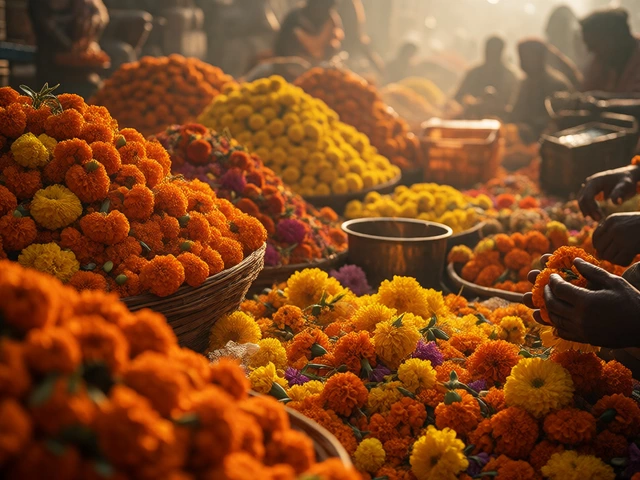
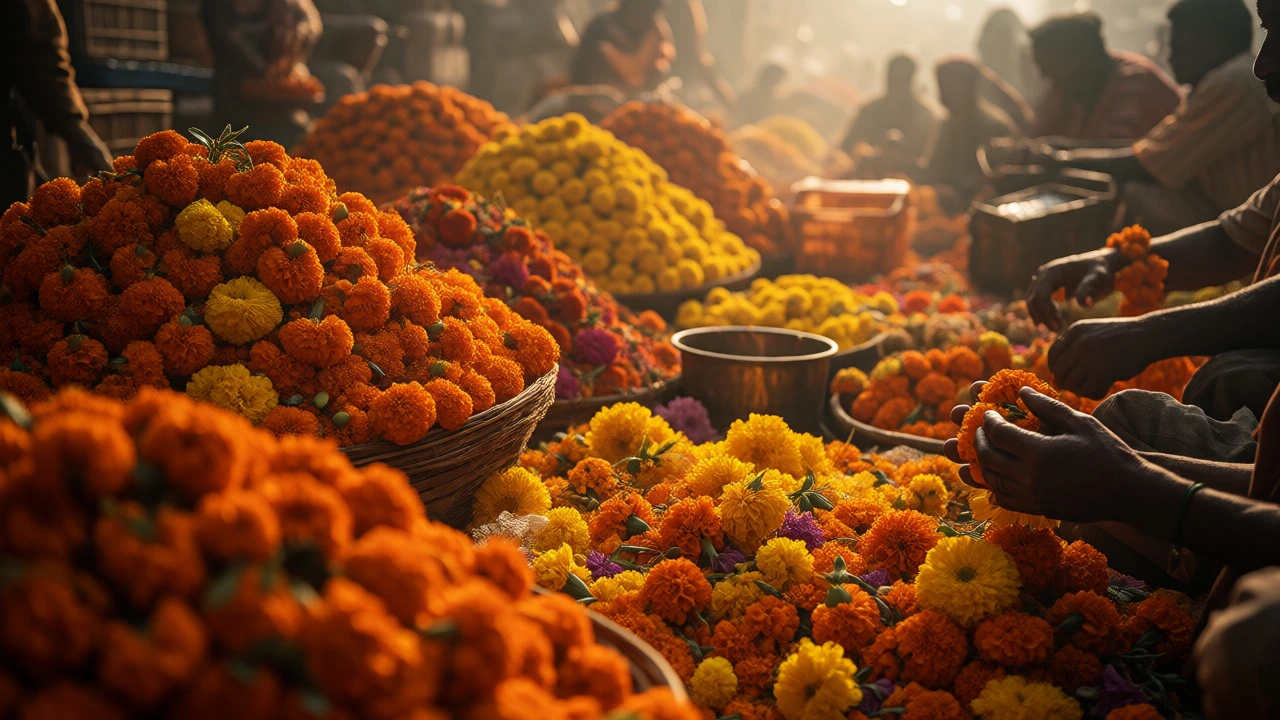
You walk into a local mandai (market) at 4 AM in Delhi or Mumbai. The air is thick with humidity and the scent of fresh blooms. If you’re trying to figure out which flower has highest demand in India, the answer isn’t just one single species-it’s a rotating cast of characters depending on the day, the city, and the festival calendar. But if we had to pick a heavyweight champion, it would be the Marigold. It dominates volume sales across almost every state. However, for value per stem, Roses often take the crown. Understanding this distinction is the difference between making a quick buck and building a sustainable floral business.
Why does this matter? Because planting or buying the wrong flower at the wrong time can wipe out your margins. A bunch of jasmine might sell like hotcakes in Chennai during Pongal but gather dust in Bangalore during a quiet Tuesday. This guide breaks down the actual market dynamics, not just theoretical botany, so you know exactly what moves money in the Indian floral trade.
The Undisputed King: Why Marigolds Rule the Volume
If you look at sheer tonnage, nothing beats the Marigold (Genda Phool). It is the most widely cultivated cut flower in India. The reason is simple: cultural necessity. In Hindu rituals, weddings, and daily temple offerings, marigolds are non-negotiable. You don’t choose them because they smell amazing; you choose them because tradition demands them.
There are two main types dominating the market: the African Marigold (larger, pom-pom heads) and the French Marigold (smaller, more delicate). Farmers prefer growing these because they are hardy. They tolerate heat, resist many common pests, and have a long shelf life compared to fragile blooms like orchids. During major festivals like Diwali, Durga Puja, and Ganesh Chaturthi, the price of marigolds can triple overnight. If you are a grower, timing your harvest for these windows is critical. If you are a buyer, expect volatility.
| Feature | Marigold | Rose |
|---|---|---|
| Primary Use | Rituals, Garlands, Decor | Gifting, Weddings, Luxury Decor |
| Shelf Life | High (3-5 days) | Moderate (2-4 days) |
| Price Stability | Volatile (Festival spikes) | Stable (Premium steady) |
| Top Producing States | Andhra Pradesh, Tamil Nadu | Karnataka, Maharashtra |
The Value Leader: Roses and Their Premium Niche
While marigolds win on volume, roses win on revenue per unit. The Rose is the global language of romance, and India is no exception. However, the Indian rose market is segmented. There is the "standard" red rose used for Valentine’s Day and weddings, and then there are exotic varieties like the Blue Moon or Black Magic that command premium prices in urban centers like Mumbai and Delhi.
Hyderabad and Karnataka are the hubs for high-quality cut roses. The climate in places like Hosur (Tamil Nadu) and Kolar (Karnataka) allows for year-round production of high-grade stems. Unlike marigolds, roses require careful post-harvest handling. If you drop a marigold, it’s fine. If you bruise a rose petal, its value drops by half. For entrepreneurs, roses offer better margins but come with higher risk due to spoilage and lower tolerance for rough handling.
Fragrance Economy: Jasmine and Tuberose
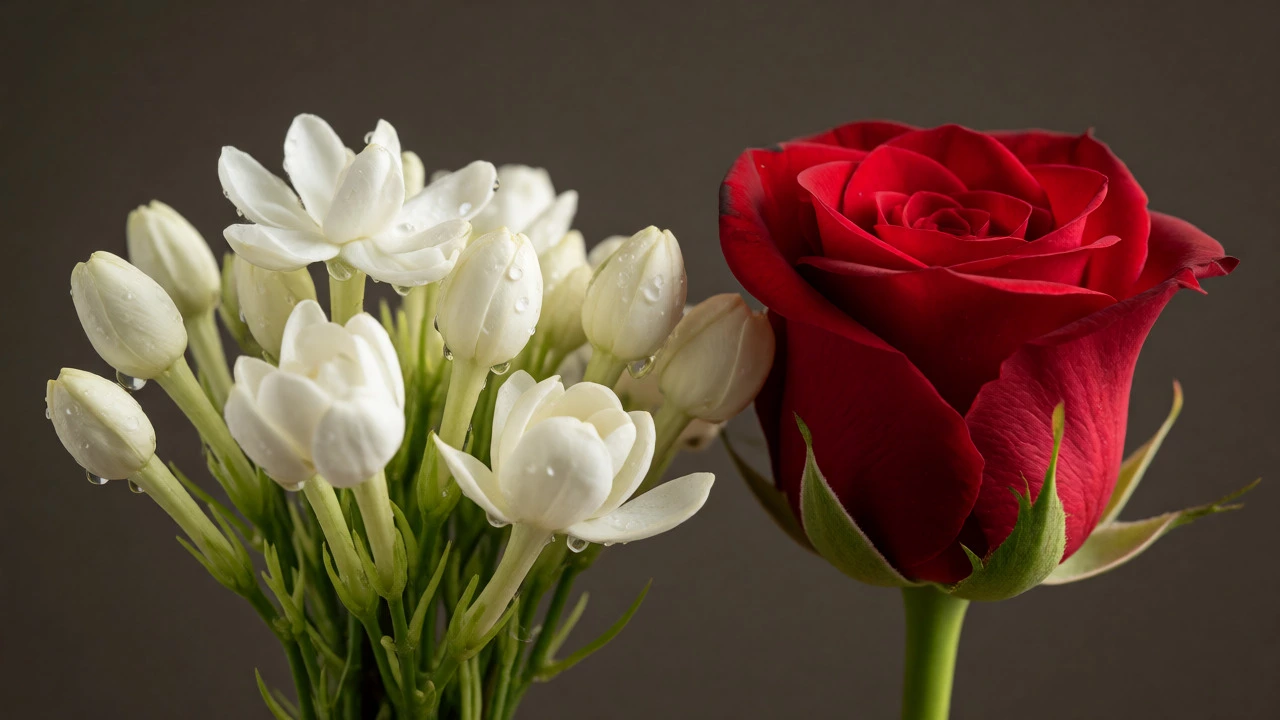
In South India, particularly Tamil Nadu and Kerala, fragrance is as important as visual appeal. Here, Jasmine (Mallige) is king. It’s woven into hair, offered to deities, and sold in tiny bunches at traffic signals. The demand for jasmine is consistent year-round, unlike festive-dependent flowers. It’s a daily essential for millions of women.
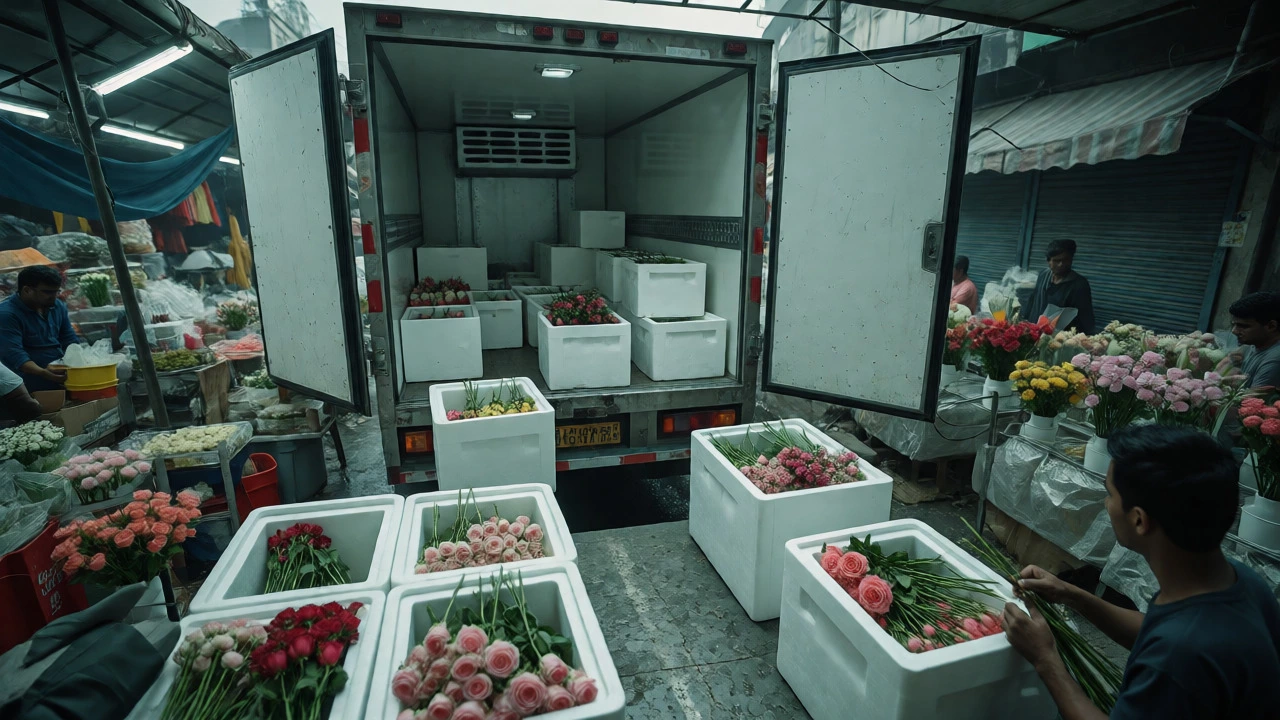
Tuberose (Rajnigandha) is another fragrant heavy hitter. It’s cheaper than jasmine but offers an intense scent that fills a room instantly. It’s popular for home decor and religious ceremonies where a strong aroma is desired. The catch? Tuberose wilts quickly once picked. You need a cold chain-refrigerated transport-to keep it fresh from farm to florist. Without proper cooling, you lose 30% of your stock before it even reaches the customer.
Seasonal Spikes: When Demand Explodes
Understanding seasonality is crucial for maximizing profit. The Indian floral market operates on a festival cycle. Here’s how the demand shifts:
- January - February: High demand for Roses and Lilies for Valentine’s Day and Republic Day events.
- March - April: Spring brings Tulips and Gerberas. Wedding season kicks off in North India.
- September - October: Navratri and Dussehra drive massive Marigold and Chrysanthemum sales.
- October - November: Diwali is the peak. Marigolds, Lotus, and Cockscomb see exponential price hikes.
- December: Christmas drives demand for Poinsettias and Carnations in metro cities.
Don’t ignore the wedding industry. It’s worth billions annually. Weddings require bulk orders of specific colors. White roses, pink lilies, and green chrysanthemums are staples. If you can guarantee supply consistency for wedding planners, you’ll secure contracts that dwarf retail sales.
Regional Preferences Matter More Than You Think
India isn’t a monolith. What sells in Punjab doesn’t necessarily fly in Bengaluru.
North India: Prefers large, bold blooms. Marigolds, Roses, and Chrysanthemums dominate. The weather is cooler, allowing for longer-lasting cut flowers.
South India: Heavily favors fragrant flowers. Jasmine, Tuberose, and Frangipani (Champa) are preferred. The hot climate means heat-tolerant varieties perform better.
East India: Kolkata has a unique love affair with Marigolds and Tagetes during Durga Puja. The scale of consumption here is staggering for just ten days.
West India: Mumbai and Pune are cosmopolitan. They import exotic flowers like Orchids and Anthuriums from Thailand and Malaysia. Local growers compete on quality and freshness rather than just price.
How to Start Selling Flowers Profitably
So, you want to enter the market. Don’t start by planting acres of roses. Start small and smart.
- Choose Your Niche: Will you focus on ritual flowers (Marigold/Jasmine) or luxury gifting (Roses/Lilies)? Ritual flowers have steady, low-margin volume. Luxury flowers have sporadic, high-margin sales.
- Source Locally First: Build relationships with nearby farmers. Cut flowers lose value every hour. Sourcing from within 100km ensures freshness.
- Master Post-Harvest Care: Invest in clean water, sharp scissors, and cool storage. A $50 cooler box can save you hundreds in spoiled inventory.
- Leverage Digital Platforms: Apps like Udaan or local B2B platforms connect farmers directly to retailers, cutting out middlemen who take 40% of the margin.
One common mistake new sellers make is ignoring waste management. Up to 20% of flowers are discarded due to damage. Implement strict grading standards. Grade A goes to hotels and weddings. Grade B goes to street vendors. Grade C becomes compost. Never mix grades.
Future Trends: Exotics and Sustainability
The market is evolving. Urban consumers are increasingly interested in exotic blooms like Hydrangeas and Proteas, though these remain niche due to cost. Another growing trend is sustainability. Plastic-wrapped bouquets are falling out of favor. Eco-friendly packaging using banana leaves or recycled paper commands a premium among eco-conscious buyers in metros.
Also, watch out for imported competition. Cheap imports from Kenya and Ethiopia are flooding the premium segment. Local growers must differentiate through variety uniqueness and faster delivery times. An imported rose takes three days to arrive; a local rose arrives in three hours. Sell that speed.
Which flower is most profitable to grow in India?
Profitability depends on your location and scale. For high volume and steady cash flow, Marigolds are the best bet due to constant ritualistic demand. For higher margins per stem, Roses and Gerberas are superior, especially if you target the wedding and corporate gifting sectors. However, they require more investment in infrastructure like polyhouses and cold storage.
Is jasmine farming lucrative in India?
Yes, especially in South India. Jasmine (Mallige) has consistent daily demand, unlike festival-specific flowers. It requires less space than field crops and can be grown in backyards or small plots. The key is harvesting early morning when buds are tight and selling immediately to maintain fragrance intensity.
What is the biggest challenge in the Indian flower market?
Post-harvest losses. Due to lack of cold chain infrastructure, up to 30-40% of flowers spoil before reaching the end consumer. Investing in basic refrigeration and proper packaging significantly reduces this loss and increases net profit.
Do imported flowers beat Indian flowers in quality?
Not necessarily. Indian hybrid roses and gerberas match international quality standards. Imports often win on exotic variety availability (like certain orchids) but lose on freshness and price. Local flowers are fresher and support the domestic economy.
Which state produces the most flowers in India?
Andhra Pradesh and Tamil Nadu lead in total area under cultivation, largely driven by marigold and jasmine. Karnataka is a major hub for cut roses and gerberas. West Bengal is significant for marigolds during Durga Puja.