Indian Crop Profitability Calculator
Saffron (Kesar)
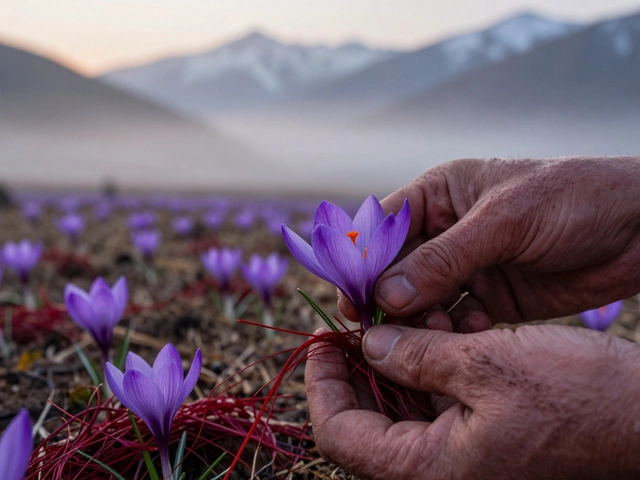
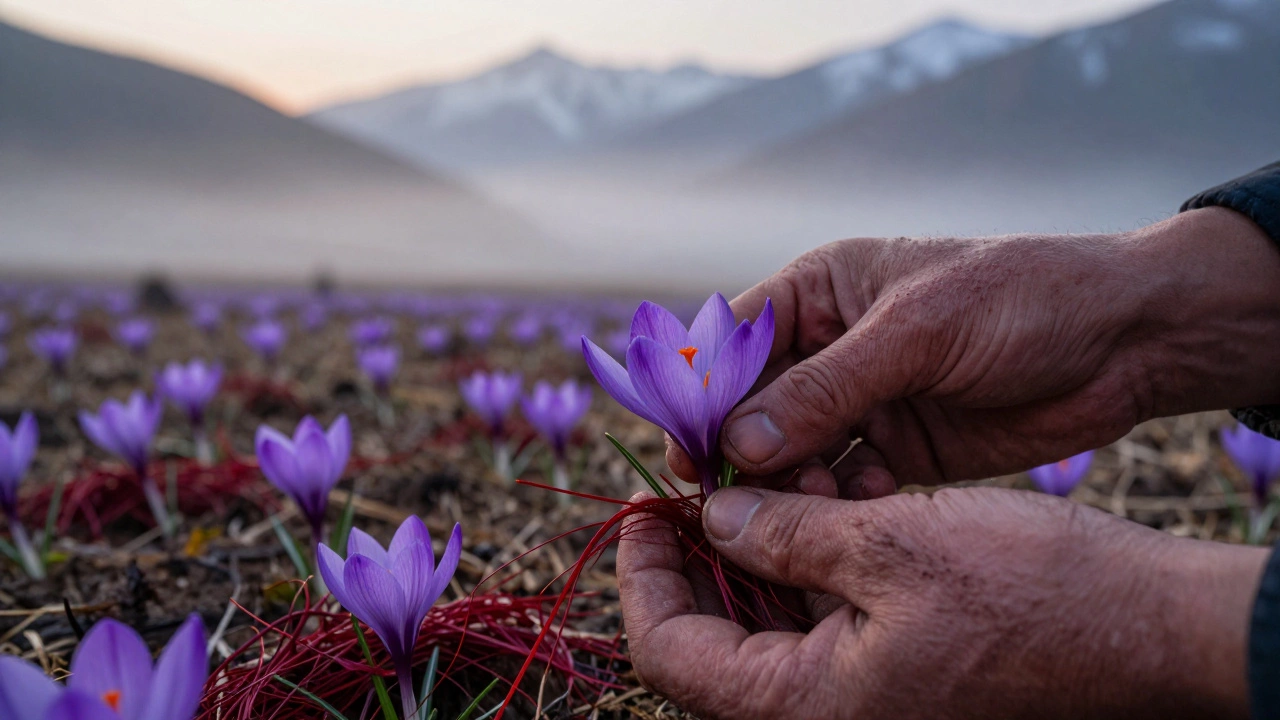
Highest Price/kgThe price king requiring specific Kashmir climate. Intense manual labor during harvest.
- Price: ₹2,00,000 - ₹3,00,000/kg
- Region: Kashmir only
- Labor: Very High
Turmeric (Haldi)
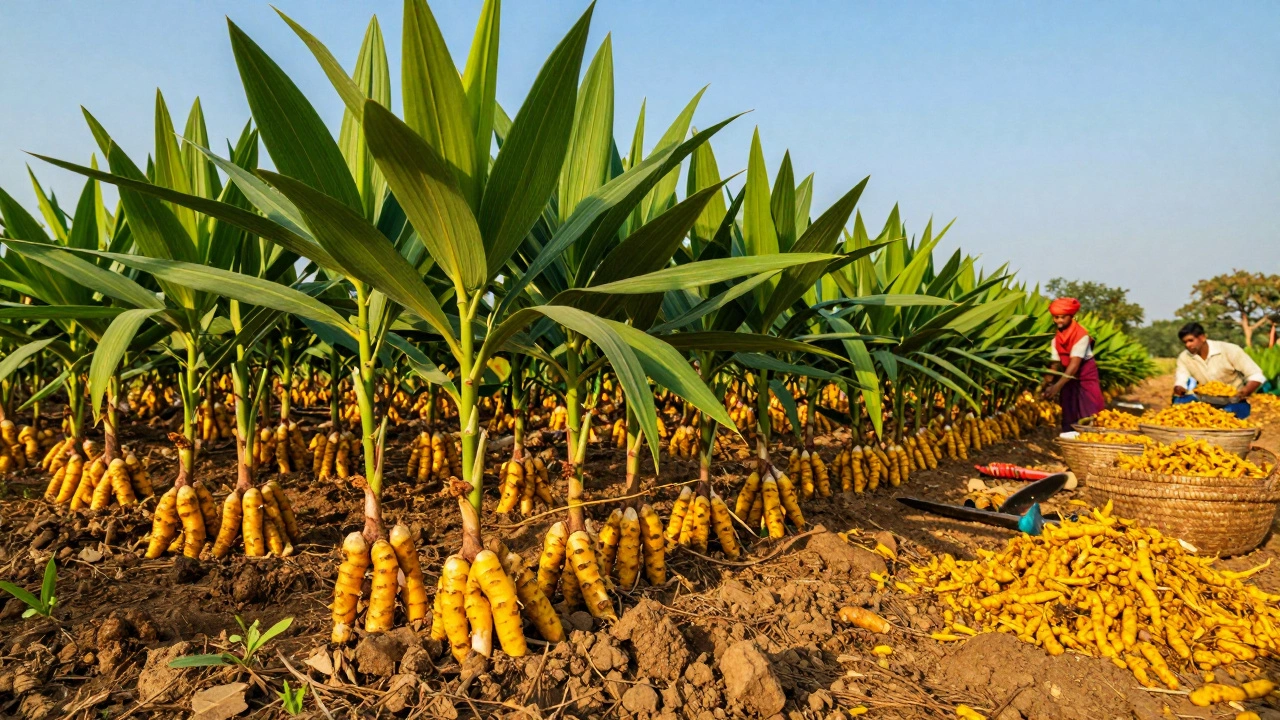
Global DominatorIndia produces 80% of world supply. Stable market with health boom demand.
- Price: ₹60 - ₹150/kg
- Region: South India
- Labor: Moderate
Cardamom (Elaichi)
Green GoldHigh income per acre in Western Ghats. Volatile prices but exceptional returns.
- Price: ₹1,500 - ₹2,500/kg
- Region: Kerala, Karnataka
- Labor: High
Your Farming Parameters
Configure your parameters and click calculate to see potential returns
When you hear "rich plant," what comes to mind? A rare orchid sitting in a museum? Or maybe a massive teak tree worth thousands? In India, wealth isn't just about rarity; it's about demand. The title of the richest plant in India shifts depending on whether you measure by price per kilogram, total export volume, or profit margin for small farmers. There is no single answer, but there are clear winners in specific categories.
If we talk about raw price per weight, Saffron is the most expensive spice in the world, derived from the Crocus sativus flower. If we look at agricultural GDP and global market share, Turmeric is a golden rhizome that dominates the global spice trade with India producing over 75% of the world's supply. For the farmer looking for quick cash flow, Cardamom is known as the Queen of Spices, offering high returns per hectare in specific climatic zones.
The Price King: Saffron (Kesar)
Let’s start with the obvious contender for the highest price tag. Saffron is not just expensive; it is astronomical. You pay for labor, not just the plant. Each Crocus sativus is a flowering plant species of the iris family Iridaceae produces only three red stigmas. To get one kilogram of dry saffron, you need roughly 150,000 to 200,000 flowers. That means hand-picking hundreds of thousands of blooms before they wilt.
In India, saffron cultivation is almost exclusively limited to Kashmir is a region in northern India known for its unique cold climate suitable for saffron growth, specifically the Pampore area. The soil here is alluvial, rich in organic matter, and the weather provides the necessary chilling period followed by warm, dry summers for curing. Prices can range from ₹200,000 to ₹300,000 per kilogram for premium grade Mongra saffron. However, the barrier to entry is high. It requires specific altitude (1,500-2,000 meters), precise irrigation control, and intense manual labor during the short harvest window in October-November.
Is it the richest plant for everyone? No. If you live in Kerala or Tamil Nadu, saffron won’t grow. It’s a niche king, ruling a tiny geographic kingdom but commanding the highest prices globally.
The Global Dominator: Turmeric (Haldi)
While saffron wins on price per gram, Turmeric is a perennial herb belonging to the ginger family Zingiberaceae wins on scale and reliability. India is the undisputed champion here, producing about 80% of the world’s turmeric. The variety matters immensely. Lavangapatti is a high-curcumin variety of turmeric grown primarily in Erode district, Tamil Nadu and Safed Haldi is white turmeric used mainly in religious ceremonies and traditional medicine command premium prices due to their curcumin content.
Why is turmeric so valuable right now? It’s the health boom. Curcumin, the active compound, is linked to anti-inflammatory properties. This drives demand not just for cooking, but for supplements, cosmetics, and pharmaceuticals. Farmers in states like Andhra Pradesh, Tamil Nadu, and Odisha treat turmeric as a cash crop that fits well into rotation systems with paddy or coconut. The yield is predictable, and the market is always open. Unlike saffron, which has a single buyer base often dominated by middlemen in Kashmir, turmeric has a decentralized market across South India.
| Plant | Avg. Price (per kg) | Growing Region | Harvest Cycle | Primary Use |
|---|---|---|---|---|
| Saffron | ₹200,000 - ₹300,000 | Kashmir | Annual (Flowers) | Culinary, Medicine |
| Cardamom | ₹1,500 - ₹2,500 | Kerala, Karnataka | Biennial/Triennial | Culinary, Flavoring |
| Turmeric | ₹60 - ₹150 | South India | 7-10 Months | Culinary, Pharma |
| Banana | ₹30 - ₹60 | All India | Continuous | Food Export |
The Green Gold: Cardamom (Elaichi)
If you want high income per acre without the extreme labor of saffron, look at Cardamom is a spice made from the seeds of several plants in the genera Elettaria and Amomum. Grown mostly in the Western Ghats of Kerala, Karnataka, and Tamil Nadu, this crop thrives under shade. It’s called "Green Gold" for a reason. Smallholders often earn more from a few acres of cardamom than from larger areas of rice or rubber.
The key here is the variety. Malabar Cardamom is the large cardamom variety indigenous to India, highly valued for its aroma is the premium type. The challenge with cardamom is volatility. Prices swing wildly based on production cycles in Guatemala (the other major producer) and local weather events like cyclones. But when the price is high, the returns are exceptional. It requires careful management of shade trees and humidity, making it a skill-intensive crop rather than a brute-force one.
The Silent Giant: Banana
You might think banana is too common to be "rich," but consider the numbers. India is the largest producer of bananas in the world. The "richness" here comes from volume and export potential. Varieties like Nendran is a popular cooking banana variety in South India with high starch content and Robusta is a hybrid banana variety resistant to diseases, widely grown for export are powerhouses. With rising demand in Middle Eastern and European markets, organized farming with proper packaging and cold chain logistics turns this staple fruit into a serious revenue generator. It’s not luxury wealth; it’s steady, scalable wealth.

Medicinal Herbs: Ashwagandha and Giloy
The Ayurveda renaissance has turned medicinal plants into lucrative assets. Ashwagandha is Withania somnifera, an adaptogenic herb used to reduce stress and improve energy and Giloy is Tinospora cordifolia, a vine used extensively in traditional Indian medicine for immunity are seeing skyrocketing demand. Unlike spices, these are often processed into powders or extracts. The value addition happens post-harvest. Farmers who partner with processing units or sell dried roots directly to herbal companies can secure better margins. These plants are hardy, require less water than rice, and fit well into sustainable farming models.
How to Choose Your "Richest" Crop
Picking the right plant depends on your context. Ask yourself these questions:
- Where are you located? Saffron needs Kashmir’s cold. Cardamom needs the Western Ghats’ mist. Turmeric loves the tropical heat of the South.
- What is your labor capacity? Saffron requires armies of pickers. Turmeric and bananas are more mechanizable.
- Who is your buyer? Do you have access to export channels for bananas? Local markets for turmeric? Direct contracts for medicinal herbs?
Don’t chase the highest price per kilo if the crop doesn’t suit your land. A healthy turmeric farm in Tamil Nadu will out-earn a failed saffron experiment elsewhere. Wealth in agriculture comes from matching the plant’s biological needs with your resources and market access.
Is saffron the most profitable crop in India?
Saffron has the highest price per kilogram, but it is not necessarily the most profitable for every farmer. It is restricted to specific regions like Kashmir and requires immense manual labor. For many farmers, crops like cardamom or turmeric offer better risk-adjusted returns due to lower input costs and broader market accessibility.
Which plant gives the highest return per acre in India?
Returns vary by year and region, but cardamom and vanilla often provide the highest net income per acre due to their high market value. However, they require specific microclimates and skilled management. Turmeric offers consistent, moderate-to-high returns with less specialized care.
Can I grow saffron outside of Kashmir?
It is extremely difficult. Saffron requires a specific combination of cold winters and dry, hot summers for curing. While experimental plots exist in Himachal Pradesh and Uttarakhand, commercial viability remains largely confined to the Kashmir Valley due to established infrastructure and expertise.
Why is turmeric considered a high-value crop?
Turmeric contains curcumin, a compound with significant medicinal and cosmetic applications. Global demand for natural health products has driven up prices for high-curcumin varieties like Lavangapatti. India’s dominance in production ensures stable export markets.
What are the best medicinal plants to grow for profit?
Ashwagandha, Giloy, Tulsi, and Neem are top choices. They are hardy, require relatively low maintenance, and have growing demand from both domestic Ayurvedic industries and international supplement manufacturers. Processing them into dried forms or extracts increases profitability significantly.