All-Season Plant Selector
Find Your Perfect Year-Round Bloomer
Answer a few questions to get personalized plant recommendations for your Indian climate and care habits.
Your Recommended All-Season Bloomers
If you’ve ever stood in your garden in January and wondered why nothing’s blooming, you’re not alone. In India, where seasons swing from scorching heat to monsoon deluges and cool winters, most plants come and go like clockwork. But there’s a quiet truth: some plants don’t care about the calendar. They bloom through summer droughts, monsoon floods, and winter chill - all without a break.
What Makes a Plant Truly All-Season?
Not every green plant that sticks around is a true all-season bloomer. Some just survive - they don’t flower. True all-season plants keep producing flowers, buds, or colorful foliage across all three major seasons in India: summer (March-June), monsoon (July-September), and winter (October-February).
These plants aren’t magic. They’re adapted. Their roots dig deep to find water when the surface dries. Their leaves are often thick or waxy to hold moisture. And their flowering cycles? They’re not tied to one season. Instead, they respond to small changes - a bit of rain, a cooler breeze, or even just the length of daylight.
Look around any Indian backyard, balcony, or roadside garden, and you’ll see them. They’re the ones neighbors point to and say, “It’s been flowering since last Diwali.”
The Top 5 All-Season Flowering Plants in India
Here are the five plants that reliably bloom year-round in most parts of India, from Kerala to Punjab, from Mumbai rooftops to Delhi balconies.
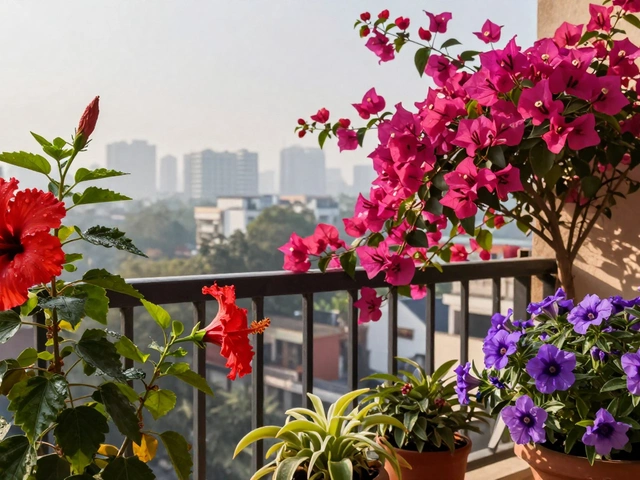
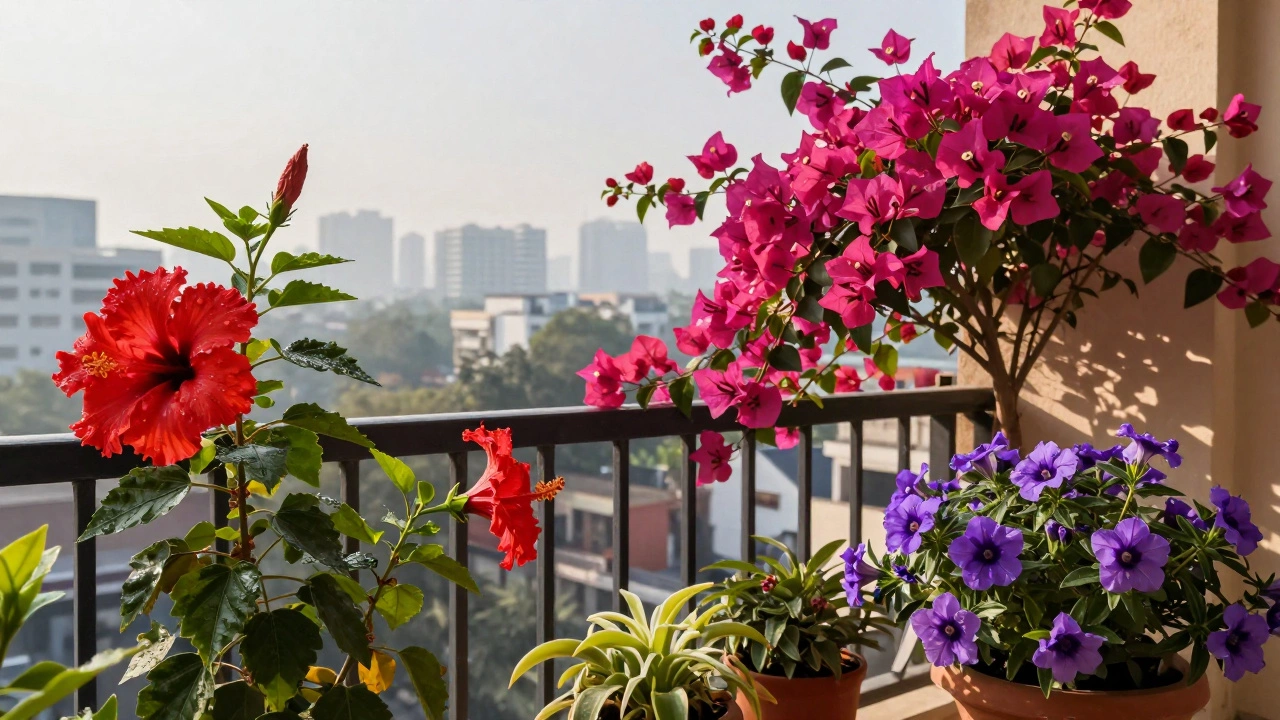
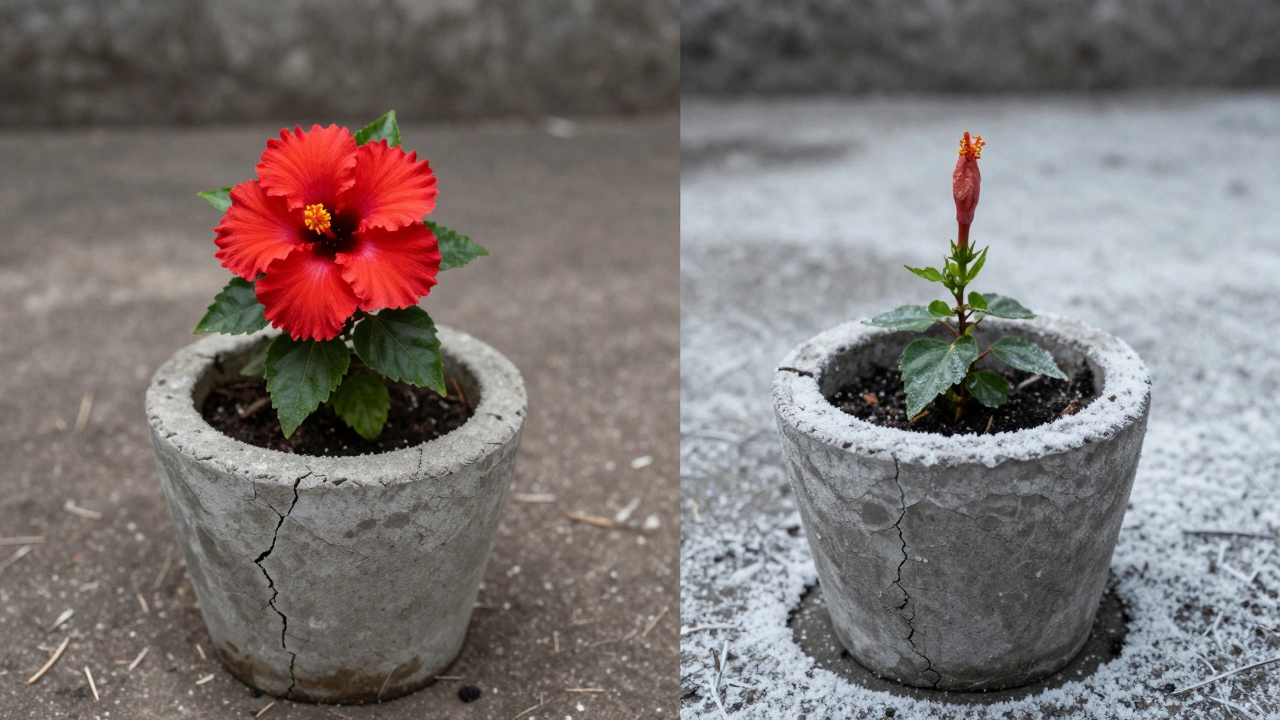
- Hibiscus rosa-sinensis - Also called Chinese hibiscus or shoe flower, this is the most common all-season bloomer. It doesn’t need perfect care. Even in cracked concrete pots, it throws out red, pink, or yellow flowers every single week. It thrives in full sun and tolerates dry spells. In the monsoon, it explodes with blooms. In winter, it slows down - but rarely stops.
- Penta montevidensis - Often called starflower or umbrella plant, this low-growing shrub is a pollinator magnet. Its clusters of tiny purple, pink, or white flowers appear nonstop. It’s drought-tolerant, grows fast, and doesn’t need pruning. You’ll find it in public parks in Bangalore and on terrace gardens in Jaipur.
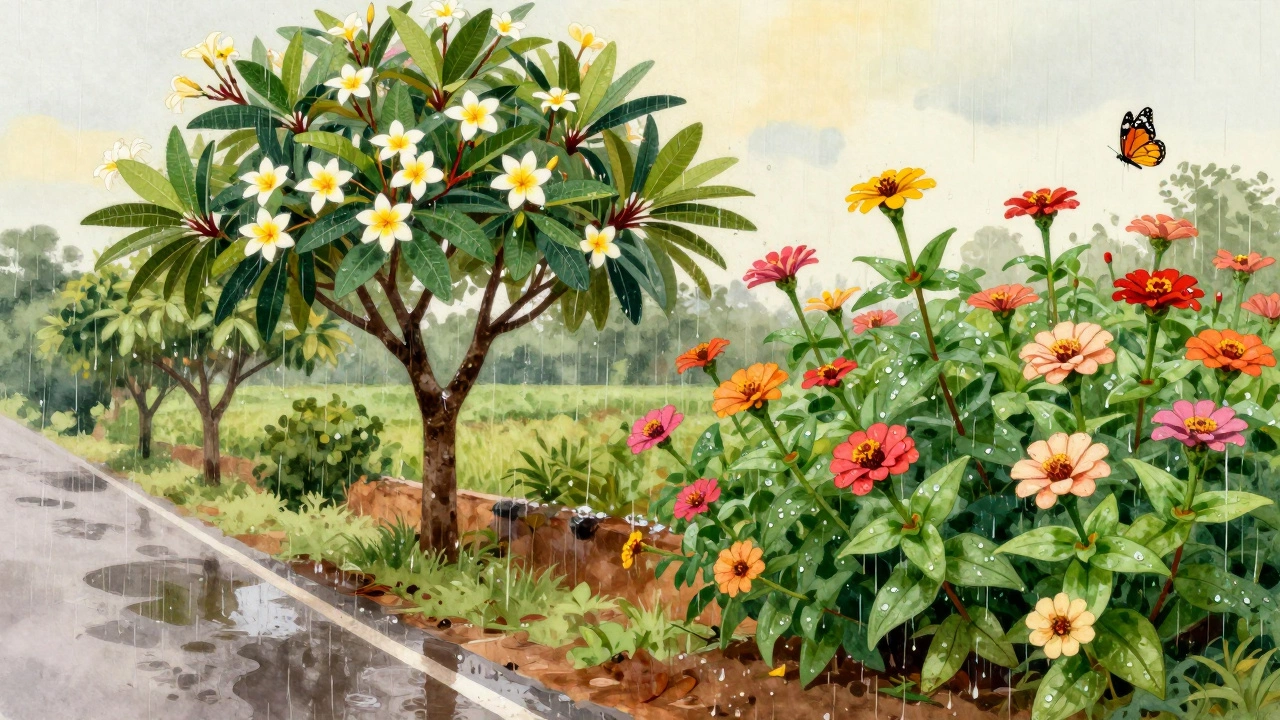
- Plumeria rubra - Known as frangipani or champa, this tree-like shrub blooms in fragrant, waxy flowers from spring through winter. It loses leaves in colder regions like Delhi during December, but keeps flowering. In warmer zones like Chennai or Goa, it blooms continuously. Its sap is toxic, so keep it away from pets.
- Bougainvillea spectabilis - If you’ve ever seen a bright magenta wall covered in paper-thin petals, that’s bougainvillea. It’s the ultimate survivor. It blooms best in dry, sunny spots. Even after a heavy rain, it rebounds in days. It doesn’t flower in deep shade or waterlogged soil, but give it a wall and some sun, and it’ll cover it in color for 10 months straight.
- Zinnia elegans - Yes, zinnias are usually called annuals. But in India’s mild winters and warm springs, they behave like perennials. Plant them in March, and they’ll keep flowering until January. They’re easy from seed, attract butterflies, and come in every color but blue. Gardeners in Hyderabad and Pune swear by them for constant color.
Why These Plants Work Where Others Fail
Most plants bloom because of photoperiod - how long the day is. But these five don’t care. They’re “day-neutral” bloomers. That means they flower based on health, not the calendar.
They also have shallow root systems that spread wide. This lets them grab water from light rains or even morning dew. They don’t need deep soil. That’s why they grow so well in pots, on terraces, and even in broken tiles.
Another reason? They’re not picky about nutrients. A little compost once every three months is enough. Fertilizer? Optional. Overwatering? That’s what kills them. These plants hate soggy roots. If your soil drains poorly, mix in sand or broken brick pieces.
They also don’t need deadheading to keep blooming. Sure, removing old flowers helps - but it’s not required. That’s why they’re perfect for busy people, renters, or anyone who doesn’t have time to fuss.
What Doesn’t Work as an All-Season Plant
Don’t be fooled by plants that look evergreen. Many Indian shrubs - like marigolds, sunflowers, or cosmos - are seasonal. They bloom hard in winter or summer, then vanish. Marigolds? Gorgeous in November, gone by March. Sunflowers? Summer-only. Cosmos? They love autumn, but die with the first frost.
Even some perennials like lantana or jasmine aren’t truly year-round. Lantana blooms mostly in summer and monsoon. Jasmine? It peaks in spring and fall, but goes quiet in the hottest months.
And don’t trust nursery labels that say “all-year bloomer.” Many are misleading. Check local gardening groups or ask older gardeners. They know what actually works in your city.
Where to Plant Them
These plants don’t need fancy setups. But they do need three things:
- Sun - At least 4-6 hours of direct sunlight daily. Even bougainvillea will go bare if kept in shade.
- Drainage - Never plant them in clay soil without mixing in perlite or coarse sand. Raised beds or pots with holes are ideal.
- Space - Bougainvillea and plumeria grow tall. Give them room. Hibiscus and pentas stay compact - perfect for balconies.
If you’re planting in pots, use a mix of garden soil, cocopeat, and compost. Avoid store-bought potting soil that’s too light - it dries out too fast in Indian heat.
Common Mistakes to Avoid
Even these tough plants can die from neglect - or overcare.
- Watering daily - That’s the #1 killer. Let the top inch of soil dry before watering again. In winter, you might water only once every 10 days.
- Using chemical fertilizers too often - A handful of compost every 3 months is enough. Too much fertilizer burns roots and kills blooms.
- Pruning too hard - Light trimming helps shape them, but cutting back too much delays flowering for weeks.
- Expecting winter flowers in North India - In places like Delhi or Chandigarh, hibiscus may pause in December. That’s normal. Don’t give up on it.
Real-Life Example: A Delhi Balcony That Blooms All Year
Take Mrs. Sharma’s 6x4 ft balcony in South Delhi. She has three pots: one hibiscus, one bougainvillea, and one pentas. She waters them twice a week in summer, once a week in winter. No fertilizer. No pruning. She just removes dead leaves.
Since 2021, she’s had flowers every single month. Even in January, when temperatures drop to 5°C, the hibiscus has at least two open blooms. Neighbors ask her how she does it. She just says, “I don’t do anything. They just keep going.”
That’s the secret. These plants don’t need heroes. They need consistency - not perfection.
What About Indoor Plants?
If you’re asking about indoor plants that bloom all year, the answer is short: none. Most flowering plants need sunlight. Even the toughest ones like hibiscus or bougainvillea will weaken and stop blooming if kept indoors.
For indoor color, go for foliage plants - snake plants, ZZ plants, or peace lilies. They don’t flower, but they stay green and clean the air. But if you want color year-round, you need sun.
Try placing your pots on a windowsill that gets morning sun. Even 3 hours helps.
Final Thought: Nature Doesn’t Follow Schedules
Indian gardens don’t need to be perfect. They don’t need to look like magazines. They need to live. The plants that bloom all year aren’t the most expensive or the rarest. They’re the ones that just keep showing up.
Start with one hibiscus. Put it in a pot. Let it sit in the sun. Don’t water it every day. Watch it. In a month, you’ll see buds. In two, flowers. And by next winter, you’ll realize - it never left.
Can any plant flower all year in cold regions like Kashmir?
No true flowering plant blooms continuously in harsh winters like Kashmir’s. Temperatures below 0°C and snow kill most tropical bloomers. Hibiscus, bougainvillea, and pentas won’t survive. In such areas, focus on hardy evergreens like rosemary or juniper for year-round greenery. For color, use seasonal pots in spring and autumn.
Do all-season plants need special soil?
No special soil is needed, but good drainage is essential. Mix garden soil with 30% cocopeat or compost and a handful of sand. Avoid heavy clay or water-retaining potting mixes. If your soil drains slowly, plant in raised beds or pots with drainage holes.
Why does my hibiscus stop flowering in winter?
It’s normal. Hibiscus slows down in cooler temperatures, especially below 12°C. It doesn’t die - it conserves energy. As long as the leaves stay green and the stems are firm, it’s just resting. Don’t overwater or fertilize. When spring returns, new buds will appear.
Can I grow these plants from seeds?
Yes, hibiscus, zinnia, and pentas grow easily from seed. Sow them in early spring or after monsoon. Keep the soil moist until seedlings appear. Bougainvillea and plumeria are harder from seed - better to get cuttings from a friend’s plant. Cuttings root in 3-4 weeks.
Are these plants safe for pets?
Plumeria is toxic if ingested - keep it away from dogs and cats. Hibiscus and bougainvillea are safe. Pentas and zinnias are non-toxic and even attract butterflies. If you have pets, avoid plumeria or place it out of reach.