Hindu Gardening & Sacred Nature Quiz
Result
There’s no single Hindu god of gardening in the way you might expect. You won’t find a statue of a bearded man holding a trowel in a temple corner. But if you walk through a village garden in Uttar Pradesh or a backyard in Kerala where tomatoes, okra, and spinach grow wild under the monsoon sun, you’ll see gardening isn’t just work-it’s worship. The land, the seeds, the water-they’re all sacred. And the gods connected to them? They’re everywhere.
It’s Not One God, It’s a System
People often ask, “Who’s the Hindu god of gardening?” as if there’s one divine gardener in charge. But Hinduism doesn’t work like that. It’s layered. The act of growing food isn’t tied to a single deity-it’s woven into a network of gods, rituals, and natural forces. Each part of gardening has its own spiritual anchor.For example, Prithvi, the earth goddess, is the foundation. She’s not just soil. She’s the mother who gives life. In the Rigveda, she’s called “Prithvi Mata,” the mother of all living things. Farmers in Bihar still offer their first harvest to her before selling or eating it. You won’t find temples built just for her, but you’ll see her name whispered in the soil before planting.
Then there’s Indra, the god of rain. In ancient India, farming meant survival-and survival meant rain. No rain, no crops. So farmers prayed to Indra for timely showers. Even today, in rural Maharashtra, you’ll hear farmers chant Vedic hymns during droughts, asking Indra to send clouds. His weapon, the vajra (thunderbolt), isn’t just a symbol of power-it’s a metaphor for the storm that breaks the dry earth.
And what about the plants themselves? Shiva is often shown with the bael tree, whose leaves are offered to him. But he’s also linked to the concept of regeneration. His dance, the Tandava, isn’t just destruction-it’s renewal. The same energy that ends a season also brings new growth. In the Himalayas, farmers believe Shiva’s presence keeps pests away from their potato fields. They leave small offerings of rice and jaggery at the edge of their plots.
The Real Gardening Deity: Bhumi and the Vedic Concept of Agriculture
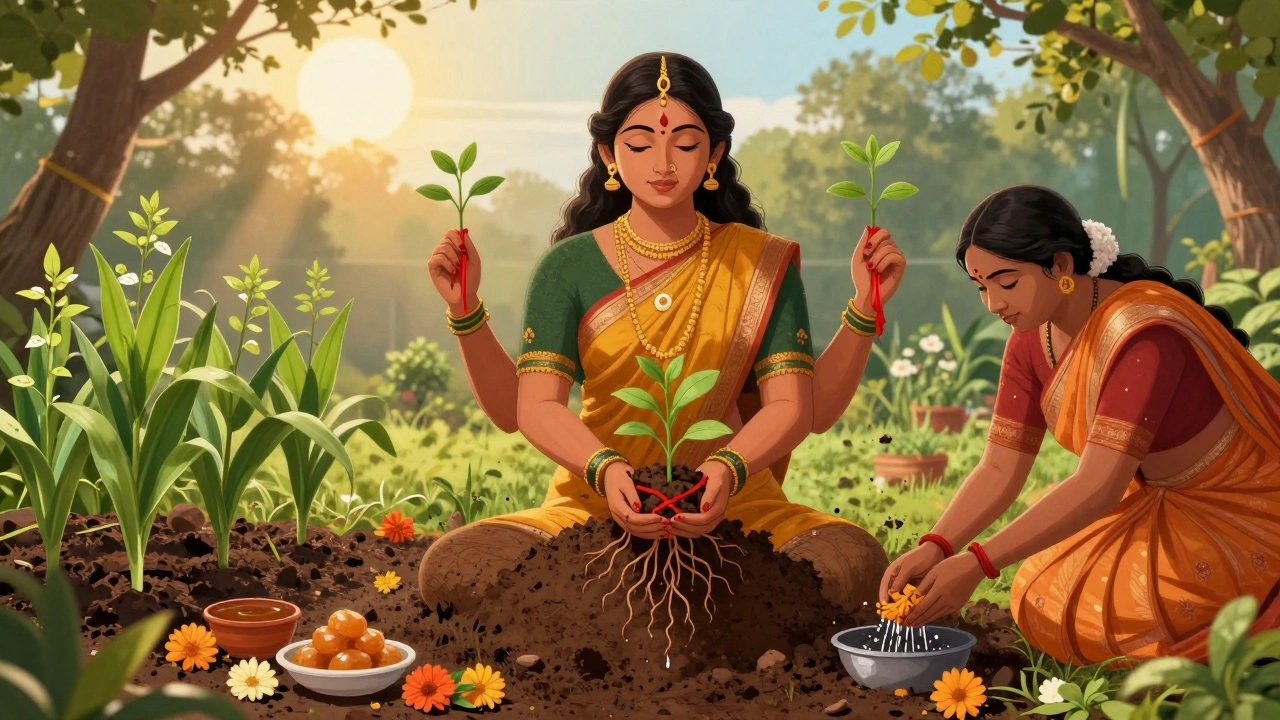
If you had to pick one figure most tied to gardening, it would be Bhumi Devi-another name for the earth goddess, often shown alongside Vishnu. In South India, especially Tamil Nadu and Andhra Pradesh, women plant seeds on the day of Varalakshmi Vratam, a ritual honoring abundance. They tie threads around saplings, offer flowers, and recite prayers for healthy roots and strong stems.This isn’t folklore. It’s practical spirituality. In villages where chemical fertilizers are rare, traditional methods still dominate. Cow dung is mixed into the soil-not just as compost, but as a sacred offering. The belief? That the earth remembers kindness. That if you treat the soil with respect, it gives back.
The Shatapatha Brahmana, a 2,500-year-old Vedic text, says: “The earth is the source of all food. He who tills the earth with devotion, feeds the gods.” That’s the core idea. Gardening isn’t a chore. It’s a duty to the divine. You’re not just growing vegetables. You’re sustaining cosmic order.
Who Is Pushpaka Devata? The Misunderstood “Gardening God”
You might hear someone say, “Pushpaka Devata is the god of gardening.” But that’s a modern myth. Pushpaka isn’t a real deity in ancient texts. The word comes from “pushpa,” meaning flower, and “devata,” meaning deity. Some modern blogs and Instagram influencers use it to sell spiritual gardening kits. But if you ask a priest in Varanasi or a farmer in Odisha, they’ll laugh. There’s no idol of Pushpaka Devata. No temple. No hymns.What’s real is that flowers and plants are sacred. Lotus belongs to Lakshmi. Bilva leaves are for Shiva. Tulsi (holy basil) is worshipped daily in homes across India. The Tulsi plant isn’t just for tea-it’s considered an avatar of the goddess Vrinda. Women clean its leaves with their fingers, water it at dawn, and never let it die. If the plant withers, it’s seen as bad luck. That’s gardening as devotion.
Vegetable Gardening in India: Rituals You Can Still See Today
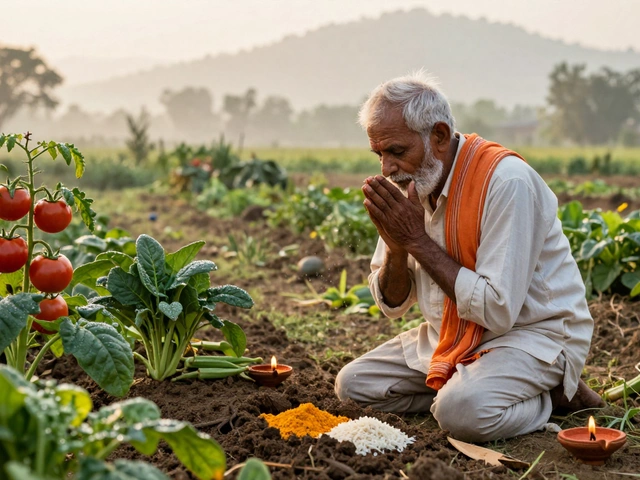
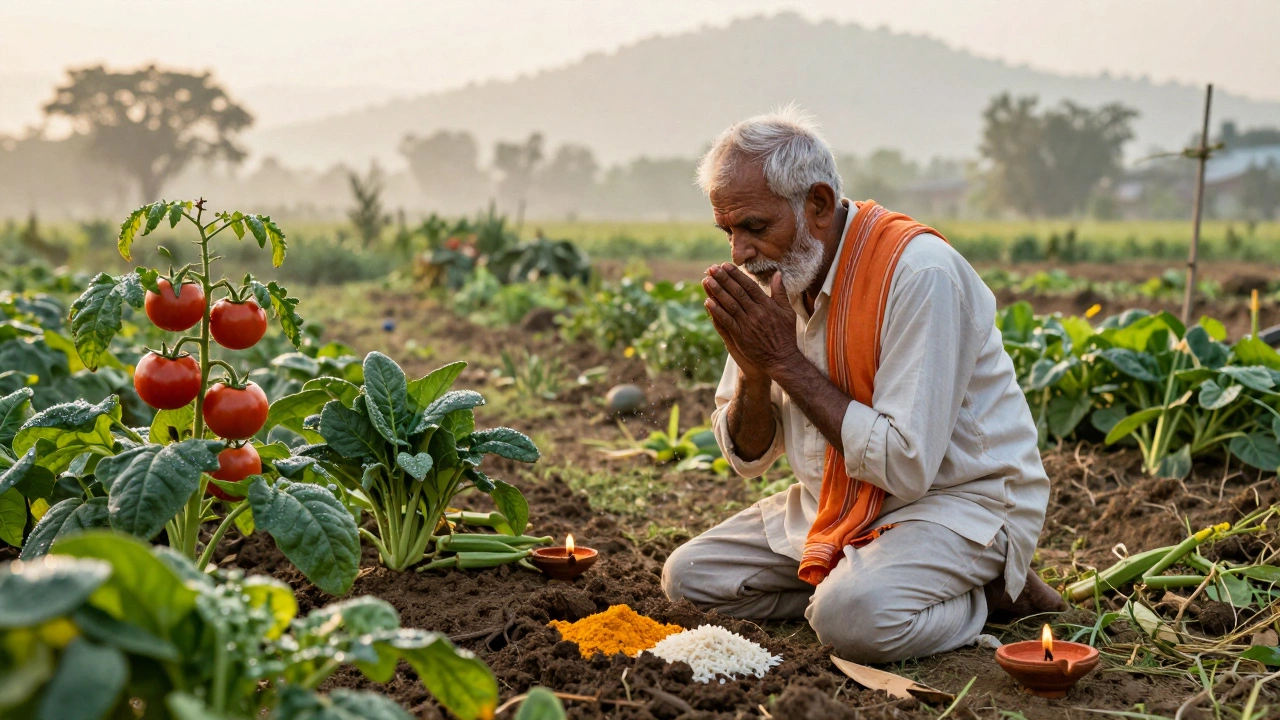
If you visit a rural home in Karnataka, you’ll notice something: the kitchen garden is always placed in the northeast corner. Why? Because Vastu Shastra says that’s the direction of Ishanya, ruled by Shiva. It’s not superstition-it’s ancient environmental wisdom. The northeast gets the softest morning light, ideal for leafy greens.Before planting, many families do a small ritual. They sprinkle turmeric and rice on the soil. They light a diya (oil lamp) near the seedbed. They don’t say, “I’m praying to the god of gardening.” They say, “We’re asking the earth to be kind.”
In Gujarat, women plant fenugreek seeds on the day of Navratri. Each day of the festival, they water the sprouts while singing folk songs. By the end of the nine days, the plants are ready to eat. The harvest isn’t just food-it’s a blessing.
Even in cities, this lives on. In Mumbai’s slums, people grow spinach on rooftops using recycled buckets. They don’t call it “urban gardening.” They call it “keeping the earth alive.”

Why This Matters for Modern Gardeners
If you’re growing vegetables in India-or even if you’re just curious about how culture shapes farming-you need to understand this: gardening here isn’t about efficiency. It’s about relationship.Western gardening focuses on yield, pH levels, and crop rotation. Indian gardening asks: Who gave me this seed? Who waters the soil? Who protects the plant from harm?
That’s why organic methods thrive here. No one needed a “sustainable gardening” trend. It was always the norm. Cow manure, neem leaves, ash from the hearth-they’ve been used for centuries. Why? Because they’re not just nutrients. They’re offerings.
If you want to grow better vegetables in India, don’t just buy compost. Learn the stories behind the soil. Talk to the elders. Watch how they plant. Listen to what they say when they water.
The Real Answer: The Divine Is in the Dirt
There’s no Hindu god of gardening. But there’s a whole universe of gods who care about it. Prithvi holds the soil. Indra brings the rain. Shiva renews the cycle. Lakshmi blesses the harvest. Tulsi protects the home. And you? You’re part of the chain.When you plant a tomato seed in your backyard in Delhi or a chilli plant on your balcony in Chennai, you’re not just gardening. You’re joining a 5,000-year-old conversation between humans and the divine. The gods don’t need temples to be present. They’re in the sprout pushing through the earth. In the dew on the okra leaves. In the quiet morning when you kneel to water your plants.
So the next time someone asks, “Who’s the Hindu god of gardening?”-you can smile and say: It’s not one. It’s all of them. And you’re one of them now, too.
Is there a Hindu god specifically for growing vegetables?
No single god is named as the deity of vegetables. But several deities are deeply connected to agriculture: Prithvi (earth), Indra (rain), and Shiva (renewal). The act of growing food is seen as a sacred duty, not just a task. Vegetables are considered gifts from the earth goddess, and planting them is a form of worship.
What is the role of Tulsi in Indian gardening?
Tulsi (holy basil) is not just a plant-it’s considered an incarnation of the goddess Vrinda. It’s grown in nearly every Indian home, often in a small courtyard shrine. Watering Tulsi daily is a religious ritual. Its leaves are used in prayers, and it’s believed to purify the air and protect the home. Many gardeners treat Tulsi with more care than any ornamental flower.
Why do Indian farmers pray before planting?
Prayers before planting honor the natural forces that make growth possible: earth, water, sun, and wind. These are personified as deities like Bhumi Devi and Indra. The ritual isn’t about asking for miracles-it’s about showing respect. It’s a reminder that harvests aren’t guaranteed by tools or seeds alone, but by harmony with nature.
Is Vastu Shastra important for vegetable gardening in India?
Yes, especially in rural areas. Vastu recommends placing kitchen gardens in the northeast corner of the property, where morning sunlight is gentle and consistent. This isn’t just tradition-it’s practical. Northeast light is ideal for leafy greens and herbs. Many modern urban gardeners in cities like Bangalore and Pune still follow this rule, even if they don’t know the name Vastu.
Do Hindu rituals help plants grow better?
The rituals themselves don’t magically make plants grow. But the practices behind them do. Offering cow dung as fertilizer, using neem leaves to repel pests, watering at dawn-all these are scientifically sound methods. The spiritual layer encourages consistency, respect, and patience. That’s what makes the difference. People who tend their gardens with care, ritual, and attention, tend to get better results.
For those growing vegetables in India, the path isn’t about finding a god to worship-it’s about becoming part of a living tradition. The soil remembers. The plants respond. And the divine? It doesn’t sit on a throne. It’s right there, in the first green shoot pushing through the earth.