Fern Epsom Salt Calculator
Calculate Your Epsom Salt Amount
Select your fern's pot size to calculate the proper amount of Epsom salt.
Enter the water volume if you know it directly.
If you’ve ever seen a fern with yellowing leaves and thought it was dying, you’re not alone. But before you give up on it, there’s a simple, cheap fix that many plant owners swear by: Epsom salt. You might have heard it’s a miracle cure, but here’s the truth-it’s not magic. It’s chemistry. And if your fern is struggling, it might just be missing one key thing: magnesium.
What Epsom Salt Actually Is
Epsom salt isn’t salt at all. It’s magnesium sulfate-a compound made of magnesium, sulfur, and oxygen. You’ll find it in bath stores, pharmacies, and garden centers, usually in a white, grainy powder. It’s been used for decades in agriculture and home gardening because magnesium is essential for plant growth. Ferns, like all green plants, need it to make chlorophyll-the pigment that lets them turn sunlight into energy.
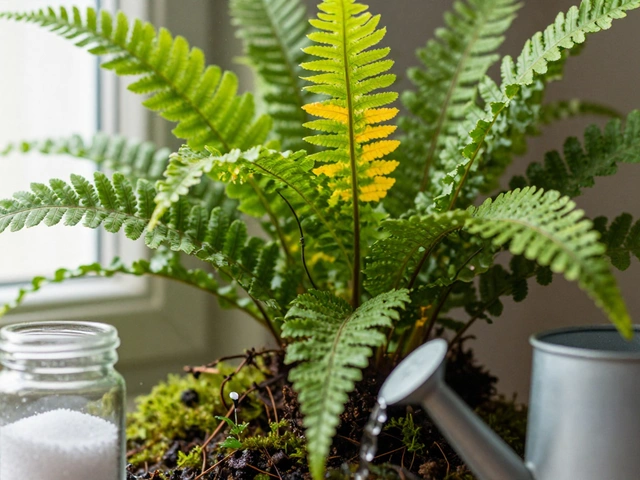
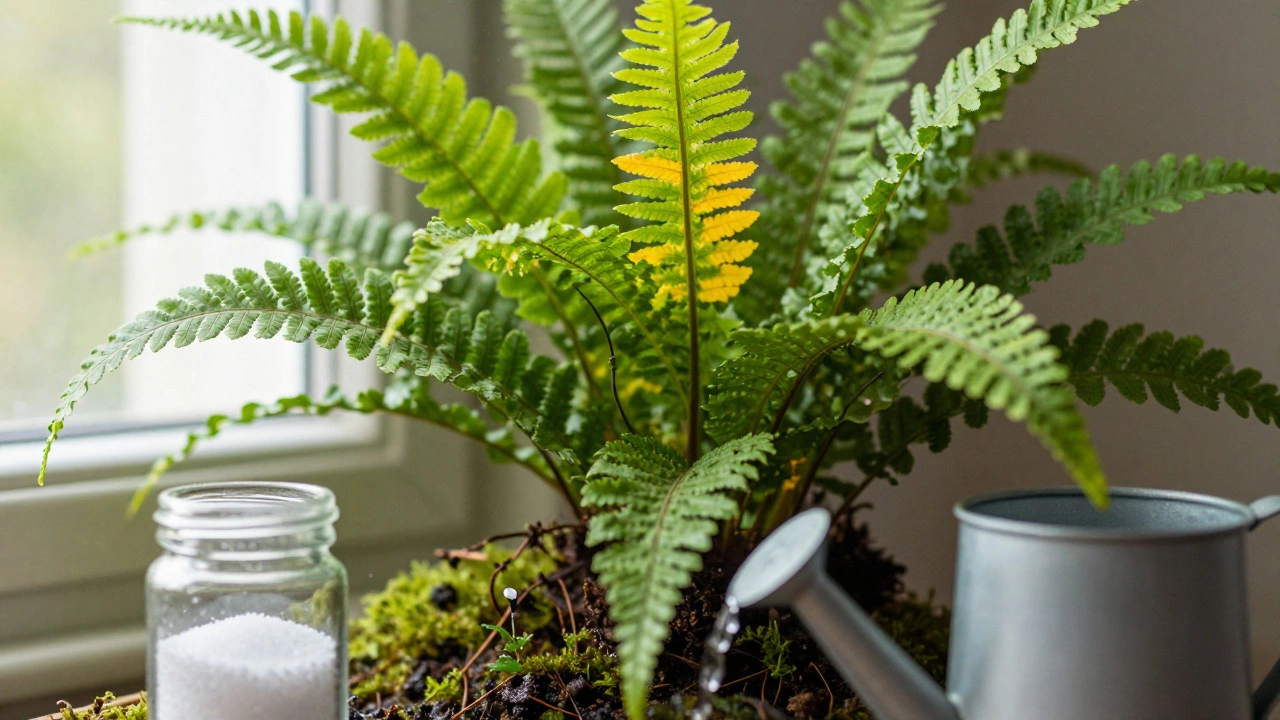
When ferns lack magnesium, their older leaves start turning yellow between the veins while the veins stay green. That’s a classic sign. New growth might be stunted or pale. If you’ve noticed this on your Boston fern, maidenhair fern, or bird’s nest fern, it’s not overwatering or low light-it’s likely a magnesium deficiency.
Why Ferns Are Especially Sensitive
Ferns are ancient plants. They evolved in rich, moist forest floors where nutrients were constantly recycled. Most indoor ferns come from tropical rainforests, where the soil is full of organic matter and minerals. But potting soil? It’s designed to drain well, not to hold nutrients. Over time, watering flushes out the minerals, especially magnesium, which is water-soluble.
Unlike succulents or cacti that can survive on little, ferns are heavy feeders. They need consistent, balanced nutrition. And because they’re not heavy bloomers, they don’t get the same attention as flowering houseplants. No one thinks to fertilize a fern every few weeks. So even if you’re watering regularly, your fern could be starving for magnesium.
How Epsom Salt Helps Ferns Grow Greener
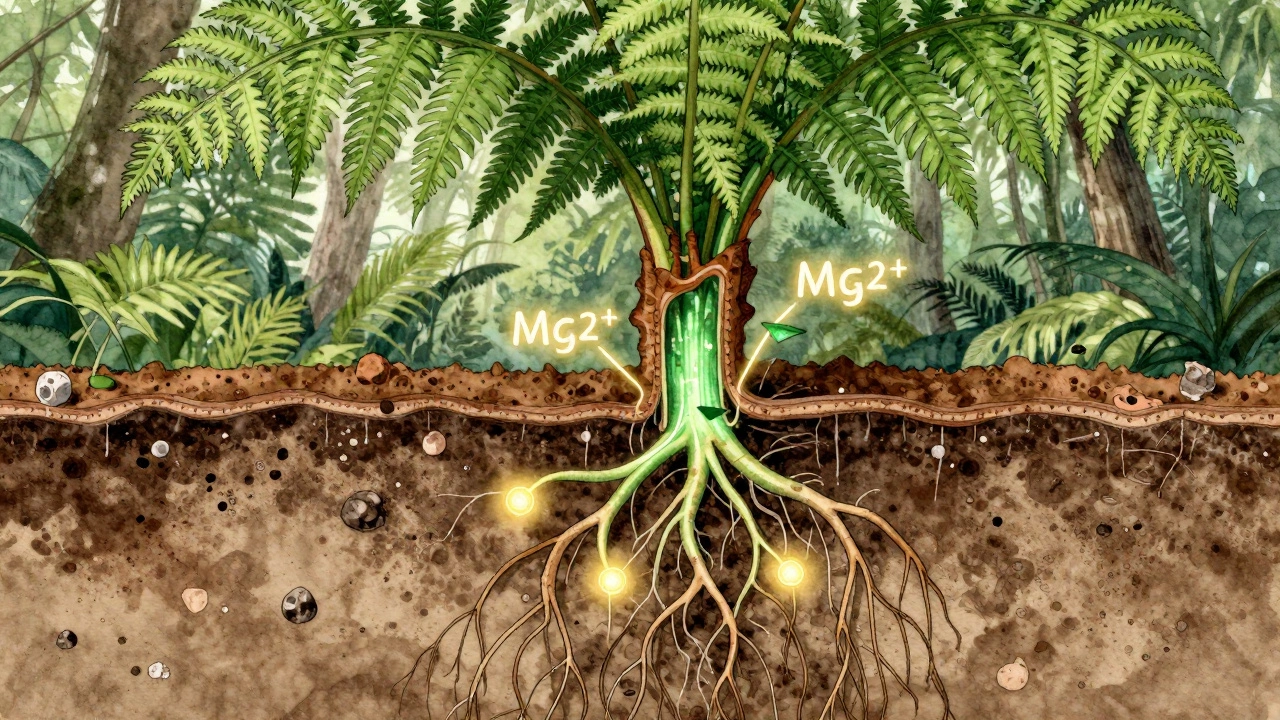
Magnesium is the center atom of every chlorophyll molecule. No magnesium? No chlorophyll. No chlorophyll? No green. No green? The plant can’t photosynthesize. That’s why yellowing leaves happen. Epsom salt gives you a direct, fast way to refill that supply.
When you mix Epsom salt into water and apply it to the soil or spray it on the leaves, the roots absorb the magnesium within hours. Sulfur, the other component, helps with enzyme production and nutrient uptake. Together, they help the fern recover its color, strengthen its fronds, and grow new leaves faster.
A study from the University of Florida’s IFAS Extension found that ferns treated with magnesium sulfate showed a 40% increase in leaf greenness within three weeks compared to untreated plants. The effect was most noticeable in species like Nephrolepis exaltata (Boston fern) and Adiantum capillus-veneris (maidenhair fern), both common indoor varieties.
How to Use Epsom Salt on Ferns
It’s simple, but there’s a right way and a wrong way.
- Use one tablespoon of Epsom salt per gallon of water. That’s about 15 grams in 4 liters. Don’t guess-measure it.
- Stir until it fully dissolves. Undissolved crystals can burn roots.
- Water your fern as you normally would, soaking the soil until water drains out the bottom.
- Do this once a month during spring and summer. Skip it in fall and winter when growth slows.
You can also spray it on the leaves as a foliar feed. Mix the same solution in a spray bottle and mist the fronds lightly in the morning. This gives the plant a quick boost, especially if the roots are struggling to absorb nutrients. But don’t overdo it-once every six weeks is enough for foliar feeding.
Never use Epsom salt as a substitute for regular fertilizer. It doesn’t contain nitrogen, phosphorus, or other key nutrients. Think of it as a supplement, not a full meal.
When Not to Use Epsom Salt
Not every yellow fern needs Epsom salt. If the leaves are turning brown and crispy, that’s usually dry air or too much sun. If the stems are soft and black, you’ve overwatered. If new leaves are twisted or stunted, it could be a calcium deficiency or pest damage.
Also, don’t use Epsom salt if your soil is already rich in magnesium. Some potting mixes include lime or dolomite, which add magnesium. If you’ve been using a balanced liquid fertilizer every two weeks, you might already be giving your fern enough. Test before you treat.
And never pour undiluted Epsom salt directly onto the soil. It’s too concentrated and can cause salt buildup, which damages roots. Always dissolve it first.
What to Expect After Treatment
Don’t expect overnight results. Ferns grow slowly. You might see a slight darkening of old leaves in 7-10 days, but real improvement takes 3-4 weeks. New fronds should emerge greener and more robust. If you don’t see any change after two months, the issue isn’t magnesium. Check your light levels, humidity, or drainage.
One user in Manchester told me their 15-year-old Boston fern had barely grown in years. After two months of monthly Epsom salt soaks, it produced three new fronds-something it hadn’t done since 2020. The plant was in the same spot, same pot, same water schedule. The only change? Epsom salt.
Alternatives to Epsom Salt
If you don’t have Epsom salt, you can use a balanced houseplant fertilizer with magnesium listed on the label. Look for something with an NPK ratio like 10-10-10 and added magnesium (Mg). Some organic options include seaweed extract or compost tea, which contain trace minerals including magnesium.
But if you want fast, targeted results, nothing beats Epsom salt. It’s affordable, safe, and works when you need it most.
Other Plants That Benefit
Ferns aren’t the only ones. Tomatoes, peppers, and roses often get Epsom salt boosts too. But for indoor plants, ferns are the most responsive. Peace lilies, spider plants, and ZZ plants don’t usually need it-they’re tougher and get enough from standard fertilizers.
If you have multiple ferns, treat them all at once. They’ll thank you with lush, dark green fronds that last longer and look more vibrant.
Final Tip: Keep the Humidity Up
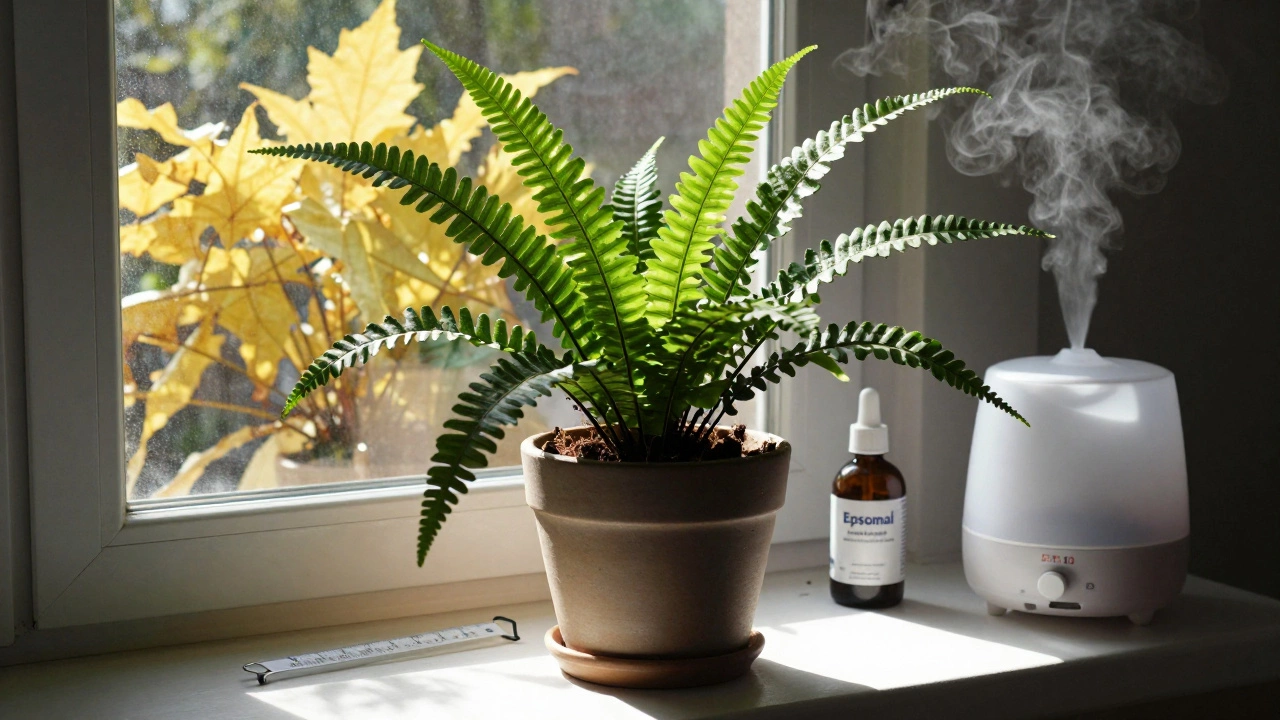
Epsom salt helps with color, but ferns still need humidity. In winter, indoor air gets dry. Use a humidifier, place a tray of water near the plant, or group your ferns together. No supplement works well if the air is too dry.
Can Epsom salt kill ferns?
Yes, if you use too much or apply it too often. Overuse leads to salt buildup in the soil, which can burn roots and cause leaf browning. Always dilute it properly-one tablespoon per gallon-and limit applications to once a month during the growing season.
How often should I use Epsom salt on my fern?
Once a month during spring and summer. Ferns grow actively during these months and use up nutrients faster. In fall and winter, when growth slows, skip it entirely. Over-fertilizing-even with natural products-can do more harm than good.
Is Epsom salt better than fertilizer for ferns?
No. Epsom salt only provides magnesium and sulfur. A good houseplant fertilizer gives you nitrogen, phosphorus, potassium, and trace minerals. Use Epsom salt as a supplement when you see yellowing leaves, not as your only source of nutrition.
Can I use Epsom salt on other indoor plants?
Some, yes. Peace lilies and orchids can benefit occasionally. But most common houseplants like snake plants, pothos, or rubber trees don’t need it. They’re adapted to low-nutrient conditions. Only use it if you see clear signs of magnesium deficiency-yellowing between leaf veins on older leaves.
Where can I buy Epsom salt for plants?
Any pharmacy, grocery store, or garden center sells it. Look for plain magnesium sulfate-no fragrances or additives. The kind meant for baths is fine for plants. Avoid products labeled "garden Epsom salt" with added chemicals; plain is better.
If your fern looks like it’s giving up, don’t toss it. Give it a little magnesium. It might just surprise you.