Soil Restoration Calculator
Soil Test Results
Recommended Actions
Your Soil Restoration Plan
If your garden used to burst with tomatoes and zinnias but now barely grows weeds, your soil is likely depleted. This isn’t rare-especially in places like Manchester where heavy rain washes nutrients away and years of planting the same crops drain the earth. Depleted soil doesn’t mean your garden is dead. It just needs the right fix. And it’s not about buying expensive bags of fertilizer. It’s about working with nature, not against it.
What Does Depleted Soil Look Like?
Depleted soil doesn’t always look bad. It might look fine-dark, crumbly, even moist. But here’s what tells you it’s running on empty:
- Plants grow slowly, even with plenty of water
- Leaves turn yellow, especially older ones
- Roots stay shallow instead of digging deep
- Harvests are tiny or nonexistent, year after year
- Water pools on top instead of soaking in
These aren’t signs of pests or disease. They’re signs your soil is out of food. Plants need nitrogen, phosphorus, potassium, and dozens of micronutrients. When those run low, growth stalls. And if you’ve been using the same compost or fertilizer for years without testing, you might be giving your plants the wrong thing.
Test Before You Treat
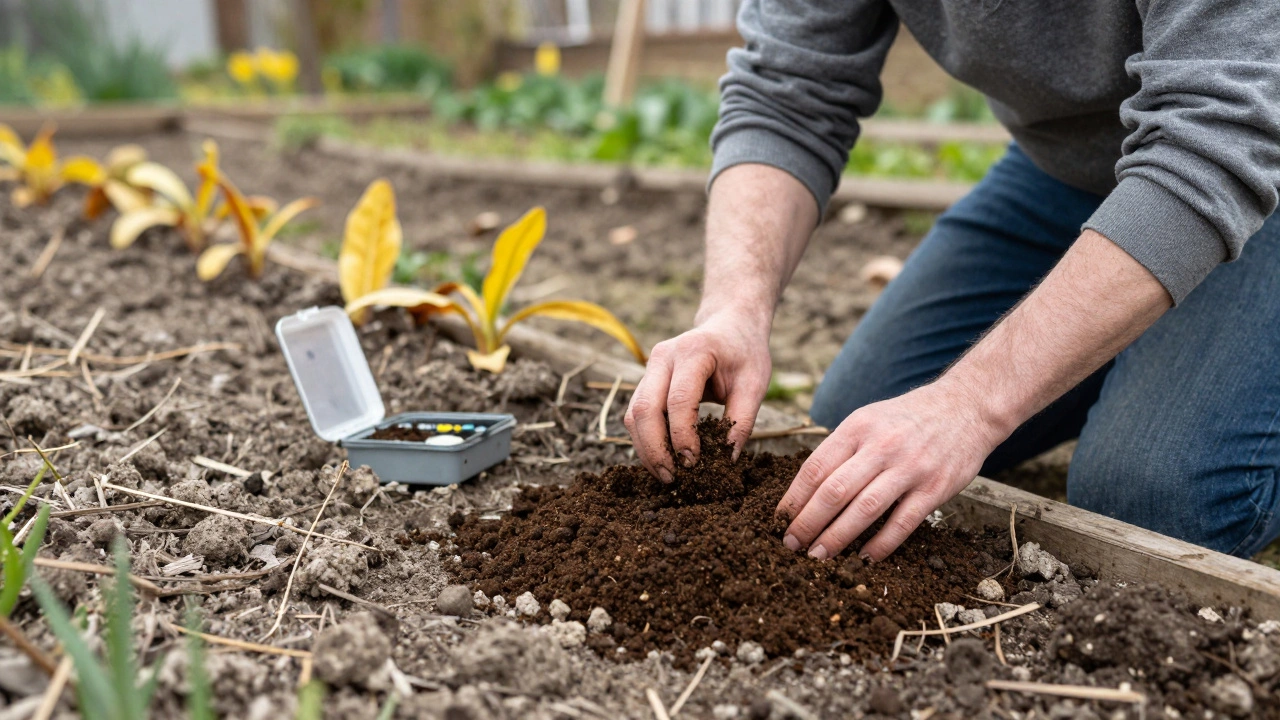
Don’t guess what your soil needs. A simple soil test tells you exactly what’s missing. You can buy a basic kit from any garden center for under £15. Or send a sample to a lab-many universities and extension services offer affordable testing. In the UK, the Soil Association or your local horticultural college can help.
What you’ll find out matters:
- Is your pH too high or too low? Most vegetables want between 6.0 and 7.0. If it’s below 5.5, your soil is too acidic. Above 7.5, it’s too alkaline.
- Is nitrogen low? That’s the most common problem. It’s what makes leaves green and plants grow fast.
- Are phosphorus and potassium missing? These help roots, flowers, and fruit develop.
- Is organic matter below 3%? Healthy soil should be at least 5%.
One gardener in Salford tested her soil after three years of growing carrots. She found pH at 5.2 and organic matter at 1.8%. She added lime and compost-and her next harvest doubled. Testing saves money. You won’t waste cash on the wrong fertilizer.
Add Organic Matter-The Foundation
Organic matter is the backbone of healthy soil. It holds water, feeds microbes, and slowly releases nutrients. Depleted soil has little of it. The fix? Add compost. Not store-bought bagged stuff-real, homemade compost made from kitchen scraps, grass clippings, leaves, and coffee grounds.
Spread a 2- to 3-inch layer over your garden beds in early spring or fall. Dig it in lightly with a fork. Don’t till deep. You don’t want to destroy soil structure. Over time, worms and fungi will pull it down, aerating the soil naturally.
Other great sources:
- Well-rotted manure (cow, horse, or chicken-never fresh)
- Leaf mold (aged leaves broken down over a year)
- Bokashi bran (fermented kitchen waste, great for small spaces)
- Cover crops like clover or winter rye (grown in off-seasons to protect and feed the soil)
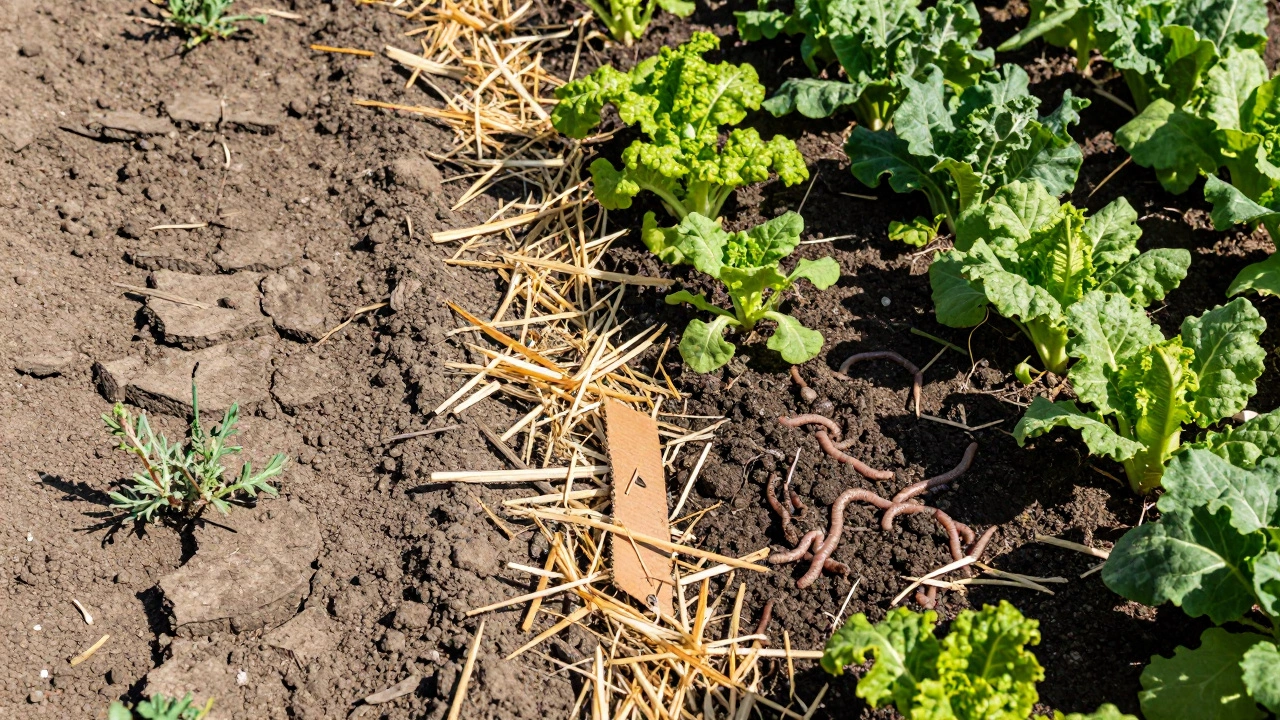
One Manchester gardener turned his patchy lawn into a vegetable bed by layering cardboard, compost, and straw over winter. By spring, the soil was dark, soft, and full of earthworms. He didn’t buy a single bag of fertilizer.
Use Cover Crops to Heal Between Seasons
Empty soil is vulnerable. Rain washes nutrients away. Sun bakes the surface. Weeds take over. Cover crops fix all that.
After harvesting in late summer, sow a mix of winter rye and hairy vetch. Rye grows fast, protects the soil, and adds bulk when turned under. Vetch fixes nitrogen from the air-like a natural fertilizer factory. In spring, cut them down and leave the cuttings on top as mulch. They break down slowly, feeding the soil.
Even if you only have a small bed, planting a cover crop for four months makes a bigger difference than any chemical blend. It’s free, natural, and works better than synthetic options.
Balance pH Naturally
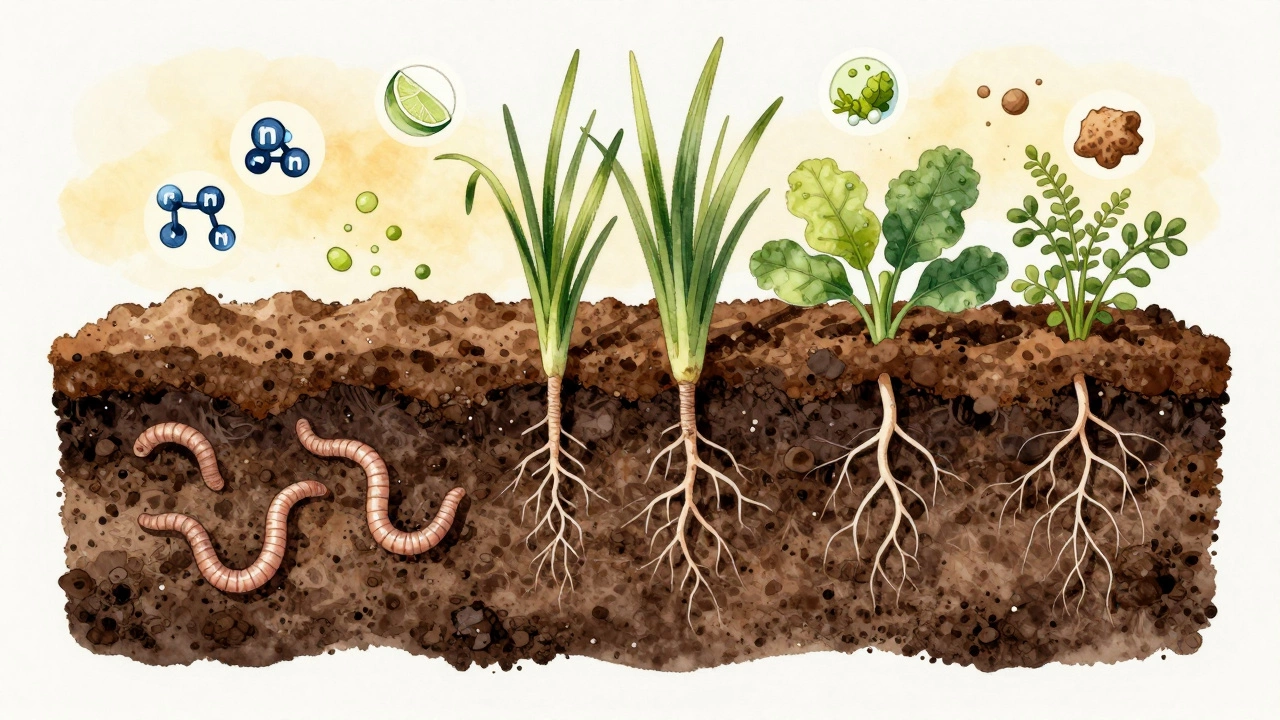
Most gardeners don’t realize pH affects nutrient availability. Even if you add nitrogen, if the soil is too acidic, plants can’t use it.
If your soil is too acidic (below 6.0), add garden lime. Crushed limestone works best. Apply 100-200 grams per square meter in autumn. It takes months to work, so plan ahead.
If your soil is too alkaline (above 7.5), use elemental sulfur or pine needles. Sulfur lowers pH slowly over a season. Pine needles mulched around acid-loving plants like blueberries or potatoes help too.
Don’t rush this. Changing pH too fast shocks soil life. Slow and steady wins the race.
Rotate Crops and Avoid Monoculture
Planting tomatoes in the same spot every year is like eating pasta for breakfast, lunch, and dinner. Your soil gets tired. Rotating crops lets it rest and rebuild.
Group plants by family:
- Brassicas: cabbage, broccoli, kale
- Solanaceae: tomatoes, peppers, potatoes
- Legumes: beans, peas
- Roots: carrots, beets, onions
Move each group to a new bed every year. After heavy feeders like tomatoes, plant beans. Beans add nitrogen back. After onions, plant lettuce. Lettuce doesn’t need much. This simple rotation cuts disease, boosts nutrients, and reduces pests.
A gardener in Bury rotated her crops for three years. Her tomato yield went from 8 fruits per plant to over 30. No pesticides. No fancy products. Just timing and spacing.
Use Mulch to Protect and Feed
Mulch isn’t just for looks. It’s insurance for your soil. A 2-inch layer of straw, shredded leaves, or wood chips keeps moisture in, stops weeds, and slowly breaks down into nutrients.
Apply mulch after planting, not before. Wait until the soil warms up in spring. Too much mulch too early keeps the ground cold. In autumn, add more to protect overwintering plants.
Cardboard under mulch works wonders. Lay it down before adding straw. It blocks weeds and holds moisture. After a year, it’s gone-turned into soil by worms.
Wait and Observe
Soil healing isn’t fast. You won’t see results overnight. It takes one full growing season to start noticing big changes. Two seasons for full recovery.
Don’t rush to add more fertilizer. Too much nitrogen burns roots. Too much phosphorus locks up iron. Let the soil rebuild itself with organic matter, cover crops, and time.
Check your soil again next spring. Test the pH. Dig a handful. Is it looser? Darker? Do you see more worms? That’s your progress.
What Not to Do
Stop these common mistakes:
- Don’t use chemical fertilizers as a quick fix. They feed plants, not soil. The soil gets weaker over time.
- Don’t till deeply every year. It kills beneficial fungi and breaks up soil structure.
- Don’t ignore weeds. They’re telling you something. Dandelions mean compacted soil. Chickweed means wet, rich soil. Learn what they say.
- Don’t buy soil amendments without testing. You might be adding lime when you need sulfur.
Soil isn’t a battery you plug in. It’s a living system. Treat it like one.
Quick Start Plan for Depleted Soil
Here’s what to do in the next 12 months:
- Test your soil now (before March).
- Add 3 inches of homemade compost over all beds by early April.
- Plant cover crops in empty areas by late September.
- Apply lime or sulfur only if your test says so.
- Start crop rotation next spring.
- Mulch every bed after planting.
- Test again next fall.
Follow this, and your soil will turn from tired to thriving. No magic potions. No expensive gadgets. Just patience, observation, and a little compost.
How long does it take to fix depleted garden soil?
You’ll start seeing improvements in 3-6 months with consistent compost and cover crops. Full recovery usually takes one full growing season. If your soil is severely damaged-like after years of chemical use-it may take two seasons. The key is consistency, not speed.
Can I use store-bought compost to fix depleted soil?
Yes, but check the label. Many bagged composts are low in nutrients and high in fillers like peat or bark. Look for compost labeled as “well-rotted” or “organic matter-rich.” Homemade compost from your own kitchen scraps and garden waste is always better-it’s tailored to your soil’s needs.
Do I need to add fertilizer at all?
Not if you’re using compost, cover crops, and crop rotation. These build long-term fertility. But if your soil test shows a severe deficiency-like nitrogen below 10 ppm-you can use a light application of organic fertilizer like blood meal or fish emulsion. Use it sparingly. It’s a short-term boost, not a cure.
What’s the best cover crop for UK gardens?
Winter rye and hairy vetch are the top choices. Rye grows fast, suppresses weeds, and adds bulk. Vetch fixes nitrogen. Mix them 50/50 for the best results. For small spaces, crimson clover works well too. Sow them in September before the first frost.
Why is my soil still hard after adding compost?
Compost alone won’t fix compaction. You need to stop walking on beds and avoid tilling deeply. Add organic matter, then let earthworms do the work. If the soil is still hard, try a broadfork-no turning, just loosening. It opens the soil without destroying its structure.