Kitchen Garden Plant Selector
Your Garden Conditions
Recommended Plants
Your Best Plants
Care Tips
No plants match your conditions
Try adjusting your selections or check our common mistakes section.
You don’t need a backyard to grow your own food. Even if you live in a flat in Manchester with a windowsill the size of a tea towel, you can still have a kitchen garden that gives you fresh basil, cherry tomatoes, and mint all year round. The idea isn’t to turn your kitchen into a farm-it’s to make growing food part of your daily routine, like making coffee or washing dishes.
Start with what you have
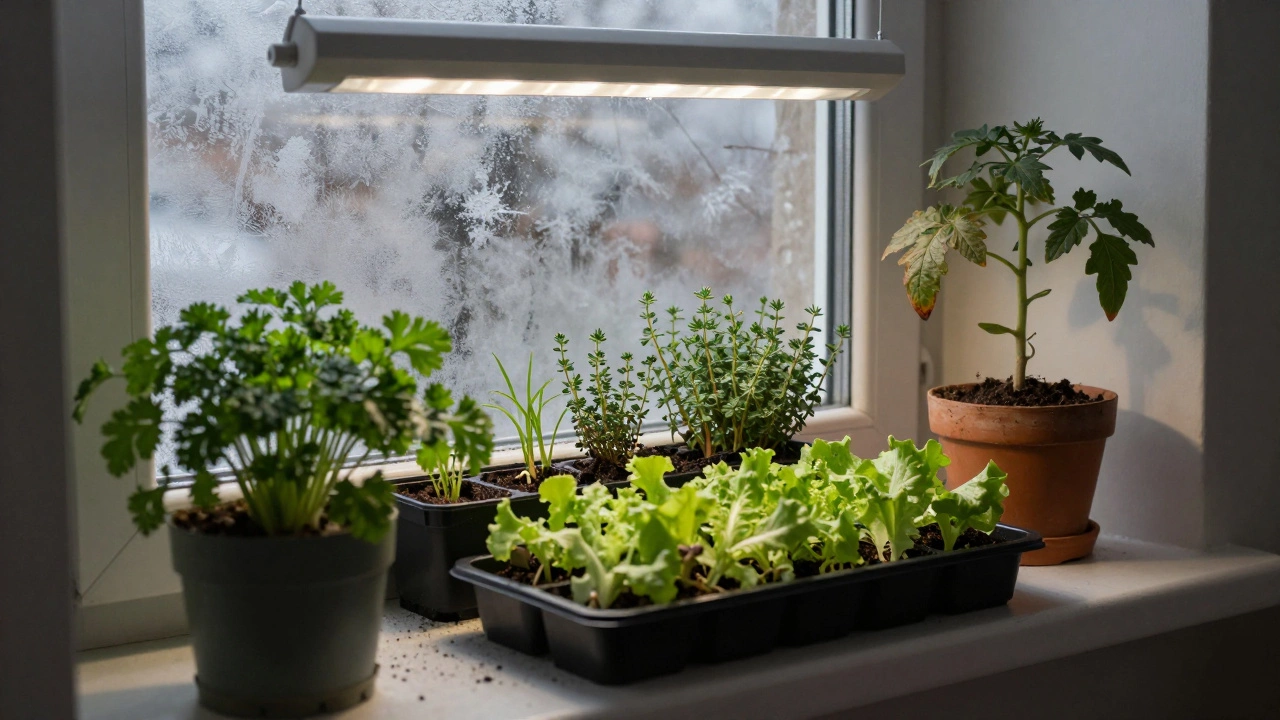
Most people think they need big pots, raised beds, or sunlight all day. That’s not true. A south-facing windowsill gets six hours of sun in winter and over ten in summer. That’s enough for most herbs and leafy greens. If your only window faces north, don’t give up. Lettuce, spinach, and chives will still grow in lower light. You can even use a cheap LED grow light from a hardware store-no fancy setup needed.
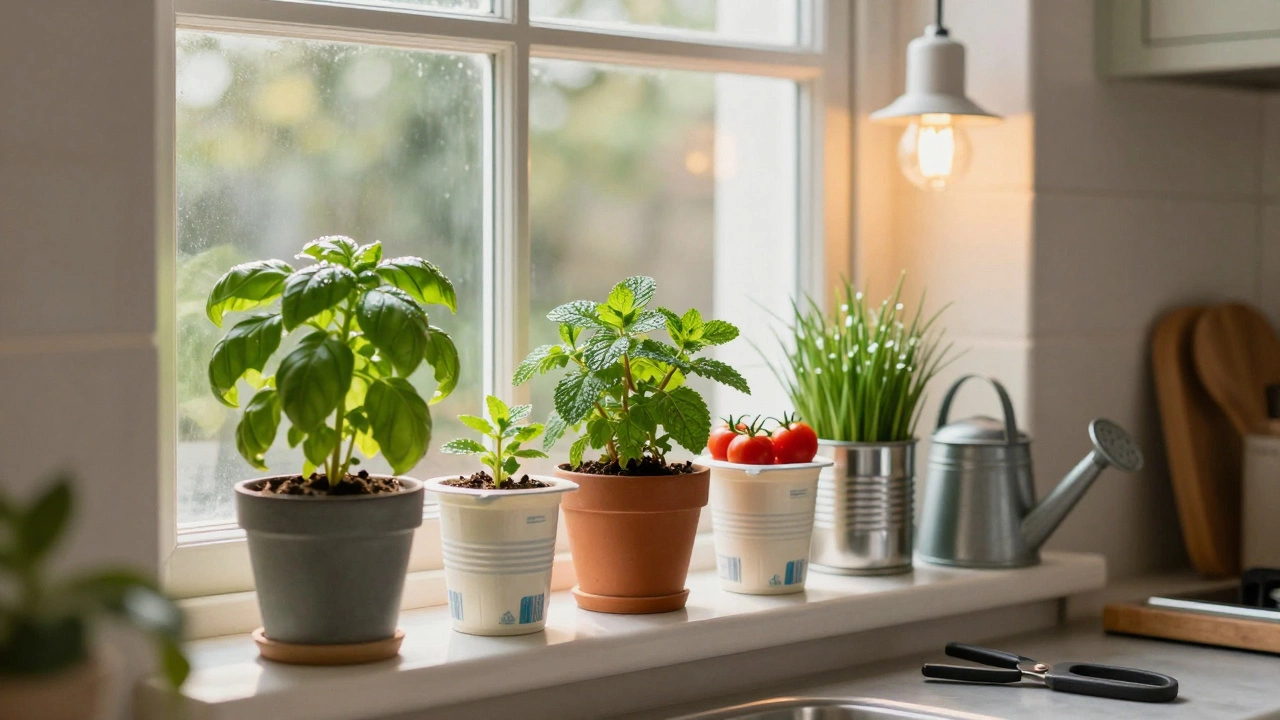
Use what’s already in your kitchen. Old yogurt tubs, tin cans with holes punched in the bottom, or even a cut-in-half plastic bottle can become a planter. Rinse them out, poke drainage holes, and fill them with potting mix. Don’t use garden soil. It’s too heavy and will compact in containers. Buy a good multipurpose compost from the garden center-it’s worth the few extra pounds.
Choose the right plants
Not everything grows well indoors. Stick to plants that are forgiving, fast-growing, and don’t need deep roots. Here’s what works best:
- Basil - Needs warmth and sun. Snip leaves often to keep it bushy. It’s the easiest herb to grow and smells amazing when you brush past it.
- Parsley - Slow to start but lasts for months. Great for garnishes and soups.
- Mint - Grows like a weed. Keep it in its own pot-it’ll take over if planted with others.
- Chives - Like onions but milder. Cut the stems and they’ll regrow. They even flower in spring.
- Lettuce - Use loose-leaf varieties like ‘Black Seeded Simpson’. Harvest baby leaves in 3-4 weeks.
- Cherry tomatoes - Yes, really. Get a dwarf variety like ‘Tumbling Tom’ or ‘Micro Tom’. One plant in a 30cm pot gives you dozens of sweet fruits.
- Thyme and Rosemary - Hardy, drought-tolerant, and perfect for cooking.
Avoid carrots, potatoes, or zucchini. They need too much space and depth. Stick to the short, fast, and flavorful.
Watering: less is more
Overwatering kills more kitchen gardens than neglect. The soil should feel dry an inch down before you water again. Stick your finger in. If it’s damp, wait. If it’s dusty, give it a good soak until water runs out the bottom. Then let it drain. Never let pots sit in a saucer of water-it causes root rot.
In winter, you might only water once a week. In summer, maybe every 2-3 days. Use room-temperature water. Cold water shocks the roots. A small watering can with a narrow spout helps you target the soil, not the leaves.
Feed them lightly
Your plants aren’t in the ground where nutrients renew naturally. So every 3-4 weeks, give them a weak dose of liquid fertilizer. Use a general-purpose plant food diluted to half strength. Tomato feed works great for herbs too-it’s high in potassium, which helps with flavor and fruiting. Don’t overdo it. A little goes a long way. Too much fertilizer burns the roots and makes leaves bitter.
Harvest like a pro
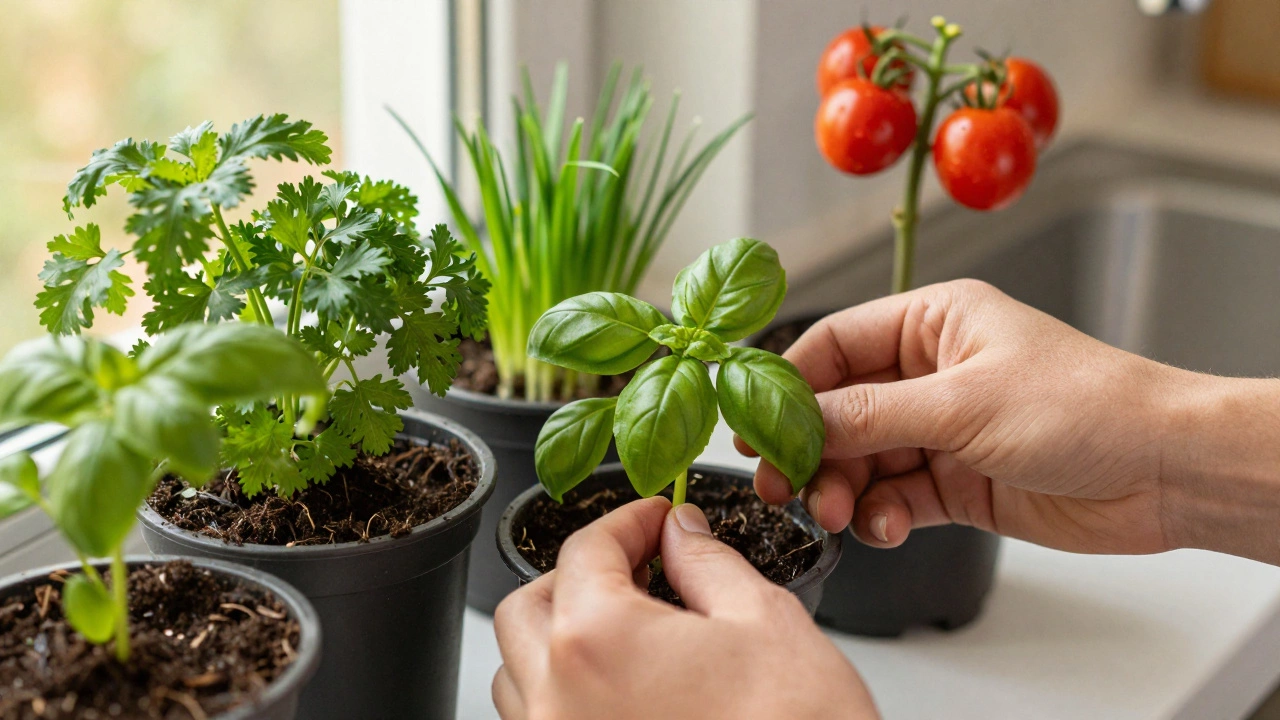
Don’t wait for your basil to look perfect. Pick leaves regularly. The more you cut, the bushier it gets. Use scissors or pinch off stems just above a leaf node. That’s where new growth comes from.
For lettuce, cut the outer leaves and leave the center to keep growing. With chives, snip the tops like you’re giving them a haircut. Cherry tomatoes? Let them ripen fully on the vine. A red tomato picked too early tastes like cardboard.
Harvest in the morning. That’s when flavors are strongest and leaves are crispest. Wash them just before using. Don’t store herbs wet-they’ll rot.
Common mistakes (and how to fix them)
- Yellow leaves? Usually overwatering or no drainage. Check your pots. If water pools, drill more holes.
- Leggy, stretched plants? Not enough light. Move them closer to the window or add a grow light for 12 hours a day.
- Flying bugs? Aphids or whiteflies. Spray with a mix of water and a drop of dish soap. Repeat every 3 days. Don’t use chemical sprays indoors.
- No growth? You might have planted the wrong plant. Mint in a dark corner? Basil in a drafty room? Move them. Plants aren’t decorative-they’re living things that need conditions.
Keep it going all year
Kitchen gardens don’t have to die in winter. You can keep growing if you adjust. In December, your basil might slow down. That’s fine. Focus on hardier plants: parsley, chives, thyme. They’ll keep going. If you want fresh greens in January, sow a new batch of lettuce every 2 weeks. Rotate your crops. One pot for herbs, one for greens, one for tomatoes. That way, if one fails, you’ve still got others.
And when spring comes, don’t toss out your old pots. Refresh the soil, add compost, and replant. You’ll be surprised how many plants come back strong.
Why this matters
There’s something quiet but powerful about eating food you grew yourself. You know exactly what went into it-no pesticides, no long-haul shipping, no plastic packaging. A handful of basil from your windowsill tastes brighter than anything from the supermarket. A cherry tomato picked warm from the sun still has its flavor intact.
It’s not about saving money. It’s about reconnecting with the rhythm of seasons, even if you live in a city. You’ll notice how the light changes in February. You’ll remember which window gets the most sun. You’ll start seeing your kitchen differently-not just as a place to eat, but as a place where life grows.
Start small. One pot. One herb. One window. That’s all you need.
Can I grow a kitchen garden without natural sunlight?
Yes, but you’ll need a grow light. LED grow lights designed for herbs and vegetables use little electricity and can be set on a timer for 12-14 hours a day. Place them 6-12 inches above your plants. Without enough light, plants get leggy and stop producing. A simple 15-watt LED panel from a garden store will work better than a regular desk lamp.
What’s the best container size for a kitchen garden?
For herbs like basil, mint, and thyme, a pot that’s at least 15cm wide and deep is enough. For cherry tomatoes, go bigger-30cm deep and wide. Lettuce and spinach can grow in shallow trays, around 10cm deep. The key is drainage: every container must have holes. If it doesn’t, drill them. No exceptions.
Can I use regular soil from my garden?
No. Garden soil is too dense for containers. It compacts, blocks drainage, and can carry pests or diseases. Always use potting compost. It’s light, well-draining, and designed for plants in pots. You can find it at any garden center or even some supermarkets. Look for "multipurpose compost"-it’s the standard for indoor plants.
How long until I can harvest my herbs?
Most herbs are ready in 4-6 weeks after planting seeds, or sooner if you buy small plants. Basil and chives grow quickly-you can start snipping leaves in about a month. Lettuce takes 3-4 weeks for baby leaves. Tomatoes take longer, around 60-70 days from seed to first fruit. Patience pays off. The first few leaves you pick will taste better than anything you’ve bought.
Do I need to fertilize my kitchen garden?
Yes, but lightly. Plants in pots use up nutrients faster than those in the ground. Use a liquid fertilizer every 3-4 weeks, diluted to half the recommended strength. Tomato feed works well for herbs too because it’s high in potassium, which boosts flavor. Skip fertilizer in winter when growth slows. Overfeeding burns roots and makes leaves bitter-less is more.