Soil pH Adjustment Calculator
Restore Your Garden Soil pH
Calculate the exact amount of lime or sulfur needed for healthy plant growth
Adjustment Recommendation
Important Instructions
- Apply lime or sulfur when soil is slightly moist
- Work into the top 1-2 inches of soil
- Wait at least 4-6 weeks before planting
- For clay soils in Manchester, adjust in autumn
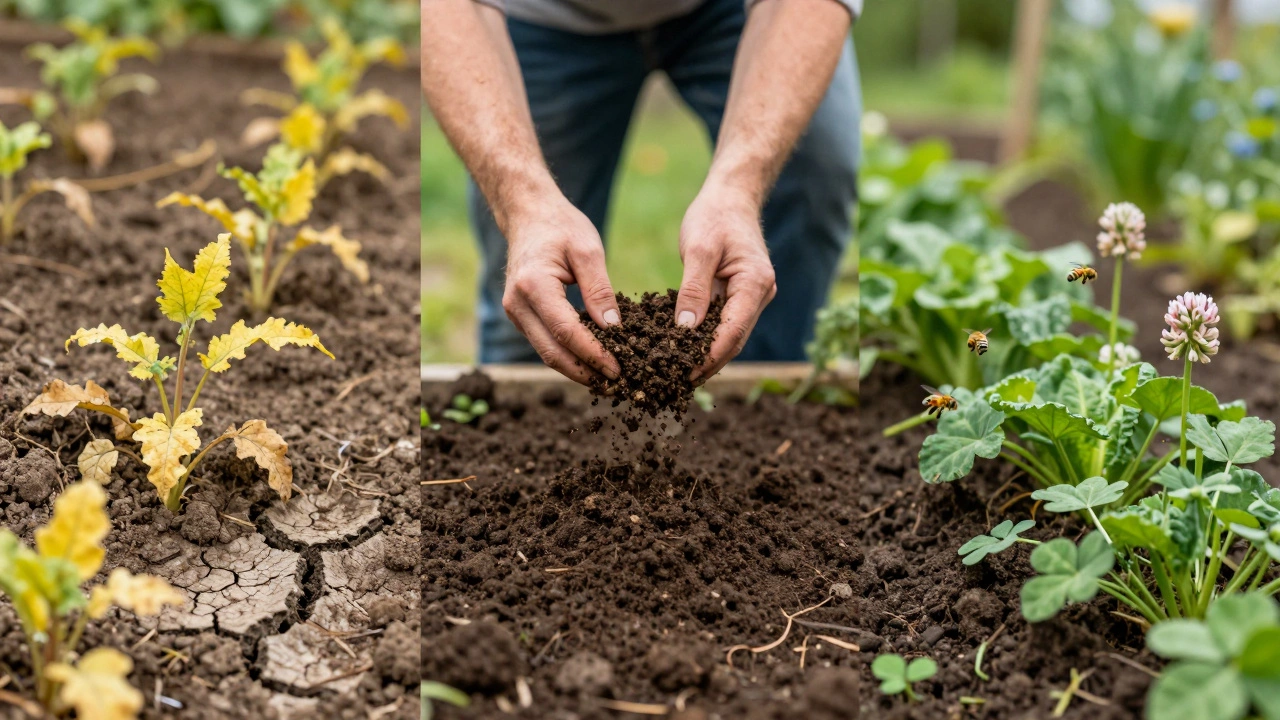
Old garden soil doesn’t just wear out-it gets tired. Years of planting, harvesting, and weathering can leave it compacted, lifeless, and stripped of nutrients. You might notice your plants struggling: stunted growth, yellowing leaves, or water pooling instead of soaking in. That’s not just bad luck. It’s soil fatigue. But the good news? You can bring it back. Restoring old garden soil isn’t about buying expensive products or hiring experts. It’s about working with nature, not against it.
Test your soil first-don’t guess
Before you add anything, find out what’s really going on underground. Most gardeners skip this step and end up over-fertilizing or adding the wrong things. A simple soil test tells you the pH, nitrogen, phosphorus, and potassium levels. You can buy a basic kit from any garden center for under £15. Or send a sample to a local extension service-they’ll give you a detailed report for around £25.
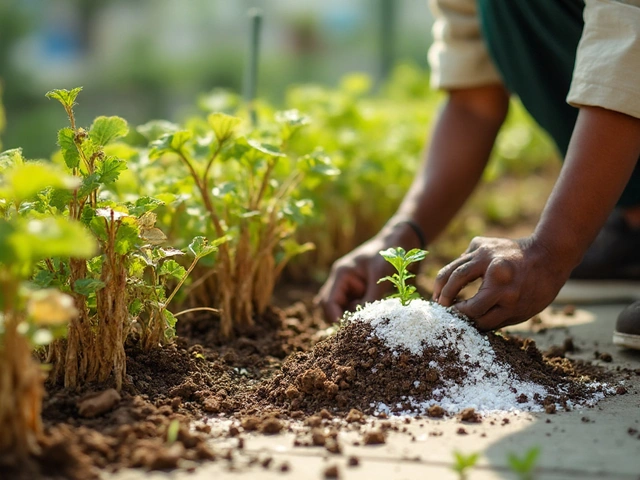
In Manchester, where rain is frequent and clay-heavy soil is common, pH often drops below 5.5. Most vegetables and flowers want it between 6.0 and 7.0. If your soil is too acidic, lime will help. Too alkaline? Sulfur or peat moss brings it down. Without testing, you’re shooting in the dark.
Break up the compaction
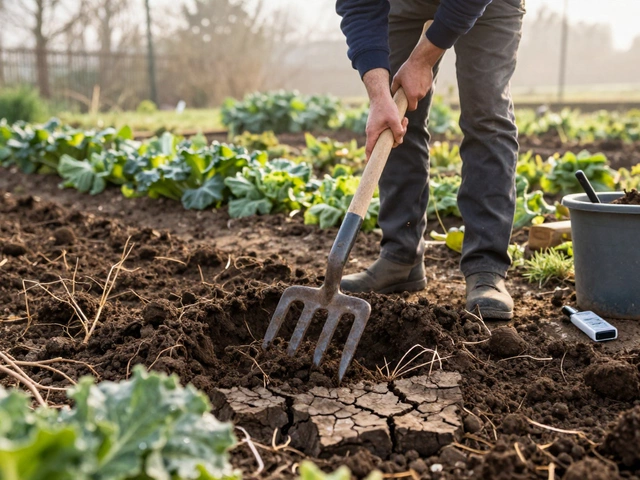
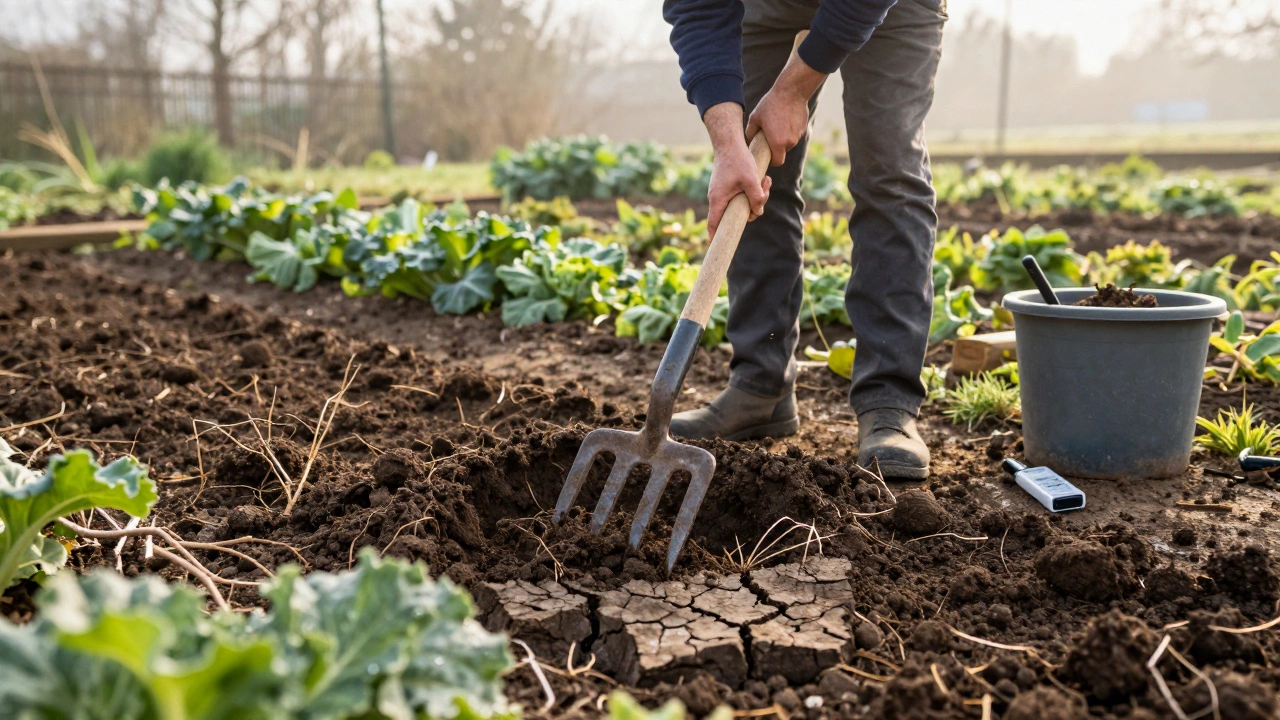
Compacted soil is like concrete with weeds. Roots can’t breathe. Water can’t drain. Earthworms won’t live there. The fix? No-till aeration. Don’t dig deep and turn everything over-that kills microbes and brings up weed seeds. Instead, use a garden fork. Push it into the soil about 6 inches deep, then gently rock it back and forth. Do this across the whole bed. Repeat every few weeks during the growing season.
For raised beds or small plots, try a broadfork. It’s a tool with long tines that lifts soil without flipping it. It’s not expensive, and it lasts decades. After aerating, let the soil rest for a week. You’ll see cracks form. That’s air getting in. That’s the soil breathing again.
Add organic matter-lots of it
Healthy soil is 5% to 10% organic matter. Old garden soil often has less than 2%. The cure? Compost. Not bagged stuff from the store-real, homemade compost. If you don’t have a bin, start one. Collect kitchen scraps (coffee grounds, eggshells, vegetable peels), grass clippings, dried leaves, and shredded cardboard. Layer them, keep it moist, and turn it every few weeks. In six months, you’ll have dark, crumbly, earthy-smelling compost.
Spread a 2-inch layer over your soil in early spring or late autumn. Don’t dig it in. Let worms and rain do the work. Over time, it will sink down and feed the microbes. If you can’t wait for homemade compost, buy bulk compost from a local supplier. Avoid mushroom compost-it’s often too salty for vegetables.
Plant cover crops to rebuild
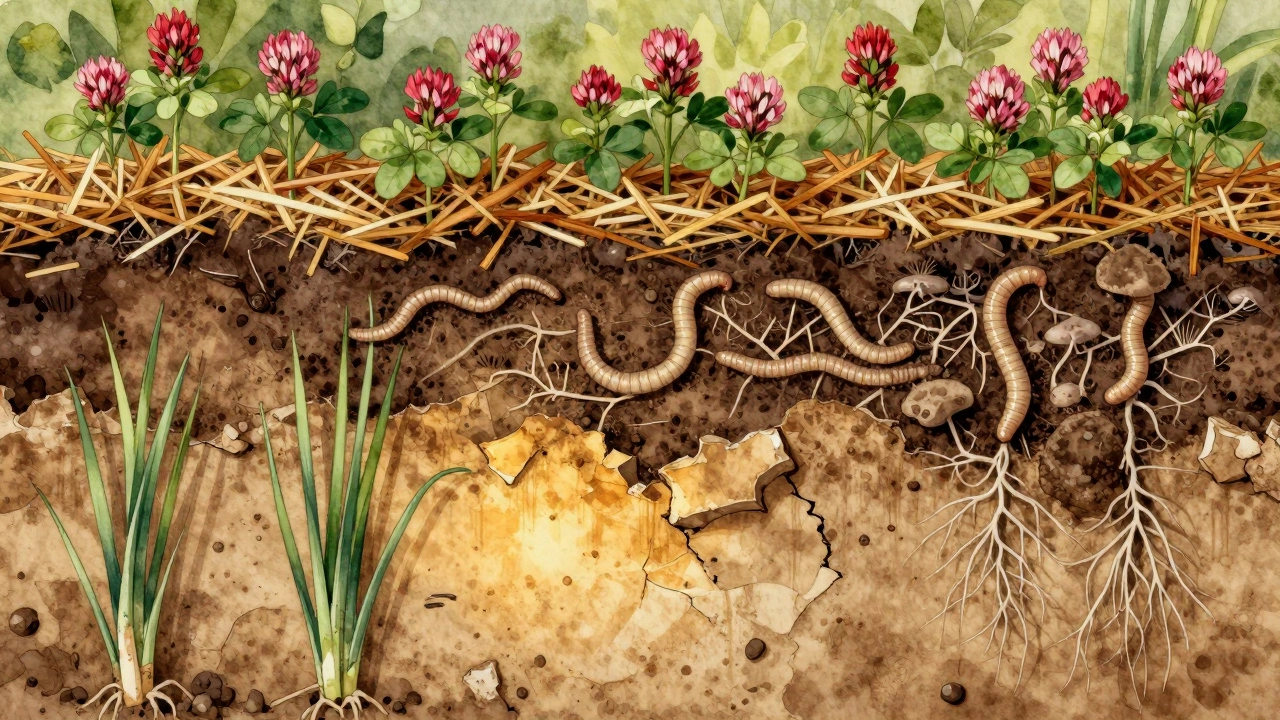
One of the most powerful tools for restoring soil is planting something you don’t eat. Cover crops-like winter rye, crimson clover, or field peas-are grown just to protect and nourish the soil. They stop erosion, suppress weeds, and fix nitrogen in the ground.
After harvesting your summer veggies, clear the bed. Scatter cover crop seeds thickly. Water them in. Let them grow until late autumn. When frost hits, they die back. Leave the dead plants on the soil as mulch. In spring, cut them down with scissors or a hoe. The roots decompose right where they are, adding structure and nutrients. Clover adds nitrogen. Rye breaks up hardpan. Peas feed the soil and attract pollinators.
Use mulch to protect and feed
Mulch isn’t just for looks. It’s insurance for your soil. A 3-inch layer of shredded bark, straw, or leaf mold keeps moisture in, stops weeds, and slowly breaks down into humus. Avoid plastic mulch or dyed wood chips-they don’t feed the soil and can leach chemicals.
Apply mulch after planting, not before. Let the soil warm up in spring, then lay it down. Replenish it every season. In the UK, oak leaves are free and abundant. Rake them up in autumn, let them dry, then spread them over your beds. They’re slightly acidic, which works well for blueberries and rhododendrons. For vegetables, straw is better-it doesn’t tie up nitrogen as it breaks down.
Rotate crops and avoid monoculture
Planting the same thing in the same spot year after year drains the soil. Tomatoes suck out calcium. Carrots pull deep phosphorus. Cabbage leaves behind sulfur. Rotate crops in three-year cycles. Move tomatoes where beans were last year. Put brassicas where onions grew. This breaks pest cycles and lets different plants use and replenish different nutrients.
Keep a simple sketch of your garden each year. Note what went where. You don’t need fancy software-just a notebook. After three years, you’ll see patterns. Your soil will start to recover because no single crop is overworking it.
Let nature do the heavy lifting
Earthworms, fungi, bacteria-they’re the real soil doctors. You can’t buy them. But you can invite them in. Reduce chemical fertilizers and pesticides. They kill beneficial microbes. Instead, use organic inputs: compost tea, seaweed extract, or fish emulsion. These feed the soil life without poisoning it.
Leave some leaf litter under shrubs. Don’t rake everything clean. Tiny insects and fungi live there. They’re part of the ecosystem. Let clover grow between rows. It’s not a weed-it’s a soil healer. The more biodiversity you allow, the faster your soil recovers.
Give it time-no shortcuts
Restoring soil doesn’t happen overnight. If your soil has been neglected for five years, don’t expect miracles in six months. Think in seasons, not weeks. After one year of compost and cover crops, you’ll see better drainage. After two, plants will grow stronger. By year three, you’ll have rich, dark soil that smells like forest floor.
Don’t rush it. Don’t dump fertilizer. Don’t till like crazy. Just keep adding organic matter, protecting the surface, and letting life return. Your garden will thank you.
Can I restore garden soil without compost?
You can, but it will take much longer. Compost is the fastest way to rebuild organic matter. Without it, you’ll need to rely on cover crops, mulch, and organic fertilizers like bone meal or blood meal. These help, but they don’t add the same microbial diversity. Compost brings live organisms that other inputs don’t. If you can’t make your own, buy bulk compost from a local farm or garden center.
How long does it take to fix compacted soil?
You’ll see improvement in 4-6 weeks after aerating and adding mulch. But full recovery takes 1-3 growing seasons. The deeper the compaction, the longer it takes. Clay soils in Manchester can take up to three years to loosen naturally. Patience is key. Keep aerating, mulching, and planting cover crops each season.
Should I add sand to clay soil?
No. Adding sand to clay creates something like concrete. It doesn’t improve drainage-it makes it worse. The right fix is organic matter. Compost, leaf mold, and well-rotted manure open up clay particles. They create air pockets. Over time, the soil becomes crumbly and workable. Sand only works if you’re mixing it with silt or loam-not pure clay.
What’s the best cover crop for UK gardens?
For autumn planting, winter rye is the most reliable. It survives frost, grows fast, and breaks up hard soil. Crimson clover is great for spring and summer-it fixes nitrogen and attracts bees. For quick results in small beds, field peas work well. They grow in 6-8 weeks and can be chopped and dropped as green manure. Avoid mustard if you’re growing brassicas-it can spread diseases.
Can I use store-bought soil improvers?
Some are useful, but many are overpriced and ineffective. Products labeled "soil revitalizer" or "miracle grow for soil" often contain just a little compost and a lot of filler. Stick to bulk compost, leaf mold, or well-rotted manure. If you buy a product, check the ingredients. Look for "100% organic matter" and avoid anything with synthetic NPK ratios. Real soil restoration comes from biology, not chemistry.