Aerate Soil: Why It Matters and How to Do It Right
When you aerate soil, you create tiny spaces in the ground that let air, water, and nutrients reach plant roots. Also known as soil aeration, it’s not just for lawns—it’s critical for any garden where roots struggle to breathe. Most gardeners don’t realize their soil has turned to concrete. Over time, foot traffic, heavy rain, and even frequent watering push soil particles together, squeezing out the air. Without oxygen, roots suffocate. Nutrients lock up. Water pools on top instead of soaking in. That’s why your plants look weak, even when you water them daily.
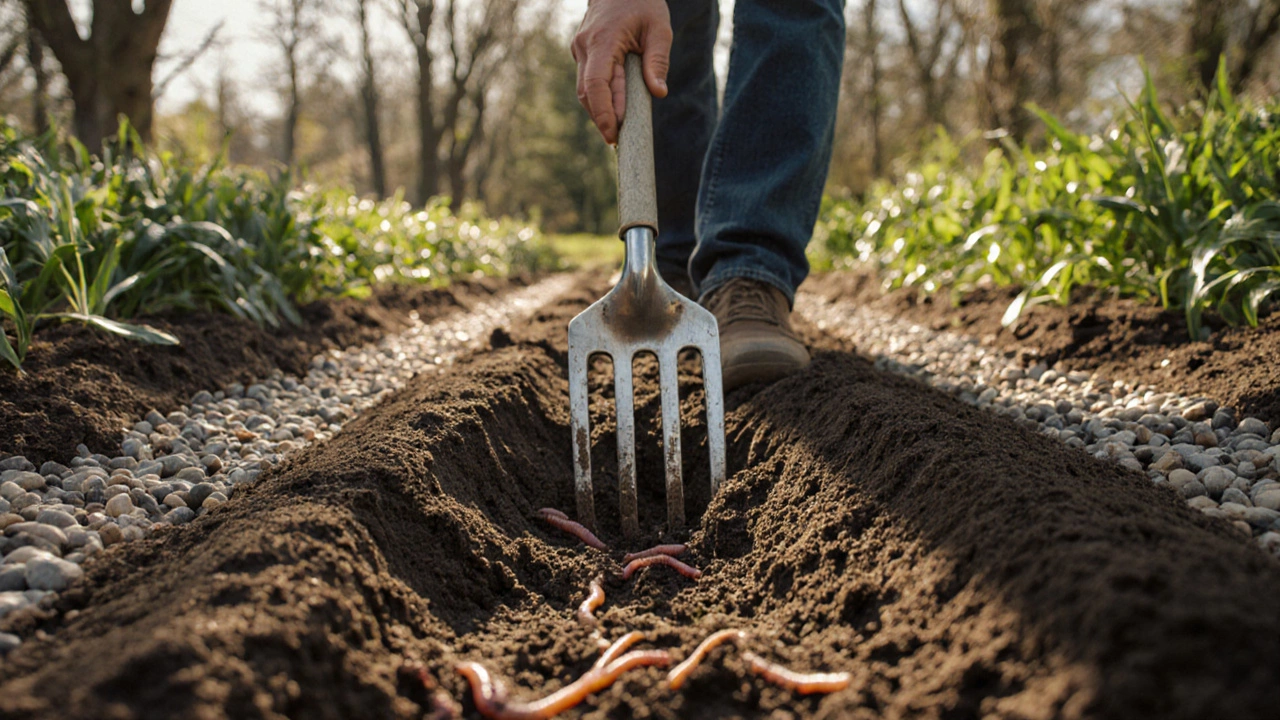
Soil compaction, the main enemy of healthy roots, happens everywhere—from potted plants on balconies to backyard vegetable beds. In India’s clay-heavy soils, it’s worse. You can spot it when water sits for hours after rain, or when seedlings refuse to grow despite good fertilizer. The fix isn’t more water or more food—it’s space. Aeration opens up those packed layers. You don’t need fancy gear. A garden fork, a manual aerator, or even a spiked shoe can work. For lawns, a core aerator pulls out tiny plugs. For pots and raised beds, gently loosen the top 2–4 inches with a trowel or hand fork. Do it in spring or fall when roots are actively growing. Skip it in summer heat or during monsoon—too much disturbance then stresses plants.
Soil aeration tools, from simple spikes to motorized machines, vary by scale. If you’re growing veggies in containers, you only need to poke holes once every few months. If you’re managing a terrace garden with heavy foot traffic, you’ll need to aerate every 6–8 weeks. The goal isn’t to dig deep—it’s to break the crust. After aerating, top-dress with compost. That’s when the real magic happens: microbes wake up, earthworms return, and your soil starts working for you again. You’ll see faster growth, fewer pests, and less watering needed.
Don’t confuse aeration with tilling. Tilling turns the whole bed upside down and kills soil life. Aeration just pokes holes—gentle, targeted, and sustainable. It’s the quiet fix most gardeners overlook, but it’s the one that turns struggling plants into thriving ones. In the posts below, you’ll find real examples of how people fixed their compacted soil, what tools worked best in Indian conditions, and how aeration ties into better watering, composting, and long-term soil health.
Fix compacted soil naturally with aeration, compost, and mulch. Learn how to restore garden soil for healthier plants, better drainage, and stronger root growth without expensive tools or chemicals.
Continue reading...